English – The Conversation | Self-driving cars struggle to see at night or in fog – but imitating the human brain can make them safe by Pablo Hernández Cámara, Profesor e investigador. Departamento de Ingeniería Electrónica & Laboratorio de Procesado de Imágenes, Universitat de València, Universitat de València

AI generated summary, Read the full article for complete information.

Self‑driving cars work well in clear daylight but become almost blind in darkness, rain or fog, because current AI vision systems lack the adaptive mechanisms that human eyes use. Researchers at the University of Valencia mimicked the brain’s “divisive normalisation”—a neuronal “volume‑control” that amplifies weak signals in dark scenes and attenuates bright ones—to modify standard AI models. Tests with real‑world European driving data, night‑time images from Switzerland and virtual simulators showed that the brain‑inspired models retained accurate object detection under fog and complete darkness, outperforming unmodified AI by more than 20 %. The study suggests that improving autonomous‑vehicle safety does not require larger computers or massive datasets, but rather can be achieved by borrowing evolution‑tested strategies from human vision, making AI systems more robust, adaptable, and trustworthy in all weather conditions.

Read more: https://theconversation.com/self-driving-cars-struggle-to-see-at-night-or-in-fog-but-imitating-the-human-brain-can-make-them-safe-282284

#UniversityofValencia #Selfdrivingcars #AIvision #Neuralnetwork #Humanbrain #Divisivenormalisation #Switzerland #Europeandatasets #Autonomousvehicles #Braininspired #
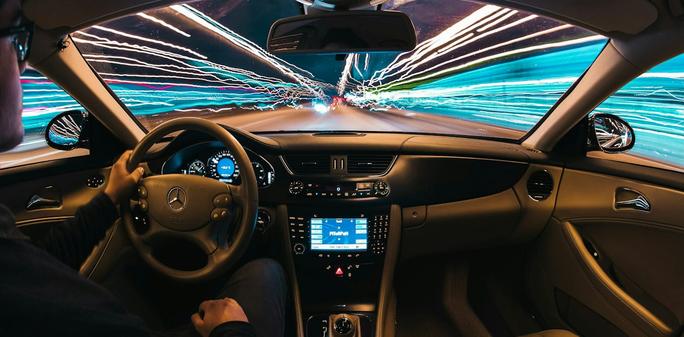

Self-driving cars struggle to see at night or in fog – but imitating the human brain can make them safe

AI models that power self-driving cars work great in clear conditions, but turn blind in fog or at night.

The Conversation

I haven't boosted the #BrainInspired podcast for far too long, but you can't miss this wonderful episode with the one and only @jaanaru.

They talk about consciousness, why current #AI does not have it (not even near), how insight is generated, and why academic research currently produces so little of it...

I just felt myself nodding along for the whole two hours...

Check it out!

https://braininspired.co/podcast/231

BI 231 Jaan Aru: Conscious AI? Not Even Close! | Brain Inspired

Cool podcast episode on how we, our brain, form and use memories , 1.5hrs https://braininspired.co/podcast/206/
As audio-only and as YT video.
With transcript. So if you find the guest's Ciara Greene fast Irish difficult to follow you can read along.
#neuroscience #BrainInspired
BI 206 Ciara Greene: Memories Are Useful, Not Accurate | Brain Inspired

Proud to have managed to finish a #neuromorphic manuscript, with Chiara De Luca, Mirco Tincani and Elisa Donati just before the end of the year!

It demonstrates the benefits of using #braininspired principles of computation for achieving robust computation across multiple time-scales, despite the inherent variability of the underlying computational substrate (silicon neurons that emulate faithfully biological ones):
A neuromorphic multi-scale approach for heart rate and state detection
https://doi.org/10.21203/rs.3.rs-5737326/v1
#neuromorphic #wearable #neuroai #SpikingNeuralNetwork

A neuromorphic multi-scale approach for heart rate and state detection

With the advent of novel sensor and machine learning technologies, it is becoming possible to develop wearable systems that perform continuous recording and processing of biosignals for health or body state assessment. For example, modern smartwatches can already track physiological functions, in...

New #braininspired
#MazviitaChirimuuta
#TheBrainAbstracted
#Simplification in the #History & #Philosophy of #Neuroscience
» when we try to understand something complex, like the brain, using models, and math, and analogies, for example - we should keep in mind these are all ways of simplifying and abstracting away details to give us something we actually can understand.
...
necessary to do the science and limit the interpretation we can claim from our results «
https://youtu.be/NwNHW4otoJQ
#neurobuzz
BI 186 Mazviita Chirimuuta: The Brain Abstracted

YouTube

I just listend to the #BrainInspired podcast with Andrea Martin. @andrea https://braininspired.co/podcast/169/

It was a tour de force on a variety of #linguistics and #nlp/ #LLMs topics. Wow.

BI 169 Andrea Martin: Neural Dynamics and Language | Brain Inspired

@NicoleCRust @debivort @MolemanPeter @knutson_brain @kordinglab @dsmith @tdverstynen Right, so contextual constraints as causes just goes one important step further. The emergent properties that are hard to predict also meaningfully constrain the relationships/interactions between the individual components. Neurons are constrained by their neighbors, which are constrained by other brain areas, which are constrained by the brain as a whole, which are constrained by other people's brains, etc. These are all top-down constraints that can cause the "lower" components to behave in ways that would not be possible otherwise and would lack meaning without relation to the whole. If you define cause as efficient cause only, that's OK, and these can be labeled constraints. But I view them as equally causal.

And I'd formally model this myself but I know my limits ;)

I encourage you to check out Juarrero's book, even first 30 pages or so makes the point clear. Or listen to her on #braininspired for a summary.

#neurobuzz

Check out this discussion moderated by Paul Middlebrooks from #BrainInspired with yours truly & a number of actual neuroscientists (Katrin Franke, Ralf Haefner, Martin Hebart & Fred Wolf) about if & how machine learning can be used to gain insights into the brain: https://braininspired.co/podcast/177.
BI 177 Special: Bernstein Workshop Panel | Brain Inspired

This latest episode of the #BrainInspired podcast, where Paul Middlebrooks interviews @WiringtheBrain is finger-licking good!

https://braininspired.co/podcast/175

I'm reading "Free Agents" right now, and it's amazingly well written, accessible, and gets right to the point.

https://press.princeton.edu/books/hardcover/9780691226231/free-agents

Agency is real, not doubt about it, and it's not even that mysterious.

BI 175 Kevin Mitchell: Free Agents | Brain Inspired