English – The Conversation | Self-driving cars struggle to see at night or in fog – but imitating the human brain can make them safe by Pablo Hernández Cámara, Profesor e investigador. Departamento de Ingeniería Electrónica & Laboratorio de Procesado de Imágenes, Universitat de València, Universitat de València

AI generated summary, Read the full article for complete information.

Self‑driving cars work well in clear daylight but become almost blind in darkness, rain or fog, because current AI vision systems lack the adaptive mechanisms that human eyes use. Researchers at the University of Valencia mimicked the brain’s “divisive normalisation”—a neuronal “volume‑control” that amplifies weak signals in dark scenes and attenuates bright ones—to modify standard AI models. Tests with real‑world European driving data, night‑time images from Switzerland and virtual simulators showed that the brain‑inspired models retained accurate object detection under fog and complete darkness, outperforming unmodified AI by more than 20 %. The study suggests that improving autonomous‑vehicle safety does not require larger computers or massive datasets, but rather can be achieved by borrowing evolution‑tested strategies from human vision, making AI systems more robust, adaptable, and trustworthy in all weather conditions.

Read more: https://theconversation.com/self-driving-cars-struggle-to-see-at-night-or-in-fog-but-imitating-the-human-brain-can-make-them-safe-282284

#UniversityofValencia #Selfdrivingcars #AIvision #Neuralnetwork #Humanbrain #Divisivenormalisation #Switzerland #Europeandatasets #Autonomousvehicles #Braininspired #
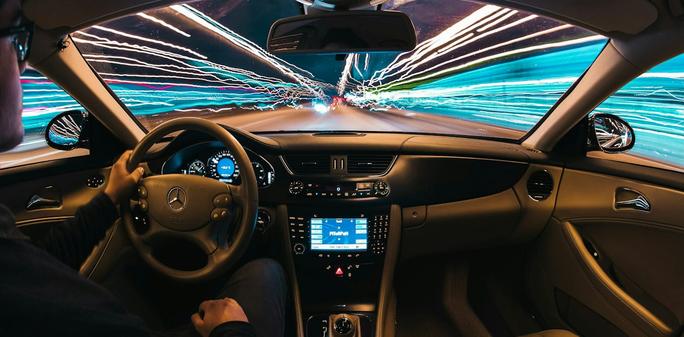

Self-driving cars struggle to see at night or in fog – but imitating the human brain can make them safe

AI models that power self-driving cars work great in clear conditions, but turn blind in fog or at night.

The Conversation

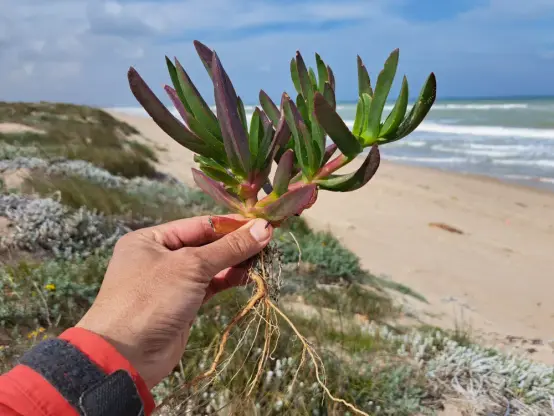
'En estas dunas de la #Albufera de #València se ejecutó un proyecto de eliminación de #florainvasora en 2025. Este Carpobrotus edulis es un rebrote de una de las plantas eliminadas. Es esencial revisar periódicamente las zonas de erradicación d sp invasoras para evitar su reinvasión a corto plazo. #EEI
Miguel Ángel Gómez Serrano Assistant Professor in Ecology at #ICBIBE #universityofValencia @uv.es

https://bsky.app/profile/gomezserrano-ma.bsky.social/post/3mhxftcusnk2t

Miguel A. Gómez-Serrano (@gomezserrano-ma.bsky.social)

En estas dunas de la Albufera de València se ejecutó un proyecto de eliminación de flora invasora en 2025. Este Carpobrotus edulis es un rebrote de una de las plantas eliminadas. Es esencial revisar periódicamente las zonas de erradicación d sp invasoras para evitar su reinvasión a corto plazo. #EEI

Bluesky Social
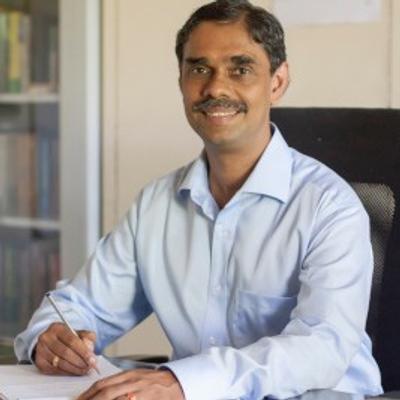
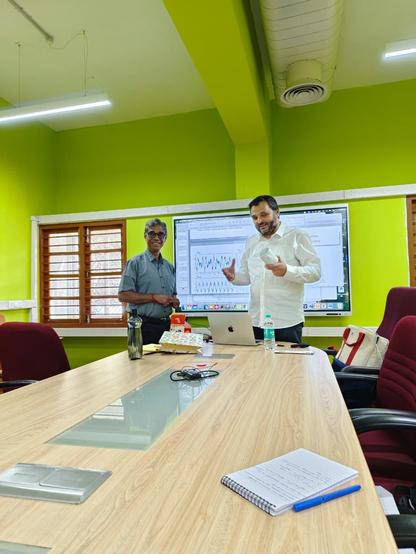
Delighted to host Prof. Vladimir García-Morales from University of Valencia, Spain. We exchanged ideas on potential collaborations on modeling complex systems employing CGLE.
#complexsystems #modeling #mathematical #universityofvalencia #collaboration #spain

📬 Submit your abstract and be part of shaping the future of sustainable resource recovery.

🔗 https://go.uv.es/ad19/Call4Papers

#AD19 #IWA #AnaerobicDigestion
#Sustainability #Biogas #CircularEconomy #UniversityOfValencia #CallForPapers

On Monday, #UniversityofValencia (#UV) students launched #Spain’s first university encampment in solidarity with #Palestine.

Spain’s farm labourers, University of Valencia students protest #Gaza genocide - World Socialist Web Site

#PalestineSolidarity

https://www.wsws.org/en/articles/2024/05/01/wtlf-m01.html

Spain’s farm labourers, University of Valencia students protest Gaza genocide

This underscores the potential internationally for students protesting the genocide to mobilize the working class to halt the genocide and the war.

World Socialist Web Site
SciPost: SciPost Phys. 15, 053 (2023) - Anomaly Awareness

SciPost Journals Publication Detail SciPost Phys. 15, 053 (2023) Anomaly Awareness