PiEmbSysTech - Apps on Google Play

Embedded Research Blog

TIL about sips – scriptable image processing system, that comes standard on MacOS. sips is similar to ImageMagick’s convert and allows you to batch process images. It is also scriptable with javascript.
Useful if you don’t want to go through installing ImageMagick on your mac.
#imageprocessing #graphics #graphicsprocessing #MacOS

@drahardja I wouldn’t be surprised if VR is the tech that breaks the camels back and necessitates #Photonics, or #OpticalChips.

You can parallelize computing a lot more with #OpticalLogic , and early #OpticalProcessors are rolling off manufacturing floors and being used for #ML #Inferencing and #GraphicsProcessing.

With the right #Technology you could with zero latency composition #MR layers using light instead of electricity.

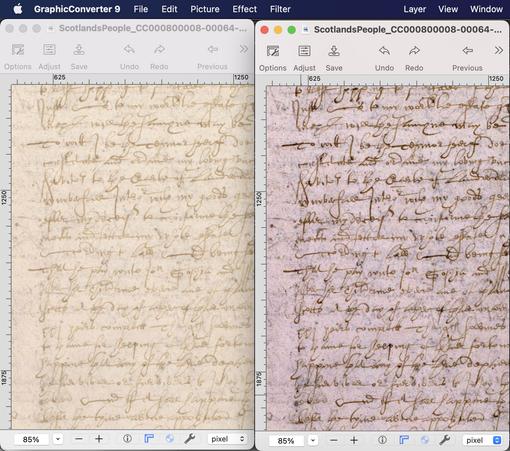
Happy to be sitting up doing some more old document reading. And thank goodness again for easy colour/balance graphics processing software to make it more readable! Here a testament testamentar (Scottish will and inventory) from 1648. #HistoricalResearch #ScottishHistory #Genealogy #FamilyHistory #17thCentury #SeventeenthCentury #Will #Wills #Inventory #Inventories #Testament #Testaments #Palaeography #GraphicsProcessing #GraphicSoftware
Experience the rise and fall of a revolutionary #NURBS technology - Nvidia's NV-1! Read our blog post to explore its impact on 3D graphics & more!
https://www.eliza-ng.me/post/snvidiadirectx/snvidiadirectx/
#3DGraphics #graphicsprocessing #Nvidia #NV1
Nvidia's NV-1: The Rise and Fall of Revolutionary NURBS Technology

The video accelerator market has seen a lot of changes over the years, with various innovations and technologies coming to the forefront as different companies compete for dominance. One such company is Nvidia, which has been around since the 1990s and is still a major player in the industry today. In this article, we will take a look at Nvidia’s NV-1 video accelerator and how it failed to gain traction despite its promise of revolutionary NURBS technology.

Early CGI | Tomorrow's World | Earth Lab

YouTube
#introduction I’m Matt — By day I’m an engineering manager at a cybersecurity company. By night I’m looking into #EEG and #GraphicsProcessing while writing as much #rust as I can. Non-technical life is spent outside with my family: #mtb #hiking #kayaking. You can expect a random assortment of the above in my feed.

What Kind of GPU Are You?

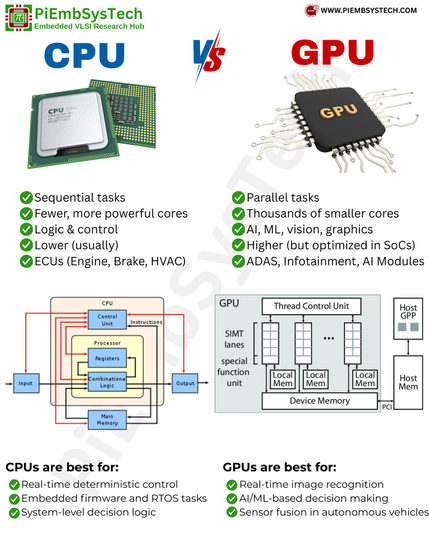
In the old days, big computers often had some form of external array processor. The idea is you could load a bunch of numbers into the processor and then do some math operations on all of the numbers in parallel. These days, you are more likely to turn to your graphics card for number crunching support. You'll usually use some library to help you do that, but things are always better when you understand what's going on under the hood. That's why we enjoyed [RasterGrid's] post on GPU architecture types.

If you can tell the difference between IMR (immediate mode) and TBR (tile-based) rendering this might not be the post for you. But while we knew the terms, we found a lot of interesting detail including some graphics and pseudo code that clarified the key differences.

Which architecture is better? As the post points out, that depends on how you define better. Each can boast it is better at something, but the flip side is that each is also worse at something else. In general, IMR GPUs wind up in desktop computers and mobile devices tend towards TBR. It also depends on the specific task you ask of the GPU.

Granted, you normally don't need to know any of this. For graphics, you are probably not directly controlling the device and for computation, you will likely use CUDA or OpenCL. But you don't need to understand an engine to drive a car, but the best-performing drivers do know how an engine works.

#computerhacks #cuda #gpu #graphics #graphicscard #graphicsprocessing #opencl

What Kind Of GPU Are You?

In the old days, big computers often had some form of external array processor. The idea is you could load a bunch of numbers into the processor and then do some math operations on all of the numbe…

Hackaday