#RockportME - 2nd Annual SEED FEST

April 11 @ 9:30 AM – 1:30 PM

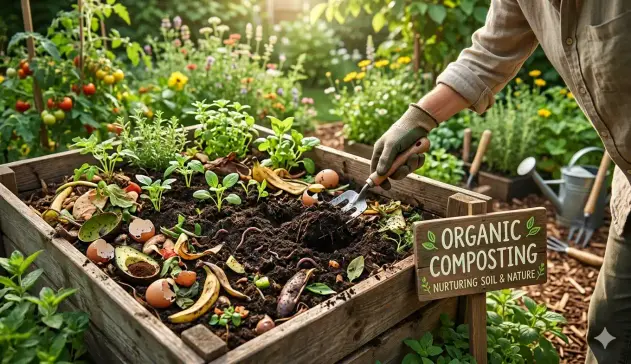
"The #RockportPublicLibrary will host its second annual SEED FEST on Saturday, April 11. This free, family-friendly event will take place on the upper and lower levels of the library. From 9:30 a.m. to 12:00 p.m., visitors can browse educational exhibits and activities covering #SeedStarting, #pollinators, #SoilHealth, #Composting, #NativePlants, #HeirloomVegetables, growing #rice and #grains in #Maine, #Wabanaki #FoodSovereignty, and much more!

"At 12:30 p.m., Petra Page-Mann of #FruitionSeeds will deliver an interactive keynote presentation. Page-Mann and her nonprofit seed company are strong advocates of 'gift culture,' which involves giving away seeds to promote food cultivation and community building. This ethos aligns perfectly with the theme of SEED FEST.

"The event is generously sponsored by the Rockport Library Foundation and is organized in partnership with several organizations, listed alphabetically: Herbal Hummingbird Hub, Knox Lincoln County Beekeepers, Knox-Lincoln Soil and Water Conservation District, Maine Grains and Maine Grain Alliance, Maine Heirloom Seed Network, Maine Organic Farmers and Gardeners Association [#MOFGA], #MaineRiceProject at Ararat Farms, #MerryspringNatureCenter, #Niweskok: From the Stars to Seeds, Roots n Shoots, #UMaineCooperativeExtension, and #WildSeedProject.

"The exhibiting partners will provide valuable information, hands-on activities, items for sale, and an abundance of free seeds and seedlings. Additionally, #midcoast artist Katharine Cartwright’s beautiful #BotanicalPaintings will be showcased in the library’s lower level for a month-long exhibition titled 'In My Garden.' "

FMI:
https://www.rockportlibrary.net/event/2nd-annual-seed-fest/

#SolarPunkSunday #BuildingCommunity #GrowYourOwnFood #GYO #IndigenousFoodSovereignty #FoodSovereignty #LibrariesRule #SeedFest #WabanakiFoodSovereignty #SoilIsLife

Samples collected for soil texture tests of the growing beds to see if there’s any variation.

I’ll also do some water infiltration tests, worm counts and a visual soil assessment of the beds. #GrowYourOwn #SoilHealth #Soil #Allotment

Test your soil's pH! Is it acidic or alkaline? Veggies like spinach & beans prefer neutral to alkaline soil, while blueberries & potatoes love acidic conditions. Knowing your soil's pH helps you understand what grows happily & which plants need some help to be at their best! #gardening #soilhealth

The Silent Collapse of Soil Health: Implications for Climate and Food Security

A growing body of research suggests that climate change is both intensifying and accelerating. While much of the focus remains on fossil fuel emissions and rising te…
#dining #cooking #diet #food #Food #agriculture #climate #climatechange #foodsecurity #foodsystems #soil #Soildegradation #soilhealth
https://www.diningandcooking.com/2568564/the-silent-collapse-of-soil-health-implications-for-climate-and-food-security/

Not to be petty or mean, but especially in #soilhealth and #regenerative ag: if you have a "researcher" presenting simple truths on complex matters... check the Google Scholar account.

#Agroforestry may be just what #Maine needs for agricultural growth

By Marina Schauffler
Published on: January 24, 2021

Excerpt: "Agroforestry, an age-old concept, could provide a path to Maine’s future. Part of the #RegenerativeAgriculture movement, it involves an integrated approach to cultivating #trees with #crops and – sometimes – #livestock. These diversified farm systems nourish #SoilHealth and #wildlife while offering more resilience in a warming world — locking up atmospheric carbon, absorbing floodwaters, and sheltering crops and animals from high winds and #ExtremeHeat.

" 'Diversity is really key to sustainability for small farms and the ecology of farms,' said vegetable farmer Max Boudreau of Winslow Farm in Falmouth. He sees many landowners and #homesteaders 'putting these principles into practice,' but said agroforestry is still 'a foreign concept' in farm service agencies.

"Being interdisciplinary, agroforestry challenges the siloed world of natural resource management. It is routinely ignored in college curricula and by technical service providers, said Meghan Giroux, an agroforestry researcher, technical service provider and practitioner in Vermont. Her nonprofit, #InterlaceCommons, seeks to fill that void by training farmers – including Boudreau – how to implement and maintain agroforestry practices.

"Boudreau was one of the 20 farmers selected among 92 applicants from around the Northeast for a free, agroforestry 'field consultancy' this year. Farmers are eager to learn about agroforestry’s potential to diversify income, and there’s growing consumer demand for its products – from nuts and uncommon fruits (like #honeyberry and #PawPaw) to #mushrooms and #MedicinalHerbs.

"Yet policymakers routinely tell Giroux there’s 'no interest in agroforestry,' she says. 'There’s no institutional will to move these practices forward primarily because people don’t understand them.'

"The U.S. Department of Agriculture has supported agroforestry since the 1990 Farm Bill and does exceptional research, Giroux feels, but “a knowledge-exchange issue” prevents guidance from reaching most landowners. A network of trained farmers could help support and train peers – a process that happens informally, Boudreau says, in the permaculture community, a related landscape design approach modeled after natural systems.

"Research has already demonstrated that #NoTill agriculture improves crop yields, reduces costs and improves soil health. Even more economic and environmental benefits could flow from cultivating crops in a layered, integrated mix of annuals and perennials more reminiscent of natural plant communities."

Full article:
https://themainemonitor.org/sea-change-agroforestry-may-be-just-what-maine-needs-for-agricultural-growth/

#SolarPunkSunday #NoMonoculture #Polyculture #AgroEcology #FoodForests

Agroforestry may be just what Maine needs for agricultural growth

A state that grows trees "really well," Maine could benefit from the expansion of agroforestry — which has ecological and economic promise.

The Maine Monitor

Free TERN webinar about soil litter, you humus-loving dorks:

"Nature's Litter, Nature's Treasure"
1st of April 2026, 03:00 PM AEST

Register here:

https://uqz.zoom.us/webinar/register/WN_caGB7fVFTc-lD4VpSSBFjw#/registration

If the time doesn't work for you, you can still register to get the recording.

Find past webinar recordings here: https://www.tern.org.au/webinars/#pastwebinars

#science #conservation #environment #ecology #soilHealth

Welcome! You are invited to join a webinar: TERN Webinar - Nature's Litter, Nature's Treasure. After registering, you will receive a confirmation email about joining the webinar.

From one leaf to a nation's carbon budget, from the driest deserts to the wettest peatlands, litter isn't trash - it's ecology's master variable. It connects individual organisms to global cycles, field observations to policy outcomes and basic science to environmental management. Every year, Australian vegetation produces hundreds of millions of tonnes of dead plant material. What happens next, that is, whether this organic matter decomposes in weeks or persists for millennia, determines soil fertility, carbon storage, wildfire fuel loads and the accuracy of our national environmental accounting. Yet this fundamental process remains one of ecology's most perplexing puzzles, with different ecosystems playing by completely different rules. In Australia's sunbaked drylands, leaves vanish faster than rainfall alone could explain. Our decomposition models consistently predict the wrong rates because they miss a crucial player. In waterlogged peatlands, organic matter accumulates for thousands of years, creating carbon time capsules that standard decomposition theory says shouldn't exist. And in our national carbon accounts, how we track and model litter determines whether Australia accurately measures its climate commitments or miscalculates by millions of tonnes. In this webinar, international experts tackle the challenge of how do we take vastly different processes, from photobleached leaves in the Mallee to centuries-old organic matter in alpine bogs and create coherent national models that actually work. We are learning from litter science that leaf fall could be a significant factor in managing Australia's environmental challenges.

Zoom

What if you could see what's happening beneath your crops in real time?

A quick guide to picking the right soil sensor:

🔹 DL-TRS12 — Moisture, temp & conductivity. All-rounder for any soil.
🔹 DL-TRS21 — Water potential. What the plant actually feels.
🔹 DL-SMTP — Depth profile. Follow water to the roots.
🔹 DL-SDD — Moisture + salinity. Soil health & nutrients.

See it live: https://buff.ly/RD8VvJ9

#SoilHealth #PrecisionAgriculture #LoRaWAN #IoT #SmartFarming

Discover the pioneering work of Patanjali Organic Research Institute in advancing organic farming, natural inputs, and sustainable agriculture. Visit the page to learn how its research empowers farmers, improves soil vitality, and promotes safe, chemical-free food for a healthier future: https://acharyabalkrishna.com/pages/patanjali-organic-research-institute

#Patanjali #OrganicFarming #SustainableAgriculture #NaturalFarming #SoilHealth #OrganicIndia #EcoFriendlyFarming #ChemicalFreeFood #FarmerSupport #GreenAgriculture