The Silent Collapse of Soil Health: Implications for Climate and Food Security

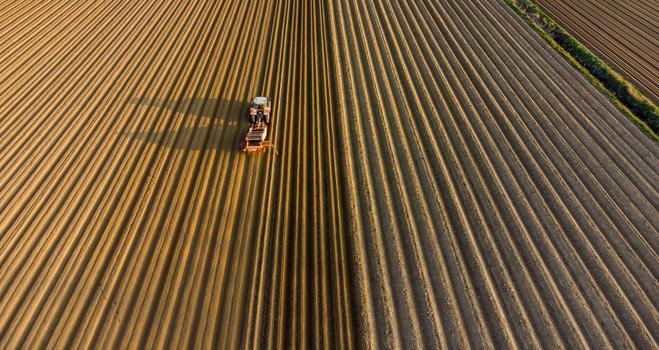
A growing body of research suggests that climate change is both intensifying and accelerating. While much of the focus remains on fossil fuel emissions and rising te…
#dining #cooking #diet #food #Food #agriculture #climate #climatechange #foodsecurity #foodsystems #soil #Soildegradation #soilhealth
https://www.diningandcooking.com/2568564/the-silent-collapse-of-soil-health-implications-for-climate-and-food-security/

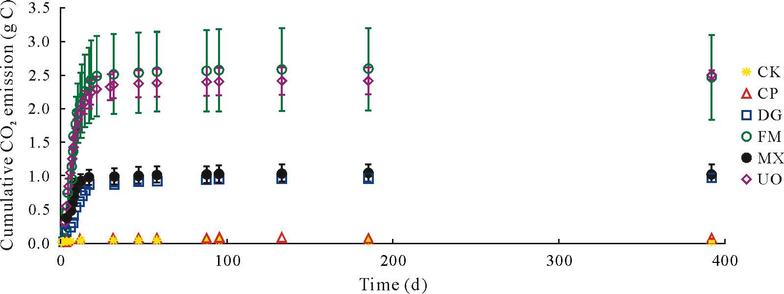
New publication: Fate of C and N from pretreated organic amendments in soil. #carbon #nitrogen #soilfertility #soildegradation #agriculture
https://doi.org/10.1016/j.pedsph.2024.07.007

#SEZs in #India: Balancing Economic Growth and #Environmental Concerns

July 27, 2024

"Picture this: vast stretches of industrial land buzzing with activity, modern factories producing goods for global markets, and thousands of job opportunities emerging overnight. This is the promise of Special Economic Zones (SEZs) in India. But behind this gleaming facade lies a complex web of environmental challenges and social concerns that demand our attention. SEZs represent one of India’s most ambitious economic policies, designed to accelerate industrial growth and boost exports, yet they often come at a significant cost to the environment and local communities.

[...]

"[T]he rapid expansion of SEZs has raised significant environmental red flags. The most pressing concern is land acquisition, which often involves converting fertile agricultural land into industrial zones. This conversion not only reduces the country’s agricultural capacity but also disrupts local ecosystems and biodiversity.

"The establishment of SEZs typically requires large tracts of land – sometimes spanning thousands of acres. Much of this land is acquired from agricultural areas, leading to the displacement of farming communities who have depended on these lands for generations. For instance, the proposed #RaigadSEZ in #Maharashtra would have required over 14,000 hectares of #agricultural land, leading to massive #protests from local farmers.

"The conversion of agricultural land to #IndustrialUse has long-term implications for #FoodSecurity. As India’s population continues to grow, the loss of productive #farmland could exacerbate food shortage issues in the future. Moreover, agricultural land often has better soil quality and water retention capacity compared to industrial land, making this conversion environmentally costly.

"Industrial activities within SEZs generate various forms of #pollution. Air pollution from #manufacturing processes, water #contamination from industrial effluents, and #SoilDegradation from chemical usage are common problems. The concentration of industries in SEZs can create pollution hotspots that affect air and water quality in surrounding areas.

"#WaterScarcity is another critical issue. SEZs require substantial water resources for industrial processes, often competing with local communities for this precious resource. In water-stressed regions, this competition can lead to conflicts and further environmental degradation.
Human rights and social displacement

"The human cost of SEZ development cannot be overlooked. Land acquisition for SEZs often involves displacing local communities, particularly small farmers and agricultural workers. These communities frequently receive inadequate compensation and struggle to find alternative livelihoods.

"The displacement process can be traumatic for local communities who have strong cultural and emotional ties to their land. Traditional occupations like #farming, #fishing, and #SmallScaleTrading are disrupted, forcing people to adapt to entirely new economic realities. The promised employment opportunities in SEZs often don’t materialize for displaced communities, as they may lack the required skills for industrial jobs.

"Women in these communities face particular challenges, as they often have limited access to alternative employment opportunities and may lose traditional income sources like kitchen gardening or small-scale agricultural activities. The social fabric of rural communities can be severely disrupted, leading to increased poverty and social inequality."

https://csr.education/urban-planning-development/sezs-india-economic-growth-environment/#environmental-concerns-the-hidden-costs

#HumanRights #HumanRightsFreeZone #CorporateColonialism
#IMFLoanSharks #Exploitation #WorldBank #RaceToTheBottom
#HumanRightsViolations
#Pollution #EnvironmentalDegradation
#EconomicSacrificZones
#ForcedRelocation #ForcedDisplacement #TraditionalLifestyles #EnvironmentalRacism #Exploitation
#CorporateColonialism

Environmental Impact of Gold Mining

Gold mining can bring severe pollution hazards, including:
• Water Pollution – Cyanide & mercury contamination threaten aquatic life & human health.
• Air Pollution – Dust and toxic fumes harm air quality & respiratory health.
• Soil Degradation – Heavy metals like mercury & arsenic poison the land, harming agriculture & wildlife.
• Biodiversity Loss – Destruction of natural habitats leads to extinction of vulnerable species.
• Health Risks – Exposure to toxic chemicals causes neurological damage, cancers, and more.
• Acid Mine Drainage – Harmful acids leak into water systems, causing long-term damage.

A stark reminder: The Cadia gold mine has been convicted of breaching dust limits five times between 2021-2023, with one test showing nearly 6x the allowable dust limit. Newmont Corporation has been fined $350,000 in penalties.

It’s time for stricter regulations and sustainable mining practices!

#goldmining #environmentalimpact #pollution #waterpollution #airpollution #soildegradation #biodiversity #healthrisks #sustainablemining #newmont #cadia #dustpollution #environmentaljustice #fines

https://www.abc.net.au/news/2025-03-31/cadia-gold-mine-newmont-corporation-fined-for-air-pollution/105115918

Cadia gold mine fined $350,000 for breaching air pollution regulations

Newmont Corporation, owner of the Cadia mine at Orange in New South Wales, is convicted of exceeding dust regulations on five occasions between 2021 and 2023.

ABC News
Massive perturbation of food production by #ClimateChange, #SoilDegradation vs population growth makes #hunger catastrophe likely. Call for science moonshot by nobel laureates. https://www.worldfoodprize.org/index.cfm?nodeID=96854&audienceID=1

Native grasslands

"It’s colloquial wisdom that the wealth of colonial Australia was built off the sheep’s back, but it is seldom acknowledged that the vast natural grasslands graziers depended on had been culturally managed by Aboriginal people for more than 30,000 years."

"Disturbance caused by traditional burning and frequent digging for edible tubers, alongside digging by small marsupials, created the spongy soils and extraordinarily biodiverse ecosystems taken for granted by early settlers"

“Eighty per cent or 11,000 hectares of Tasmania’s critically endangered lowland native grasslands remain unprotected...Once the grasslands are gone, they are lost forever."
>>
https://www.theguardian.com/australia-news/2024/dec/22/sheep-farmers-are-helping-save-tasmanias-native-grasslands-were-better-off-working-together
#NativeGrasslands #biodiversity #ecosystems #soil #SoilDegradation #soil

Sheep farmers are helping save Tasmania’s native grasslands: ‘We’re better off working together’

Critically endangered grasslands in Tasmania’s Midlands were being destroyed by agriculture, but an innovative partnership has protected the remaining ecosystem – and local farmers’ profits

The Guardian

This report delves into the intricate interplay between drivers, pressures and impacts on soil in the 32 Member States of the European Environment Agency (EEA), along with six cooperating countries from the West Balkans, Ukraine and UK, shedding light on the multifaceted challenges facing soil conservation efforts. Our analysis shows the complex interactions among various factors, both anthropogenic and natural, shaping soil degradation processes and their subsequent consequences. We highlight key findings, including the significant impacts of soil degradation on agriculture, ecosystem resilience, water quality, biodiversity, and human health, underscoring the urgent need for comprehensive soil management strategies. Moreover, our examination of citizen science initiatives underlines the importance of engaging the public in soil monitoring and conservation efforts. This work emphasises the policy relevance of promoting sustainable soil governance frameworks, supported by research, innovation, and robust soil monitoring schemes, to safeguard soil health and ensure the long-term resilience of ecosystems.

https://publications.jrc.ec.europa.eu/repository/handle/JRC137600

#soils #SoilScience #SoilDegradation #EuropeanEnvironmentAgency #Soil #Agroecology

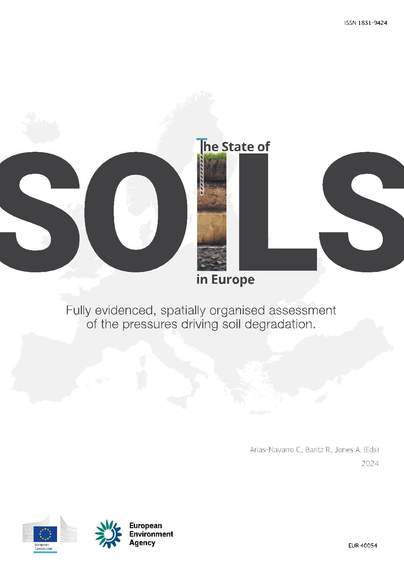
The state of soils in Europe

This report delves into the intricate interplay between drivers, pressures and impacts on soil in the 32 Member States of the European Environment Agency (EEA), along with six cooperating countries from the West Balkans, Ukraine and UK, shedding light on the multifaceted challenges facing soil conservation efforts. Our analysis shows the complex interactions among various factors, both anthropogenic and natural, shaping soil degradation processes and their subsequent consequences. We highlight key findings, including the significant impacts of soil degradation on agriculture, ecosystem resilience, water quality, biodiversity, and human health, underscoring the urgent need for comprehensive soil management strategies. Moreover, our examination of citizen science initiatives underlines the importance of engaging the public in soil monitoring and conservation efforts. This work emphasises the policy relevance of promoting sustainable soil governance frameworks, supported by research, innovation, and robust soil monitoring schemes, to safeguard soil health and ensure the long-term resilience of ecosystems.

JRC Publications Repository

Two serious articles about soil degradation... 👆

Soils are the base of our living. And we are treating them worse than dirt.

Don't believe anybody who wants to sell you some fancy high-tech soil-less cultivation system. Expensive. Won't scale. Needs a lot of energy input. Not resilient. Does not solve our problems.

#Soil #SoilScience #LandDegradation #Desertification #SoilDegradation #Agriculture #RegenerativeAgriculture
#Agroecology

@gerrymcgovern

UN food chief: Poorest areas have zero harvests left

World Food Programme director Martin Frick warns land degradation will cause crop failures worldwide.