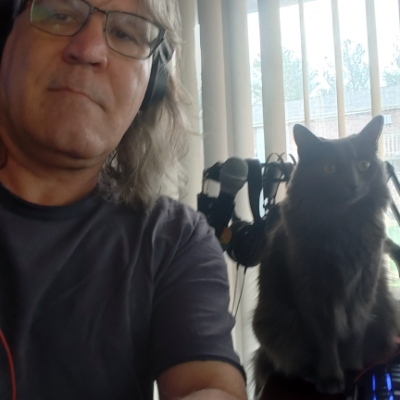
 FurballsNHairballs
Kuwait on 20M SSB coming in well...received s5 signal report from Emad
#hfradio
#hamradio
#amateurradio
#hfradio
#hamradio
#amateurradio
The Power of the Whisper: How WSPR and WSJT-X are Redefining Long-Distance Radio
1,250 words, 7 minutes read time.
Amateur radio operators and technology enthusiasts are currently utilizing the Weak Signal Propagation Reporter, commonly known as WSPR, and the WSJT-X software suite to achieve global communication using minimal power. Developed by Nobel laureate Joe Taylor, K1JT, this digital protocol allows stations to send and receive signals that are often completely buried in background noise, making it possible to map atmospheric conditions and radio propagation in real-time. This technology serves as a critical entry point for men looking to understand the mechanics of the ionosphere and the efficiency of modern digital signal processing. By leveraging advanced mathematical algorithms, WSPR proves that high-power amplifiers and massive antenna towers are no longer the only way to reach across the ocean, offering a technical challenge that rewards precision and patience over brute force.
The core of this system lies in the software known as WSJT-X. This program implements several digital protocols designed specifically for making reliable communication under extreme conditions where traditional voice or Morse code signals would fail. While WSPR is not a conversational mode, it acts as a global beacon system. A station transmits a brief packet containing its callsign, location grid square, and power level. Thousands of other stations around the world, running the same software, listen for these signals and automatically report any successful decodes to a central internet database called WSPRnet. This creates a living, breathing map of how radio waves are traveling across the planet at any given second, providing invaluable data for anyone interested in the science of communication.
Understanding the physics behind this process is what separates a casual observer from a true radio technician. The Earth’s ionosphere, a layer of the atmosphere ionized by solar radiation, acts as a mirror for certain radio frequencies. Depending on the time of day, solar flare activity, and the season, these signals can skip off the sky and land thousands of miles away. In the past, confirming these paths required luck and high-power transmissions. Joe Taylor once noted that the goal of these modes is to utilize the information-theoretic limits of the channel. This means squeezing every bit of data through the smallest amount of bandwidth possible, allowing a station running only one watt of power to be heard in Antarctica from a backyard in Michigan.
For the man standing on the threshold of earning his amateur radio license, WSPR is the ultimate proof of concept. It removes the intimidation factor of “talking” to strangers and replaces it with a pure engineering objective: How far can my signal go with the least amount of effort? Setting up a WSPR station requires a computer, a transceiver, and a simple wire antenna. The software handles the heavy lifting of Forward Error Correction and narrow-band filtering. This process teaches the fundamentals of station grounding, signal-to-noise ratios, and frequency stability—skills that are mandatory for passing the licensing exam and, more importantly, for operating a professional-grade station.
The hardware requirements are surprisingly modest, which appeals to the practical, DIY-oriented mind. Many enthusiasts use a Raspberry Pi or an older laptop dedicated to the task. The interface between the radio and the computer is the critical link, ensuring that the audio generated by the software is cleanly injected into the radio’s transmitter. If the audio levels are too high, the signal becomes distorted, “splattering” across the band and becoming unreadable. This level of technical discipline is exactly what is required in high-stakes fields like aviation or telecommunications. Mastering the “clean” signal is a badge of honor in the ham radio community, signifying a man who knows his equipment inside and out.
As we look at the data generated by WSPR, we see more than just dots on a map; we see the pulse of the sun. Because radio propagation is tied directly to solar activity, WSPR users are often the first to notice a solar storm or a sudden ionospheric disturbance. When the sun emits a massive burst of energy, the higher frequency bands might “open up,” allowing for incredible distances to be covered on low power. Conversely, a solar blackout can shut down communication entirely. Being able to read these signs and adjust one’s strategy accordingly is a core component of the hobby. It turns a simple radio into a scientific instrument used for environmental monitoring.
The community surrounding WSJT-X is one of rigorous peer review and constant improvement. The software is open-source, meaning the code is available for anyone to inspect and refine. This transparency has led to a rapid evolution of the protocols. While WSPR is for propagation reporting, other modes within the suite like FT8 or FST4 are used for rapid-fire contacts. However, WSPR remains the gold standard for testing antennas. If a man builds a new wire antenna in his yard, he doesn’t have to wait for someone to answer his call to know if it works. He can run WSPR for an hour, check the online map, and see exactly where his signal landed. It provides immediate, objective feedback that is essential for any technical project.
The future of this technology points toward even more robust communication in the face of increasing electronic noise. As our cities become more crowded with Wi-Fi, power lines, and electronics, the “noise floor” of the radio spectrum is rising. Traditional modes are struggling to compete. Digital modes like those found in WSJT-X are the solution, using digital signal processing to “dig” signals out of the static. This represents the next frontier of amateur radio—the transition from analog heritage to digital mastery. For those looking to get involved, the barrier to entry has never been lower, and the potential for discovery has never been higher.
In the broader context of emergency preparedness and global infrastructure, the lessons learned from WSPR are invaluable. In a scenario where satellites or internet backbones fail, the ability to bounce low-power signals off the atmosphere remains one of the only viable long-distance communication methods. A man who understands how to deploy a WSPR-capable station is a man who can provide data and connectivity when everything else goes dark. This sense of utility and self-reliance is a driving force for many who pursue their license. It is not just about a hobby; it is about mastering a fundamental force of nature to ensure that the lines of communication stay open, no matter the circumstances.
Call to Action
If this story caught your attention, don’t just scroll past. Join the community—men sharing skills, stories, and experiences. Subscribe for more posts like this, drop a comment about your projects or lessons learned, or reach out and tell me what you’re building or experimenting with. Let’s grow together.
D. Bryan King
Sources
Disclaimer:
The views and opinions expressed in this post are solely those of the author. The information provided is based on personal research, experience, and understanding of the subject matter at the time of writing. Readers should consult relevant experts or authorities for specific guidance related to their unique situations.
#amateurRadioCommunity #amateurRadioForBeginners #amateurRadioLicense #antennaTesting #AtmosphericScience #AtomicClock #Balun #bandwidth #CATControl #dataModes #Decibel #digitalModes #digitalSignalProcessing #dipoleAntenna #DIYRadio #DXing #ElectronicEngineering #Elmers #EmergencyCommunication #ExtraClass #forwardErrorCorrection #frequencyHopping #FrequencyStability #FT8 #GeneralClass #GlobalRadioMap #GPSTime #GridDownRadio #GridSquares #Grounding #hamRadio #hamRadioExamPrep #hamRadioGear #HamRadioMentoring #hamRadioProjects #hamRadioSkills #hamRadioSoftware #hfAntenna #HFRadio #HighFrequency #impedanceMatching #ionosphere #JoeTaylorK1JT #LongDistanceRadio #LowPowerRadio #MagneticLoopAntenna #MaidenheadLocator #NarrowbandCommunication #NetworkTimeProtocol #NoiseFloor #OpenSourceRadio #PCToRadioInterface #QRP #RadioAstronomy #RadioBenchmarking #radioCommunication #radioFrequency #RadioInterfacing #RadioNetworking #radioPropagation #RadioScience #radioSignals #radioSpectrum #radioTechnician #radioTroubleshooting #RadioWavePhysics #RaspberryPiRadio #RealTimeTracking #RFInterference #RigControl #SDR #shortwaveRadio #SignalDecoding #SignalReporting #SignalToNoiseRatio #softwareDefinedRadio #solarActivity #solarCycle #SolarFlareImpacts #SoundcardPacket #SpaceWeather #StandingWaveRatio #SurvivalCommunication #SWR #TechHobbiesForMen #TechnicalSelfReliance #technicianClass #telecommunications #timeSync #TransceiverSetup #Unun #verticalAntenna #VOXControl #WeakSignalPropagationReporter #wireAntenna #wirelessTechnology #wsjtX #wsjtXTutorial #WSPR #WSPRTutorial #WSPRnet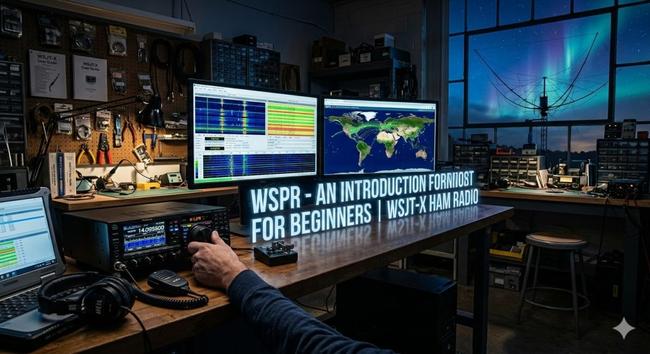
FT8: The Digital Revolution of Modern Amateur Radio
2,237 words, 12 minutes read time.
FT8 is a digital communication protocol released in 2017 by Joe Taylor, K1JT, and Steve Franke, K9AN, designed to allow radio amateurs to exchange contact information under extreme weak-signal conditions. Operating primarily on High Frequency (HF) bands, FT8 uses a precise 15-second sequence of structured data bursts to transmit call signs, signal reports, and grid squares even when the human ear can hear nothing but static. This mode has fundamentally shifted the landscape of ham radio by enabling reliable global communication during the low points of the solar cycle, ensuring that operators can maintain “workable” signals despite poor ionospheric propagation. Its rapid adoption stems from its efficiency and the fact that it allows modest stations with simple wire antennas and low power to compete with massive “big gun” contest stations.
The technical backbone of FT8 is a specialized form of digital modulation known as 8-slot Frequency Shift Keying (8-FSK). This means the signal shifts between eight distinct tones, each representing a specific piece of data. Because the bandwidth is incredibly narrow—only 50 Hz—multiple conversations can happen simultaneously within a standard 3 kHz single-sideband radio channel without interfering with one another. To make this work, the protocol requires absolute synchronization. Every participating computer must have its internal clock set to within one second of Coordinated Universal Time (UTC). This allows the software to know exactly when to start listening for a message and when to begin transmitting its own response. Without this temporal precision, the sequence breaks down and the data becomes unreadable noise.
The “how” of FT8 is a masterclass in forward error correction and data compression. A standard FT8 message is only 75 bits long, yet it contains everything necessary to confirm a legal and valid contact. Joe Taylor, a Nobel Prize-winning astrophysicist, applied the same principles used to detect faint signals from deep space to the world of amateur radio. By using sophisticated algorithms, the software can reconstruct a message even if a significant portion of the signal is lost to fading or atmospheric interference. This capability allows FT8 to function at signal-to-noise ratios as low as -21 dB. To put that in perspective, an FT8 signal can be decoded when it is significantly weaker than the background noise of the universe itself.
The impact of this mode on the hobby cannot be overstated. Before FT8, many men found themselves frustrated by “dead bands” where hours of calling “CQ” yielded no results. FT8 turned the hobby into a 24/7 pursuit. According to the ARRL (American Radio Relay League), FT8 and its successor modes now account for a massive percentage of all amateur radio activity globally. It has bridged the gap between traditional radio technology and modern computing, appealing to men who enjoy the technical challenge of optimizing a digital interface while still respecting the core physics of radio wave propagation. It is the tool of the modern digital woodsman, carving out a path through the noise of a crowded spectrum.
The Mechanics of the 15-Second Cycle
Understanding the rhythm of FT8 is essential for any man looking to master the digital airwaves. The protocol operates on a rigid 15-second “time slot” system. In the first 12.64 seconds of a slot, the message is transmitted; the remaining time is used for the software to process the data and for the operator to prepare the next response. This “even/odd” sequence ensures that two stations aren’t talking over each other. One station transmits on the even-numbered minutes and 15-second intervals, while the other listens, then they swap. This disciplined structure removes the guesswork and chaos often found in voice or Morse code pile-ups, creating an orderly flow of information that maximizes the use of available airtime.
To get on the air with FT8, an operator needs more than just a radio and an antenna; he needs a bridge between the analog and digital worlds. This is usually achieved through a dedicated USB interface or a built-in sound card in modern transceivers. The software—most commonly WSJT-X—takes the digital data from the computer, converts it into audio tones, and feeds those tones into the radio’s transmitter. On the receiving end, the process is reversed. The radio “hears” a series of chirps and warbles, which the sound card captures and the software decodes back into text on the screen. This synergy of hardware and software is what makes FT8 a true “hybrid” mode of communication.
The software interface provides a “waterfall” display, a visual representation of the radio spectrum where signals appear as vertical blue or yellow streaks. This allows an operator to see exactly where the activity is and find an open “slot” to transmit. It is a highly visual and tactical way to operate. Instead of spinning a dial and listening for a faint voice, you are scanning a digital landscape, looking for the telltale signatures of other stations. For many men, this adds a layer of strategy to the hobby that is deeply engaging, akin to a high-stakes game of electronic chess where the board is the entire planet.
Why Signal-to-Noise Ratio Matters
In the world of radio, the Signal-to-Noise Ratio (SNR) is the ultimate metric of success. It is the difference between the strength of the desired signal and the level of background atmospheric noise. FT8 excels because it is “wideband” in its ability to hear, but “narrowband” in its transmission. Because the tones are so precise and the error correction so robust, FT8 can pull a signal out of a “noise floor” that would render a voice transmission completely unintelligible. This is the primary reason why FT8 is the go-to mode for “DXing”—the art of contacting long-distance stations. It levels the playing field, allowing a man with a 100-watt radio and a wire in his backyard to talk to someone in Antarctica or Japan.
The mathematical genius behind FT8 involves a process called “Costas arrays” and “Low-Density Parity-Check” (LDPC) codes. These are not just buzzwords; they are the tools that allow the software to identify the start of a transmission and fix any bits that were flipped or lost during the journey through the ionosphere. As Joe Taylor noted in his technical documentation for the WSJT-X suite, the goal was to create a mode that was “optimized for the specific characteristics of HF propagation.” By focusing on short, structured bursts rather than long-form conversation, FT8 prioritizes the successful completion of a contact over everything else.
This efficiency does come with a trade-off. FT8 is not a “rag-chewing” mode. You won’t be discussing the weather or your favorite sports team. The messages are strictly limited to the essentials: call sign, signal report (in dB), and location (maidenhead grid square). However, for many men, the thrill is in the “catch.” The satisfaction comes from seeing a distant, rare station pop up on the screen and successfully completing that 60-second digital handshake. It is a hobby centered on the achievement of technical milestones and the collection of digital “QSL” cards that prove you reached the far corners of the earth.
Integration with Modern Computing
The rise of FT8 has coincided with the ubiquity of high-speed internet and powerful home computers. This integration has led to the creation of the “PSK Reporter” network, a massive, real-time map of global radio propagation. When your computer decodes an FT8 signal, it can automatically upload that data to a central server. This allows any operator in the world to see exactly where their signal is being heard in real-time. It is a revolutionary tool for understanding the ionosphere. A man can send out a few “CQ” calls and then check a website to see that he is being heard in Spain, Australia, and Brazil, all within seconds.
This real-time feedback loop has changed the way men approach radio. It removes the mystery and replaces it with data. If you aren’t being heard, you can immediately troubleshoot your antenna or wait for the bands to open up. This data-driven approach appeals to the problem-solving nature of the masculine mind. It turns amateur radio into a laboratory where the results are visible and measurable. You aren’t just shouting into the void; you are probing the atmosphere and receiving instant confirmation of your reach.
Furthermore, FT8 has fostered a global community of “citizen scientists.” By contributing data to these networks, ham operators are helping researchers understand solar cycles and their impact on global communications. As noted in various IEEE publications, the sheer volume of data generated by FT8 operators provides a unique look at the Earth’s upper atmosphere that was previously impossible to obtain on such a scale. When you engage in FT8, you aren’t just playing with a radio; you are part of a global sensor network that monitors the very fringes of our planet’s environment.
The Role of Precision Timing
As mentioned, timing is the lifeblood of FT8. Because the protocol relies on such tight windows of transmission, even a two-second drift in your computer’s clock can make you invisible to the rest of the world. This has led to the widespread use of time-synchronization software like Dimension 4 or Meinberg NTP. For the radio enthusiast, this adds another layer of technical “shack” maintenance. Ensuring that your station is perfectly synced to the atomic clocks in Colorado or via GPS is a point of pride. It represents the discipline required to participate in high-level digital communications.
This requirement for precision also highlights the evolution of the amateur radio station. The modern “shack” is often a clean, streamlined desk featuring a high-resolution monitor and a sleek transceiver. Gone are the days of massive, heat-spewing vacuum tube amplifiers—though those still have their place. The FT8 operator is a digital navigator, managing signal levels, gain settings, and software configurations to ensure the cleanest possible signal. Over-driving the audio, for instance, creates “splatter” that ruins the frequency for others. Mastery of FT8 requires a gentleman’s agreement to maintain a clean signal and respect the shared bandwidth of the community.
The discipline of the 15-second cycle also introduces a meditative quality to the hobby. There is a cadence to it—transmit, wait, decode, respond. It requires focus and patience. You are watching the waterfall, waiting for that specific signal to emerge from the static. When the software finally highlights a successful decode in bright red or green, there is a genuine sense of accomplishment. It is a modern manifestation of the same thrill early radio pioneers felt when they first heard a Morse code signal crackle through their headsets a century ago.
FT8 and the Future of Amateur Radio
While some traditionalists argue that FT8 has taken the “human element” out of radio, the reality is that it has saved the hobby for thousands of men. In an era of high urban noise and restricted antenna space, FT8 allows a man to remain active and competitive. You don’t need a 100-foot tower to be a successful FT8 operator; a simple wire hidden in the attic can often be enough to work the world. It has democratized the airwaves, making the thrill of long-distance communication accessible to anyone with a basic radio and a laptop.
Looking forward, FT8 is just the beginning. The principles of weak-signal digital communication are being applied to even more robust modes like FT4 (a faster version for contesting) and JS8Call (which allows for actual keyboard-to-keyboard messaging). The technology is constantly evolving, driven by the same spirit of innovation that has defined amateur radio since its inception. As we move deeper into the 21st century, the marriage of radio physics and digital signal processing will only grow stronger, ensuring that the airwaves remain a vibrant frontier for exploration and discovery.
In conclusion, FT8 represents the pinnacle of modern amateur radio engineering. It is a mode built on the foundations of advanced mathematics, precise timing, and a deep understanding of the natural world. For the man who is looking to earn his license, FT8 offers a clear path toward global connectivity and technical mastery. It is a testament to the fact that even when the sun is quiet and the bands seem dead, there is always a way to reach out and touch the other side of the planet. The digital revolution is here, and it is chirping across the HF bands in 15-second increments, waiting for the next generation of operators to join the conversation.
Call to Action
If this story caught your attention, don’t just scroll past. Join the community—men sharing skills, stories, and experiences. Subscribe for more posts like this, drop a comment about your projects or lessons learned, or reach out and tell me what you’re building or experimenting with. Let’s grow together.
D. Bryan King
Sources
Disclaimer:
The views and opinions expressed in this post are solely those of the author. The information provided is based on personal research, experience, and understanding of the subject matter at the time of writing. Readers should consult relevant experts or authorities for specific guidance related to their unique situations.
#15SecondCycle #20Meters #40Meters #8FSK #AmateurRadio #amateurRadioLicense #antennaTuning #AtmosphericScience #AudioTones #CATControl #CitizenScience #ComputerRadioInterface #CoordinatedUniversalTime #CostasArrays #DataCompression #dB #Decibel #DigitalHandshake #digitalModes #digitalSignalProcessing #dipoleAntenna #DSP #DXing #ElectronicCommunication #forwardErrorCorrection #FrequencyShiftKeying #FrequencyStability #FT4 #FT8 #GeneralClass #GlobalConnectivity #GPSSync #hamRadio #hamRadioSoftware #hamRadioTech #HFBands #HFRadio #HighFrequency #IcomIC7300 #IonosphericPropagation #JoeTaylor #JS8Call #K1JT #LDPCCodes #LongDistanceRadio #LowPowerRadio #MaidenheadGridSquare #MasculineHobbies #ModernHamRadio #NarrowbandCommunication #NetworkTimeProtocol #NoiseFloor #NTP #OpenSourceRadio #PhysicsOfRadio #psKReporter #QRP #QSLCard #RadioAutomation #radioContesting #RadioEngineering #radioFrequency #RadioModems #RadioNavigation #RadioNetworking #radioPower #radioProtocol #radioShack #RadioSilence #radioWavePropagation #rf #RigBlaster #SignalDecoding #signalToNoiseRatio #Signalink #singleSideband #SNR #solarCycle #solarFlux #soundCardInterface #SpectrumManagement #SSB #TechHobby #technicianClass #TimeProtocols #transceiver #UTCSynchronization #waterfallDisplay #weakSignal #wirelessTechnology #wsjtX #YaesuFT991A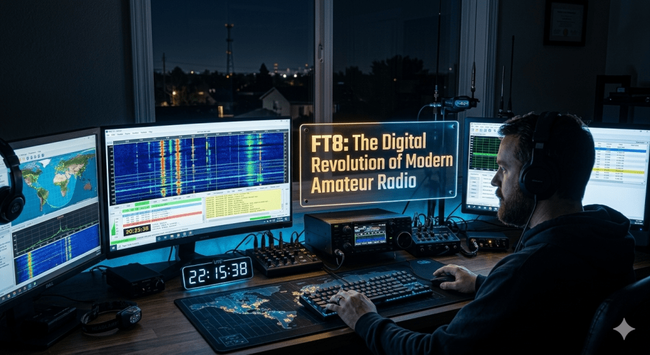

The Gentleman’s Guide to Ham Radio: Unwritten Rules for Modern Operators
1,301 words, 7 minutes read time.
Amateur radio, or ham radio, is a unique hobby that combines technical skill, communication expertise, and community interaction. Success on the airwaves requires more than just a license—it demands understanding both regulations and the unwritten conventions that keep the hobby enjoyable and efficient for everyone. Operating responsibly ensures clear transmissions, prevents interference, and helps operators avoid being labeled a “lid,” a term for someone who makes avoidable mistakes on the air. This article explores the core practices that define effective ham radio operation.
Understanding Ham Radio Regulations
Every amateur radio operator is bound by regulations set forth by licensing authorities, and compliance is the first step in responsible operation. In the United States, for example, the Federal Communications Commission (FCC) enforces rules that prohibit broadcasting music, transmitting encrypted messages, or conducting commercial activities over amateur frequencies. Operators must also perform station identification at the start of a transmission, every ten minutes during prolonged contacts, and at the end of a conversation. These regulations are not merely formalities; they protect the integrity of the amateur radio spectrum and ensure that operators can communicate openly without interference from unauthorized sources.
Knowing the law is only the foundation. Equally important is understanding how to transmit responsibly. Operators must choose the correct calling frequency for their band, whether on VHF, UHF, or HF. For instance, in VHF operation, 146.52 MHz serves as the standard calling frequency in the Americas. HF operators must also be aware of band segments, using the upper portion for voice modes and the lower portion for data. Ignoring these guidelines and transmitting randomly can disrupt ongoing contacts and frustrate other operators. Listening before transmitting is critical; it prevents unintentional interference and helps operators gauge whether a frequency is active or clear.
Proper Repeater Etiquette and Communication Practices
Once you understand the rules, the next step is learning effective communication techniques, especially when using repeaters. Repeaters are shared resources, and using them incorrectly can annoy fellow operators or even create safety hazards during emergency communications. One of the most common mistakes for new operators is “chunking” the repeater—pressing the push-to-talk button without speaking. This generates unnecessary noise on the frequency and signals inexperience. If such an accident occurs, it should be acknowledged promptly to avoid being labeled a lid.
Operators should also avoid using the term “broadcast” to describe amateur transmissions. Amateur radio is inherently a two-way communication system. It is designed for interaction and connection, not one-way transmission of information. Similarly, operators should become familiar with repeater personalities. Some repeaters are formal and structured, with strict conversation protocols, while others are informal or casual. Observing the repeater’s tone and conventions before transmitting allows new operators to integrate seamlessly, reducing the risk of conflicts or misunderstandings. Listening, patience, and proper identification are key components of this stage of operation.
Calling Frequencies, Codes, and Phonetics
Another critical aspect of ham radio best practices is understanding how to make effective contact on a frequency. Calling frequencies are designated portions of a band where operators can announce their presence, such as calling “CQ” to signal availability for a conversation. On VHF repeaters, it is unnecessary to use traditional CQ calls. Instead, a simple identification or request for contact is sufficient. On HF, the situation is different. Operators may use CQ calls to reach others across longer distances, but even then, care must be taken to ensure the frequency is clear. Listening for a few moments, announcing presence, and waiting for responses prevents interference and shows respect for fellow operators.
Operators should also understand the proper use of codes. Common codes, such as QSL for confirmation of receipt or QTH for location, are derived from Morse code practices and are widely accepted. Other codes like QRZ (who is calling) and QSY (change frequency) serve specific functions. In addition, the phonetic alphabet is essential for clear identification, particularly on HF or during contests, where signal clarity is critical. On VHF repeaters, however, phonetics may be unnecessary unless the call sign is difficult to discern. Using codes and phonetics appropriately ensures that communications are efficient and understandable, maintaining professionalism on the air.
Advanced Best Practices for HF and Data Modes
HF operations introduce additional technical considerations, such as antenna tuning and signal management. Operators should never tune an antenna over an active conversation, as the tuning noise can disrupt ongoing contacts. Instead, move a few kilohertz away from an active frequency before initiating tuning procedures. Similarly, when engaging in data modes using software like FL Digi, operators should be aware of RSID tones and mode identification to prevent confusion for others receiving the signal.
Calling CQ on HF requires attentiveness and timing. Operators should first confirm that a frequency is free, announce their presence, and then issue a CQ call in a measured manner. Ragchewing, or extended conversational contact, requires awareness of the other operator’s signal strength and readability. Signal reports, often expressed using the RST system—Readability, Signal Strength, and Tone—allow operators to determine whether a conversation is feasible. Providing or interpreting an accurate RST ensures that communication remains clear and efficient, and prevents frustration caused by attempting contacts under suboptimal conditions.
Effective Interaction During Nets and Group Communications
Net operations, where one operator serves as a controller for a structured group conversation, demand disciplined communication. Operators should not transmit until called upon and must follow the net control protocol. Interrupting ongoing conversations is acceptable only under certain circumstances, such as emergencies or brief interjections. Understanding how to enter and participate in group discussions without dominating the channel is an advanced skill that reinforces professionalism.
Equally important is leaving adequate pauses between transmissions. Allowing time for other operators to respond or interject ensures that conversations remain orderly and inclusive. Misusing the seven-three shorthand, or incorrectly referencing handheld transceivers, may mark an operator as inexperienced. Observing these subtle conventions distinguishes proficient operators from novices and reinforces the culture of respect that underpins amateur radio.
Conclusion: Mastering Ham Radio Conduct
Operating a ham radio effectively requires a balance of technical knowledge, regulatory compliance, and interpersonal skill. By understanding regulations, respecting calling frequencies and repeaters, and mastering proper communication techniques, operators can avoid common mistakes and participate fully in the amateur radio community. Listening attentively, using codes and phonetics appropriately, and maintaining awareness of other operators on the frequency ensures clarity, efficiency, and respect.
Ham radio is as much about community and shared experience as it is about technology. Following best practices allows operators to make meaningful contacts, expand their skills, and enjoy the hobby without causing interference or frustration. Mastery of these principles ensures that every transmission contributes positively to the amateur radio environment, fostering both technical competence and professional conduct.
Call to Action
If this story caught your attention, don’t just scroll past. Join the community—men sharing skills, stories, and experiences. Subscribe for more posts like this, drop a comment about your projects or lessons learned, or reach out and tell me what you’re building or experimenting with. Let’s grow together.
D. Bryan King
Sources
Disclaimer:
The views and opinions expressed in this post are solely those of the author. The information provided is based on personal research, experience, and understanding of the subject matter at the time of writing. Readers should consult relevant experts or authorities for specific guidance related to their unique situations.
#amateurOperator #amateurRadio #amateurRadioAdvice #amateurRadioCommunity #amateurRadioEquipment #amateurRadioHobby #amateurRadioInstruction #amateurRadioKnowledge #amateurRadioNetwork #amateurRadioRules #amateurRadioSafety #amateurRadioSignals #amateurRadioStation #amateurRadioTraining #antennaTuning #callingFrequencies #communicationProtocol #contestOperation #cqCalls #cw #dataModes #digitalModes #effectiveRadioCommunication #emergencyCommunication #fccRegulations #flDigi #hamRadio #hamRadioBeginner #hamRadioBestPractices #hamRadioCommunity #hamRadioEtiquette #hamRadioGuide #hamRadioLicense #hamRadioOperations #hamRadioTips #handheldTransceiver #hfContacts #hfRadio #ht #morseCode #netControl #phoneticAlphabet #properCommunication #psk31 #pushToTalk #qCodes #qrz #qsl #qsy #qth #radioBestPractices #radioCallSigns #radioCheck #radioClarity #radioCodes #radioCommunicationSkills #radioContact #radioConversation #radioConversationEtiquette #radioEngagement #radioEtiquette #radioFrequency #radioGuidelines #radioHobbyist #radioInterference #radioLearning #radioLicense #radioListener #radioListening #radioMonitoring #radioOperation #radioOperationGuide #radioOperationTips #radioOperatorGuide #radioOperatorTips #radioSetup #radioSignal #radioTerminology #radioTransmission #ragchew #readability #repeaterCommunication #repeaterEtiquette #repeaters #rsidTone #rstReport #rtty #sevenThree #signalReport #signalStrength #toneReport #uhfCommunication #uhfContacts #vhfCommunication #vhfContacts
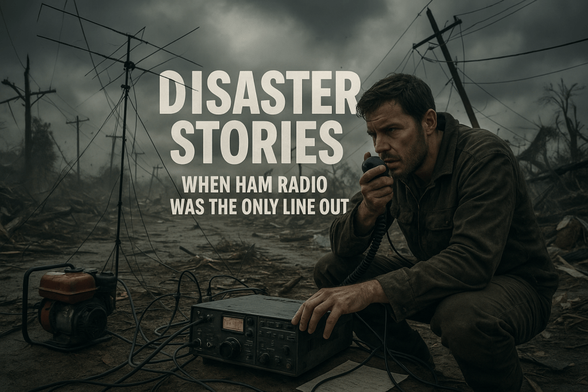
Disaster Stories: When Ham Radio Was the Only Line Out
979 words, 5 minutes read time.
In the face of disaster, when power grids fail, cell towers collapse, and the world falls silent, a group of dedicated individuals remains steadfast—amateur radio operators, or “hams.” These men and women, often working quietly behind the scenes, have been the lifeline for countless communities during emergencies. Their stories are not just about radios and frequencies; they’re about courage, community, and the unyielding spirit of service.
The Genesis of Amateur Radio in Emergency Communications
The roots of amateur radio’s involvement in emergency communications trace back to the early 20th century. In 1914, the American Radio Relay League (ARRL) was established, marking a significant step in organizing amateur radio operators. By the 1920s and 1930s, hams were actively engaging in disaster response, providing crucial communication links during floods and ice storms in New Mexico and Minnesota.
The need for organized emergency communication became even more apparent during World War II. In 1942, the Federal Communications Commission (FCC) formed the War Emergency Radio Service (WERS) to ensure that amateur radio could be quickly mobilized in times of national crisis. This laid the groundwork for future emergency services.
The Rise of ARES and RACES
In 1935, the ARRL introduced the Amateur Radio Emergency Service (ARES), aiming to provide organized communication support during emergencies. This initiative was further strengthened in 1952 with the establishment of the Radio Amateur Civil Emergency Service (RACES), a service authorized by the FCC to assist government agencies during civil emergencies.
These organizations have been instrumental in numerous disaster responses. For instance, during the 2003 North America blackout, amateur radio operators played a pivotal role in relaying information and coordinating efforts when traditional communication systems were overwhelmed.
Real-Life Heroes: Ham Radio in Action
The true measure of amateur radio’s impact is best understood through the stories of those who have experienced its benefits firsthand.
During Hurricane Katrina in 2005, over a thousand ARES volunteers provided essential communication services. Hancock County, Mississippi, had lost all contact with the outside world, except through ARES operators who served as 911 dispatchers and message relayers.
Hurricane Michael in 2018 left many areas without power and communication. Amateur radio operators were among the first to establish communication links, coordinating rescue and relief efforts when other systems were down.
During Hurricane Helene in 2024, in Asheville, North Carolina, ham radio operators played a significant role in keeping residents informed during this deadly tropical storm. They provided updates and coordinated emergency responses when electrical grids and telephone communications were disrupted.
The Mechanics of Ham Radio in Emergencies
Amateur radio’s effectiveness in emergencies lies in its unique capabilities. Unlike commercial communication systems that rely on infrastructure vulnerable to damage, ham radios can operate independently. Operators use battery-powered equipment, solar panels, and portable antennas to establish communication links, often without the need for external power sources.
One of the key tools in emergency communications is the use of repeaters. These devices amplify radio signals, extending the communication range, especially in mountainous or obstructed areas. Additionally, digital modes like Winlink allow for the transmission of emails and messages over long distances, even when traditional internet services are unavailable.
Training and Preparedness: The Backbone of Emergency Response
The readiness of amateur radio operators is a result of continuous training and preparation. Events like Field Day, held annually, simulate emergency conditions, allowing operators to practice setting up equipment and establishing communication links without relying on commercial power sources. These exercises ensure that when real disasters strike, operators are prepared to respond swiftly and effectively.
Organizations such as ARES and RACES provide structured training programs, ensuring that volunteers are equipped with the necessary skills and knowledge to handle various emergency scenarios. Their involvement is crucial in maintaining a state of preparedness within communities.
The Future of Ham Radio in Disaster Response
As technology advances, so does the role of amateur radio in emergency communications. The integration of digital modes, satellite communications, and software-defined radios enhances the capabilities of ham operators, allowing for more efficient and reliable communication during disasters.
Legislative support also plays a vital role in ensuring the continued effectiveness of amateur radio. Initiatives like the Amateur Radio Emergency Preparedness Act aim to prevent homeowner associations from banning amateur radio antennas, ensuring that operators can maintain their equipment and remain ready to assist during emergencies.
Conclusion: A Call to Action
The stories of amateur radio operators during disasters are a testament to the power of community, preparedness, and resilience. Their unwavering commitment ensures that when all else fails, communication remains possible.
For those interested in becoming part of this vital network, obtaining an amateur radio license is the first step. By doing so, you not only gain the skills to operate radio equipment but also become a crucial link in a chain that can make all the difference during emergencies.
To learn more about amateur radio and how you can get involved, consider subscribing to our newsletter at https://wordpress.com/reader/site/subscription/61236952 or joining the conversation by leaving a comment, or contact me using the contact form at https://bdking71.wordpress.com/contact/.
D. Bryan King
Sources
Disclaimer:
The views and opinions expressed in this post are solely those of the author. The information provided is based on personal research, experience, and understanding of the subject matter at the time of writing. Readers should consult relevant experts or authorities for specific guidance related to their unique situations.
Related Posts
Rate this:
#AmateurRadio #amateurRadioCallToAction #amateurRadioClubs #amateurRadioCommunicationMethods #amateurRadioDisasterHistory #amateurRadioEmergencyCases #amateurRadioEmergencyTips #amateurRadioHistory #amateurRadioLicense #amateurRadioLifeSaving #amateurRadioNetwork #amateurRadioNetworking #amateurRadioNews #amateurRadioOutreach #amateurRadioPreparation #amateurRadioPreparedness #amateurRadioRescue #amateurRadioRescueStories #amateurRadioSatelliteCommunication #amateurRadioService #amateurRadioTraining #amateurRadioVolunteerStories #antennaSetup #ARES #batteryPoweredRadio #communicationLifeline #communicationsDuringBlackout #communityRadioService #digitalRadioModes #disasterCommunication #disasterCommunicationExamples #disasterCommunicationTips #disasterRelief #DisasterResponse #disasterStorytelling #earthquakeCommunication #EmergencyCommunication #emergencyCommunicationStrategies #emergencyCommunicationSystems #emergencyCommunicationsNetwork #emergencyMessaging #emergencyOperator #emergencyOperatorTraining #EmergencyPreparedness #emergencyPreparednessTraining #emergencyRadio #emergencyRadioTraining #emergencyResponse #emergencyVolunteer #fieldDay #floodCommunication #hamRadio #hamRadioAntennaTips #hamRadioBenefits #hamRadioCommunity #hamRadioCommunitySupport #hamRadioDigitalModes #hamRadioEmergencyExercises #hamRadioEmergencyService #hamRadioEquipment #hamRadioFieldDayTips #hamRadioFieldOperations #hamRadioHero #hamRadioHeroStories #hamRadioHistoryTimeline #hamRadioInAction #hamRadioInspiration #hamRadioLicense #hamRadioNewsCoverage #hamRadioRealStories #HamRadioSafety #hamRadioStories #hamRadioSurvivalSkills #hamRadioTechnicalGuide #hamRadioTechnology #HamRadioTraining #hamRadioVolunteer #HFRadio #hurricaneCommunication #portableRadio #RACES #radioDisasterExamples #radioEmergencyPreparedness #radioEmergencySupport #radioForEmergencies #radioInCrisis #radioOperator #radioOperatorSkills #radioSkills #repeaters #solarPoweredRadio #SurvivalCommunication #UHFRadio #VHFRadio #volunteerRadioOperator #Winlink
 Bryan King