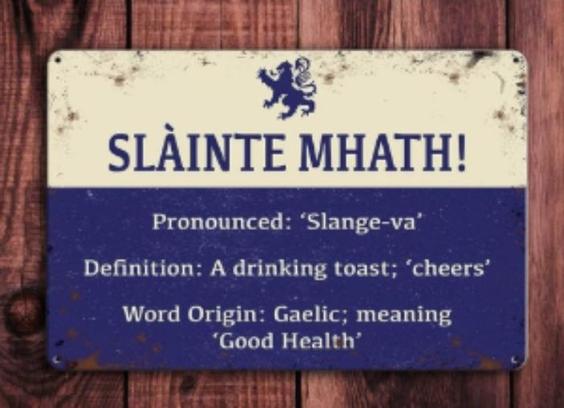
"Good Health" in all the Gaelic languages:
Sláinte Mhaith! 🇮🇪 Gaeilge/Gàidhlig na h-Eireann/Yernish
Slàinte Mhath!🏴 Gaeilge na hAlban/Gàidhlig/Albinish
Slaynt Vie! 🇮🇲 Gaeilge Mhanainn/Gàidhlig Eilean Mhanainn/Gaelg
"Good Health" in all the Gaelic languages:
Sláinte Mhaith! 🇮🇪 Gaeilge/Gàidhlig na h-Eireann/Yernish
Slàinte Mhath!🏴 Gaeilge na hAlban/Gàidhlig/Albinish
Slaynt Vie! 🇮🇲 Gaeilge Mhanainn/Gàidhlig Eilean Mhanainn/Gaelg
Hype for the Future 82A: The P-Celtic and Q-Celtic Split
Introduction Traditionally spoken in a larger portion of Europe and into the mainland, the modern Celtic languages have effectively been reduced in scope into a linguistic family primarily split into the Brythonic and Goidelic language families. P-Celtic and Q-Celtic Compared Usually, the Celtic languages are traditionally organized based on the sound changes from the potential /h/ phoneme to either the /p/ or /k/ phonemes. Though both are classified under the Celtic definition, the […]
Friendships shape everyday life, but three Ohio State students turned theirs into something new: the university’s first and only Welsh language club. Clwb Cymraeg, or “Welsh Club,” reflects their shared bond and passion for preserving and sharing the language. Rhys Davis, a second-year in integrated language arts/English education, Connor Davis, a second-year in psychology and […]
Attention, those who speak Irish, Scottish Gaelic, Manx, Welsh, Cornish and Breton. This is how we Brits spoke before the Germans (Anglo-Saxons) invaded! King Arthur spoke Welsh! 😮😃
#CelticLanguages 🏴
Ahem...*taps mic*
This here be my beige.party #Introduction
I'm a Gen X (1967) American who works in security for a living. I feel fortunate to have grown up through the 70s, 80s, and the 90s. I kinda look at that as the Yahtzee! of pop culture. What a time to be a nerd!
Music defines me. I don't have just a soundtrack to my life, I have a boxed set, including rare demos and unreleased live recordings. Wanna get to know me? Hang around for my music posts.
A song that's...me?
I am ADHD, and have Dysthymia to boot. I live an unmedicated life, and am kind of a mess as a result. I'm not anti-medication, it's just that I can't seem to stay on the wagon. If you follow me, and I don't immediately follow you back, don't take it personal. I'm trying to deal with over stimulation.
Politically...jeebus. To make it easy, I'm a Democratic Socialist. Honestly, I hate trying to define myself.
What I am (consider the following "AF"): Pro-choice, Pro trans rights, as well as a firm believer that women can do whatever the blue hell they want. I'm pro-sexwork, and pro pineapple on pizza (DO NOT COME AT ME ON THAT ONE).
I DO NOT. LIKE. NAZIS.
If you are a nazi, I do not like you. My great uncle put bushels of you in the ground in WW II. Follow Hitler's example and suck on the end of a loaded Luger.
I'm religious, and by that, I shall refer to a quote attributed to Gandhi: "I consider him religious who recognizes the suffering of others." I am a bit all over the place, and do not blindly follow any specific dogma. I have my thing. It's not everybody's thing, but that's okay. Everybody else has their thing. It may not necessarily be my thing, but that's okay. Whatever your thing is, may it bring you comfort and peace of mind. Just don't be a wanker.
I am very pro Fediverse, and pro FOSS. Technology can be very cool and wondrous, if we choose to make it that way. I'm a Linux user, and have shed all but two mainstream social media platforms. I am attempting to de-google my life. I am VERY anti-AI.
Be kind. Always.
Lord, but I did ramble a one. That's ADHD for ya, folks: LOADS of bonus content!
And now, hashtags...
#Introductions #Mastodon #adhd #MentalHealth #Dysthymia #Music #FreePalestine #FuckCapitalism #FOSS #Android #GrapheneOS #FuckAI #AnarchoCooperativism #Kropotkin #KurtVonnegut #WilliamGibson #EmmaGoldman #TTRPG #StarTrek #GraphicNovels #Comics #Languages #History #Ireland #IrishHeritage #CelticLanguages #DnD2e #GURPS #Skyrim #ElderScrolls #ElderScrollsOnline #Battletech #MechWarriorOnline #CozyGaming #WilliamGibson #Linux #LinuxMint #PopOS #Ubuntu #PCGaming #Tolkien #LOTR #Film #Runequest #Talislanta #HeroSystem #ChampionsRPG #Writing #France #French #Spirituality #Religion #Agnosticism #Books #PhysicalMedia #SciFi #Fantasy
For me, there was lots to take away from the reading that follows my own from Menna, which I am sure will be fascinating for #Gaelic speakers in a wider #CelticLanguages context, and anyone who loves poetry - just because of the joy of #multilingualism.
Whatever your language competence, I hope this underscores that multilingualism is your gift to explore and get #creative with.
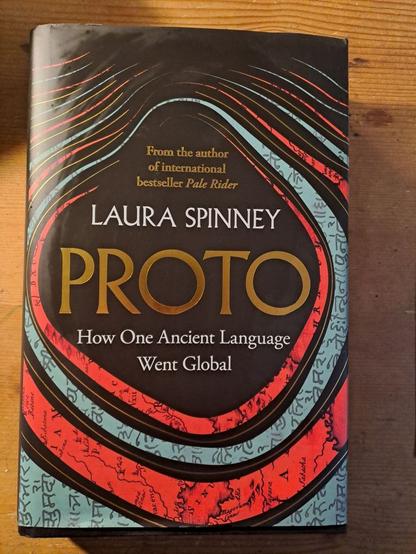
Proto, by Laura Spinney
I interrupted the sequence of novels I’ve been reading recently to absorb a non-fiction book, Proto by Laura Spinney (left). I find linguistics a fascinating subject and when I saw a review of this recently and couldn’t resist. I’m glad I bought it because it’s absolutely fascinating. It is the story – or at least a very plausible account of the story of the lost ancestor of the Indo-European languages, the methods that have been used to reconstruct “Proto”, and why it was the spark that generated so many other languages across Europe, Eurasia and India.
The topic is very complex and I won’t attempt to describe it all in depth here; each chapter could be a book in itself because each family of languages within the Indo-European group – including lost ones such as Tocharian – has its own fascinating story. There are chapters focussing on the origins of language itself, the possibilities surround Proto (a language that was never written and probably exists in many dialects), Anatolian, Tocharian, Celtic, Germanic and Italic, the Indo-Iranian group (based on Sanskrit), Baltic and Slavic, and Albanian, Armenian and Greek. The last of these is fascinating because it used a method of writing borrowed from a non-Indo-European source that became the origin of the European alphabet.
The story of which all these are subplots begins around the Black Sea shortly after end of the last Ice Age. In this area there lived mesolithic hunter-gatherers who had survived the ice who interacted with farmers moving up from the direction of modern day Syria. Their languages would have merged in some way to allow them to describe things that their neighbours had that they didn’t. Hunter-gatherers would not have words for, e.g., ploughing or barley while farmers would have fewer words for spears and other hunting equipment. Into this mix, the argument goes, came a third group, a fully nomadic culture called the Yamnaya people. These people and their successors subsequently underwent vast migrations from the steppes across the continent and were responsible for spreading the Proto-Indo-European languages. That’s a hypothesis, not a proven fact, but it is plausible and has a reasonable amount of evidence in its favour.
Recent progress in this field has been driven not only by linguists but also by archaeologists and geneticists, with each aspect of this triangulation vital. It was reading about archaeology in this book that prompted me to write a post about the Nebra Sky Disc. There are some fascinating snippets from palaeogenetics, too. Full DNA sequences are now known for about 10,000 individuals who lived in prehistoric times.
One extraordinary find involves two burials of individuals who both lived about 5,000 years ago. Their DNA profiles match so well that they were probably second cousins or first cousins once removed. The thing is that one of them was buried in the Don Valley, north-east of Rostov in modern-day Russian, while the other was found 3,000 km away in the Altai mountains. Assuming they were both buried where they died, the implications for the distance over which people could move in a lifetime are remarkable.
Another fascinating genetic snippet applies to Irish, a Celtic language. The Celtic languages derive from a proto-Celtic source that probably arose about 1000 BC. Around 2450 BC one of the cultures preceding the Celts arrived in Britain and Ireland, now called the Bell Beaker People because of their taste in pottery. The genetic record shows that the DNA of the Beaker folk replaced about 90% of the previous local gene pool, and all of the Y chromosomes; for some reason men of the earlier culture stopped fathering children. A similar change happened in Ireland, about 200 years later.One possible inference is that there was a violent conquest involving the erasure of the male population, but we don’t know for sure that it was sudden and catastrophic.
Whatever language the Beaker people brought with them was not Celtic (though it may have been Indo-European). The fascinating conundrum is that when Celtic languages arrived in Ireland whoever brought them left not a trace in the genetic record. This is unlike any of the similar changes in language use throughout European pre-history. Either the population responsible has not been identified or the language was spread through communication (e.g. for trade) rather than settlement. Irish may be a Celtic language, but there is little evidence of significant numbers of Celts settling here and bringing it with them.
Some time ago I wrote a post about the Celtic languages, which you might want to look at if you’re interested in this topic. A lot of that post I now realize to be very simplistic, but to add one other snippet I should mention that the name of Turkish football team Galatasaray translates to “Palace of the Celts” after the Celtic-speaking people who settled in Anatolia; these were the Galatians to whom Paul addressed his Epistle.
I thoroughly recommend this fascinating book. It made me want to find out more about so many things. It also gacve me additional motivation to pursue an idea I had a while ago to do a Masters in Linguistics wehn I retire from physics…
#archaeology #BeakerPeople #CelticLanguages #Genetics #LasuraSpinney #liguistics #Proto #ProtoIndoEuropeanLanguage #YamnayaCulture
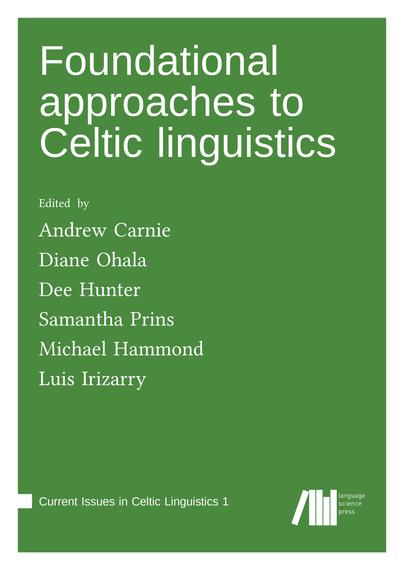
Archaeoethnologica: Approches to Celtic Linguistics - Book / Abordagens da Linguística Céltica - Livro
+INFO in: https://archaeoethnologica.blogspot.com/2025/07/abordagens-da-linguistica-celtica-livro.html
#Linguistics #celticstudies #celticlinguistics #philology #celticlanguages #languagechange #palaeolinguistics #books #openaccess
Archaeoethnologica: Approches to Celtic Linguistics - Book / Abordagens da Linguística Céltica - Livro
+INFO in: https://archaeoethnologica.blogspot.com/2025/07/abordagens-da-linguistica-celtica-livro.html
#Linguistics #celticstudies #celticlinguistics #philology #celticlanguages #languagechange #palaeolinguistics #books #openaccess
Archaeoethnologica: Approches to Celtic Linguistics - Book / Abordagens da Linguística Céltica - Livro
+INFO in: https://archaeoethnologica.blogspot.com/2025/07/abordagens-da-linguistica-celtica-livro.html
#Linguistics #celticstudies #celticlinguistics #philology #celticlanguages #languagechange #palaeolinguistics #books #openaccess