The Big Pipes: the thread about the water supply to old Leith

This thread was originally written and published in August 2019.

Yesterday’s library trip was surprisingly productive on the subject of the water supply of old Leith. What I already knew was limited to the facts that it was unreliable, that it was supplied from the loch at Lochend and that it went from there via pipes to a reservoir at the foot of Water Street (hence the name).

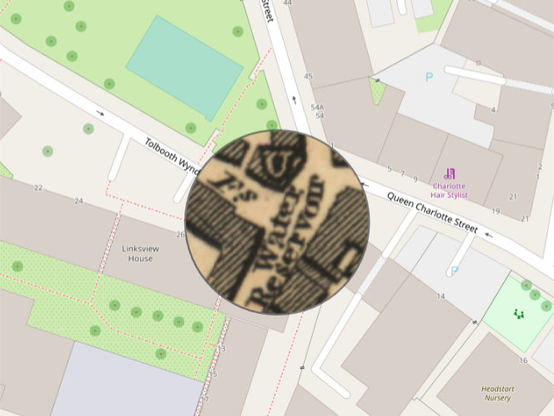
Kirkwood’s map of Edinburgh and Leith, 1817, spyglass over modern map. Reproduced with the permission of the National Library of Scotland

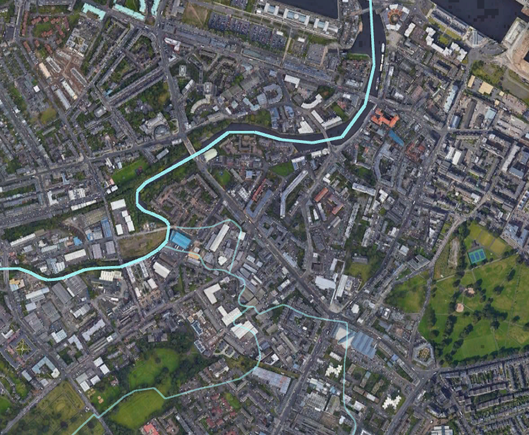
So what new things did I learn? Let’s start with some of the problems Leith faced when it came to getting drinking water. Traditionally the obvious source of water would have been the Water of Leith, but at this time it was tidal quite and so you had to take any water quite far upstream. But the principal problem was its water was also heavily used for milling by villages upstream and would have been badly polluted by the time it arrived in Leith. The other streams passing through the burgh, the Broughton Burn and the Greenside Burn, were fundamentally natural land drains and have been entirely unsuitable as a steady source of water.

Google Earth view with traces of the Water of Leith (thicker blue line) and the narrow lines of the Greenside (right) and Broughton (left) burns

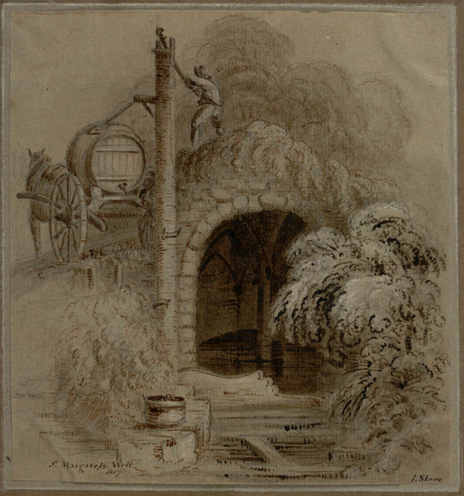
Sourcing water was a serious problem for Leith industries too; distilling, soap making and sugar refining all suffered from a lack of the stuff and migrated upstream on to Bonnington where there was a well. Big houses would have kept their own wells and there were wells at Yardheads too for the brewers, but the supply was meagre and upredictable. There was a good reason brewing never figured as a big Leith industry beyond meeting the residents’ own needs and disappeared altogether once Edinburgh had excess capacity to supply it. So where else could water have been sourced from? There is a description and a number of images of water being carted in from the well at Restalrig, the “holy” well of St. Triduana and/or St. Margaret. However supplying enough water in this manner would have been exceedingly difficult given the limitations of transport, so this might have been more of a niche trade than a serious supply of potable water.

Water being carted from St. Margaret’s Well at Restalrig, an 1817 sketch by James Skene. © Edinburgh City Libraries

In 1752, the Incorporation of Traffickers of Leith (the Leith Company of Merchants) heard that Edinburgh was petitioning parliament for the right to levy a tax on ale of 2d per pint brewed. This would cover Leith too as Edinburgh exercised the rights of taxation over it. Leith saw an opportunity here and lobbied Edinburgh to try and gain access to some of the collected revenues of this taxation to improve the water supply in their town. Surprisingly Edinburgh agreed, if Leith drew up a schedule of costs and the plans themselves. The only realistic source of the water was obvious, it was the only substantial body of standing fresh water in the whole parish of South Leith; the loch at Lochend. Conveniently this had been made available for sale by the Crown who had confiscated it after the Jacobite rising of 1745. The previous proprietor of the Barony of Restalrig, Arthur Elphinstone, 6th Lord Balmerino, had forfeited this estate and his head for his part in that rebellion.

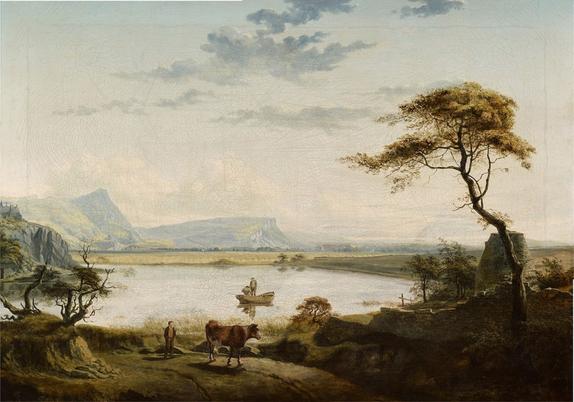
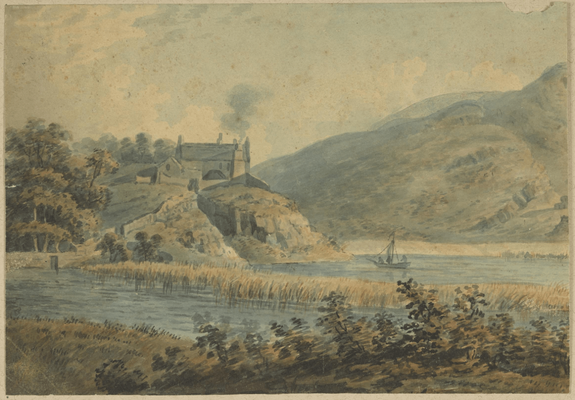
Lochend loch and House in the early 19th century. Note at this time the water level was significantly higher than it is now. This is a picture credited as Duddingston Loch, but is very definitely Lochend, with Whinny Hill of Arthur’s Seat in the background. By Hugh William Williams, CC-by-NC National Galleries Scotland.

The cost of the scheme was to be £600 and the plan was to lift the water out of the loch by a pump and siphon, and draw it from there down the gradient to Leith in wooden pipes to a cistern at the junction of Carpet Lane and Rotten Row1 (which would become Water Lane). Wooden pipes sound odd to modern ears, but were actually cheaper and lighter than the alternative; lead. Whole elm trunks were used as they were resistant to rot, and they were hollowed out and joined with leather seals, you can see some contemporary originals in the Museum of Edinburgh. It was reported in 1922 that wooden water pipes from this scheme were still in the possession of a “Leith Museum”.

  • (* = Rotten Row was nothing to do with being rotten, it’s an ancient name recorded in Leith as early as 1453 as Rantoneraw, later Ratoun Raw, from the old Scots roten, describing a soft piece of ground.) ↩︎
  • 18th century wooden water pipes recovered from Edinburgh, CC-BY-SA 2.0 Kim Traynor

    The cost was to be met half each by Leith and Edinburgh. A campaign for public subscription in Leith raised only £110, so the Trade Incorporations had to foot the remaining £190. The contractor was a local plumber, however had no experience of laying a public water supply. They also had no capital of their own and thus work proceeded piecemeal as the money came in and they could pay for labourers and pipes. A contemporary writer wrote critically of the whole initiative:

    The Loch was too small and unhygienic. The contractor he said was “a fool“, and laid the pipes so deep (15 feet) that cost was too high, progress was too slow, and the inevitable repairs were difficult.

    William Maitland, in “History of Edinburgh

    The pipes were laid either under, or alongside, Lochend Road which at this time ran through open fields. Water descended by gravity, but a pump house with a simple chain pump was constructed at the loch to lift the water out initially and start the siphon action. That pump house is still there. It’s very intriguing, a small, octagonal structure. If you peek inside you will see it goes down below the current ground level and there are signs of where the pump was within. If you look around at the pump house from the outside you may notice on the south wall there are signs of where a pipe has once entered the building and investigate the ground heading off north towards the park entrance you can trace a line of stone slabs in the grass, which undoubtedly covered the wooden water pipe.

    The line of cap stones running away from the pump house towards Lochend RoadThe south face of the pump house showing where an iron pipe has gone through the wallThe interior of the pump house, showing the depth below ground and some supports for the pump sylinder or pipes. That cast iron pipe comes through the wall in the top right of the photo.Lochend pump house, with the Doocot/ kiln beyond. © SelfLochend pump house details © self

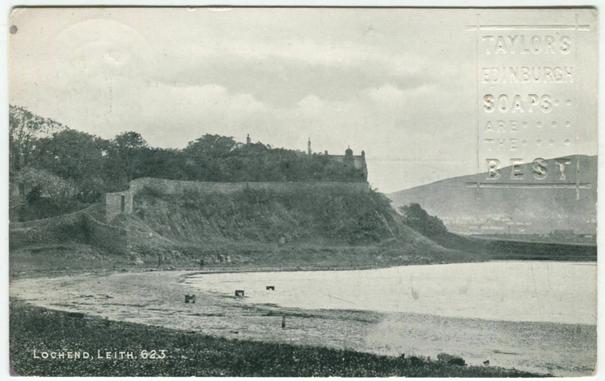
    It is worth noting that the surface of the loch back then was about 5-10 feet higher than it is now (depending on the season), and therefore its surface reached much further into the grounds of the park than it does today. This also meant that the pump house was inside the loch, not distant from it. The drop in level is a combined result of the abstraction of water, building drains into it and some of the underground springs feeding it were reputedly cut through by railway construction. Water reached the pump house from far into the water by way of an inlet pipe, the remains of which can be seen on the late 19th century postcard below.

    An old postcard of Lochend Loch, of interest are the row of supports sticking out of the water and mud, these would have carried the water inlet pipe to the pump house.

    The end result of this endeavour was that Leith now had it’s own piped water supply! But immediately, there were problems; the pipes were too narrow; the cistern was too small. There just wasn’t anything like enough water! So at the expense of Leith it was all dug up again within months and relaid with larger bore pipes. A larger cistern was constructed further south and this area appropriately became known locally as “The Big Pipes“. A bar of this name stood until cleared away with most of the rest of old central Leith in the mid 1960s.

    “The Big Pipes” bar, opposite the water cistern, where the Kirkgate met Tolbooth Wynd, [Queen] Charlotte Street and Water Street. © Edinburgh City Libraries.

    Six wellheads were provided within the town for public use, the locations of five being;

    • on the Kirkgate at Brickwork Close
    • in the yard of The Vaults
    • on the Coalhill at the bridge
    • on the Shore at the New Quay
    • and at Bernard’s Neuk on Bernard Street.

    The well at the Shore was to be used for watering ships, but the task of filling casks lead to long queues of locals (mainly women and girls) with stoups (narrow leather buckets suspended from a yoke) and so ships were forbidden to water between 5am and 8pm. Notice that North Leith (the part of the town to the north and west of the Water of Leith) is excluded from all this as it was a separate parish from South Leith at this time and to many intents and purposes administratively part of Edinburgh. In 1771 a Police Act for Edinburgh included South Leith parish. The concept of Police at this time covered powers of sanitation, lighting, cleansing and the prevention of infectious diseases, rather than law enforcement. The Act made provisions for the paving, watering, cleansing and lighting of areas of South Leith including St. Anthony’s, the Kirkgate and Yardheads. One of the provisions was a new water cistern reserved exclusively for shipping at the Ferryboat Steps on the Shore. It would cost £850 and ships could get water for 1 shilling per ton. Clearly a lot of water would need to be provided to cover the costs.

    But the basic problem persisted for Leith that Lochend was not a satisfactory reservoir and even the Big Pipes were insufficient. The inlet pipe was sunk deeper into the loch but silted up and had to regularly be cleared. As a result of this deeper and increased abstraction, the Loch would start to dry up in summer. Various schemes were mooted to resolve this, including constructing a dam across the Back Drum – the area of high ground to the west of the Loch on which Easter Road Stadium stands. This would have used a steam-driven pump to lift clean, silt-free water from the loch up the hill and from where it could run by gravity to the wells and cisterns in Leith. Instead and after much lobbying a two inch lead pipe was provided from Edinburgh’s own precious water supply to supplement that of Leith. Leith of course had to pay for this privilege and £1,000 was billed to the Leith Police Commissioners. Not long after this connection was completed a drought in 1793 resulted in Edinburgh cutting off the pipe. Chalk up another example in the long history of Edinburgh messing with Leith!

    The water situation in Leith remained dire. Money was really the problem, the Commissioners had the powers but not the funds as Edinburgh kept a tight and uncooperative hand on the purse strings. All that changed in 1799 when John’s Place, a fashionable new development of merchant class villas, was constructed in Leith along the western edge of the Links as the town slowly and tentatively began to expand from the confines of its medieval boundaries.

    John’s Place, Leith

    The proprietors of this development wanted to match the New Town and that meant having piped water. So they proposed to the Commissioners that they would lend them the money for water improvements at 5% interest, if they would also lay supplies to them at John’s Place. The Commissioners jumped at the chance as the residents would also pay annual dues to them for this supply. On hearing this, “every heritor on the line of the pipe from Lochend” also got on board and wanted water. Each would pay 1 guinea per annum, and the required money was therefore lent to the Commissioners. Work to improve the supply and provide the private supplies took 2 years, but finally it was complete. On the grand day, the private stop cocks were opened and the public cistern promptly ran dry! That’s the problem with tapping off your water supply upstream before it reaches its destination! And so the private supplies were all shut off and could only be opened as and when the town cistern was filled.

    And so the supply remained poor and the water quality was doubtful. Finally, in 1869, the Corporations of Edinburgh, Leith and Portobello made the sensible decision to combine their water interests and took over the Edinburgh Water Company to run it for themselves. Thus the Edinburgh District Water Trust came into being (look for EDWT street furniture at your feet) and Leith finally got a proper water supply.

    I have used some educated guesswork to determine the likely route of the Big Pipes into Leith from Lochend and followed that on the 1849 Ordnance Survey town plan. Lo! and Behold, you can find a line of public water pumps and troughs along it near John’s Place!

    Water pump marked on Leith Links. OS 1849 Town Plan, Reproduced with the permission of the National Library of Scotland Water pump and trough marked at south end of John’s Place. OS 1849 Town Plan, Reproduced with the permission of the National Library of Scotland Water pump and trough marked at north end of John’s Place. OS 1849 Town Plan, Reproduced with the permission of the National Library of Scotland

    By this time Leith was finally a municipal burgh in its own right and retained the rights over the Loch as a water source even after it was abandoned for the drinking supply in 1869. It was still useful to some industries as it was softer water than the drinking supply so better for use in boilers. The Roperie was allegedly the last user of the Lochend supply, as late as 1922, as a source of cooling water. Leith exercised its rights in Parliament in 1906 when Edinburgh put forward a Parliamentary Bill which would have allowed it abstract water from the Loch for the condensers in its electrical power station at McDonald Road and return it to source warmed up. This was a threat to The Roperie and so although the Loch was partly within the municipal territory of both Edinburgh and Leith, the rights of the latter, junior burgh were successfully defended.

    If you have found this useful, informative or amusing, perhaps you would like to help contribute towards the running costs of this site – including keeping it ad-free and my book-buying budget to find further stories to bring you – by supporting me on ko-fi. Or please do just share this post on social media or amongst friends.

    Explore Threadinburgh by map:

    Travelers' Map is loading...
    If you see this after your page is loaded completely, leafletJS files are missing.

    These threads © 2017-2026, Andy Arthur.

    NO AI TRAINING: Any use of the contents of this website to “train” generative artificial intelligence (AI) technologies to generate text is expressly prohibited. The author reserves all rights to license uses of this work for generative AI training and development of machine learning language models.

    #Lochend #Logan #Restalrig #StMargaret
    Steel in the Suburbs: the thread about Lochend’s controvertial Steel Houses

    There’s a quiet and well-kept little corner of the Lochend Housing Scheme that is a bit different from the rest. Its houses look distinctly municipal (although they were never “council”), but they are at a lower density than other parts of the scheme; there are bungalows and there are no tenements. You wouldn’t know it to look at it, but underneath the modern external insulation and pebbledash, all of these houses are steel houses. Lets find out how these houses came to be and what sort of houses they are.

    Lochend steel houses at Findlay Gardens

    In February 1926 the Scottish National Housing Company Ltd. (SNHC) formed a new subsidiary to provide 2,000 steel houses for Scotland; the imaginatively named Second Scottish National Housing Company (Housing Trust) Ltd., (SSNHCHT). The objective of this was to quickly build new housing in areas that needed it, without either making demands on the skilled labour market or the material supply of the traditional building trade; bricks, stone, plaster and cement. By producing the houses out of prefabricated steel components, idle engineering workers could be employed; unskilled workers could quickly erect the houses on prepared sites and there would not be a significant drain on building materials. A further consideration was that there was a deep recession in the Scottish shipbuilding industry, which was projected to last for some years further. By extension, this impacted the wider engineering, steel and coal industries, and Scotland’s industrialists and a number of politicians saw steel houses as a stimulus for these sectors.

    The SNHC had been set up in September 1914 to built housing on land owned by the Admiralty adjacent to the new Rosyth Dockyard. Its stated objective was “to carry on the business of housing, town-planning and garden city making” i.e. to develop the Rosyth Garden City for let to dockyard workers. It was arranged along the lines of a public utility company, with dividend limited to 5% and a board stuffed with the worthies of local government of Scotland, including the Lord Provosts of Glasgow and Edinburgh. During the war, they would go on to build some 1,872 houses at Rosyth.

    Rosyth Garden City, cottage houses, 1920

    The capital for the SSNHCHT steel house programme of the was provided by the government – 50% from the Public Works Loan Board and 50% from the Scottish Board of Health (at a rate of 5% interest, this scheme had to pay itself back!). Its time-scales were ambitious, with only 2 years were allowed to complete and there a £40 penalty for each house that failed to meet its scheduled delivery date. To keep labour demands down, only 10% of the workforce could be from the skilled trades, with penalties for exceeding this proportion. Houses were allocated to the main centres of population, including 750 for Glasgow, 350 for Edinburgh and 300 for Dundee. Five approved types were ordered; 1,000 Weir Houses (in 3 variants), 500 Atholl Houses and 500 Cowieson Houses. The SSNHCHT had to abide by local building regulations and have their proposals approved by the Dean of Guild Courts (the equivalent then of a planning committee). Rents were set to local equivalents and factoring was handled by local agents – in Edinburgh this was Gumley & Davidson. All of the steel houses had coal fires as the only source of heating and hot water and were lit by gas; electricity was ruled out as an economy.

    Weir steel houses at Garngad in Glasgow

    Steel houses were not without controversy – indeed the government’s initial offer had been a £40 per house subsidy to local authorities that ordered and constructed their own such houses; none had taken it up, which was why they turned to the SNHC. The prime minister, Stanley Baldwin, had to intervene due to the controversy and made the provision of steel houses something of a campaign promise. Mrs Baldwin offered to personally live in one for a month to demonstrate how satisfactory they were.

    The socialist movement faced the question of whether to resist them on account of their perceived lack of quality and the labour practices involved in their manufacture versus accepting them as a cheap way to quickly provide modern new houses for slum clearance. This caused a substantial rift at the time; John Wheatley MP (who as Minister of Health had been behind the “Homes for Heroes” council houses of the 1919 programme) spoke unfavourably of them: “the people [do] not want steel houses. [I have] yet to learn that a single one of the thousands who had bought their own houses had ordered a steel house“. The building trades were unhappy that workers employed in fabrication at the factories undercut their rates and that only 10% of the labour could come from their members. Mr Hicks of the Building Trades Union condemned them as “shoddy and insanitary“. His union was in turn accused of protectionism and of trying to prevent underemployed engineering workers and casual labourers from getting steady work on fabricating the houses.

    There was also official prejudice against steel houses within Edinburgh; Baillie Mancor of the Town Council said the council wanted “real houses” and not steel houses; Councillor Mrs Eltringham Miller said that these houses were “a gift, and they were not looking forward to what they would cost after they had them.” Councillor Hardie went further and said that these were “shoddy building substitutes” and that the state was adopting a “Mussolini attitude” in forcing steel houses upon local authorities. Nevertheless, the Housing and Planning Committee approved sites in Edinburgh for the scheme on land they had already laid out for municipal housing. 250 were to go to Lochend, where 23 acres were transferred to the SSNHCHT and 100 to the Wardie district; additional land was reserved at Saughton as the Corporation desired 500 steel houses in total and was keen to encourage the SSNHCHT in any way it could.

    Work progressed quickly; in July 1926 it was reported that “satisfactory progress” was being made and that the new houses were proving popular with applicants. By August, groundworks were complete and houses were beginning to rise from the ground; many more applications for let were being received every day. Rents were set at £22 per annum for cottage flats, £28/10 for the bungalows and £34 for semi detached houses. In November 1926, The Scotsman reported that the Lochend steel houses were nearing completion, with “quite a batch of Weir houses ready now, and men at work on the gardens, shovelling a rich, dark soil, which augurs well for the gardens of the future.” The paper observed that the houses were “more than empty: they have never been inhabited” and that it was with the “coming of the people and the gardens that they will acquire a personality.”

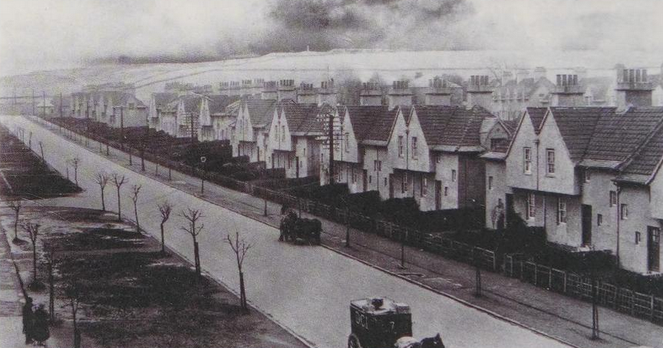
    Lochend was allocated all 5 available types under the scheme, laid out in typical garden city style, the streets taking the name “Findlay” from John R. Findlay, Bt., chairman of the SSNHCHT (the steel houses at Wardie were given the streetnames “Fraser” from Provost Fraser of Dunfermline, who was on the board of directors).

    Housing types and distribution of the Lochend Steel Houses

    Atholl Cottage Flat

    These houses were produced by the Atholl Steel House Company and named after one of its founding partners, the Duke of Atholl, who had envisaged building a steel house in 1919 after touring the idle shipyards of the Clyde. He partnered with the industrialist William Beardmore, whose shipyard and locomotive works were desperate for work, with his steel foundry at Mossend in Lanarkshire ready to provide the plates. Also known as “4 in a block” houses, this style was very popular with the 1920s public housing schemes, offering a good balance between reducing building and population density, construction costs and giving each household its own entry door and garden.

    The Atholl Cottage Flat. The house on the right has not been rec-lad, and the steel panel lines are visible. Like the Weir Lanefield, the upper flats were accessed through the side. The narrow central upstairs window is diagnostic when comparing it with the Weir Cottage Flats.

    Atholl’s original house was to be a lodge for his own estate, and as such was designed and built to be permanent. The construction of the Atholl House was therefore more substantial than its competitors, requiring 3 to 4 times as much steel. These heavyweight steel walls were load bearing, providing rigidity to the steel framework to which they were attached and therefore no internal cross-bracing was required. The steel was coated on its inner face with granulated cork to prevent condensation and then lined with composite boards, which were painted or wallpapered, eliminating the need for plasterers. Atholl estimated the lifespan of his house to be 60 to 90 years, with that of the Weir and Cowieson being 40 years.

    The Weir Houses were produced by G. & J. Weir, engineers to the shipbuilding industry at the Holm Foundry in Cathcart in Glasgow. Weir’s chairman, Viscount Weir, had a particular interest in the idea of prefabricated houses and they would be something the company returned to on numerous occasions. Those of the 1926 scheme were of three distinct types, but all used the same basic structure, of a load bearing timber frame and floors to which a relatively thin skin of steel plates was attached as an external cladding. Their lighter construction and lower labour costs than other steel houses meant that they were the cheapest, and Weirs therefore got 50% of the total order for the scheme. A feature of all Weir houses was exposed internal copper plumbing; it could not easily be buried within the walls or their thin insulation layer, and Lord Weir felt it was better to make it accessible for repairs, so was simply clipped along the inner partitions. The Weir Paragon House of 1944 inherited this design feature.

    General construction diagram of the Weir Steel Houses; a wooden frame sitting on a concrete base, with lightweight steel panels cladding the outside.

    In 1925, Weirs built a demonstration steel bungalow in Grosvenor Square in just 10 days:

    10 days to complete a house. The Weir demonstration house in Grosvenor Square

    The Weir Houses were the most controversial of the steel houses as Weirs paid their workers at the rates of the engineering trades from which they were drawn, which were lower than those of the building trades. Weirs were accused of building “steel houses of a very inferior kind by paying low wages under sweated conditions“. In an editorial, The Scotsman called them “a pig in a poke” (an unknown entity) but that people would want to live in them anyway and prevailed upon Weirs to improve their wages. Atholl avoided this scandal by paying building trades rates to their prefabrication workers in the factories.

    Weir Eastwood Bungalow

    The correspondent from The Scotsman who was sent to review the house noted that “the Living room is a good size, and the kitchenette or scullery is larger than that of many a modern brick house. The two bedrooms are a sensible shape“. The Eastwood, like its siblings, featured lots of built-in storage cupboards and a built-in coal bunker in the kitchen. The price, excluding groundworks, was set at £365 per house.

    Weir Eastwood Bungalow at Lochend, this pair of houses were in a very original condition at the time this photograph was captured.

    Weir Douglas Semi-Detached House

    The Douglas was the largest of the Weir Houses and was a semi-detached, two-storey cottage house. The ground floor contained a sitting room with “handsome fireplace”, kitchen, larder, bathroom and – something of a novelty for the time – a large under-stairs cupboard. Upstairs were the three bedrooms, with the master bedroom running the full width of the house and having an unusually wide casement window to the front. This was the only house of the programme that had 3 bedrooms; all the other having 2. The price, excluding groundworks, was £390 per house.

    Weir Douglas Semi. The house on the right is in a very original condition, that on the left has modern windows, roof, external insulation and cladding and porch. Note the five-pane first floor window.

    Weir Blanefield Cottage Flat

    This was the cottage flat in the in the Weir range. It was basically a 2-storeyed version of the Eastwood Bungalow with the upper flats accessed by internal staircases accessed from the side. The upstairs kitchens had floors strengthened with timber laid on a damp-proof layer to protect the steel beneath from “the vigorous scrubbings” of the housewife. The price, excluding ground works, was set at £357 per house.

    Weir Blanefield Cottage Flat. In a relatively original condition excepting the modern UPVC windows in 3 of the 4 flats. The easiest way to discern this from the Atholl cottage flat is the lack of the narrow central upstairs window to the front, and the upstairs outer window is offset somewhat from that on the ground floor

    Cowieson Terraced House

    F. D. Cowieson had trained as an architect, but found success in prefabricated wood and iron buildings, with the company based in St. Rollox in Glasgow. Initially these were simple agricultural structures such as barns and sheds, but soon the company was offering halls and huts, pavilions and even cinemas. During WW1 the company turned to building bus and lorry bodies – particularly ambulances – and they would later become much better known for this side of the business. They also experimented with “brieze block” houses, a single pair of which were trialled in Edinburgh at the Riversdale Demonstration Site.

    1920s advert for Cowiesons, describing the range of prefabricated structures that the company offered.

    The Cowieson Houses built in the programme were of a four-in-a-block terrace and like the Weir Houses, used a load bearing wooden structure to which a steel cladding was applied. The roof was originally asbestos tiles.

    Cowieson Houses at Lochend the three houses on the left have been re-roofed, externally insulated and pebbledashed; that on the right has not and looks to have its original roof also.Cowieson Houses in Dundee, built under the 1926-7 scheme by the SSNHCHT. This photo has been included as the exterior is in its original condition and the light paint shows up the steel panel lines to good effect.

    In July 1927, Lochend was proudly exhibited to King George V and Queen Mary, who made a royal visit on 11th of that month. Before proceeding to Lochend, the visitors stopped at the Corporation’s newest housing scheme at Prestonfield, where the King and Queen each planted a tree to inaugurate the development. They then headed to Lochend through the Holyrood Park, with 35,000 school children turned out to line the route. Further crowds greeted them at Lochend and they made a slow drive through the new neighbourhood, guided by Lord Provost Stevenson and two councillors.

    Their majesties expressed pleasure at the fine layout of this garden city and were greatly interested in the many types of construction in evidence as well as the openness of the place and tasteful arrangement of the gardens.

    Edinburgh Evening News, 11th July 1927The Royal Party at Lochend Drive. The Queen is leading the King onto the pathway, lined with a neat picket fence.

    A halt was made at 49 Findlay Gardens, a Weir bungalow, where an inspection was made of the house occupied by the Hill family and their two young children. Mr Hill’s occupation was given as the manager of an egg merchant, T. Howden & Co., in Leith, which gives an idea of the sort of persons who were living in the houses. The residents were asked if the house had been cold in winter; yes it had been, but it was not now (it was July!). The next house to be inspected was the Atholl House of Mrs Wilson at 7 Findlay Medway, where they remarked on the sensible layout of the interior and were intrigued by a bed settee in the living room, the Queen sat on it and plumped up the cushions.

    The householders were apparently not informed in advance that they were about to receive their guests and the first thing they knew was the knock on the door from the police. One of the housewives was reputedly peeling potatoes when they arrived and said of the Queen: “She’s a verra hamely lady” and that “Ye hav’na much crack for folk o’ that kind, and ye’re a bit tongue-tacket, but she was that kind and natural, and said everything was very nice“.

    The King and Queen leaving 58 Lochend Avenue, an Airey tenement flat

    On leaving the steel houses, the royal party then proceeded to some of the Airey Duo-slab houses; Mr & Mrs Galloway at 58 Lochend Avenue and Mrs Dickson at 34 Lochend Drive.

    In the end, an additional 500 steel houses were erected by the SSNHCHT above and beyond its original target, taking the total to 2,252. All were completed by the end of 1928 and the stock, along with those at Lochend, was passed to the ownership and management of the Scottish Special Housing Agency in 1963 when it took over the assets of the Scottish National Housing companies. Although they were only given a 40-60 year lifespan by their builders, most were first refurbished between 1978 and 1983 and in 3 years time they will have their centenary. Nearly all are still standing and most have been substantially upgraded with external insulation and rendering, double glazing, central heating, new roofs etc. A handful remain in an earlier state, usually those that had been bought very early under “right to buy” legislation. The tenants of those that were not bought early campaigned to have them upgraded rather than demolished, and most of those were subsequently bought (it was not possible to buy a defective house).

    If you have found this useful, informative or amusing, perhaps you would like to help contribute towards the running costs of this site – including keeping it ad-free and my book-buying budget to find further stories to bring you – by supporting me on ko-fi. Or please do just share this post on social media or amongst friends.

    Explore Threadinburgh by map:

    Travelers' Map is loading...
    If you see this after your page is loaded completely, leafletJS files are missing.

    These threads © 2017-2026, Andy Arthur.

    NO AI TRAINING: Any use of the contents of this website to “train” generative artificial intelligence (AI) technologies to generate text is expressly prohibited. The author reserves all rights to license uses of this work for generative AI training and development of machine learning language models.

    #Lochend #Logan #Restalrig #StMargaret
    Hawkhill: the thread about its House and the marvellous things that once went on there

    If old gate piers could talk, they could tell many a tale of who once passed through them, could they not?
    There’s an old gate pier on Lochend Road. What would it tell us if it could? Would it have interesting tales to tell? Shall we find out?

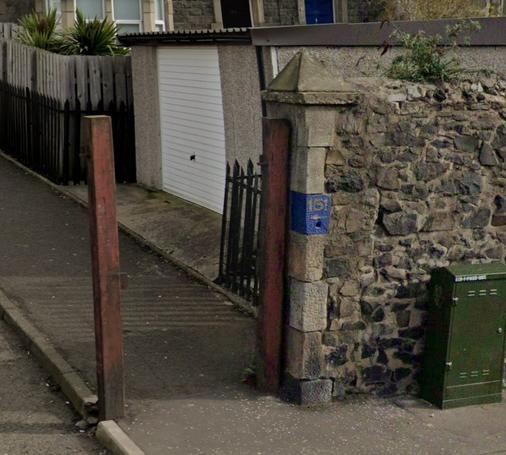
    A Georgian gate pier where it shouldn’t be? 151 Lochend Road, Edinburgh.

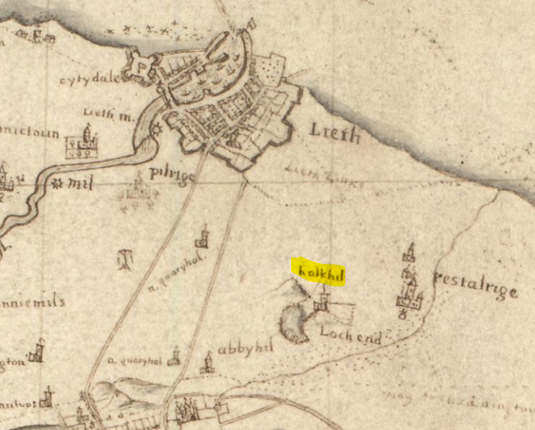
    So why is there a Georgian gate pier leading to 1980s housing? Well of course there used to be a Georgian house here before there were 1980s houses. Given this area is known as Hawkhill, the house was sensibly called Hawkhill House. The name Hawkhill is descriptive and literal – there was once a hill here were hawks must have dwelled. It’s mentioned as Halkehill in 1560, and shown as Halkhill in Adair’s map of 1682.

    “Halkhil” on John Adair’s Map of Midlothian, 1682. Reproduced with the permission of the National Library of Scotland

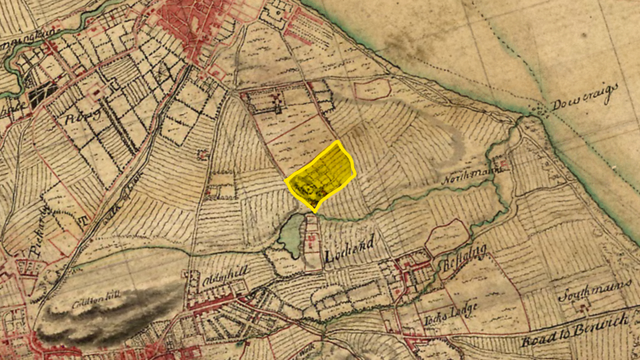
    Once part of the Barony of Restalrig, these lands found their way into the possession of Lord Balmerino after the Logans were dispossessed of them. He in turn lost them – and his head – for his part in the Jacobite rising of 1745. The Crown gave (or sold) them on to Trinity College & Hospital, who feud a small estate of 20 acres off of them at Hawkhill in the 1750s.

    Outline of the Hawkhill lands on Roy’s Lowland Map, c. 1750. Reproduced with the permission of the National Library of Scotland

    The feuar was Andrew Pringle, Lord Alemoor, a judge, senator of the College of Justice, Solicitor General for Scotland and a Lord of Session. “He had an unrivalled reputation as a lawyer and pleader“. He was the son of John Pringle, Lord Haining of The Haining in Selkirkshire, who also was a respected judge and one time Senator of the College of Justice.

    Andrew Pringle, Lord Alemoor, by William Brassey Hole. CC-by-NC National Galleries Scotland

    Alemoor had John Adam, son of William and older brother to Robert and James, build him a small but perfectly formed villa on the land. Overshadowed as an architect by his younger brothers, John was more involved in the business administration, but was nevertheless a fine and competent architect. Hawkhill was squat but perfectly formed, topped with two large and distinctive chimneys.

    Lord Alemoor’s Villa at Hawkhill near Edinburgh by John Adam

    A later description from its sale notes:

    “two lofty and finely-proportioned public rooms, library, five bedrooms, two dressing rooms, hot and cold baths, large kitchen, laundry, and other accommodation is supplied… There is a lodge for the gardener; stable, coach-house and other offices which are all ample; also a high-walled garden, well stocked and productive, and a large greenhouse. There is about 2 and a half acres of detached garden ground, bounded for 400 yards on the north side by a high wall planted with good fruit trees. The remainder of the property consists of a park of about 10 acres, and the shrubberies, in which there are some fine old trees.”

    A description of Hawkhill in 1867

    Alemoor was a man of letters. Sir Adam Ferguson took James Boswell to sup with him at Hawkhill. The latter was reportedly left impressed. He was “a very spirited and successful improver” and kept a fine garden, planted a good stock of trees and had a large parkland for sheep. But after the law, Alemoor’s main passion was science. He was supported in this by his factor, James Hoy. He had an observatory erected on the top of the Hawkhill to the latest designed by John Smeaton. We can see it and the house poking out in a late 18th century watercolour

    Hawkhill, the observatory and the house in the distance, beyond Lochend house and Doocot. From the Hutton Papers vol. 2. CC-BY-SA 4.0 National Library of Scotland

    Alemoor had Hoy take and keep regular, accurate temperature records for 7 years. Hoy kept this practice up at Castle Gordon where he went next to work and his data set was used to help calculate the first accurate, average temperature for Scotland. On June 4th 1769, Alemoor, Hoy and Dr James Lind (something of a polymath and also known as a silhouette artist1) observed the transit of Venus across the sun, each using a different telescope and each keeping time accurately. The Astronomer Royal commended their results as particularly accurate. This was an event of major world scientific importance – Captain James Cook had been sent all the way to Tahiti to observe it – and perhaps the first “crowd-sourced” scientific endeavour?

    Excerpt from Dr James Lind’s letter to the Astronomer RoyalExcerpt from Dr James Lind’s letter to the Astronomer Royal
  • Dr James Lind, 1736-1812, an Edinburgh Doctor and not to be confused with Dr James Lind 1716-1794, the Edinburgh Doctor known for investigations into scurvy. I made this mistake myself and am indebted to Emma Schmidt for the correction. ↩︎
  • Alemoor died in 1776, the house passing to his brother who likely sold it to pay of their fathers’ debts on the home estate of The Haining. It came into the possession now of Captain Gideon Johnstone, RN. Gideon had been a captain at the Battle of Chesapeake Bay in 1781 but never got another command again after that. He retired to Hawkhill, dying there in 1788. The house passed to his brother John Johnstone of Alva, “a corrupt Nabob of the East India Company“.

    John Johnstone esq. of Alva, right, by Henry Raeburn. Miss Wedderburn is centre, here niece Betty Johnstone on the left.

    Johnstone went to India as a clerk, avoided the “Black Hole of Calcutta” which claimed his brother and found himself as an artillery officer. He worked his way up to being a provincial governor but returned from India in a scandal, fired by his former friend General Clive on the subject of taking bribes from local princes. He therefore came back overshadowed but fabulously rich, so retired to a quiet life as a country gentleman of leisure on the estate of Alva.

    Hawkhill was given to his niece, Elizabeth – Betty – Johnstone, on the left in the painting above. She was the youngest sister of Margaret Johnstone, Lady Ogilvy, who was sentenced to death after the ’45 for her part in encouraging her husband in his support of the rising. He fled to France and she did the same, escaping Edinburgh castle by swapping clothes with her washer woman and walking out the gate. Aunt Betty was unmarried but doted on by her nieces. They took Aaron Burr to visit her, who wrote in his diary “Pretty place. View of the Forth.” he noted he had a sumptuous meal and Madeira wine. This would be about 1808. Who was Aaron Burr? He was an America lawyer and politician, 3rd Vice President of the United States. He is noted for having “assassinated” Alexander Hamilton (former Secretary of the Treasury) in a duel in 1804. He was in Europe on a self-imposed exile.

    Aaron Burr by John Vanderlyn, 1802

    Betty died of old age at Hawkhill in 1813. She passed away during a thunder storm, looking to the sky and remarking “Sirs, what a night for me to be fleeing through the air” before expiring. She is buried with the Fergusons of Pitfour, also of her family, in Greyfriars. Hawkhill went to her cousin, James Raymond Johnstone esg. of Alva, who had inherited John Johnstone’s estate and ill gotten fortune from India. He gave it in life rent to his sister Ann Elizabeth and her husband James Gordon of Craig, an Advocate.

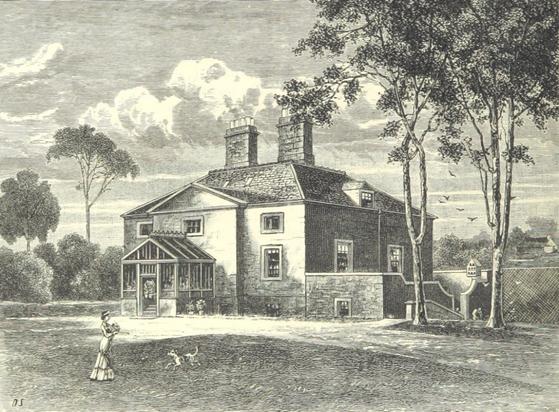
    Hawkhill as it was in the mid 19th century, much the same as Georgian times except the added conservatory. Note the trees, sunken garden to the right. Perhaps Ann Elizabeth Johnstone strolling in the foreground. From Old & New Edinburgh vol. 5 by James Grant

    Ann Elizabeth died at Hawkhill in 1851, at which point the whole estate was put up for sale. The advert noted that the lands had value in quarrying and felling the trees planted by Alemoor.

    The Scotsman, March 10th 1852

    The lands were now split up. The hill of Hawkhill itself began to be quarried for its whinstone for use in street paving setts. Alemoor’s trees were felled and his sheep park was dug up for clay to feed a brickworks built on the site. Worse was to come when a tallow melting works was built in the eastern portion of the park land. The works belonged to Alexander Beveridge of Leith; “margarine manufacturer and tallow melter, employing 17 men and 13 women” and a member of The Incorporation of Candemakers of Edinburgh.

    A brick from the Hawkhill Brickworks, found in the Warriston Cemetery © Self

    The reek from the tallow works and dust from the quarrying both ended up in court cases from disgruntled neighbours. The “Tallow Melting Case” found in favour of the works, and the works and the stench went on.

    Scotsman, 1866

    Thomas Field, “slate merchant, brick and tile maker and quarry master” lost his case and the brickworks was ordered to shut; quarrying went on however. In 1877, three boys were hospitalised in Leith after playing with blasting powder from the quarry. A young woman working in the Tallow Works lost an arm to machinery in 1877 in horrible circumstances.

    Scotsman, 17 Sep 1883

    The site of the closed brickworks was sold off and became the Hawkhill Recreation Fields, a commercial enterprise. It was used for amateur sports, professional football, dog racing, as a showground and fairground. Then on 1 October 1888 something quite incredible happened at Hawkhill…

    At 5:15PM, the slight figure of “Professor” James Baldwin strode across the field, packed to capacity. In one hand he had a “parachute umbrella” in the other he took hold of a trapeze suspended from a hot air balloon. Then the balloon was let go…

    “DROP FROM CLOUDLAND” advert, from the Scotsman, September 1888

    The balloon rose quickly to 1,200 feet and Baldwin let go of the trapeze. He fell 300 feet before opening his “umbrella”. He fell to the ground, landing gently and exactly where he wanted to.

    BALDWIN’s DROP FROM THE CLOUDS. © British Library

    Baldwin was a circus acrobat, tightrope walker and all round daredevil with a keen interest in ballooning. This was a trick he had first performed the year before in the US and he had brought it to Europe. It was a sensation and he made a fortune.

    “Baldwin’s Drop from the Clouds”, poster advert for London in 1888

    Baldwin made the first ever parachute jump in the US in 1887. In 1888 he made the first in the UK. The Houses of Parliament were suspended in order that members could go see for themselves before deciding whether or not to ban his act as suicidal. On the 1st October 1888, he made the first parachute jump in Scotland at Hawkhill.

    London Illustrated News illustration of Baldwin’s act.

    Such was the popularity of the act, that Hawkhill exceeded capacity. The proprietor of the next door farm at Lochend, Fanny Jackson, successfully sued Baldwin’s organisers for £30 for damages done to gates, fences and crops by the crowds who invaded her farmland. Ten years later on July 5th 1899, a balloon jumper act returned. This time it was Miss Alma Beaumont, “Lady Parachutist” who leapt from the skies as part of a huge show and fair put on at Hawkhill to coincide with the Highland Show.

    Scotsman advert, July 4th 1899Alma Beaumont. Via Yeovil Virtual Museum

    In 1890, a balloon was flown from Edinburgh International Exhibition at Meggetland and came down safely at Hawkhill grounds. From 1888 to about 1900, Hawkhill House itself was used as a residential boarding house, run by “Mrs Donaldson, late of Wooton Lodge, Cumin Place, the Grange“. By 1902 it was owned by Jonathan Newey & Sons, who ran a firelighter manufacturing business on the site. The quarry was worked out by about 1913, having completely consumed the Hawk Hill in the process (in case you’re wondering where it went as it’s quite clearly no longer there). In 1924, Leith bakers J. Smith & Sons built a modern, industrial bakery there. It later became part of the Sunblest empire.

    Advert for Smiths’ of Hawkhill, Fife Free Press, 15th February 1958

    The recreation grounds were bought after WW1 by the Leith Education Authority for use as school and public playing fields. Amateur football was allowed to continue, but professional sport and dog racing was banned. They continued to let the park out for sheep grazing. In 1920 they came into possession of the Edinburgh Education Authority, who tendered for “100 carts of good black soil” to be delivered to improve the playing fields. Many a local school, scouts and amateur sporting event would take place there over the next 70 years. When Leith Academy moved it its new site, it got on-site playing fields (“Academy Park”), and Hawkhill Fields were sold off for housing. Alemoor Crescent and Park were built, recalling the house’s first Laird, Andrew Pringle.

    The tallow melting works closed in 1968, taking its stench with it, and was replaced by the council housing “multis” of Hawkhill Court and Nisbet Court (the Nisbets of Craigentinny were an old local landowning family, but never actually of Hawkhill.)

    Hawkhill Court and Nisbet Court, 1977, © Edinburgh City Libraries

    Hawkhill House by this point was unoccupied but remarkably much of its original John Adam Georgian interiors were still in place, if somewhat decrepit. The Georgian Society campaigned to preserve it.

    Survey photos of Hawkhill House for the Ministry of Works, 1966. From Canmore’s entry for Hawkhill House.

    But it deteriorated further and was soon bricked up not long after that photo study, it is looking very sad in the photo below taken in the early 1970s, not long before it was demolished in (I think) 1972. The site was added to the playing fields.

    Hawkhill House, early 1970s. Unknown provenance (I’ve looked for it!)

    We can see 130 years of transition at Hawkhill in this animated overlay of maps.

    Animated map transition of Hawkhill, 1817 to 1944. Reproduced with the permission of the National Library of Scotland

    Before finishing, I’d like to just say thanks to the ever helpful and knowledgeable Fergus Smith for the quick lesson (late) last night about how property could, or could not be, inherited in Scotland before 1868. It really helped me with this and saved a lot of time in working out some of the ownership. Thanks Fergus!

    If you have found this useful, informative or amusing, perhaps you would like to help contribute towards the running costs of this site – including keeping it ad-free and my book-buying budget to find further stories to bring you – by supporting me on ko-fi. Or please do just share this post on social media or amongst friends.

    Explore Threadinburgh by map:

    Travelers' Map is loading...
    If you see this after your page is loaded completely, leafletJS files are missing.

    These threads © 2017-2026, Andy Arthur.

    NO AI TRAINING: Any use of the contents of this website to “train” generative artificial intelligence (AI) technologies to generate text is expressly prohibited. The author reserves all rights to license uses of this work for generative AI training and development of machine learning language models.

    #Lochend #Logan #Restalrig #StMargaret
    Corolite: the thread about a Lochend experiment in Dutch construction

    Another day. Following on from the thread about the Riversdale Demonstration Houses, here’s another bunch of inconspicuous-looking municipal houses in Edinburgh which once again pose the question of “well, what makes these so special then?”. This post will endeavour to answer that.

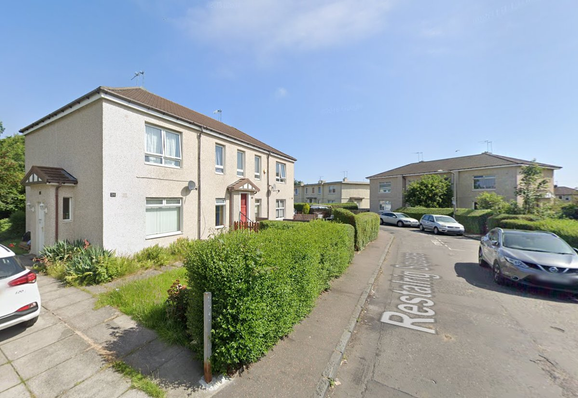
    Houses at Restalrig Square in Lochend

    This is just one little corner of the large Lochend housing scheme, which was developed in the mid-1920s as a big showpiece by the Edinburgh Corporation. The Corporation purchased the 170 acre Lochend estate from Morton Gray Stuart, 17th Earl of Moray, in 1923 for £37,500 (£2.9M today). Central government subsidies in place at the time encouraged the use of “non traditional construction” techniques, to try and deal with post-war shortages of skilled trades labour and an economic downturn that put many men employed on labouring out of work. Edinburgh Corporation was quick to embrace both the money and the new techniques required to access it.

    The first houses that went up at Lochend were of the Airey Duo-Slab type, a mix of pre-cast concrete slabs (which apparently made use of waste rubble from the construction of Portobello Power Station) and poured concrete.

    Airey Duo-Slab cottage flat house at Lochend.

    At a ceremony officiated over by Lord Provost Sleigh, Labour MP for South Ayrshire and Lord High Commissioner to the Church of Scotland, James Brown MP, laid a foundation stone at a Duo-Slab house on May 27th 1924 (although construction had actually started in January).

    Lord Provost Sleigh (balding, with moustache and chains of office) and James Brown MP (balding, with moustache and no chains of office) at the Lochend stone-laying ceremony in 1924

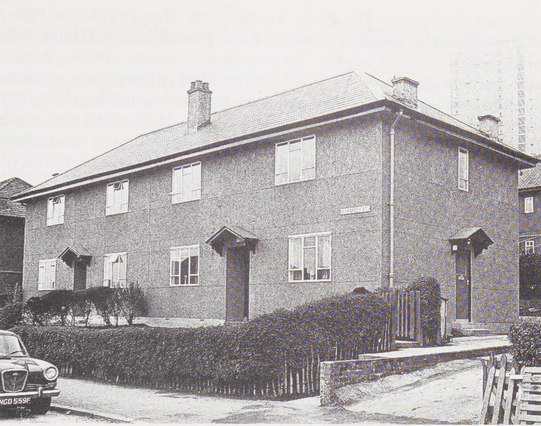
    Edinburgh Corporation ended up being very pleased with these houses and they would go on to become the prevalent type at Lochend, with something like 1,000 built (I haven’t counted them all!) There are Duo-Slab cottage flats at Restalrig Square, but those aren’t what this thread is about, there’s something else too. So if these other houses aren’t Duo-slabs then what are they? Well, one of them is a slight give-away as it’s different from the rest; strikingly so. This house is strikingly modern, with a flat roof, overhanging eaves, no ornamentation and chimney flues running up the façade.

    The unique and incongruously modernist flat-roofed Corolite house at Restalrig Square

    This house is very conspicuous – Edinburgh’s City Architects were rarely radical when it came to style and even the thoroughly modern (in construction terms) Duo-slab houses were conservatively traditional in style; they had a mock-classical porch (pre-cast concrete of course), 4-over-2 sash windows, tiled hipped roofs and traditional placement of the chimneys. No, what we are looking at here is a different, radical new construction technique, one imported from the continent. This is a Corolite House and is basically a copy of the Dutch Korrelbeton houses of the early 1920s.

    The flat-roofed Corolite House, an alternative angle

    Korrelbeton translates from Dutch as – approximately – “granular concrete”. It was a “no-fines” technique (i.e. no fine sand or ash to fill in the gaps between the aggregate) but instead of gravel as an aggregate it used crushed waste brick, clinker or slag. This made it lightweight – it was 25-50% air pockets. It was also cheap, as it was mixed in the very lean ration of 1 part Portland Cement to 9 parts aggregate (which was recycled waste materials). The end result was both well insulated and breathable, so it didn’t suffer from two of poured concrete’s biggest drawbacks when it came to house building.

    The Dutch developed Korrelbeton around 1919 and had been using it for 5 years when a visit was made by the British Housing Commission. Suitably impressed and interested, a British company was set up – the Corolite Construction Co. – in London to import this technique for housebuilding. Edinburgh’s City Architect, Adam Horsburgh Campbell, took a particular interest in what was going on in the continent regards housing and was either part of that delegation, or made a follow up visit of his own. In Jan. 1925, the Corporation accepted an offer from the Corolite Co. to built 52 experimental houses at Lochend to demonstrate the technique.

    Early Dutch Korrelbeton houses, c. 1925, note the overhanging eaves and flat roofs.

    Thirteen blocks of 4-house cottage flats (mid-density, 4-in-a-block houses, with 2 flats upstairs and 2 downstairs, all with their own external entrance doors) were to be built. Six were of the “Dutch” style, with poured Corolite flat roofs, at £420 per house. Seven were of a more traditional style with a pitched, tiled roof, costing £440 each. These houses were eligible for £9/house rent subsidy, so saved the Corporation money.

    The Lochend Corolite Houses at Restalrig Square

    The flat-roof type have overhanging eaves and the distinctive external chimney flues running up the facade. All except one of the 6 were re-roofed and reclad during the 1990s or 2000s, when rather odd-looking porticos were added. I’m not sure how one survived in its original form.

    The flat roofed Corolite House next to a modernised house of the same type (right)

    The other seven blocks were built with pitched roofs that had a reduced overhang and did not have the external flues or the central 3 windows recessed. They also got those same porticos during modernisation, so are visually quite similar – but not identical to – the refurbished flat roof houses.

    Pitched roof Corolite House, also modernised

    These were amongst the first Corolite houses completed in Britain (they may be the first completed scheme) and were certainly the first in Scotland. On a visit to Scotland in June 1926, Prime Minister Baldwin said he thought them “quite agreeable to the eye“, “quite reasonable” and “wished [we] had more of them“. Baldwin’s government had announced a £40 per-house (about 10% construction costs) subsidy for the use of Non-Traditional construction, for the first 4,000 such houses built by local authorities in Scotland. While many authorities resisted this temptation as they did not like the terms, or care for non-traditional construction, others such as Edinburgh raced to try and build such council housing under subsidy.

    In December 1925, the Edinburgh Town Council’s Housing and Town Planning Committee made a recommendation to the council that 500 further Corolite houses should be built at Lochend to capitalise on the subsidy. The Council however voted to turn down the recommendation by 35 votes to 20, after deputations from the building trade associations made representations. The £40 subsidy meant that only 10% of labour employed could be from skilled trades and the trades said it had been almost impossible to erect the Corolite houses with this workforce and keep to timescales. They also said that official figures for the number of men in the building trade that were out of work were wrong; they contended that they had better information as men out of work from one job to the next would sign on with their Union when in need of work, rather than with the Labour Exchange. Rather than being fully employed, the trades said that many men were unemployed; Edinburgh bricklayers were off working in England on public housing schemes due to the lack of work for them at home. Councillors asked about the shortage of plasterers; the plasterers’ trade representative pointed the finger at the building contractors. The trades said that building to more traditional construction practices would employ more men in the short term and the investment and would pay for itself in the long run by providing a better quality of house.

    Dundee’s Housing Committee had also been unimpressed with the progress of Corolite houses, and had made that known in the papers. The Corolite Construciton Company were aggrieved at this and made their defence known in the papers too. L. J. Pond, their general manager in Edinburgh, defended the use of wallpaper on bare concrete (rather than plaster) as being the result of the 10% skilled labour cap and having to use an unskilled wall finish. He said that it was a “sanitary, durable and pleasing finish” and should not reflect on the house itself. Corolite also said that they could build good houses faster, and cheaper, and that if Edinburgh didn’t take them up on it then someone else would get the £40 per house subsidy instead and unemployed general labourers lost the chance of steady work.

    In the end, neither Lochend nor Edinburgh (nor I believe, anywhere in Scotland) got any more Corolite houses. Airey won the contract to build lots more of their Duo-slabs at Lochend and the Second Scottish National Housing Company would build 350 steel houses for Edinburgh on Corporation land, before a return to more traditional construction for later phases. The Corolite Construction Company tried to flog their system to various other local authorities – Willesden Council in London built some at Brentfield and Manchester Corporation built a number that may total a few hundred – but overall they seem to have never found favour. The company moved on to other things and were last heard of in “Metroland”, advertising an estate of traditionally-built bungalows outside Berkhamstead in 1938.

    A 1938-built Corolite Construction Company house at Berkhamstead.

    If you have found this useful, informative or amusing, perhaps you would like to help contribute towards the running costs of this site – including keeping it ad-free and my book-buying budget to find further stories to bring you – by supporting me on ko-fi. Or please do just share this post on social media or amongst friends.

    Explore Threadinburgh by map:

    Travelers' Map is loading...
    If you see this after your page is loaded completely, leafletJS files are missing.

    These threads © 2017-2026, Andy Arthur.

    NO AI TRAINING: Any use of the contents of this website to “train” generative artificial intelligence (AI) technologies to generate text is expressly prohibited. The author reserves all rights to license uses of this work for generative AI training and development of machine learning language models.

    #Lochend #Logan #Restalrig #StMargaret
    A Failed Filling-In: the thread about the loch at Lochend

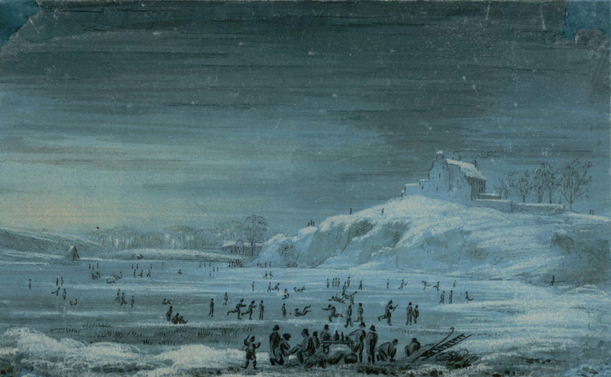
    Lochend Loch, in the district of that name, is a natural loch fed from its own springs. The name comes from the fact this was one end of the Barony of Restalrig; the opposite end was the community of the Calton which was therefore sometimes known as the Craigend (Craig being Scots for a rock or cliff). As such the name Lochend Loch is a self-referential tautology. It long had utility as an area for wildfowling, fishing and collecting reeds for thatch and when it froze over it was a popular skating rink. Historically it was fed by a stream called the Strype which drained the lands to its west into it. From the 18th century onwards it was also the water supply for the Port of Leith, but the quality was poor and so much of it leaked out of wood and leather pipes that it could never slake the thirst of that town.

    Ice Skating on Lochend in 1818 by James Skene. © Edinburgh City Libraries

    The loch was formerly bigger and deeper than it is now, a combination of water extraction and improved drainage having lowered the surface. In 1876 the surface is recorded by the Ordnance Survey at 83.4 feet above sea level. In 1894 it was 78.54 feet and in 1944 it was 77.99 feet. That’s a drop of 5.4 feet or 1.64m.

    Lochend Loch and House in the early 19th century when the water level was significantly higher. This is a picture credited as Duddingston Loch, but is very definitely Lochend, with Whinny Hill of Arthur’s Seat in the background. By Hugh William Williams, CC-by-NC National Galleries Scotland.An old postcard of the Loch, late 19th century, showing how much lower the water level is than in the above painting. Of interest are the row of supports sticking out of the water and mud, these would have carried the water inlet pipe to the pump house from when it was the public water supply for Leith.

    It can be seen on the map below that in 1817 the loch edge is near to the old dovecot – the round building at the top of the map. The water pumping house, just next to the fold in the page, is well within the loch. Both of these structures are now some distance from the loch edge, so the shoreline has retreated significantly since then.

    Kirkwood’s Town Plan of Edinburgh and Leith, 1817.

    The 1817 survey gives the depth as 23.75 feet at its maximum. Local legend held that it was bottomless, and that a horse and card had been driven in never to be seen again. This may be influence somewhat by the tail of an accused witch, Bessie Dunlop, who was burned at the stake in 1576. Bessie was convicted on the grounds that she had consorted with a man named Tam Reid, who had died at the battle of Pinkie 30 years previous. Tam had conferred healing powers on her. On one occasion, while riding near Lochend Loch she had stopped to water her horse and with Tam had watched an apparition of a company of fairy horse riders charge into the loch to disappear.

    When the Corporation built large housing estates in the area; at Lochend, Craigentinny and Restalrig, in the 1920s and 30s, the loch and surrounding grounds was purchased from its historic owners – the Earls of Moray – and formed into a new civic park to serve the neighbourhood. Between 1928-30 the park had been shut and 3,000 lorryloads of spoil from excavating the foundations of the housing schemes had been tipped in around the edges to form pathways. The loch and its grounds were tidied up and became the central feature of the park as a duck pond.

    Lochend Loch in the park in 1955. © Edinburgh City Libraries

    By 1958 the loch was unfenced except for a section kept partitioned off as a bird sanctuary. On Aug 19th, John French, 10, from Piershill was playing with 2 friends, took off his socks and shoes and waded a few yards in. He slipped, fell below the surface and his friends never saw him again. It took 4 days for his body to be found; volunteer members of the Scottish Sub-Aqua Club Search & Rescue team had worked around the clock to try and find him, but he was finally recovered just a few yards from where he had disappeared from view, 10 yards from shore. The Corporation immediately formed a sub-committee headed by the Superintendent of Parks and the City Engineer to come up with proposals to make the park safer. They reported back the following month, their preferred option was infilling the loch to a safe depth of 2.5 feet. The Civic Amenity Committee approved this course of action, which they were told would take 3 years, with “complete drainage rejected”. At this point there were not too many dissenting voices as the tragedy of young John’s death was still fresh in peoples minds.

    Lochend park and loch in 1957, Edinburgh Evening News photograph

    The Corporation got to work and lorryloads of demolition rubble from the city’s slum clearances began to arrive. But they soon ran into problems as land reclamation at Leith Docks was paying a premium for rubble and most of it was being diverted there. In 1961, they made the decision to declare the loch a general landfill site for “clean waste“. But the lack of infill material wasn’t the only problem; the City Engineer reported they were “finding it increasingly difficult to maintain the water level“. The loch was fighting back. Once people saw what was happening to it, there was increasingly vocal local outrage at what was being done. “Official Vandalism” wrote one to the Evening News. “The ruination of one of the best bird sanctuaries in Edinburgh… What once was a delight to the eye is today a very sad sight” wrote another. In June 1961 it was reported that the landfill tipping into the loch had polluted it with oil, and the resident swans and cygnets covered. James Christison of Albert Street wrote to complain of the “stench of rotting weeds and freshwater shellfish” hanging over the water.

    The City Engineer was called to account and now recommended complete infill and asked for 3 more years. Labour councillor for Craigentinny, Joe Mackaill, was having none of it “it is a beautiful park and a beautiful pond and I will fight all the way to keep it that way“. In July 1961, another letter to the Evening News observed “Lochend appears now to provide a convenient dumping ground for the debris from demolition sites and other waste materials which are possibly difficult to dispose of on account of lack of facilities“. Local residents complained from all the dust coating their washing and windows, and of the smoke cloud that hung over the neighbourhood as the site had a permanent bonfire to burn off wooden furniture and garden waste that could not be tipped in the loch. But the tipping continued, the Corporation countered that they were obliged to take any waste they were provided with now that the Loch was an official landfill site. It seemed that the “best” waste, rubble and soil, was sorted and diverted to Leith Docks while Lochend kept the worst.

    The Evening News sent a photographer, who took a picture behind a rickety barbed wire fence showing the loch 3/4 full of “old tyres, empty tea chests, kitchen sinks and house doors… And an enormous quantity of builders’ rubbish“. The loch’s strongest defender in the Corporation, councillor Mackaill, died unexpectedly in March 1962. His cause was taken up by Councillor (later Baillie) Marion Alexander who noted the “disquiet, indignation and even disgust” at the situation

    Edinburgh Evening News 14/9/62 “City Beauty Spot Now a Rubbish Dump”

    There was an increasing discontent now that the loch should never have been in-filled, and that course had been an over-reaction. Letters were sent to the Evening News that the safety of children was the responsibility of their parents, “not the ratepayers“. “It is time the councillors for South Leith woke up to the desecration of this beauty spot and did something about the matter” wrote Peter Robertson of Easter Road. The pressure paid off. In November 1962 Councillor A. D. Jameson (Progressive – Portobello), chair of the Civic Amenities Committee, announced that they were relenting and that the loch would now be restored to its original (surface) size once the infill was settled at the safe depth.

    I’ve overlaid some snippets of aerial photographs through the ages on a modern image to show the rise and fall (or rather, the fall and rise again) of the Loch level. The papers now went quiet on the issue, but 3 years later in 1965 it was observed that “Edinburgh Corporation, at the [Scottish Wildlife Trust]’s suggestion, have successfully improved Lochend Loch.” These improvements had included planting an artificial island in the centre of the loch with trees. The island has been subsiding ever since, built up from unstable waste that has rotted and settled and decomposed over time. This explains why the park these days has a spooky, mangrove-like, sunken forest of half-dead trees in the middle.

    The remains of the failed attempt to fill in Lochend loch CC-BY-SA 2.0 Richard Webb

    The below animation shows the loch surface over time.

    #NowAndThen at Lochend loch, 1945 to present. You can see in the still from 1961 that the infill started in the northwest corner of the loch – a road through the park is obvious, leading onto the spoiltip where it was simply being driven onto the loch and dumped.

    Sadly there was a further tragedy at Lochend in April 1997, when 13 year old Arron Duffus fell off a raft he and his pals had made from abandoned foam insulation and wood sheets. Arron lost his life and eleven others ended up in hospital who also fell in or had tried to save him. The fencing around the loch – which had broken down – was replaced and heightened. The park was also given a clear up to remove the various abandoned cabins and sheds that had once been used as pigeon lofts and greyhound kennels from where the raft materials were taken. A local “friends” group has been trying their best, with some success, to make sure the park and its loch is better maintained and cared for in more recent years..

    Photo of makeshift rafts at the edge of Lochend loch, The Scotsman. Saturday 12 April 1997

    If you have found this useful, informative or amusing, perhaps you would like to help contribute towards the running costs of this site – including keeping it ad-free and my book-buying budget to find further stories to bring you – by supporting me on ko-fi. Or please do just share this post on social media or amongst friends.

    Explore Threadinburgh by map:

    Travelers' Map is loading...
    If you see this after your page is loaded completely, leafletJS files are missing.

    These threads © 2017-2026, Andy Arthur.

    NO AI TRAINING: Any use of the contents of this website to “train” generative artificial intelligence (AI) technologies to generate text is expressly prohibited. The author reserves all rights to license uses of this work for generative AI training and development of machine learning language models.

    #Lochend #Logan #Restalrig #StMargaret
    Beautiful wool from some of Scotland's most unique heritage sheep.

    #Lochend
    #NorthRonaldsayMill

    #OrkneyBoreray
    #keepOrkneytheBrand
    #keepScotlandtheBrand