 The Hard Times – Punk News Comin’ Your Way! [Unofficial]
Aging B-Boy Has Groove in the Heart, Kidneys, Lymphatic System

Aging B-Boy Has Groove in the Heart, Kidneys, Lymphatic System
The #LymphaticSystem maintains #FluidBalance and supports #ImmuneFunction by transporting lymph and removing interstitial fluid. Essential knowledge for #Physiology, #MedicalEducation, and understanding #Edema.
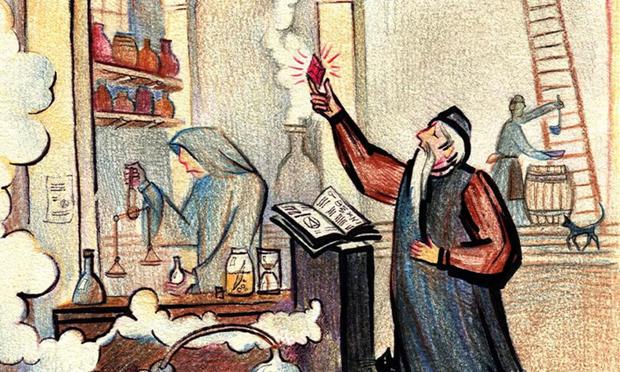
“Alchemy. The link between the immemorial magic arts and modern science. Humankind’s first systematic effort to unlock the secrets of matter by reproducible experiment.”*…
As (AI/tech pro and writer) Dale Markowitz explains, for scientists of yore anything—from mermaids to alchemy—was on the table…
In 1936, the economist John Maynard Keynes purchased a trove of Isaac Newton’s unpublished notes. These included more than 100,000 words on the great physicist’s secret alchemical experiments. Keynes, shocked and awed, dubbed them “wholly magical and wholly devoid of scientific value.” This unexpected discovery, paired with things like Newton’s obsession with searching for encrypted messages in the Bible’s Book of David, showed that Newton “was not the first of the age of reason,” Keynes concluded. “He was the last of the magicians.”
When it came to fascination with the occult, Newton was hardly alone. Many contemporary scientists may cast aspersions on spells, mythical tales, and powers of divination. Not so for many of the early modern thinkers who laid the foundations of modern science. To them, the world teemed with the uncanny: witches, unicorns, mermaids, stars that foretold the future, base metals that could be coaxed into gold or distilled into elixirs of eternal life.
These fantastical beliefs were shared by the illiterate and educated elite alike—including many of the forebears of contemporary science, including chemist Robert Boyle, who gave us modern chemistry and Boyle’s law, and biologist Carl Linnaeus, who developed the taxonomic system by which scientists classify species today. Rather than stifling discovery, their now-arcane beliefs may have helped drive them and other scientists to endure hot smoky days in the bowels of alchemical laboratories or long frigid nights on the balconies of astronomical towers.
To understand the role of magic in spurring scientific progress, it helps to understand the state of learning in Europe in those times. Throughout the Middle Ages, many scholars were fixated on the idea that knowledge could only be gleaned from ancient texts. Universities taught from incomplete, often poorly translated copies of Aristotle, Ptolemy, and Galen. To stray from the giants was a crime: In 14th-century Oxford, scholars could be charged 5 shillings for contradicting Aristotle. Curiosity was considered a sin on par with lust. A powerful motivator was needed to shuck off ancient thinking.
One of the first influential thinkers to break with the old ways was the 16th-century Swiss-German physician Paracelsus. The father of toxicology, known for his pioneering use of chemicals in medicine, Paracelsus was among the first of his time to champion the importance of experimentation and observation—a philosophy which would set the foundations for the scientific method. Paracelsus showed the scholars what he thought of their old books by publicly burning his copies of Galen and Avicenna.
But what led him to this experiment-first approach? Perhaps it was because, to Paracelsus, experimentation was a kind of magic. His writing fuses scientific observation with the occult. To him, medicine, astrology, and alchemy were inextricably linked—different ways of unveiling sacred truths hidden in nature by God. Paracelsus considered himself a kind of magus, as he believed Moses and Solomon had been, as Newton would view himself 150 years later. Paracelsus believed, though, that divine knowledge could be gained not just by studying scripture, but also by studying nature. The alchemical workbench, the night sky—these were even surer routes to God than any dusty old textbook…
[Markowitz recounts the stories of Tycho Brahe [almanac entry here], his patron Holy Roman Emperor Rudolf II, Robert Boyle, William Harvey, and Linnaeus [here], who, in 1749, urged the Royal Swedish Academy of Sciences to launch a hunt for mermaids…]
… To our contemporary ears, most all of this may sound fairly ridiculous. But as Edward Donlick puts it in The Clockwork Universe, “The world was so full of marvels, in other words, that the truly scientific approach was to reserve judgment about what was possible and what wasn’t, and to observe and experiment instead.” To the 17th-century scientist, anything was on the table, so long as it could be experimentally studied.
Today, we know how the story ends: Belief in astrology, alchemy, and witchcraft declined in places where empiricism and skepticism became cornerstones of science. But perhaps early scientists’ fascination with the occult should remind us of other tenants of discovery: open-mindedness and curiosity. Witches, mermaids, and the philosopher’s stone may not have survived modern scrutiny, but it was curiosity about them that drove real progress and allowed early thinkers to stray from established norms. In this sense, curiosity is a kind of magic…
“How the Occult Gave Birth to Science,” from @dalequark.bsky.social in @nautil.us.
See also: “The importance of experimental proof, on the other hand, does not mean that without new experimental data we cannot make advances” and “Everyone knows Newton as the great scientist. Few remember that he spent half his life muddling with alchemy, looking for the philosopher’s stone. That was the pebble by the seashore he really wanted to find.”
###
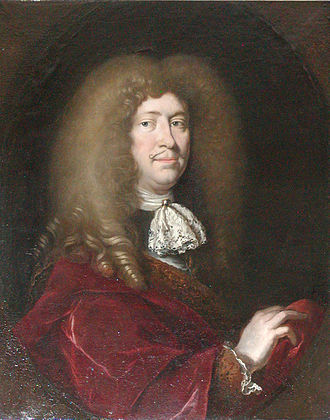
As we think about transmutation, we might spare a thought for a rough contemporary (and fellow-traveler) of Newton’s, Rasmus Bartholin; he died on this date in 1698. A physician, mathematician, and physicist, he is best known for his discovery of the optical phenomenon of double refraction. In 1669, Bartholin observed that images seen through Icelandic feldspar (calcite) were doubled and that, when the crystal was rotated, one image remained stationary while the other rotated with the crystal. Such behaviour of light could not be explained using Newton’s optical theories of the time. Subsequently, this was explained as the effect of the polarisation of the light.
Bartholin also wrote a several mathematical works and made astronomical observations (including the comets of 1665). And he is famed for his medical work, in particular his introduction of quinine in the fight against malaria.
(Bartholin’s family was packed with pioneering scientists, 12 of whom became professors at the University of Copenhagen; perhaps most notable, his elder brother Thomas, who discovered the lymphatic system in humans and advanced the theory of “refrigeration anesthesia”(being the first to describe it scientifically).
Rasmus Bartholin (source)#alchemy #astology #culture #Discovery #doubleRefraction #history #IsaacNewton #Linnaeus #lymphaticSystem #malaria #occult #optics #Paracelsus #philosophy #quinine #RasmusBartholin #Science #Technology #ThomasBartholin #TychoBrahe #witchcraft
🫀📄 #WorldHeartDay: 'The Functional Unit of the Lymphatic System: Towards Understanding the Importance of a Well-Rehearsed Interaction of Lymphatic Capillaries, Collecting Vessels, and Lymph Nodes' - a review article in the Karger: Cardiovascular System Collection on #ScienceOpen 🔗 https://www.scienceopen.com/document?vid=6f805b1d-3f4e-4045-a4da-b35060bb05be
#LymphaticSystem #Immunology #VascularBiology #ScienceMastodon
<p xmlns:xsi="http://www.w3.org/2001/XMLSchema-instance" dir="auto" id="d7349083e130"> <b> <i>Introduction:</i> </b> Lymphatic vessels and lymph nodes (LNs) are part of the lymphatic system taking care of interstitial tissue homoeostasis, lipid transport, and immune response. The interposition of LNs in between the lymphatic vasculature allows the filtration of lymph fluid, cell-cell interactions, and also the transfer of lymph fluid into the venous system. An important role of lymphatic flow, which is often underestimated, is the active involvement of lymph flow and the lymphatic vasculature in immunologic function. <b> <i>Summary:</i> </b> The present review summarizes the current knowledge of the different functional units of the lymphatic transport system trying to create a model of their interplay and options to react to inflammatory conditions. Remodelling of the lymphatic system during inflammation includes lymphangiogenesis, changed fluid transport rates, and modification of LN morphology. Alterations of these processes can aggravate inflammatory processes, leading to an incomplete resolution of the inflammation and often ending in chronic inflammatory condition. Despite the development of histological markers to visualize lymphatic vessels, new imaging methods and increased knowledge about the different parts of the lymphatic system the general overview about the interplay of the different components is missing. <b> <i>Key Messages:</i> </b> We show the importance of lymphatic flow in the initiation of the immune response and the solution of an inflammation. We speculate that the increase in density and vessel diameter of lymph vessels is necessary to increase the fluid influx, efflux and the migration of cells into the LN. A failure of antigen-tissue clearance leads to chronic inflammation. Remodelling of LN morphology and vasculature is also necessary in this reaction. An overrun of the defending capacity of the LN is prevented by the immune system via control of the lymph vessel transport capacity and LN remodelling. </p>
Imagine this: you’ve just come through a significant surgery – maybe for your thyroid, or something in your chest or abdomen. You’re focusing on healing, getting back on your feet. #chyleleak #chyleleaktreatment #lowfatdiet #lymphaticsystem #surgicalcomplication #thoracicduct
Unveil the secrets behind DISH and learn how I manually reset my body’s protective mechanisms.
Read more 👉 https://lttr.ai/AbFXI
#HealthBreakthrough #InnovativeHealth #autoimmunesolutions #healingjourney #holistichealth #chronicinflammation #healthhypothesis #lymphaticsystem #interwovenwisdom #healthbackwards


As we draw to a conclusion with the Interwoven Wisdom Books series of blogs, I would like to briefly explain to you what took me five years to figure out (DISH) and another five years to fine tune to where I could benefit from what I did figure out.
I never could figure out why high school science often overlooks the lymphatic system. I created this resource for teachers, makes it much easier to explain to students. Has some helpful animated GIFs
https://kaiserscience.wordpress.com/biology-the-living-environment/immune-system/lymphatic-system/
#teaching #NGSS #life #Biology #biologyteachers #scienceteachers #highschoolscience #lymph #lymphaticsystem
Let’s learn about the lymphatic system! 🎓
From specialised exercise routines to targeted supplements, our nutritional experts at @Cavalor have compiled essential tips for a healthy lymphatic system! ✅
Take a look 👉 https://cavalor.com/articles/the-lymphatic-system-and-performance/
#Cavalor #TopTip #LymphaticSystem


Horses are athletes, and the ultimate goal is optimal athletic performance. There has already been much scientific study on performance, but there’s still much more to discover. New scientific discoveries are being made in equine health and exercise physiology, providing new insights in improving equine health and performance.
Post-Surgical Fluid Cancer Analytics Company Gains $8M
A start-up company developing liquid #biopsies for diagnosing #cancer by analyzing fluids drained from a patient after #surgery is raising $8 million in #seed funds.
https://sciencebusiness.technewslit.com/?p=44578
#News #Science #Business #LymphaticSystem #Diagnostics #Analytics #LymphFluid #LymphNodes #Sequencing #Engineering #University #Finance #SeedFunds #VentureCapital #Biotechnology
 mymedschool
 J4njungl3
 (Roughly) Daily
 ScienceOpen
 Dr Priya Sammani ( MBBS ,DFM )
 Cyndi Whatif - Author
 KaiserScience
 fei_global
 Alan Kotok