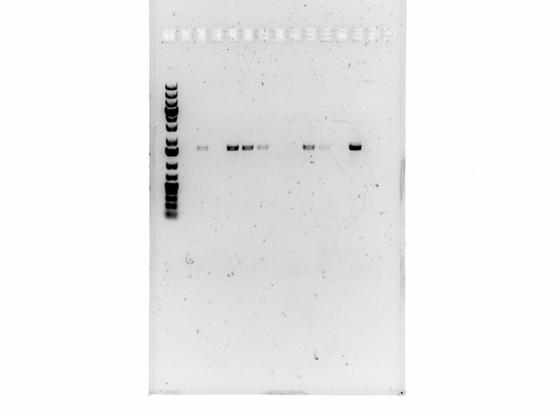
Turns out the probably 10-15 year old 20 L drum of THF that seems to have never been opened but still looks to be no more than 1/2 full is, in fact, peroxide free! #realtimechem #lablife

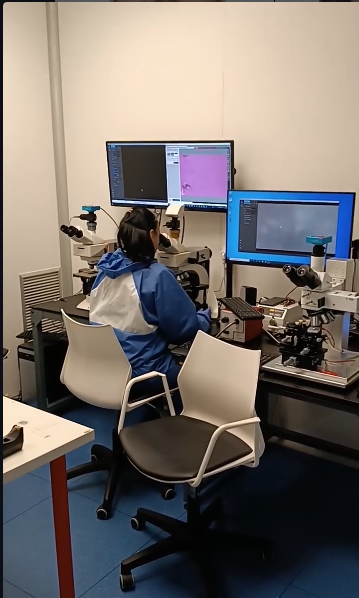
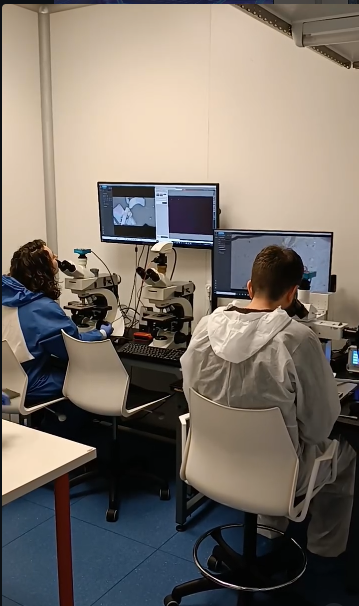
Inside the lab.

Exploring how light behaves at the nanoscale, one experiment at a time.

From microscopy to data analysis, this is where research happens.

QnanoOptics at UniOvi

#nanophotonics #quantumoptics #researchlife #lablife #nanoscience #physics #sciences

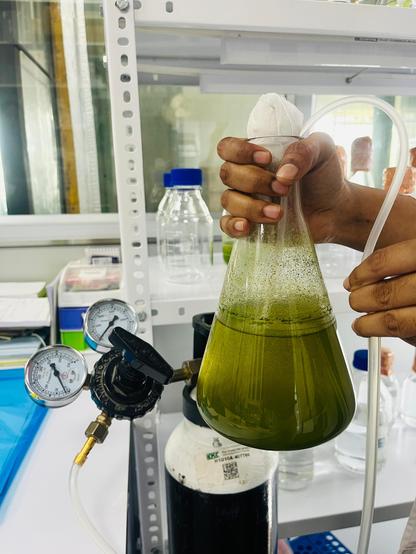
Carbelim Lab focuses on sustainable innovation through biochar production, carbon solutions, and climate technology to support environmental sustainability.

#Carbelim #LabLife #Innovation #Sustainability #Biochar #ClimateTech

Thousands apply, few are selected. This article highlights key missteps in PhD applications and interviews, and how to avoid them to increase your chances.

🔗
https://www.nature.com/articles/d41586-025-04128-8

#GraduateSchool #PhDPreparation #AcademicSuccess #ScienceCareers #LabLife

Eight common errors I see in PhD applications and interviews, and how to avoid them

Convince a supervisor that you’re a great fit for their laboratory by preparing questions, honing your personal statement and showcasing strong team-player instincts.

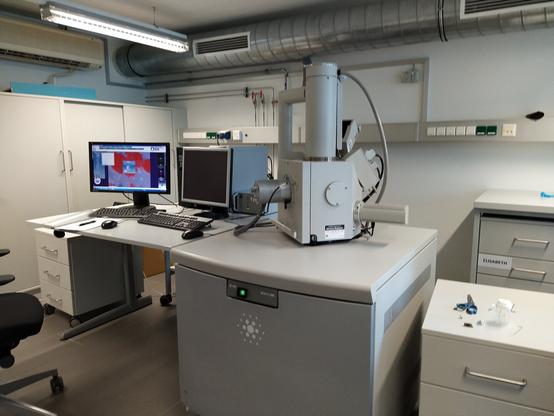
Another photo from my training that I found, this time not from organic chemistry but from inorganic chemistry! Working with the scanning electron microscope.

A scanning electron microscope (SEM) uses a focused electron beam instead of light to image surfaces at the nanometer scale.

Three types:

SEM: The electron beam scans the surface while detectors capture topography and material contrast.

TEM: Electrons transmit through thin samples, revealing atomic scale details inside the material.

STEM: A combination of both, enabling imaging and chemical analysis at the atomic level.

Measurements include microstructure, phase composition, grain size, crack patterns, often combined with mechanical or magnetic properties.

The task was to create a compact table for five samples including microstructure (optical microscope + SEM), hardness, crack resistance parameter, magnetic saturation (Tm³/kg), and coercive field (kA/m), a pure data summary without comments.

#SEM #ScanningElectronMicroscope #MaterialsScience #InorganicChemistry #Microstructure #ElectronMicroscopy #LabLife #Research #TEM #STEM #MaterialCharacterization #HardnessTesting #MagneticProperties #ScienceTraining
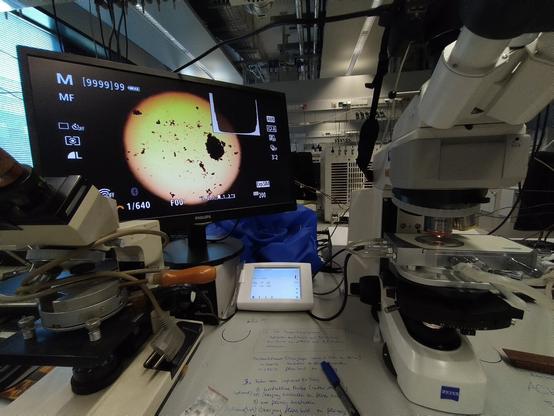
Another photo from my training, this time captured during the analysis of a polymer sample under the light microscope ✨🔬

The material is based on a polycondensation reaction of 4,4´-dihydroxybiphenyl with an aliphatic dicarboxylic acid chloride. Using an aqueous phase with sodium hydroxide and a phase transfer catalyst results in a polymer whose structure and properties strongly depend on the ordering of its molecular chains.

It becomes especially interesting when looking at the thermal and optical properties. In differential scanning calorimetry (DSC), the material shows two endothermic transitions. This means that the ordered structure is not lost all at once, but stepwise via a liquid crystalline phase into a fully isotropic state.

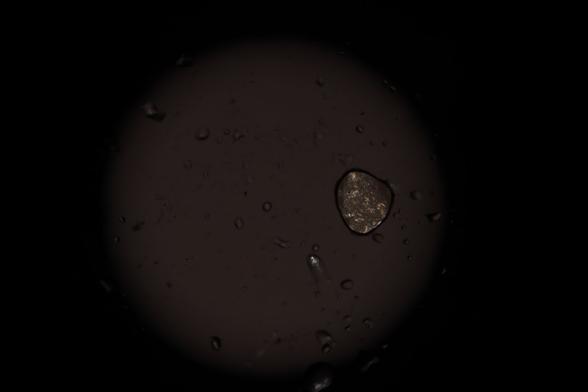
Under the polarizing microscope, this order becomes directly visible. The sample exhibits birefringence, meaning direction-dependent refraction of light. This only occurs when regions within the material are organized on a scale comparable to the wavelength of light. These structures are exactly what create the fascinating patterns and colors in the image.

In short, a small window into the world of liquid crystals, somewhere between ordered structure and thermally driven disorder.

I love these moments when chemistry is not only measurable, but also visible.

#chemistry #polymer #polymerchemistry #liquidcrystals #microscopy #polarizedlight #birefringence #materials #materialscience #lablife #science #research #stem #scicomm
I just found this photo of one of the most disgusting preparations of my entire training… PU foam!

First, a highly branched polyester was synthesized from adipic acid, oleic acid, and phthalic anhydride with 1,1,1-tris(hydroxymethyl)propane using PTSA as an acid catalyst. The polycondensation ran for many hours at ~190 °C under nitrogen and vacuum while water was continuously removed as a by-product.

During the reaction, the acid number (determined by titration, mg KOH/g) was monitored until it dropped below 10, with a target around 5. The resulting viscous polyester polyol was then reacted with tolylene-2,4-diisocyanate to produce rigid polyurethane foam.

Chemically interesting.
Visually and olfactorily… slightly traumatic. 🧪😵

#chemistry #organicchemistry #polymerchemistry #polyurethane #polymer #lablife #chemistrylab #chemstudent #polyester #synthesis

LAB CHRONICLE #26
– Shoot cancelled –

Scenario: caffeinated Leidenfrost demo.
Ambition: Nobel Prize (or just a viral post).
Reality: smell of burnt coffee, empty fire extinguisher, not a single gram of coffee left.

Conclusion:
Science also means knowing when to stop filming, right before the smoke ruins the shot.
But more importantly, it's realizing too late that we sacrificed all the coffee… for that.

#BehindTheExperiment #CoffeeSacrifice #NobelDreams #ChaosUnderControl #LabLife

Throwback to one of my favorite lab successes from last year! 🧬

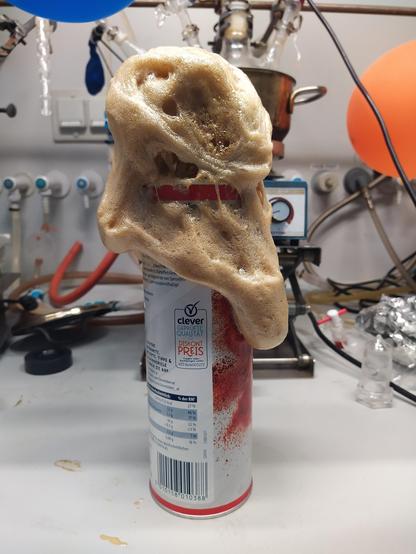
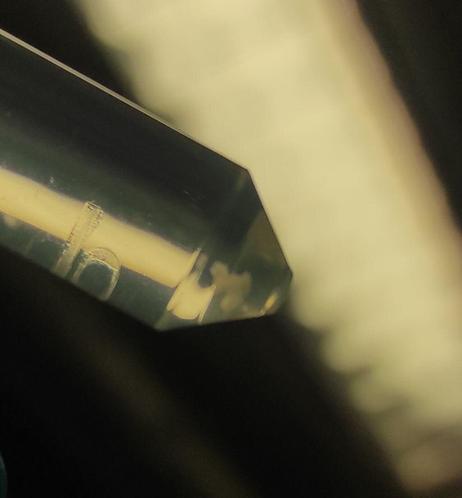
Image 1: The most beautiful pellet. Purified plasmid DNA, still in the wash solution, isolated via midiprep from E. coli that I cloned myself.
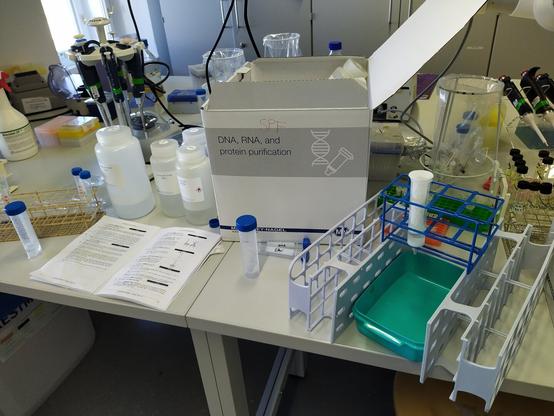
Image 2: Pure lab chaos. In the middle of the midiprep.
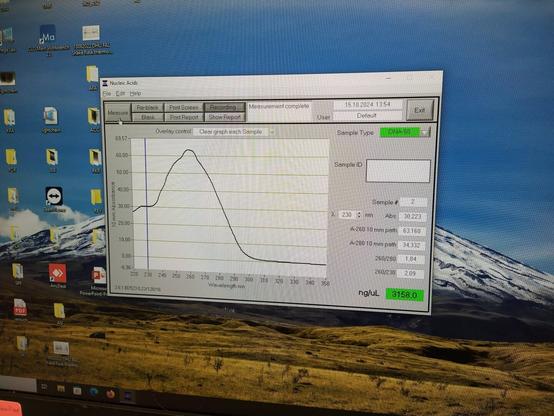
Image 3: The proof. 3158 ng/µL of isolated clean DNA measured on the Nanodrop. Yes, that is much xD
Image 4: And the happy ending. The gel image shows the successful transformation of the gene into Acetobacterium woodii. The new gene was inserted using CRISPR Cas via homologous recombination. Project goal achieved! Two new A. woodii strains that didn't exist before I created them. Proud parent moment. 🧬✂️

The goal of the project is to use A. woodii to produce bioalcohols like ethanol or 2‑butanol (that's my area) directly from CO₂ in the air. 🌍💚

#LabLife #MolecularBiology #CRISPR #GenomeEditing #Microbiology #Science #Research #Plasmid #Biotechnology

Me: "For its age this pump looks remarkably clean"

Drains oil, puts in a small amount of fresh oil, runs for 30-45 min, drains again and there is a lot of particulate.

Me: "Hmm"

Opens pump to find out the reason it was clean on the outside was probably because people weren't changing the oil frequently enough.

#LabLife #LabNightmares #Chemistry #ChemiVerse