🎧 In Science podcast - How can we recycle rubber tires?

In the new episode, Prof. Francesco Picchioni shares insights from his startup that uses new technologies to recycle tire rubber into new products such as flip-flops.🚗♻️🩴

Listen now via Spotify/Apple Podcast/RSS feed 👇
🔗 https://www.rug.nl/about-ug/latest-news/news/podcasts/

🧪 #SciComm #ScienceNewsroom #recycling #research #polymer #science #chemistry #chemical #product #engineering #scientistsOnMastodon @universityofgroningen

Bayreuth Polymer Scientist Receives the Heinz Maier-Leibnitz Prize

Chemist Prof. Dr Alex J. Plajer from the University of Bayreuth has been awarded the 2026 Heinz Maier-Leibnitz Prize of the German Research Foundation (DFG). The prize is considered the most important distinction for early-career researchers in Germany.

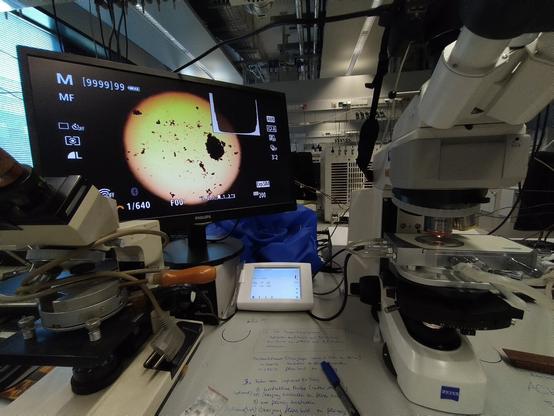
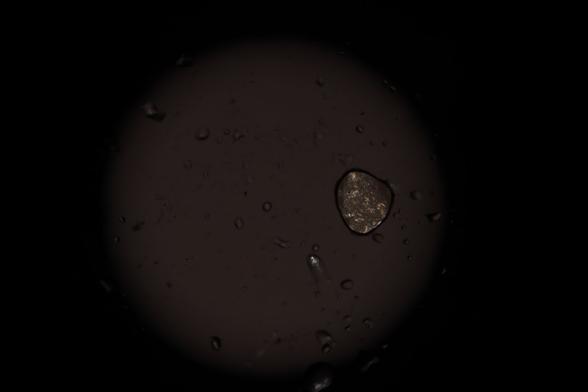
Another photo from my training, this time captured during the analysis of a polymer sample under the light microscope ✨🔬

The material is based on a polycondensation reaction of 4,4´-dihydroxybiphenyl with an aliphatic dicarboxylic acid chloride. Using an aqueous phase with sodium hydroxide and a phase transfer catalyst results in a polymer whose structure and properties strongly depend on the ordering of its molecular chains.

It becomes especially interesting when looking at the thermal and optical properties. In differential scanning calorimetry (DSC), the material shows two endothermic transitions. This means that the ordered structure is not lost all at once, but stepwise via a liquid crystalline phase into a fully isotropic state.

Under the polarizing microscope, this order becomes directly visible. The sample exhibits birefringence, meaning direction-dependent refraction of light. This only occurs when regions within the material are organized on a scale comparable to the wavelength of light. These structures are exactly what create the fascinating patterns and colors in the image.

In short, a small window into the world of liquid crystals, somewhere between ordered structure and thermally driven disorder.

I love these moments when chemistry is not only measurable, but also visible.

#chemistry #polymer #polymerchemistry #liquidcrystals #microscopy #polarizedlight #birefringence #materials #materialscience #lablife #science #research #stem #scicomm
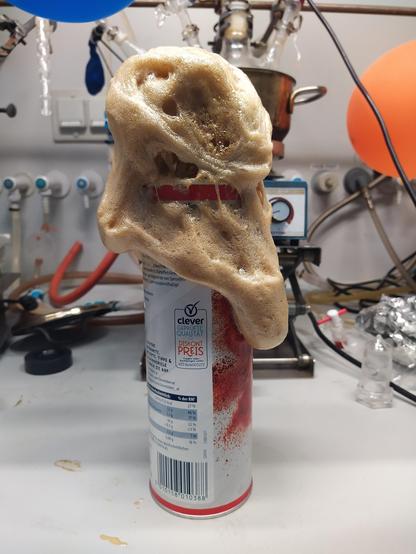
I just found this photo of one of the most disgusting preparations of my entire training… PU foam!

First, a highly branched polyester was synthesized from adipic acid, oleic acid, and phthalic anhydride with 1,1,1-tris(hydroxymethyl)propane using PTSA as an acid catalyst. The polycondensation ran for many hours at ~190 °C under nitrogen and vacuum while water was continuously removed as a by-product.

During the reaction, the acid number (determined by titration, mg KOH/g) was monitored until it dropped below 10, with a target around 5. The resulting viscous polyester polyol was then reacted with tolylene-2,4-diisocyanate to produce rigid polyurethane foam.

Chemically interesting.
Visually and olfactorily… slightly traumatic. 🧪😵

#chemistry #organicchemistry #polymerchemistry #polyurethane #polymer #lablife #chemistrylab #chemstudent #polyester #synthesis
One Sailing Pulley To Rule Them All

When thinking of humanity’s ability to harness wind energy, many people will conjure images of windmills from places like The Netherlands or Persia. But people have been using wind energy for…

Hackaday

@kimlockhartga 🧵 a #polymer: https://en.wikipedia.org/wiki/Polymer Polymers are large compounds of macromolecules, therefore great to "build" something. We have natural and artificial polymers: Your DNA or coton fibres are made from polymer as well as a plastic bottle.

We mostly built stuff with artificial polymers because they were cheap and very easy to engineer since the 1950s. With the problem of plastic waste, engineering seeks more and more for natural polymers.
The Chitin in mycelium works like a glue

Polymer - Wikipedia

🫗 The perfect polymer? Plant-based plastic is fully saltwater degradable and leaves behind zero microplastics

https://phys.org/news/2025-12-polymer-based-plastic-fully-saltwater.html

#plastics #materials #chemistry #waste #polymer

The perfect polymer? Plant-based plastic is fully saltwater degradable and leaves behind zero microplastics

Researchers led by Takuzo Aida at the RIKEN Center for Emergent Matter Science (CEMS) in Japan have one-upped themselves in their quest to solve our microplastic problem.

Phys.org
Polymer Skins That Change Color And Texture When Exposed To Water

Researchers at Stanford University recently came up with an interesting way (Phys.org summary) to create patterns and colors that emerge when a polymer is exposed to water. Although the paper itsel…

Hackaday