 Skulldox
Got a huge collection of sketches I've been meaning to upload. So uhhh.... here you go!
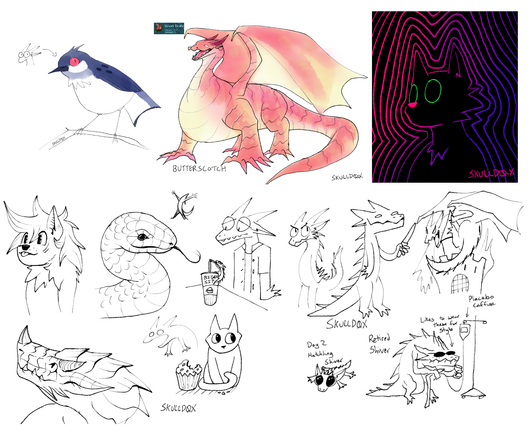
Got a huge collection of sketches I've been meaning to upload. So uhhh.... here you go!
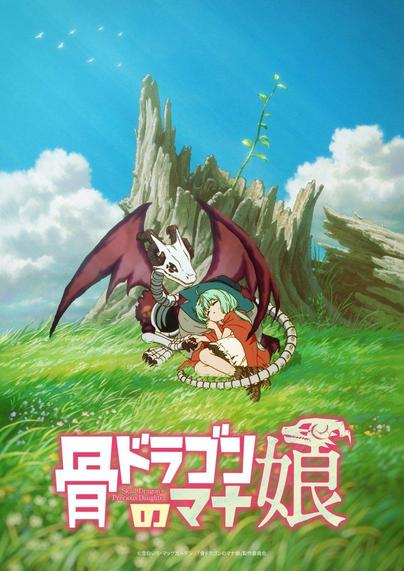
I can't believe my luck -- they are animating another manga with derg goodness. I just discovered this series a month before the announcement.
Would very much recommend this series -- the story always centers around the many goofy dragons that show up in each arc, and they are fleshed out just like any other main character.
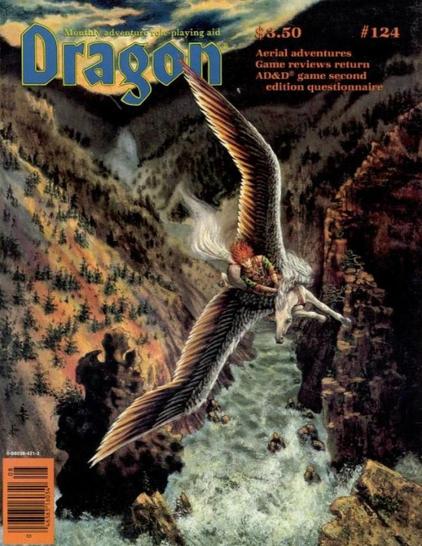
🦝The Realm of Kaerwyn has updated!🦝
Issue 23 Page 11
Kaerwyn's RP https://kaerwyn.com/
⚔️Latest Page: https://comic.kaerwyn.com/
#webcomic #webcomics #comic #fantasy #werewolf #dragon #kaerwyn

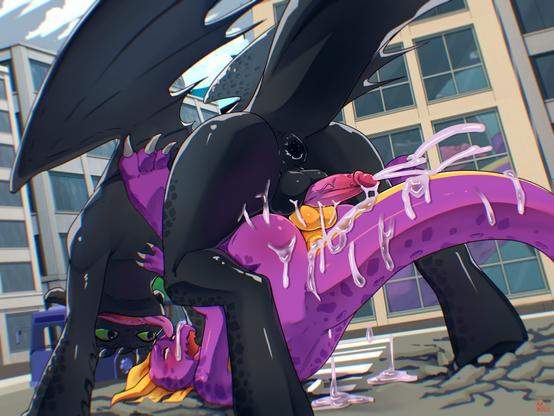
Archangel Michael
Also called Michael the Taxiarch. A taxiarch is used in the Greek language to mean “brigadier,” or a commander of a company. In Greek Orthodoxy, it refers to the Archangels Michael or Gabriel as leaders of the heavenly hosts.
Michael is an archangel & warrior of God in Christianity, Islam, & Judaism. The earliest surviving mentions of his name are in the 2nd or 3rd centuries BC Jewish works, often but not always apocalyptic. In these works, he’s the chief of the angels & archangels. He’s the guardian prince of Israel & is responsible for the care of the people of Israel.
Christianity conserved nearly all of Jewish traditions concerning him. He’s mentioned explicitly in Revelation 12:7-12, where he does battle with Satan, & in the Epistle of Jude, where the archangel & the devil have an argument over the body of Moses.
The Book of Enoch lists Michael as 1 of 7 archangels. The remaining names are: Uriel, Raguel, Raphael, Sariel, Gabriel, & Remiel. He’s mentioned again in the last chapters of the Book of Daniel, a Jewish apocalypse composed in the 2nd century BC, in which a man clothed in linen tells Daniel that he & “Michael, your prince” are engaged in a battle with the “prince of Persia,” after which, at the end-time, “Michael, the great prince who protects your people, will arise.”
Enoch was instrumental in establishing the pre-eminent place of Michael among the angels & archangels. In later Jewish works, he’s said to be their chief, mediating the Torah, & standing at the right hand of the throne of God.
In the traditions of the Qumran community, he defends, or leads, the people of God in the end-time battle. In other writings, he’s responsible for the care of Israel & acts as commander of the heavenly armies. He’s Israel’s advocate, contesting Satan’s claim to the body of Moses.
He intercedes between God & humanity & serves as High Priest in the heavenly sanctuary. (So would this make him Aaron’s equal? We’re sincerely asking. Let us know your take in the comments.) He accompanies the souls of the righteous dead to Paradise.
The 7 archangels (or 4, as traditions differ, but always include Michael) were associated with the branches of the menorah, the sacred 7-branched lamp stand in the Temple, as the 7 spirits before the throne of God. This is reflected in the Book of Revelation 4:5. Michael is mentioned explicitly in Revelation 12:7-12, where he does battle with Satan & casts him out of heaven so that he no longer has that exclusive access to God as accuser (his former role in the Old Testament).
Satan’s fall at the coming of Jesus marks the separation of the New Testament from Judaism. In Luke 22:31, Jesus tells Peter that Satan has asked God for permission to “sift” the disciples, the goal being to accuse them. But the accusation by Jesus, who thus takes on the role played by angels, & especially by Michael, in Judaism.
Michael is mentioned by anem for the 2nd time in the Epistle of Jude, which is an impassioned plea for the believers to engage in battle against the incursion of the error. In verses 9-10, the author denounces the heretics by contrasting them with the archangel Michael, who, in disputing with Satan over the body of Moses.
According to rabbinic tradition, Michael acted as the advocate of Israel. Sometimes he had to fight with the princes of other nations (Daniel 10:13), & particularly with the angel Samael, Israel’s accuser. Their hostility dates from the time Samael was thrown from heaven & tried to drag Michael down with him, requiring God’s intervention.
The rabbis declare that Michael came into his role as defender at the time of the biblical patriarchs. Rabbi Eliezer ben Jacob said Michael rescued Abraham from the furnace into which he’d been thrown by Nimrod. Some say he was the “one that had escaped” (Genesis 14:13), who told Abraham that Lot had been taken captive & who protected Sarah from defilement by Abimelech.
Michael prevented Isaac’s being sacrificed by his dad by substituting a ram in his place. He saved Jacob, while still in his mom’s womb, from death at the hands of Samuel. Michael later prevented Laban from hurting Jacob. The midrash Exodus Rabbah holds that Michael exercised his function as an advocate of Israel at the time of the Exodus & destroyed Sennacherib’s army.
Epiphanius of Salamis (circa 310-circa 320-403), in his Coptic-Arabic Hexaemeron, referred to Michael as a replacement of Satan. Accordingly, after Satan fell, Michael was appointed to the function Satan served when he was still 1 of the noble angels.
A painting of Michael slaying a serpent became a major art piece at the Michaelion after Constantine defeated Licinius near there in 324. This contributed to the standard iconography that developed of Michael as a warrior saint slaying a dragon. The Michaelion was a magnificent church & in time became a model for hundreds of other churches in Eastern Christianity.
In the 4th century, St. Basil the Great’s homily, De Angelis, St. Michael over all the angels. He was called “Archangel” because he heralds other angels, the title archangelos applied to him in Jude 1:9. The angelology of Pseudo-Dionysius, which was widely read as of the 6th century, gave Michael a rank in the hierarchy of angels.
Later, in the 13th century, others such as Bonventure believed him to be Prince of the Seraphim, the 1st of the 9 angelic orders. According to Thomas Aquinas, Michael is the Prince of the last & lowest choir, the Angels.
Catholics often refer to Michael as “Holy Michael, the Archangel” or “St. Michael.” He’s generally referred to in Christian liturgies as “St. Michael,” as in the Litany of the Saints. In a shortened archangel, is mentioned by name, omitting Saints Gabriel & Raphael.
In Roman Catholic teachings, St. Michael has 4 main roles or offices. His 1st role is the leader of the Army of God & the leader of celestial forces in triumphing over the powers of Hell. He’s viewed as the angelic model for the virtues of the “spiritual warrior,” his conflict with evil taken as “the battle within.”
The 2nd & 3rd roles of Michael in Catholic teachings deal with death. In his 2nd role, he’s the angel of death, carrying the souls of Christians to Heaven. In his 3rd role, he weighs souls on his perfectly balanced scales. The scales are a common object he holds in art.
In his 4th role, St. Michael, the special patron of the Chosen People in the Old Testament, is also Guardian of the Church. St. Michael was revered by the military orders of knights during the Middle Ages. The names of villages around the Bay of Biscay reflect this history.
The Eastern Orthodox give Michael the title Archistrategos, or “Supreme Commander of the Heavenly Hosts.” The Eastern Orthodox pray to their guardian angels & above all, to Michael & Gabriel. The Eastern Orthodox have always had a strong devotion to angels. In modern times, they’re referred to by the term “Bodiless Powers.” Several feasts dedicated to Archangel Michael are celebrated by the Eastern Orthodox throughout the year.
In Russia, many monasteries, cathedrals, courts, & merchant churches are dedicated to the Chief Commander Michael. Most Russian cities have a church or chapel dedicated to the archangel Michael. In Ukraine, the archangel Michael is the patron saint of Kyiv. He became popular from the time of Prince Vsevolod of Kyivan Rus’.
While in the Serbian Orthodox Church, St. Sava has a special role as the establisher of its autocephaly & largest Belgrade church devoted to him, the capital Belgrade’s Orthodox cathedral, the see church of the patriarch, is devoted to Michael.
The place of Michael in the Coptic Church of Alexandra is as a saintly intercessor. He’s the 1 who presents to God the prayers of the just, who accompanies the souls of the dead to Heaven, who defeats the devil. He’s celebrated liturgically on the 12th of each Coptic month.
In Alexandria, a church was dedicated to him in the early 4th century on the 12th of the month of Paoni. The 12th month of Hathor is the celebration of Michael’s appointment in Heaven, where Michael became the chief of the angels.
Seventh-Day Adventists believe that “Michael” is but 1 of many titles applied to the pre-existent Christ, or Son of God. According to Adventist theology, Michael was/is considered the “Eternal Word,” & the 1 by whom all things were created. The Word was then born, incarnated as Jesus.
They believe that the name “Michael” signifies “One Who Is Like God” & that, as the “Archangel” or “chief or head of the angels,” he led the angels; thus, the statement in Revelation 12:7-9 refers to Jesus as Michael.
Jehovah’s Witnesses believe that Michael is another name for Jesus in Heaven, in His pre-human & post-resurrection existence. They say the definite article in Jude 9 identifies Michael as the only archangel. They consider Michael to be synonymous with Christ, described in 1 Thessalonians 4:16: “with a cry of command, with the voice of an archangel, & with the sound of the trumpet.”
They believe the prominent roles assigned to Michael in Daniel 12:1, Revelation 12:7, Revelation 16, & Revelation 19:14 are identical to Jesus’ roles, being the 1 chosen to lead God’s people & as the only 1 who “stands up,” identifying the 2 as the same spirit being.
Because they identify Michael with Jesus, he’s considered the 1st & greatest of all God’s heavenly “sons,” God’s chief messenger, who takes the lead in vindicating God’s sovereignty, sanctifying his name, fighting the wicked forces of Satan & protecting God’s covenant people on earth. Jehovah’s Witnesses also identify Michael with the “Angel of the Lord” who led & protected the Israelites in the wilderness.
Members of the Mormon Church believe that Michael is Adam (of Adam & Eve fame), the Ancient of Days (Daniel 7), a prince, & the patriarch of the human family. They also hold that Michael assisted Jehovah (the pre-mortal form of Jesus) in the creation of the world under the direction of God the Father (Elohim). Under the direction of the Father, Michael also cast Satan out of Heaven.
In Islam, Mika’il (Michael) is 1 of 4 archangels along with Jibril (Gabriel, whom he’s often paired with), Israfil (trumpeter angel) & ‘Azra’il (angel of death). In other Islamic literature, Michael is associated with mercy. He asks God for forgiveness for humans & is 1 of the 1st angels who obeyed God’s orders to bow before Adam.
From the tears of Michael, angels of mercy are created as his helpers. Like Gabriel, with whom he’s often mentioned together, Michael is also a messenger. While Gabriel delivers messages from Heaven to humans, Michael delivers messages to the angelic world.
As the angel to execute God’s providence, he’s also associated with natural phenomena & causes rain upon the lands. Unlike Christian traditions, Michael is rarely shown as a warrior-angel, with a few references to the Battle of Badr by Suyuti as an exception.
The Miraj literature on occasion mentions both Gabriel & Michael as 2 angels who showed Muhammad Paradise & Hell. He’s mentioned in Shia supplication (Dua), reportedly handed down by the 6th Imam Ja’far al-Sadiq, in the prayers for blessings for the Bearers of the Throne.
The figures of Michael & Gabriel/Jibril serve as dual pillars of angelology. While they show up in the same texts, their “personalities” & mythological roles are distinct. Michael is the celestial soldier & protector. While Gabriel is the bridge between the divine mind & the human ear.
The name Michael (Mikha’el) translates from Hebrew as a rhetorical question: “Who is like God?” This name is actually a battle cry used during the primordial war in Heaven.
In the Book of Daniel, Michael is described as the “Great Prince” who stands guard over the people of Israel. Jewish Midrash expands on this. It suggests that Michael is the high priest of the Heavenly Temple. When other nations’ guardian angels argue against Israel, Michael acts as the defense in the celestial courtroom. Because after all, God is the judge of all.
Michael’s most iconic role comes from the Book of Revelation. Here, he leads an army of God against the Dragon (a.k.a. Satan). He’s almost always dressed in Roman/Medieval armor, standing over a defeated demon/dragon, holding a spear/sword.
In Catholic traditions, Michael has a secondary role as the Psychopomp. A Psychopomp is a conductor or a guide of souls. The 1 who “weighs” souls at the moment of death. This is why he’s sometimes shown with scales.
In Islamic tradition, Mikail (Michael) is 1 of 4 archangels. While Jibril feeds the soul (through revelation), Mikail is the Angel of Sustenance. He’s responsible for the forces of nature, specifically rain & lightning. Legends say he’s so moved by the majesty of God that he hasn’t smiled since the creation of Hell.
In the United States, Michael is the patron saint of paratroopers, police officers, & the military.
In the General Roman Calendar, the Anglican Calendar of Saints, & the Lutheran Calendar of Saints, Michael’s feast day is Michaelmas Day (September 29). The day is also the feast day of St. Gabriel & Raphael, in the General Roman Calendar & the Feast of St. Michael & All Angels in the Church of England.
In the Eastern Orthodox Church, St. Michael’s principal feast day is November 8. November 21, if they’re using the Gregorian calendar. Honoring him along with the rest of the “Bodiless Powers of Heaven” (angels) as their Supreme Commander, & the Miracle at Chonae is celebrated on September 6.
In the Coptic Orthodox Church, the main feast day is on 12 Hathor (between November 9 & December 9) & 12 Paoni (between June 8 & July 7). He is celebrated liturgically on the 12th of each Coptic month.
On April 7, the Oriental Orthodox Church commemorates the deliverance of the prophet Jeremiah from prison by Michael.
One-Time Monthly YearlyMake a one-time donation
Make a monthly donation
Make a yearly donation
Choose an amount
$1.00 $5.00 $10.00 $1.00 $5.00 $10.00 $5.00 $10.00 $15.00Or enter a custom amount.
$Your contribution is appreciated.
Your contribution is appreciated.
Your contribution is appreciated.
DonateDonate monthlyDonate yearly #AzraIl #1Thessalonians416 #12Hathor #12Paoni #13thCentury #2ndCenturyBC #324 #3rdCenturyBC #4thCentury #6thCentury #Abimelech #Abraham #Adam #AllAngels #AncientOfDays #AngelOfDeath #AngelOfSustenance #Angelology #AnglicanCalendarOfSaints #Apocalyptic #April7 #ArchangelGabriel #ArchangelMichael #ArchangelRaguel #ArchangelRaphael #ArchangelRemiel #ArchangelSariel #ArchangelUriel #Archangelos #Archistrategos #ArmyOfGod #BattleOfBadr #BayOfBiscay #BearersOfTheThrone #Belgrade #BodilessPowers #BodilessPowersOfHeaven #Bonventure #BookOfDaniel #BookOfEnoch #BookOfRevelation #Catholic #Catholics #ChiefCommanderMichael #Christ #Christianity #ChurchOfEngland #Circa310 #Circa320 #Circa403 #Constantine #CopticChurchOfAlexandria #Daniel #Daniel1013 #Daniel121 #Daniel7 #DeAngelis #December9 #Disciples #Dragon #Dua #EasternChristianity #EasternOrthodox #EasternOrthodoxChurch #Elohim #EpiphaniusOfSalamis #EpistleOfJude #EternalWord #ExodusRabbah #FeastDay #FeastOfStMichael #GeneralRomanCalendar #Genesis1413 #GreatPrince #GreekOrthodoxy #GregorianCalendar #Hathor #Heaven #HeavenlyTemple #Hebrew #Hell #Hexaemeron #HighPriest #Homily #Isaac #Islam #Israel #Jacob #Jehovah #JehovahSWitnesses #Jeremiah #Jesus #Jewish #Jibril #Judaism #Jude19 #Jude9 #July7 #June8 #KievanRus #KingSennacherib #Kyiv #Laban #Licinius #LitanyOfTheSaints #Lot #Luke2231 #LutheranCalendarOfSaints #Menorah #Mercy #MichaelTheTaxiarch #Michaelion #MichaelmasDay #Midrash #Mikail #MikhaEl #MiracleAtChonae #Miraj #MormonChurch #Moses #Muhammad #NewTestament #Nimrod #November21 #November8 #November9 #OldTestament #OrientalOrthodoxChurch #Paoni #Paradise #Patriarchs #PatronSaint #PatronSaints #Persia #PrinceOfTheSeraphim #PrinceVsevolod #Prophet #PseudoDionysius #Psychopomp #Qumran #Rabbis #Revelation127 #Revelation12712 #Revelation1279 #Revelation16 #Revelation1914 #Revelation45 #RomanCatholic #Russia #Samael #Samuel #Sarah #Satan #Scales #September29 #September6 #SerbianOrthodoxChurch #SeventhDayAdventists #Shia #SonOfGod #Spear #StBasilTheGreat #StGabriel #StMichael #StRaphael #StSava #Suyuti #Temple #ThomasAquinas #Torah #Trumpet #Ukraine #UnitedStatesOfAmerica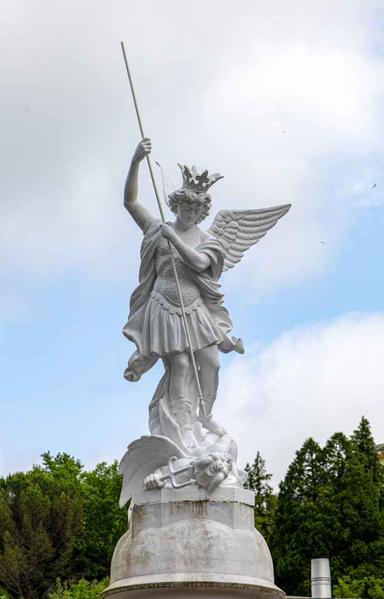
 FDA approved
  lychee
 Jakkal
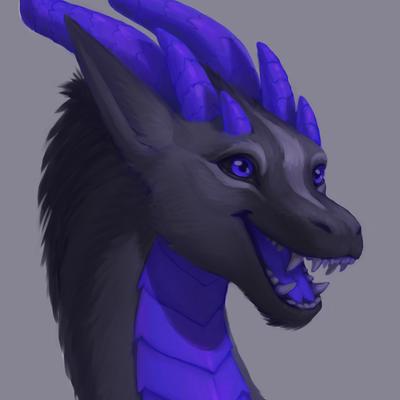 Here be Dragons and Whatnot
 Mollin
 Timothy S. Brannan
 cherry!! 🌸 ΘΔ
 Socks Outgrowing FWA26
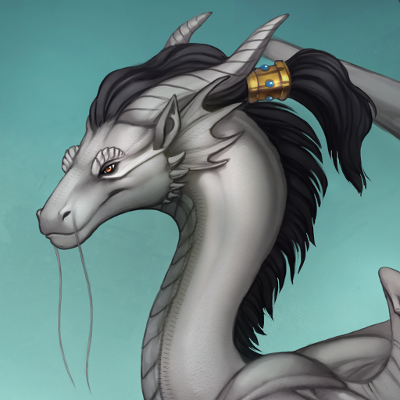 Enalys
 Spirituality & Religious Studies