
đź§µ
"What Primary Care Practitioners Need to Know about the New NICE Guideline for #MyalgicEncephalomyelitis/#ChronicFatigueSyndrome in Adults" (Dec '22)

2 of 4 authors are MDs

Free
https://mdpi.com/2227-9032/10/12/2438

I thought this was very good. Will post extracts

My overview:
Paper has lots of useful points & also helpful overall to show how the UK NICE guidelines for ME/CFS have changed dramatically from the 2007 version, with the updated approach being much more sympathetic regarding helping patients

What Primary Care Practitioners Need to Know about the New NICE Guideline for Myalgic Encephalomyelitis/Chronic Fatigue Syndrome in Adults

The new NICE guideline for myalgic encephalomyelitis/chronic fatigue syndrome (ME/CFS), published in October 2021, makes significant changes in treatment recommendations. It acknowledges the complexity of this chronic medical condition, which always impacts quality of life and can be profoundly disabling, recognising the prejudice and stigma that people with ME/CFS often experience in the absence of any specific diagnostic test. The guideline outlines steps for accurate diagnosis, recognising post-exertional malaise as a core symptom; importantly, ME/CFS can now be diagnosed after just 3 months in a bid to improve long-term health outcomes. It recommends the need for individual, tailored management by a multi-disciplinary team, ensuring that the wellbeing of the individual is paramount. The guideline makes clear that any programme based on fixed incremental increases in physical activity or exercise, for example, graded exercise therapy (GET), should not be offered as a treatment for ME/CFS and emphasises that cognitive behavioural therapy (CBT) should only be offered as a supportive intervention. Because of the rigorous methodology required by NICE Committee review and the inclusion of the testimony of people with lived experience as committee members, this guideline will influence the future diagnosis and management of ME/CFS in the UK and beyond.

MDPI

2/

“The new NICE guideline for #myalgicencephalomyeltis/#chronicfatiguesyndrome (ME/CFS), published in October 2021, makes significant changes in treatment recommendations. It acknowledges the complexity of this chronic medical condition, which always impacts quality of life and can be profoundly disabling, recognising the prejudice and stigma that people with ME/CFS often experience in the absence of any specific diagnostic test.”

@mecfs #mecfs #cfs #neurome #cfsme #myalgice #pwme

3/

“The [NICE ME/CFS] guideline makes clear that any programme based on fixed incremental increases in physical activity or exercise, for example, graded exercise therapy (GET), should not be offered as a treatment for ME/CFS and emphasises that cognitive behavioural therapy (CBT) should only be offered as a supportive intervention”

#mecfs #cfs #PwMEs #meeps

4/
“The new guideline acknowledges that people with ME/CFS may have experienced prejudice and disbelief [6,7] by people who do not understand their illness and encourages practitioners to consider:

- how this may have affected the person with ME/CFS, and

- that the individual may have lost trust in health and social services and be hesitant about their involvement”

#mecfs #cfs #cfsme

5/

“The [NICE #MEcfs] guideline recognises that ME/CFS can cause profound, long-term disability, worsened when family, carers, employers, and clinicians fail properly to recognise the condition and its impact”

#CFS #PwME #MyalgicEncephalomyelitis #ChronicFatigueSyndrome

6/

“This has been compounded by a lack of effective treatments, wide variation in access to services, and no central register of harms experienced by patients from the treatments offered, which has served only to further alienate many people with ME/CFS and, in some cases, to undermine the confidence of those caring for them”

Tom: Great to see this. I first mentioned central register point in a published letter in 2010

#MEcfs #CFS #GradedExercise #GradedExerciseTherapy #cfsme #pwme

7/

“To balance the need for earlier diagnosis with the need for accurate diagnosis, investigations are recommended at baseline to exclude alternative diagnoses and at regular follow up to capture new or missed diagnoses.

Earlier suspicion of ME/CFS and the recommendation for initial interventions including advice on activity, energy, and symptom management aim to reduce morbidity (as a secondary prevention strategy).”

#mecfs #cfs #MyalgicEncephalomyelitis #chronicfatiguesyndrome #cfsme

8/

“People with ME/CFS should be advised to remain within their energy limit when undertaking activity of any kind. This means they should not push through symptoms to complete tasks, to reduce the risk of post-exertional malaise. They can be guided in this approach through energy management techniques and should balance activity with regular rest periods.”

#mecfs #cfs #cfsme #pwme #PwMEs #MyalgicEncephalomyelitis

9/

Summary of Messages from the 2021 ME/CFS NICE Guideline

From:
"What Primary Care Practitioners Need to Know about the New NICE Guideline for #MyalgicEncephalomyelitis/#ChronicFatigueSyndrome in Adults" (Dec 2022)

https://www.mdpi.com/2227-9032/10/12/2438

#MedTwitter #MedEd #MECFS #CFS #PwME

What Primary Care Practitioners Need to Know about the New NICE Guideline for Myalgic Encephalomyelitis/Chronic Fatigue Syndrome in Adults

The new NICE guideline for myalgic encephalomyelitis/chronic fatigue syndrome (ME/CFS), published in October 2021, makes significant changes in treatment recommendations. It acknowledges the complexity of this chronic medical condition, which always impacts quality of life and can be profoundly disabling, recognising the prejudice and stigma that people with ME/CFS often experience in the absence of any specific diagnostic test. The guideline outlines steps for accurate diagnosis, recognising post-exertional malaise as a core symptom; importantly, ME/CFS can now be diagnosed after just 3 months in a bid to improve long-term health outcomes. It recommends the need for individual, tailored management by a multi-disciplinary team, ensuring that the wellbeing of the individual is paramount. The guideline makes clear that any programme based on fixed incremental increases in physical activity or exercise, for example, graded exercise therapy (GET), should not be offered as a treatment for ME/CFS and emphasises that cognitive behavioural therapy (CBT) should only be offered as a supportive intervention. Because of the rigorous methodology required by NICE Committee review and the inclusion of the testimony of people with lived experience as committee members, this guideline will influence the future diagnosis and management of ME/CFS in the UK and beyond.

MDPI

10/

“Post-exertional malaise in the first few months after a viral infection is usually a red flag for ME/CFS.”

#postviralillness #postviralsyndrome #postexertionalmalaise #mecfs #cfs @longcovid

11/

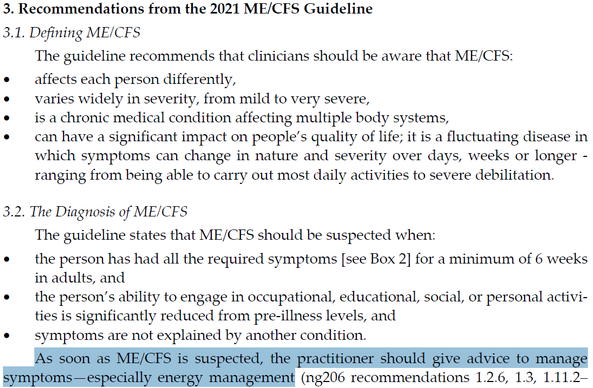
"Recommendations from the 2021 ME/CFS Guideline"

Includes:
"As soon as ME/CFS is suspected, the practitioner should give advice to manage
symptoms—especially energy management" 👍

From:
"What Primary Care Practitioners Need to Know about the New NICE Guideline for #MyalgicEncephalomyelitis/#ChronicFatigueSyndrome in Adults" (Dec 2022)

https://mdpi.com/2227-9032/10/12/2438

@mecfs #mecfs #CFS #MyalgicE #PwME #MEeps #CFSME #CFIDS #SEID #NeuroME #ME #MyE

What Primary Care Practitioners Need to Know about the New NICE Guideline for Myalgic Encephalomyelitis/Chronic Fatigue Syndrome in Adults

The new NICE guideline for myalgic encephalomyelitis/chronic fatigue syndrome (ME/CFS), published in October 2021, makes significant changes in treatment recommendations. It acknowledges the complexity of this chronic medical condition, which always impacts quality of life and can be profoundly disabling, recognising the prejudice and stigma that people with ME/CFS often experience in the absence of any specific diagnostic test. The guideline outlines steps for accurate diagnosis, recognising post-exertional malaise as a core symptom; importantly, ME/CFS can now be diagnosed after just 3 months in a bid to improve long-term health outcomes. It recommends the need for individual, tailored management by a multi-disciplinary team, ensuring that the wellbeing of the individual is paramount. The guideline makes clear that any programme based on fixed incremental increases in physical activity or exercise, for example, graded exercise therapy (GET), should not be offered as a treatment for ME/CFS and emphasises that cognitive behavioural therapy (CBT) should only be offered as a supportive intervention. Because of the rigorous methodology required by NICE Committee review and the inclusion of the testimony of people with lived experience as committee members, this guideline will influence the future diagnosis and management of ME/CFS in the UK and beyond.

MDPI

12/

“It is critical that people with ME/CFS have access to:

• an early and accurate diagnosis so they get appropriate care, and

• regular monitoring and review, particularly when their symptoms are worsening or changing”

#MyalgicEncephalomyelitis #MEcfs #CFS #PwME #chronicfatiguesyndrome

13/

“Flexibility in care provision according to the needs of the individual, including remote consultations, is essential. Home visits may be required by those severely affected, and the practitioner is unlikely to see the person with ME/CFS at their worst. Fluctuating symptoms may lead to cancelled appointments, so flexibility is crucial”

#MyalgicEncephalomyelitis #mecfs #cfs #pwme #SevereME #ChronicFatigueSyndrome

14/

"Major Symptoms for Suspecting ME/CFS" & "Other Common Symptoms of ME/#CFS"

From:
"What Primary Care Practitioners Need to Know about the New NICE Guideline for #MyalgicEncephalomyelitis/#ChronicFatigueSyndrome in Adults" (Dec 2022)

https://mdpi.com/2227-9032/10/12/2438

#MEcfs #PwME

What Primary Care Practitioners Need to Know about the New NICE Guideline for Myalgic Encephalomyelitis/Chronic Fatigue Syndrome in Adults

The new NICE guideline for myalgic encephalomyelitis/chronic fatigue syndrome (ME/CFS), published in October 2021, makes significant changes in treatment recommendations. It acknowledges the complexity of this chronic medical condition, which always impacts quality of life and can be profoundly disabling, recognising the prejudice and stigma that people with ME/CFS often experience in the absence of any specific diagnostic test. The guideline outlines steps for accurate diagnosis, recognising post-exertional malaise as a core symptom; importantly, ME/CFS can now be diagnosed after just 3 months in a bid to improve long-term health outcomes. It recommends the need for individual, tailored management by a multi-disciplinary team, ensuring that the wellbeing of the individual is paramount. The guideline makes clear that any programme based on fixed incremental increases in physical activity or exercise, for example, graded exercise therapy (GET), should not be offered as a treatment for ME/CFS and emphasises that cognitive behavioural therapy (CBT) should only be offered as a supportive intervention. Because of the rigorous methodology required by NICE Committee review and the inclusion of the testimony of people with lived experience as committee members, this guideline will influence the future diagnosis and management of ME/CFS in the UK and beyond.

MDPI

15/
"The Management of Suspected ME/CFS

The guideline states that when ME/#CFS is suspected, people should be given personalised advice about managing their symptoms, and advice (ng206 advice for people with suspected #mecfs 1.3.1):

- not to use more energy than they have—they should manage their daily activity and not push through symptoms,

- to rest and convalesce as needed (this may require changes to their daily routine, including work, education, and other activities)"

#cfsme #meeps

16/

“Pain should be investigated and managed according to best practice. Musculo-skeletal pain, neuropathic pain and headaches are the most common presentations. Treatments for pain that include exercise are unlikely to be suitable”

#MEcfs #CFS #PwME #MyalgicEncephalomyelitis #chronicfatiguesyndrome #meeps #myalgice

17/

“Rest should be part of any daily routine with frequency and duration appropriate to individual needs”

#MyalgicEncephalomyelitis #mecfs #pwme #ChronicFatigueSyndrome #cfs #meeps

18/

“Practitioners should also work with the person to find ways of minimising complications caused by gastrointestinal symptoms (such as nausea, changes to appetite, swallowing difficulties, sore throat or difficulties with the energy required to buy, prepare, and eat food). This may require medication, changes to diet or adaptations around the home.”

#mecfs #cfs #MyalgicEncephalomyelitis #chronicfatiguesyndrome #meeps #cfsme

19/

“People with ME/CFS may need aids and adaptations (such as a wheelchair, blue badge or stairlift) to help maintain their independence and improve their quality of life. These should be part of the care and support plan if they would benefit”

@mecfs #MyalgicEncephalomyelitis #chronicfatiguesyndrome #mecfs #cfs #pwme

20/

From:
"What Primary Care Practitioners Need to Know about the New NICE Guideline for #MyalgicEncephalomyelitis/#ChronicFatigueSyndrome in Adults"

https://www.mdpi.com/2227-9032/10/12/2438

@mecfs #mecfs #cfs #pwme #MEeps #cfsme

What Primary Care Practitioners Need to Know about the New NICE Guideline for Myalgic Encephalomyelitis/Chronic Fatigue Syndrome in Adults

The new NICE guideline for myalgic encephalomyelitis/chronic fatigue syndrome (ME/CFS), published in October 2021, makes significant changes in treatment recommendations. It acknowledges the complexity of this chronic medical condition, which always impacts quality of life and can be profoundly disabling, recognising the prejudice and stigma that people with ME/CFS often experience in the absence of any specific diagnostic test. The guideline outlines steps for accurate diagnosis, recognising post-exertional malaise as a core symptom; importantly, ME/CFS can now be diagnosed after just 3 months in a bid to improve long-term health outcomes. It recommends the need for individual, tailored management by a multi-disciplinary team, ensuring that the wellbeing of the individual is paramount. The guideline makes clear that any programme based on fixed incremental increases in physical activity or exercise, for example, graded exercise therapy (GET), should not be offered as a treatment for ME/CFS and emphasises that cognitive behavioural therapy (CBT) should only be offered as a supportive intervention. Because of the rigorous methodology required by NICE Committee review and the inclusion of the testimony of people with lived experience as committee members, this guideline will influence the future diagnosis and management of ME/CFS in the UK and beyond.

MDPI

21/

Relapses

From:
"What Primary Care Practitioners Need to Know about the New NICE Guideline for #MyalgicEncephalomyelitis / #ChronicFatigueSyndrome in Adults" (Dec 2022)

https://mdpi.com/2227-9032/10/12/2438

@mecfs #mecfs #cfs #pwme #cfsme

What Primary Care Practitioners Need to Know about the New NICE Guideline for Myalgic Encephalomyelitis/Chronic Fatigue Syndrome in Adults

The new NICE guideline for myalgic encephalomyelitis/chronic fatigue syndrome (ME/CFS), published in October 2021, makes significant changes in treatment recommendations. It acknowledges the complexity of this chronic medical condition, which always impacts quality of life and can be profoundly disabling, recognising the prejudice and stigma that people with ME/CFS often experience in the absence of any specific diagnostic test. The guideline outlines steps for accurate diagnosis, recognising post-exertional malaise as a core symptom; importantly, ME/CFS can now be diagnosed after just 3 months in a bid to improve long-term health outcomes. It recommends the need for individual, tailored management by a multi-disciplinary team, ensuring that the wellbeing of the individual is paramount. The guideline makes clear that any programme based on fixed incremental increases in physical activity or exercise, for example, graded exercise therapy (GET), should not be offered as a treatment for ME/CFS and emphasises that cognitive behavioural therapy (CBT) should only be offered as a supportive intervention. Because of the rigorous methodology required by NICE Committee review and the inclusion of the testimony of people with lived experience as committee members, this guideline will influence the future diagnosis and management of ME/CFS in the UK and beyond.

MDPI

22/

Discussion of why GET and CBT were dropped from NICE guidelines

From:
"What Primary Care Practitioners Need to Know about the New NICE Guideline for #MyalgicEncephalomyelitis / #ChronicFatigueSyndrome in Adults" (Dec 2022)

https://mdpi.com/2227-9032/10/12/2438

@mecfs #mecfs #cfs #pwme

What Primary Care Practitioners Need to Know about the New NICE Guideline for Myalgic Encephalomyelitis/Chronic Fatigue Syndrome in Adults

The new NICE guideline for myalgic encephalomyelitis/chronic fatigue syndrome (ME/CFS), published in October 2021, makes significant changes in treatment recommendations. It acknowledges the complexity of this chronic medical condition, which always impacts quality of life and can be profoundly disabling, recognising the prejudice and stigma that people with ME/CFS often experience in the absence of any specific diagnostic test. The guideline outlines steps for accurate diagnosis, recognising post-exertional malaise as a core symptom; importantly, ME/CFS can now be diagnosed after just 3 months in a bid to improve long-term health outcomes. It recommends the need for individual, tailored management by a multi-disciplinary team, ensuring that the wellbeing of the individual is paramount. The guideline makes clear that any programme based on fixed incremental increases in physical activity or exercise, for example, graded exercise therapy (GET), should not be offered as a treatment for ME/CFS and emphasises that cognitive behavioural therapy (CBT) should only be offered as a supportive intervention. Because of the rigorous methodology required by NICE Committee review and the inclusion of the testimony of people with lived experience as committee members, this guideline will influence the future diagnosis and management of ME/CFS in the UK and beyond.

MDPI

23/

"In the 2007 NICE guideline, CBT was presented as a treatment or cure for the underlying illness, not as a supportive therapy, but the evidence from clinical trials does not support this approach, nor did the direct experience of committee members"

#MEcfs #CFS #PwME #CFSME #MyalgicEncephalomyelitis #ChronicFatigueSyndrome

24/

"It was noteworthy that the number of studies on non-pharmacological interventions was considerable, while the number of trials on pharmacological interventions was much more limited. This imbalance in research should be addressed."

#MEcfs #CFS #PwME #CFSME #MyalgicEncephalomyelitis #ChronicFatigueSyndrome

25/

"Crucially, NICE joins the National Academy of Medicine (NAM) and the CDC in deprecating use of GET and the operant conditioning model of ME/CFS and joins a growing international consensus that identifies PEM as the cardinal characteristic symptom"

#MEcfs #CFS #PwME #CFSME

26/

"All major UK charities and clinical or research bodies for ME/CFS support the new guidelines, including the British Association of Clinicians in ME/CFS (BACME) which represents clinicians, the UK ME Research Collaborative (MERC) which represents researchers, Doctors with ME, Physios for ME and the Forward-ME group of charities"

#MEcfs #cfs #PwME

27/

"The [NICE] guideline promises to treat people with ME/CFS with compassion, ensuring safe care of the highest standard, delivered appropriately according to the needs of the individual."

/end

#MyalgicEncephalomyelitis #ChronicFatigueSyndrome #MEcfs #CFS #PwME #MEeps

@tomkindlon thanks that's really helpful. Tagging for @longcovid #LongCovid as should be helpful for that community too.
(from my personal symptoms and what I've heard from others I sometimes wonder of they are different things at all #NotAnExpert)