@mlanger Maria I have taken all my vehicles to Les Schwab for years and they have free air pressure checks. Just pull in and they jump right on it. I have never seen them look at what the tires say for recommended pressure, they just seem to know. Never had a problem with their tires or pressures. My guess is that your tire shop probably knows something. Maybe they bounce less with lower pressures because you have a big boat? #NotAnExpert

A Letter to the Prime Minister’s Office

I woke up to read the Prime Minister and Minister of Foreign Affairs on the latest foreign attack on Iran. My response is below the fold.

Hello,

I am deeply disappointed by the Prime Minister’s statement on the latest American attack on Iran published on https://www.pm.gc.ca/en/news/statements/2026/02/28/statement-prime-minister-carney-and-minister-anand-situation-middle-east. It is cowardly and removes any chance that Canada could help negotiate between the two sides.

I have visited Iran, had roommates from Iran, Egypt, and Afghanistan, and completed a PhD in ancient Iranian studies. Hostility between the US and Iranian governments goes back to the Islamic Revolution, and both sides have done terrible things. In the past Canada has usually been wise enough to keep its distance.

The US, Israel, Iran, and Pakistan all have shares of blame for “instability and terror throughout the Middle East.” All have lawless, violent regimes with democratic fronts. To call any one country “the principal source of instability and terror” is the stuff of partisan rhetoric not reasoned analysis.

Endorsing the US’s attack and its pretext that Iran seeks to obtain a nuclear weapon aligns us with the aggressor and against the attempts to bind warmaking with laws. This is very dangerous because the only power which threatens Canada’s existence is the United States. I struggle to imagine a scenario where any good comes from this assault. Bombing countries is not a good way to prevent them from developing weapons, or to encourage nonviolent resistance to a brutal government. Canada should stand for human rights and the rule of law but not support either side in this conflict.

sincerely,

Sean Manning

I note without further comment that the US three-letter agencies seem to want Reza Pahlavi to sit on his father’s throne, and that it is not hard to guess what such a regime would look like. And that the two countries attacking Iran both have nuclear weapons, one of which developed them illegally.

(scheduled 27 February 2026)

#modern #notAnExpert #openLetters #warOnIran2025
Statement by Prime Minister Carney and Minister Anand on the situation in the Middle East

Canada’s position remains clear: the Islamic Republic of Iran is the principal source of instability and terror throughout the Middle East, has one of the world’s worst human rights records, and must never be allowed to obtain or develop nuclear weapons.

Prime Minister of Canada

Quote Dump

As always, citation implies neither approval nor disapproval.

A specialist in early medieval archaeology spells out one big problem with the modern fixation on fitting ancient people into boxes and assigning them distinctive labels:

Before I start, though, I want to address the obvious criticism of the topic, which is that modern scholars work a lot on identities, but did past people care as much? Certainly it can be argued that early medieval people did not say very much about identities, and nor do modern people, outside academia. But they did not say very much about a lot of things that modern scholars obsess over, such as gender, ethnicity, social age, or sometimes even aristocracy or nobility. The only social categories that they wrote much about were ones with precise legal importance, status that had implications for property and legal rights.


It is almost certainly the case that the inhabitants of sixth-century northern Gaul did not think of themselves in terms of many – perhaps most – of the categories that I have discussed here, although some of those aspects of their identity were remarked upon and thought of as important. Nevertheless, even if entirely modern in its framing, I think that, if theorised in sophisticated fashion, the concept of identities and their interplay provides a valuable means of analysing past societies and, on that basis, thinking about the present.

– The thinly pseudonymous Historian on the Edge https://edgyhistorian.blogspot.co.at/2016/06/thinking-about-identity-in-early.html

gap

I’m writing about this now because these vulnerabilities illustrate two very important truisms about encryption and the current debate about adding back doors to security products:

1) Cryptography is harder than it looks.
2) Complexity is the worst enemy of security.

These aren’t new truisms. I wrote about the first in 1997 and the second in 1999. I’ve talked about them both in Secrets and Lies (2000) and Practical Cryptography (2003). They’ve been proven true again and again, as security vulnerabilities are discovered in cryptographic system after cryptographic system. They’re both still true today.

– Bruce Schneier, “Cryptography is Harder than it Looks,” https://www.schneier.com/blog/archives/2016/03/cryptography_is.html

The re-enactment world in general, but the Roman one in particular, is very prone to breakaways. I have heard recently of a group of only six breaking in half as egos clash.

– Chris Haines, “History of the Guard,” http://erminestreetguard.co.uk/History%20of%20the%20Guard.htm

That trolling is a shameful thing, and that no one of sense would accept to be called ‘troll’, all are agreed; but what trolling is, and how many its species are, and whether there is an excellence of the troll, is unclear. And indeed trolling is said in many ways; for some call ‘troll’ anyone who is abusive on the internet, but this is only the disagreeable person, or in newspaper comments the angry old man. And the one who disagrees loudly on the blog on each occasion is a lover of controversy, or an attention-seeker. And none of these is the troll, or perhaps some are of a mixed type; for there is no art in what they do. (Whether it is possible to troll one’s own blog is unclear; for the one who poses divisive questions seems only to seek controversy, and to do so openly; and this is not trolling but rather a kind of clickbait.)

– Pseudo-Aristotle, On Trolling, Journal of the American Philosophical Association and open-access (preserved in a single manuscript found among the papers of Rachel Barney at the University of Toronto).

I think that the idea that the Greeks from Hesiod to Demosthenes are the alter egos of small-town Anglos, and no other ancient people are, is bad history, but it is also bad tactics:

We offer one last piece of advice to philosophy departments that have not already embraced curricular diversity. For demographic, political and historical reasons, the change to a more multicultural conception of philosophy in the United States seems inevitable. Heed the Stoic adage: “The Fates lead those who come willingly, and drag those who do not.”

– Jay L. Garfield and Bryan W. Van Norden, “If Philosophy Won’t Diversity, Lets Call It What it Really Is,” New York Times

The unpredictable and brutal violence of Game of Thrones is – in my view at least – distinctly modern: it looks more like the casual brutality of Islamic State, for example, than Anglo-Saxon England or Carolingian Francia.

– Philippa Byrne https://theconversation.com/why-medievalists-should-stop-talking-about-game-of-thrones-61044

As the former employee of a software startup on the edge of Chinatown whose primary school was full of students with Chinese grandparents, I should resent this article:

On a grey, rainy morning in mid-March, I flew from Toronto to Victoria, picked up a tiny rental car and drove straight toward this Chinatown. But if I had hoped to gain insight into the experiences of early settlers, I was out of luck. Chinatown’s labyrinth of brick buildings and narrow alleyways – once crowded with tenements and brothels – is now the site of coffee shops and office space for tech startups.

By the mid-20th century, many of the city’s Chinese had moved to Vancouver and across the country, essentially leaving Victoria as a museum, a Chinatown for tourists with street fixtures decorated in red and gold dragons. Only a few hints of the original Chinese remain, like the Chinese public school that was built in 1909 after locals complained that the Chinese children enrolled in regular public schools didn’t belong.

– Ann Hui, “Chop Suey Nation,” http://www.theglobeandmail.com/life/food-and-wine/chop-suey-nation/article30539419/

Massification [the switch from a system where a small minority of the population attends university, to a system where a large minority attends- SM] can widen access to knowledge, skills and credentials. But it cannot widen access to status. Status is a game of “who are the cool kids” where membership must, by definition, be exclusive. Government policy cannot make the cool kids let people into to club. If it tries, the cool kids will change the rules of the game (read Andrew Potter and Joseph Heath’s The Rebel Sell for more on this).

Two things happens in virtually every country where massification occurs. The first is a concomitant increase in graduate education. Partly, that can be justified in the same terms as the expansion of undergraduate education – producing more specialists, more people able to teach others, etc. But often it’s simply an arms race. You have a degree? Bully for you – I have two.

The second is stratification within higher education. As governments (or non-profit private institutions in some countries) expanded the number of institutions to meet rising demand, institutions didn’t all obtain the same level of prestige. So another way the “cool kids” game plays out is that you start to see an increasing concentration of prestige at a very few schools: Todai & Kyoto in Japan; Peking, Tsinghua and Fudan in China; Harvard, MIT and Stanford in the US. It’s now no longer if you go, it’s where you go (if you want any nauseating details on that from the US, I highly recommend Lauren Rivera’s Pedigree). You’d better believe that rich parents then do what they can to make sure it’s their kid and not someone else’s who makes into those institutions.

In Canada, we don’t see this quite as much as in other countries because of a peculiarity of our higher ed system. We don’t have national exams, and we don’t use SATs, which reduces some of the push towards exclusivity. We also are peculiar in the sense that our top institutions are simply gargantuan. The top three institutions in the US accept maybe 0.1% of the incoming undergraduate class; the top three institutions in Canada accept about 10% of the incoming undergraduate population (thanks to Joe Heath and his In Due Course blog for this observation). It simply isn’t as special to be at a top institution. But it’s worth remembering what an outlier that makes us on the international field.

– Alex Usher, “Massification Causes Stratification,” http://higheredstrategy.com/massification-causes-stratification/ (but don’t more egalitarian countries like Canada have more equal access to status than less egalitarian countries like the USA? And don’t decisions that people make and laws and customs that they enact make it easier or harder for groups of old schoolmates to control access to jobs and money, or for some universities to build up massive endowments which often have a lot to do with their status?)

The blog post which Usher cites is also worth quoting, if you have a vague idea that the Ivy League universities are like big Canadian universities only richer and snobbier:

“Furthermore, all of the best schools in the United States are tiny. Here is a list of the top 10, as ranked by U.S. News & World Report, along with the number of students (undergraduate, I believe):”

  • Princeton: 5,336
  • Harvard: 6,658
  • Yale: 5,405
  • Columbia: 6,068
  • Stanford: 7,063
  • Chicago: 5,590
  • Duke: 6,655
  • MIT: 4,503
  • UPenn: 9,682
  • CIT: 997 [seems to be something called California Institute of Technology, and yes that is less than a thousand undergraduate students!- SM]
  • Dartmouth: 4,193

“That means the top 10 universities in the United States – a country of over 315 million people – at any given time are educating a grand total of only 62,150 students.”

“By contrast, here are the rough numbers of undergraduates at the top 3 Canadian universities:”

  • McGill: 30,000
  • UBC: 47,500
  • UofT: 67,000

“So the top 3 Canadian schools are at any given time educating a grand total of 144,500 students – more than twice the total of the top 10 U.S. schools. (In fact, the University of Toronto alone has more student capacity than the top 10 U.S. schools combined.) The United States has almost exactly 9 times the population of Canada, so in order to have the same sort of capacity in higher education, the top 27 schools in the United States would have to have 1.3 million students.”

– Joseph Heath, “The Bottleneck in U.S. Higher Education,” http://induecourse.ca/the-bottleneck-in-u-s-higher-education/

Edit 2022-06-13: converted to block editor and fixed some of the resulting format issues (others are not fixable, WordPress does not like lists inside blockquotes)

Edit 2026-01-01: more formatting (very long URLS display oddly)

#canadianHigherEducation #linkDumpCommonplaceBook #modern #notAnExpert

Thinking about identity in early medieval archaeology

[ A couple of weeks ago I travelled to Ghent to give a lecture to their cohort of archaeology doctoral students as part of a course on theo...

When to Engage with Ideas You Don’t Think are Well Founded

In another place, some people got very upset that I would not engage in a discussion whether some populations have a hereditary difference in intelligence from other populations, and that I thought a famous professor who enthusiastically endorsed this idea had trusted some untrustworthy people. Doesn’t that make me a bad scientist who refuses to look at the data? Haven’t I talked about how I miss the rational argument culture of the early Net? Isn’t engaging with people a better way to convince them (and to convince onlookers) than implying that I think their ideas are silly? Am I just like those posturers on corporate social media who try to ban all dissent, or the lobby groups who try to ban research whose conclusions might harm their cause?

The ideal of the free thinker who open-mindedly considers any idea and comes to an independent opinion on it is admirable. But in practice we all have limited time, emotional energy, and memory. We also have strengths and weaknesses.

I am an ancient historian and a military historian. I know a bit about some other things, and I have as many opinions as anyone else, but the thing about opinions is that everyone thinks their own opinions are wise. So while I am happy to give my professional opinion on topics in ancient history and military history, I can’t give a quick and detailed judgement on many other topics in the same way. Keeping a detailed account of the sorry history of race science in my head would interfere with things I am actually interested in and which make me happy to know (and it would not help when I met a homeopath or an anti-masker).

After 20 years on the Internet and 25 years of reading the news, I have observed that people who want me to know about racial or sex-based differences in intelligence are almost all Anglo men with credentials and a comfortable income, and usually have a visible dislike for the people they say are inferior or especially for attempts to give them the same place in society as Anglo men with university degrees and a prestigious job. Its possible that in the obscurity of psychometric journals there are people investigating this topic out of pure curiosity, but the ones who want me to believe usually have an agenda. And L. Sprague de Camp and Herodotus taught me that people are very good at rationalizing their prejudices or their own superiority. Many people rationalizing their prejudices are very clever and very diligent. So engaging with their ideas is not just time-consuming and exhausting, they might manage to fool me, like that poor professor and many other Anglo men with university degrees. It would be a lot like engaging with everyone who wants me to know about an exciting financial opportunity and examining their offer with an open mind.

Not engaging on this particular topic does not make me an ideal philosopher. But it makes me a frail human doing the best as I can in this world within my limits. If I spend all my energy arguing against things I disagree with, I would have no energy to spread ideas which I value. If I devote my time to arguing against old nonsense, I can’t devote it to finding new knowledge.

If you want to argue for racial differences in IQ, or that objects can travel faster than light, or that all infinities are equally big, or whatever weird and wonderful idea makes you excited, go forth and do so! We only have so much time on this earth and each of us should decide for ourself how to spend it. I don’t think I have ever argued that any question should be declared off limits. But I choose whether to engage with you on that topic. And I decide whether your argument shows that you have some prejudices which I had not previously known about.

PS. If you want see expert evaluations of that professor’s research on other topics, you can find them on Tales of Times Forgotten, Émile P. Torres on salon.com or in a 36 page book review, or Philip Dwyer and Mark Micale (eds.) The Darker Angels of our Nature (Bloomsbury Academic, 2017: Amazon.com)

PPS. after I formed these ideas, @[email protected] told me that Scott Alexander expressed some similar ideas as epistemic learned helplessness. It is too bad that Alexander slipped into genetic determinism too! We educated Anglo men are vulnerable to this nonsense. He also mentioned Zeynep’s law: “Until there is substantial and repeated evidence otherwise, assume counterintuitive findings to be false, and second-order effects to be dwarfed by first-order ones in magnitude.” https://nitter.ca/zeynep/status/1478766408691556353

Edit 2022-04-27: see also Andre Costapoulos, “Finally getting to the practical part of the practical guide to addressing pseudoarchaeology,” Archeothoughts, 30 September 2020 (link to archeothoughts)

Edit 2025-12-15: update post to cite someone by their new name

#hereditarianism #modern #nonsense #notAnExpert

Relatively Woke

Some Twitter conversation and a comment by Aard regular Phillip alerted me to an on-line offensive that the Swedish extreme Right seems to be staging against critical race theory and wokeness. I th


Aardvarchaeology - by Dr. Martin Rundkvist

2017 Year-Ender

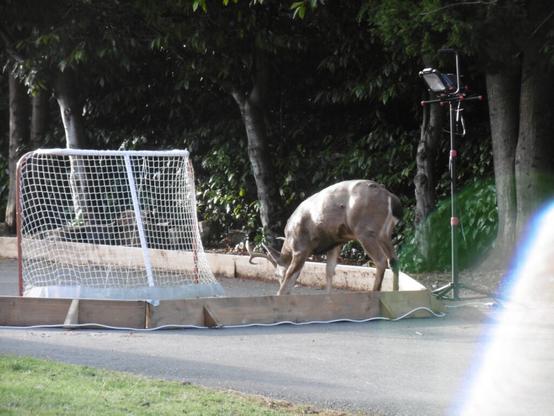
This picture combines deer, hockey, and a snowless New Year 
 what could be more Victoria than that?

Another year ends in the manner of the one which ended Xenophon’s Hellenica: after terrible battles and startling results, there is not peace but confusion and disorder. Xenophon’s perplexity lead to a Sacred War, 300 dead lions on the plain of Chaeronea, and the King dead in an abandoned carriage as his conqueror bent down and took his seal with clean white hands. As for me, I am getting to know the local deer and my old library.

Late in this year, scienceblogs.com shut down. But scienceblogs.de is still full of posts about cipher mysteries, astronomy, and whether “don’t feed the trolls” is a good strategy, and while dead humans go where no-one returns, dead blogs can be summoned with a simple incantation and enthusiastically babble about what went wrong until you hastily perform the ritual to dismiss them. After a decade of watching the science blogging community, Andy Extance finds that the number of active blogs has stayed more or less the same.

While in previous years traffic on this blog doubled, in 2017 the numbers were about the same as last year. When I look at the traffic by country, I wonder if this is because my American and British readers have other things to worry about. The five most popular posts included two of my projects, namely Armour in Texts and Fashion in the Age of Datini, as well as my comments on the largest armies in world history (thanks Flipboard!), my farewell to the historical fencers from 2016, and “Learning Sumerian is Hard.”

This year I have focused on writing my thesis and organizing things with friends, while behind me in the window the lamps on the Internet go out one by one: this site becomes blank unless you enable Javascript, that one stops letting people share photos unless they pay ransom, a third moves some accounts from the publicly visible section into the members-only if they have the wrong keywords in their names. Those are not my values, but if the last year has taught me anything, it is that not as many people share my values as I thought. Yet there are forces stirring in the dimness, and I don’t think that they will do what those who called them up expect.

Some Garry oaks with suspicious vines, December 2017

The Internet is a Garry Oak of communication and creativity swathed in the ivy of spying and advertising. Internet companies provide ‘free’ services so they can better track what you are doing and influence your behaviour with advertising and propaganda, and the problem is that the kinds of things which are most useful to advertisers are not the things which most of us want to read, watch, and hear. Like the ivy which starves the tree of light and water, this surveillance and censorship is killing the life which supports it. Journalists have begun to admit that for the Internet versions of their papers, they focus on opinionated clickbait which has a chance of going viral, because longer reads and local news do not pay for themselves with advertising, but this means that readers learn not to trust what they say. (Quinn Norton, The Hypocrisy of the Internet Journalist, Sean Blanda, Medium and the Reason You Can’t Stand the News Anymore).

Because it has been like this for 20 years, this can feel like this is just the way the Internet works. But in fact, it is an accident: the early Internet was dominated by the USA and by financial systems built on the old Visa and Mastercard networks, and the USA has very weak privacy laws and a financial system built to keep some people on top and other people on the bottom. For a long time, nobody could figure out a way to pay website owners a few dollars a month without the credit card companies eating most of those payments. But many people already pay a few dimes every time they open a large webpage on their smart phone, and it is not hard to envision a world where the US passed federal privacy legislation in the 1970s and the Google-equivalent had to limit itself to showing ads based on the contents of a search query or webpage and nothing else. People around the world can see this, and they are organizing to build an alternative.

Companies like Liberapay in France are building systems to make small monthly donations to half a dozen creators, and spread the credit-card fees across all of these donations. Right now Patreon is the most successful, but they show signs of losing their nerve: they tried to kick back greatly increased fees to the donors in December, and after years of urging creators of sexy webcomics and bondage videos to join, in October they reclassified many of these projects from acceptable ‘adult content’ to forbidden ‘pornography.’ (If you want to hear what the people affected have to say, a good place to start is the Open Letter to Patreon and the Patreon Reference Sheet by Liara Roux; a good journalist to follow is Violet Blue). And in the last few weeks, I watched the Internet boil in confusion, decide that they were not misunderstanding something and that the new fees would really make small donations much more expensive, and start organizing to find or build a replacement. It felt like the Internet ten years ago, or Maciej Ceglowski’s description of the time that the fanfiction community decided that they could no longer work with Delicious and wrote a 52-page specification of what his company would have to do to meet their needs.

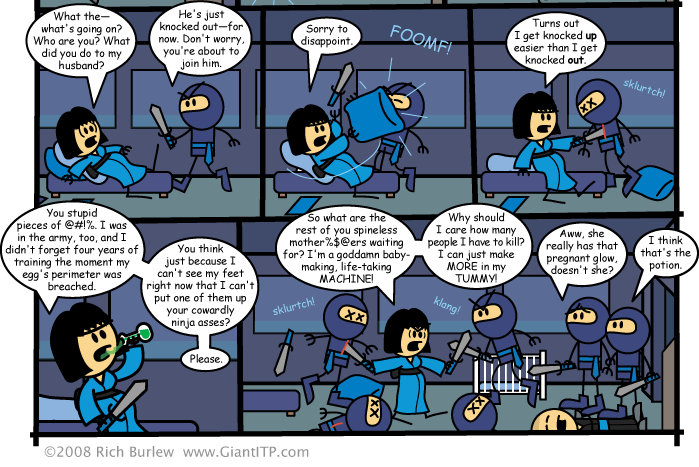
Patreon has backed down on the fees, but still seem to be discriminating against adult content which can’t pay as well as HBO, so I do not know what the future of the company will be. But millions of people have seen that it is possible to support free podcasts, blogs, webcomics, and videos with monthly donations not ads and spying. They won’t forget that, and if one company backs away or succumbs to pressure, they will create another. In the immortal words of Rich Burlew:

“Why should I care how many people I have to kill? I can just make MORE in my TUMMY!” Rich Burlew, Order of the Stick #587

Edit 2025-12-09: block editor, align images to centre

#587 #InternetCulture #modern #notAnExpert #yearEnd

2025 Year-Ender

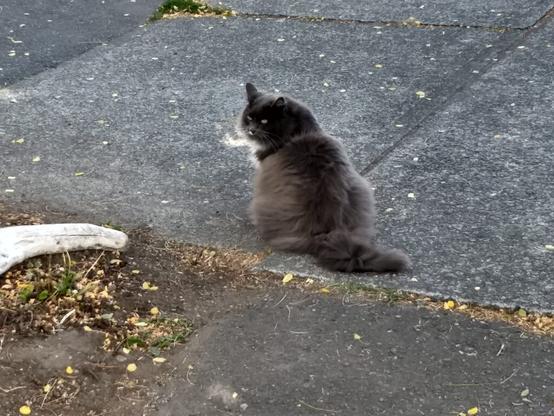
A James Bay cat! Cats may be the one good thing about the Internet and I saw this one with my own eyes.

Another year is passing, the tenth which I have ended with a blog post. This was a year of transition and activities outside of the history and archaeology I talk about on this blog. So sit down with a mug of something warm (or a glass of something cool for readers in the Antipodes) while I talk about this past year.

What I Wrote

Much of my writing this year was either for volunteer projects which I won’t talk about here, or editing my second book. I finally managed to stick to one post per month beginning in July 2025. I created a small page on My Pleiades Contributions. No magazine articles or academic articles came out this year.

I helped Martin Rundkvist with a question about swords, had a back and forth with Bret Devereaux about the hoplite wars, and traded casuistry with the very polite head of a very bad organization.

People on Mastodon enjoyed my links to Wikipedia’s guide to spotting chatbot slop and the tree of TĂ©nĂ©rĂ© in Niger.

Two of my blog posts reached wide audiences: my list of reasons why knowing things is hard, and my warning about academia.edu changing its terms of service in a way that suggests they want chatbots to talk about papers using the voice and face of their users. I got links from Bruce Sterling and Bret Devereaux. My meaty review of Brad DeLong’s book was a flash in the pan, although to my knowledge I am the only reviewer who had the respect to fact-check it. I won’t try to track statistics because the swarms of scrapers feeding chatbots (and my newly built defenses against those scrapers) interfere with the count. The most important statistic is that when I meet someone with similar interests, they have usually heard of and respect my writing. I have a very engaged audience which is very offline.

How I Pay for It

Unlike most bloggers I neither have an indulgent professional job nor independent wealth nor a thicket of ads and digital goods to sell. I have a mundane part-time job. My main sources of freelance income in 2024 have dried up so I spent a great deal of time and money this year retraining and obtaining treatment for one of my disabilities. My income was higher than any year since 2018, but lower than in any of my first five years after graduating with a BSc. If any of my gentle readers know anyone who needs an experienced editor of nonfiction, business writing, and marked-up web content please put me in touch with them! (My first profession was software development but that is a hirer’s market right now across most of the world so it would take local networking to get back in to if I choose that path). I tried some teaching and found that I need to retrain my voice for the COVID era. Look out for more on that in 2026.

Writers and artists have had to get serious about making money from their Internet presence because the industries which used to pay them for their skills have been devastated. The Internet ads which paid for the first webcomics and blogs stopped paying long ago. Some very popular things online generate no revenue, and some casual creations make it hand over fist. So if you know of small projects which you value, its very important to support them.

Everything Else

This year I joined three volunteer projects, one international and online, one in BC which was very active, and one in British Columbia where I am still coming onboard. I have not been a board member since my days in Innsbruck so this is a new experience. I helped pick English ivy and other invasive weeds from local sites and started a small garden of strawberries and marigolds and herbs. Strawberries in a sheltered area try to fruit as late as December here although they don’t get very sweet. Next year I will try planting some of the annuals farther apart and try some lavendula in a dry sunny space. Its an Eurasian species but it does well in our current climate and bees like it but deer do not.

In spring and summer I got back into archery with a fibreglass mock-Mongolian from Alibow in China. I had not drawn a bow for many years. I have not been able to connect with either of the local archery clubs but maybe that will be possible in 2026.

Orpiment and realgar. Realgar decays in sun or humidity so a sealed case might have been better.

I attended the Victoria Gem Show, saw some samples of pigment minerals like orpiment and realgar and malachite, and had a nerdy conversation with a young couple from UBC with some samples of Tuscan marble. I am glad that someone else takes on the risk of storing toxic light-sensitive minerals in unsealed transparent containers. Although I am trying to shrink Mt Tsundoku, I picked up a few used books at the Russell Books warehouse sale in James Bay.

My only sewing project was blanket-stitching the edges of a piece of Italian worsted to make it into a short cloak to wear around the house on cold nights. I have a few shields to gesso and paint this winter.

While time and money for live performances were limited, in December I attended a concert at Alex Goolden Hall. I watched The Godfather at Cinecenta with some friends. I finally visited Abkhazi Garden built by a Georgian prince and a moneyed British woman after they got out of internment camps and occupied Paris. I met German librarian Lambert Heller and some interesting but less academic people.

This year I offended one local friend and one local acquaintance who dropped out of contact. In both cases, we were mostly communicating electronically.

My health and ability to concentrate are not where I wish they were. The world situation is not what I wish it is. Whereas the internet was once a refuge where I could find scholarly and practical people, social media became crazier and more hostile and dogmatic than face-to-face communities. I foresaw the doom which was coming to those sites so I don’t understand why so many people flocked to them. As a highly educated introvert who grew up reading classic American science fiction, reading the news gives me vertigo, because a handful of people with far too much power read the same stories I did but did not get the same messages.

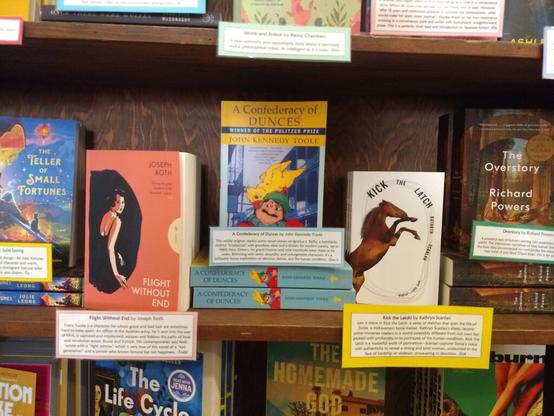
Someone at Russel Books put A Confederacy of Dunces (1969, published 1980) front and center this year

Outside the Abbey Walls

do not depend on the hope of results. When you are doing the sort of work you have taken on, essentially an apostolic work, you may have to face the fact that your work will be apparently worthless and even achieve no result at all, if not perhaps results opposite to what you expect. As you get used to this idea you start more and more to concentrate not on the results but on the value, the rightness, the truth of the work itself. And there too a great deal has to be gone through, as gradually you struggle less and less for an idea and more and more for specific people. The range tends to narrow down, but it gets much more real. In the end, as you yourself mention in passing, it is the reality of personal relationships that saves everything.

Thomas Merton, OCSO, letter to Jim Forrest, 1966 (source)

My friends who stopped worrying about indoor air quality are not getting as sick as often as last year, but the state of the world and the state of the web are still gloomy. In my view, it is urgent for us in the free world to disconnect from big-spending American institutions, while just as urgently connecting with American people. While we cannot accept the lie that the United States is isolated behind a wall from the outside world and its concerns, trying to work with Amazon or Automattic or the American public-health authorities will just drag us down into darkness. However, trying to talk about these things with a global network interested in books and swords is a distraction from acting close to home.

A second friend this year suggested that I should stop worrying about the news and social media. I think he has a point at least as far as US, UK, and corporate social media go. I have met people who don’t know the things I know about the corporate web so have not drawn the conclusions I draw from them, but the people I know tend to be smart people who can learn when they try something and it goes wrong.

I wish I knew how to fix the things in our culture that produce podcast-addled premiers. I wish that when the self-indulgent folly of rich people and their flatterers lead to destruction in the depths of the Atlantic or the heights of the atmosphere, nobody else was hurt. And I wish that people would not pay all they had for comforting lies, and not a penny for the painful truth. But I cannot change those things. The task ahead for us in our local communities is to build things which can survive the crash and the death-throes which will follow, and create low-bandwidth means of communication with the other islands of flickering light beneath a starless sky.

So in 2026, I will blog once or twice a month, while working on print publications, my day job, and my local volunteering. This is not the world I wish I was in. My efforts to sustain communities and influence their direction have often failed. However, it is what I can do with the resources available to me.

Handing Doris the light, he let her take his left arm. Together, they left the room and went down the hallway to the stairs and the long walk to the darkened street below, into a city that had suddenly been cut off from its very life-energy. A city that had put all its eggs in one basket, and left the basket in the path of any blundering foot.

H. Beam Piper, “Day of the Moron” (1951)

(scheduled 27 December 2025)

Edit 2025-12-28: edited paragraph beginning “A second friend this year”

Edit 2025-12-29: mention The Godfather

#modern #notAnExpert #slowingDown #yearEnd

Was Hadrian’s Wall Proceeded by an Earth-and-Post Construction?

Hadrian’s wall across Britain has left complex traces in the forms of trenches, pits, scraps of stonework which were not salvaged by later farmers and road-builders, and of course inscriptions boasting of what the dedicator had accomplished.

Geoff Carter, the archaeologist of Britain, is working on his theory that Hadrian’s Wall was first built as a dirt-and-cross-beams construction just in front of the later stone wall. At the eastern end of the wall the stone wall was completed, at the western wall the dirt-and-cross-beams wall survived as what archaeologists call the turf wall. He sees the deep ditch behind the wall as a construction trench for a stone road which was never completed rather than as a marker defining the southern edge of a military zone or a barrier to keep the soldiers’ horses, mules, and donkeys from straying.

If he is correct, the obvious explanation was that plans changed and the initial, very expensive plan for a 73 mile long stone wall and stone highway had to be scaled back. The evidence for this is post-holes, mounds of spoils and rubble, pollen analysis of the western “turf wall,” Statius’ description of how a Roman road was built, and a fort which was built over part of the wide ditch not long after its initial excavation. His theory also implies a considerable use of local labour to dig ditches and fell timber aside from the soldiers who left inscriptions on stone to commemorate their work.

While he decides what form of formal publication to make, he has blog posts at https://structuralarchaeology.blogspot.com/ and videos at Geoff Carter Theoretical Structural Archaeology (warning: Youtube).

He is convinced that he got caught up in an ideological battle between scientific archaeologists (like he sees his own work) and post-processural archaeologists (he tried to do a PhD on what kinds of building a set of post-holes could support, in a department which wanted him to talk about the cosmologies of prehistoric societies, and he just did not see a way to talk confidently about such abstract things using postholes and potsherds as evidence). Not being a Briton or an archaeologist, I can’t comment, but I like that his theory matches what we know about other monumental building projects in general (cathedrals often spend a few hundred years half-built) and Roman military engineering in particular (most forts and frontier defences were built first in earth and timber, and only later replaced with stone). So I hope he can find time to finish his book. In my experience, most scientists are open-minded about a new theory, as long as it is published as a formal argument with an accepted academic press or journal.

Edit 2025-11-26: block editor

#ancient #hadriansWall #methodology #notAnExpert #romanArmy

40. Reverse engineering the Vallum

As a result of my work on Hadrian's Timber Wall , I was asked recently to take part in a documentary about the period. So, putting prehisto...

@jimbob
"data.frame is also a matrix"

I took a deep breath at this point, and decided that it's not worth my time :)

#rstats #notanexpert
@defuneste @geospacedman @adamhsparks

Whipple Shields and Radiators

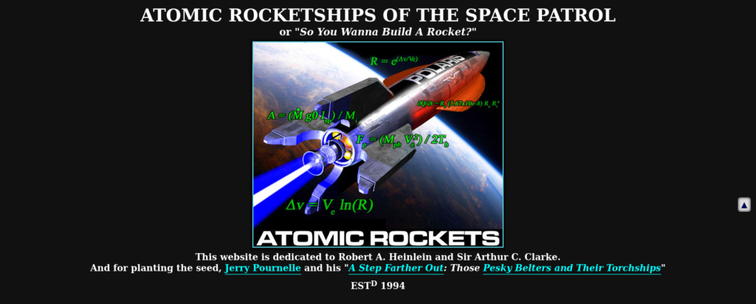
In fall 2021, Winchell ‘Nyrath’ Chung [Patreon] – [hellbirdsite] was diagnosed with terminal cancer. As of April 2022 it is in remission. His site Project Rho is one of the great Internet preservation projects: it collects material in various essays, books, and Internet posts and organizes it so it can be turned into something more digestable one day. In his case, that material is calculations and speculations about how high-powered spacecraft would work, especially in combat. This week I will talk about some of the things I learned from worldbuilding geeks which I did not learn from science fiction stories.

We all learned in school that converting energy between forms produces a certain amount of waste heat. And whenever we use a thermos, we see that vacuum is an excellent insulator. So a spacecraft with a giant fusion plant, amazing total-conversion drive, or fearsome chemical-powered lasers would produce a lot of waste heat and need a way to dispose of it before the crew boiled. The obvious solution is to have a system of radiator fins which dissipate that waste heat over as much area as possible. In a high-powered spacecraft, the fins would often glow red hot. Since they need to have maximum area for their weight, the fins would be unavoidably fragile. So high-powered spacecraft cruising between planets would be surrounded by a delicate armature of glowing radiators, and when they engaged in combat they would have to decide whether to risk boiling or risk having the radiators shot away.

Whipple shields are the standard way of armouring objects in space against impacts. Since there is negligible friction in space, objects can reach tremendous relative velocities. Armouring against impacts with a single thick plate would require prohibitive weight. So back in 1947, astronomer Fred Whipple suggested using several layers of aluminum, possibly reinforced with synthetic fibres, to break up impactors into a scattering of small fragments which can be stopped by the inner layers. Whipple shields take up some bulk, but not much mass.

Radiators and Whipple shields are well known to geeks who like to imagine how the spacecraft in old hard science fiction would work (including projects like GURPS Transhuman Space, the wargame Attack Vector: Tactical, and the computer game Children of a Dead Earth). But they are very scarce in actual fiction.

Learning about Whipple shields reminded me of how aggressively retro the science fiction of the middle of the 20th century was. Desert Mars and jungle Venus remained popular tropes in the 1950s, but back in 1907, naturalist Alfred Russel Wallace had showed that Mars was too cold and its air too thin to have liquid water. General relativity was published in 1915, but faster-than-light travel remains a beloved trope (even though these days most writers are more sensible than Robert A. Heinlein and don’t have viewpoint characters dance rhetorical rings around believers in relativity).

Ultravelocity projectiles, shaped charges, and directed energy weapons obey different physics than arrows and bullets. The Whipple Shield was proposed in 1947! Already in 1956, the designers of the Leopard I tank were told to keep the weight around 30 tons like a medium tank and only armour it against 20 mm cannon fire. They did not know any effective way to armour against shaped charges. Today tank armour consists of layers of metal, ceramics, glass, and rubber separated by air gaps. But most science fiction games still envision armour as putting as much hard dense mass between the baddies and the squishy bits as possible. Their vision of armour is anchored in the Second World War or even earlier.

Many stories about space wars are excuses to recycle tropes from 19th and 20th century warfare. The Honor Harrington stories are a famous example, but Star Wars episodes 5 and 8 even had literal bombing raids where attackers drop projectiles and watch them fall onto their targets. Space pirates keep crawling over the gunnels despite fun-ruiners trying to push them back with cries of “the economics don’t make any sense and there is no way to escape with your booty!” Space is a different environment than seas, rivers, or oceans, and space technology is very different from the technology of the Age of Sail or the Age of Steam, so there is no reason to believe that anything would exactly recapitulate itself. Naval warfare in the 19th century did not recapitulate Hellenistic galley warfare or Viking Age lashing the ships together and drifting towards the enemy!

But radiators give one excuse to adapt those old tropes! Character have to choose whether to extend their radiators (and risk them being shot off) or slowly cook to death. They have to choose whether to generate heat and upset their heat balance. That has some things in common with submarine warfare in WW II, where a submersed submarine below Schnorkel depth had a limited supply of air and battery power and could not use its powerful diesel engines. Choices with consequences make good stories. And red-hot radiators are spectacular looking, and spectacular images have always been a key part of science fiction. So I really do not know why they never became a big part of written science fiction.

Science fiction set in space rarely pays any attention to science in defining how its spacecraft work. And the rare stories which do pay attention generally add or remove a few zeros and embrace a few magical technologies such as hyperdrives, Ansibles, or Langston Fields. The geeks and dreamers who created the knowledge behind Project Rho were trying to make their imaginations realer than most of the writers who inspired them. And yet they did something wonderful.

Edit 2023-01-18: Added a link to Project Rho

Edit 2025-09-23: Jerry Pournelle, who helped design Project Thor and spent decades dreaming about war in space and criticizing NASA, never mentioned Whipple shields at all on his very active website. One correspondent mentioned radiators once in 20 years.

(scheduled 28 June 2022)

#funRuining #modern #notAnExpert #ProjectRho #scienceFiction

#notanexpert but i think that’s Ashley Bathgate on Cello. If you like Cello go listen to what she does with Cello.

đŸŽ” Philip Glass :: Closing (by Bang On A Can) #SUJukebox https://youtu.be/GdvD3sJh1M0

Philip Glass "Closing" PCF 2017

YouTube