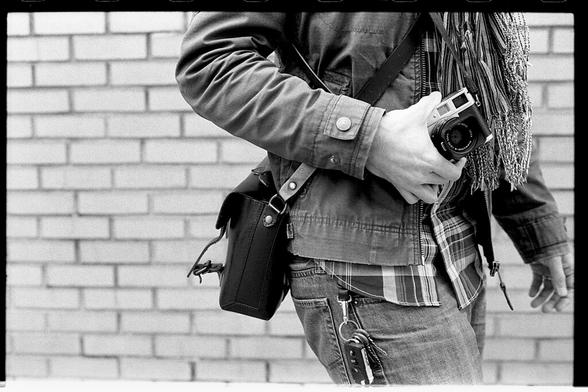
Film Prices are Skyrocketing – Shoot More Film!

Turn on any news station, any time of day, probably in any part of the world, and you'll hear about it. The prices on daily consumable goods are going up, up, up!

Photographic film is not immune to the global supply chain and inflation issues that are plaguing every industry. Kodak, Fuji, Lomography and others have announced steep price increases during the last two years, when film photography has been more popular than any other time in the last decade.

The knee-jerk reaction is to shoot less film. Sadly, some photographers are pledging to stop shooting it all together, as if that is going to help anything.

But I have a solution that may seem counterintuitive and reinstates, rather than reverses film photographers' commitment to the medium that we supposedly love.

Shoot MORE film.

No, I'm not saying "let them eat cake." And no, I'm not just here to reiterate the popular adage "shoot film stay broke."

I'm saying that now is a good time to make film photography a progressive and sustainable activity rather than a painful financial drain that hinders your creativity. Look, film is not going to get any cheaper to manufacture and distribute. In fact, during our lifetimes, film will likely only get more expensive and potentially more difficult to purchase. Not because of some grand stockholder conspiracy at Kodak and Fuji. But simply because the principles of mass production are working against this little niche industry of which photographers are a critical part.

The Snowball Effect

If film photographers shoot less film, manufacturers have no choice but to increase prices or discontinue products in order to offset their expenses and maintain a reasonable profit margin to continue business.

But worse, shooting less film, less often, will not help us to improve our film photography. Shooting and processing film is not like riding a bike in my experience. If you don't do it for a while, there is a lot to forget because so much relies on muscle memory and repetition. Additionally, there are changes in available products and aging that occurs to products and cameras that go unused for long periods. Even highly experienced shooters are bound to ruin a roll or two if they don't shoot and process regularly.

Film photography is a muscle - it must be exercised to stay fit!

Getting fewer enjoyable shots per roll is discouraging not only to individual photographers but fewer keepers also reduces the social and business presence of film photography as a whole. This inspires fewer people to take notice or participate in shooting film. So, with less people shooting less film, the outcome is an inevitable downward spiral.

However, if film photographers shoot more film, manufactures will be able to decrease prices or increase products because they can offset their expenses more easily and make a larger profit via volume sales.

What's great about this is that the more we shoot, the more we can improve our own film photography.

The more we work with a particular film, camera, lens, developer, and scanning or printing rig, the more we understand how everything works together and the more accurately we can hone our results and therefore, push envelops. This is precisely why there are so many amazing digital images in the world. Because digital shooters are not afraid to experiment and learn and keep growing, whereas so many modern film shooters are only burning a couple rolls a month and waiting even longer to process. How is that any way to keep improving?

As a result of more people shooting more film, more quality images will inevitably make it to social media and be used in business. This inspires more people to buy film products and services.

The Future Is Uncertain, But Here 's What We Can Do

I, nor film manufacturers themselves, can promise that shooting more film is going to result in lower costs, slow cost increases or increase product availability. But I can promise that over the long run, it's going to get harder to shoot film. Either because of a lack of quality, affordable film, affordable but working cameras, affordable processing or other hindrances brought on by a world that has largely moved away from photochemical. So why not do our best and most work now, when we still can?

Below, is a list of methods that I, and other successful film photographers use to pay for our film. (Yes, I consider myself reasonably successful) You don't have to agree with or practice all of them. Hell, you may find something inaccurate or incorrect about nearly everything I say. But these are just some recommendations, an attempt to offer practical solutions. I encourage you to come up with your own solutions and share them here and elsewhere. Let's control what we can control, instead of lamenting what we can't.

Sell Your Digital Equipment

You're a film photographer! What are you doing with digital cameras and related paraphernalia? Get rid of that stuff before someone sees you with it! In all seriousness, I'm not saying that if you shoot film, you can't shoot some digital too. But why not shoot less digital since everyone else does that anyway, and hock that old DSLR or p&s and any related cards, chargers or flash units etc that are going on used? Then use that money to buy some more film! Each time that I personally take a photo on my phone or digital camera, I ask myself, should or could I be taking this on film instead?

Sell Your Excess Film Equipment

Film photographers love to collect cameras and lenses. But are you a collector or a photographer first? If you can afford to be both, you probably don't have to worry about film prices. Anyone who's been shooting film for a long time has a camera or lens, or two, or twelve, that are sitting around unused. Maybe you really love them but they just aren't daily drivers. Consider sending them to someone who will put them back to use so you can offset some of your film expenses.

Stop Buying Cameras And Lenses

Recently I've seen alot of film photographers "upgrade" their vintage Nikkor lenses to new Voigtlander ones. One influencer in particular endorses doing so but also told me that he is shooting more digital than film now due to price increases on film. What about the hundreds of dollars difference in price to replace perfectly good lenses? Is it more important to make slightly sharper photos with new hobbyist lenses than to just keep using your old professional ones that you've been using? What if the result is a negative effect on film manufacturing as a whole? Nikkor vs. Voigtlander aside, do you really need a Leica? Or a 50/1.4 instead of a 50/2? Use what you have and like. Part of the cool thing about film is that $100 cameras and lenses are often just as capable of similar quality shots as $1000 cameras and lenses. Stop chasing the perfect lens or perfect camera. Start chasing the perfect shot. On film.

Write For An Established Photography Site

Have some opinions or insights you'd like to share? Maybe just the story of how you took some recent photos? Instead of just making lengthy social media posts that a few people might read, consider putting together some articles. Quality photography sites such as Kosmo Foto, Street Candy Film, and others reward photographers who provide original content for their sites with free film. Bigger sites sometimes pay guest bloggers also. Just ask around based on which pages you read. I like this ecosystem alot because writing about film and sharing your photos directly helps you take more, and helps everyone who is reading. Save film with film!

[ Sad news - shortly after I wrote this, Street Candy announced that it is pulling out of the film business, due to what? Increased film prices.]

Bulk Load Your Film

It costs a lot of money for film manufacturers to cut, package and distribute pre-loaded 35mm film canisters. It's better for the environment and your wallet to bulk load your own film. Manufacturers sell 100 foot rolls of their film that can be cut down and, using a bulk loading device, placed into reusable canisters at home. You can get about 18 rolls of 36 exposure 35mm per 100 foot reel and that works out for a few bucks less per roll than pre-loaded ones. Read all about bulk loading at 35mmc.

Process Your Own Film

Everything costs more when you pay someone else to do it for you. And while it's nice to go out to eat sometimes, if you're on a budget, nothing beats cooking your own meals at home. It's the same with film. It can cost $10 to $20 per roll of film for lab processing and scanning. This of course, is after the cost of the film and shipping. If you're doing paid work, absorbing lab costs may be fine. But for the average person, processing ones own film is many times more economical and educational. I don't want to call for a boycott on film labs because they are nice to have for work that we don't want to do at home for whatever reason. They also employ film photographers (hey, there's another way to earn film money!) But learning and getting good at home processing will drive your bottom line down significantly, while also teaching you a lot about how film works. And, if you find one set of products that you like and stick to them instead of constantly trying different ones, home processing is very straightforward and simple.

Shoot Cheaper Film Stocks

Rather than shoot digital, if you're going to change the look of your work in favor of price, why not try some cheaper stocks? Unless you're shooting a grey card at the head of each roll of Portra and having it scanned to exacting specifications by a professional colorist, you could just as easily get acceptable results from Kodak Gold or another cheaper, consumer grade film. Despite the atrophy of film manufacturing since the advent of digital photography, there are also quite a few lower budget films available from lesser know businesses like the aforementioned Kosmo Foto, Street Candy, Film Photography Project, Cinestill, Kentmere, Arista, Fomapan, Rollei, ADOX, AGFA, Silberra, KONO, Hitchcock, Yodica, Revolog/DubbleFilm, and probably others! What is your favorite budget film stock?

Price Shop For Film

It's important to buy film from reputable sources so you know that it is fresh and not mishandled prior to its arrival on your doorstep. But be sure to check out multiple websites for their current pricing. Don't just assume that one shop always has the best price on every film you shoot. Prices change on both film and shipping all the time. When I'm about to put in an order, I open four tabs in my web browser; B&H Photo, Film Photography Project, Adorama and Freestyle Photo. I load my cart up on each site with what I want to buy and get the totals with shipping for each store. I buy from whoever can get me what I need the cheapest. I'm on the East Coast so I often find that shipping is too expensive from Freestyle in California. But sometimes, they have great sales or my shops simply don't have enough film in stock to fill my order. Even with the free shipping that B&H offers on orders over $49, Film Photography Project is usually cheaper with ground or priority shipping. What are you favorite film shops?

Sell Your Film Waste

You might be surprised but some of the waste materials from shooting film can be sold and reused. Plastic 35mm film canisters and even the metal cans that hold the film, can be sold for craft projects and to bulk loading photographers on eBay. Same with 120 film spools. Incidentally, TheDarkroom.com donates these materials to Film Photography Project to package their new film in! If you're into chemistry, silver can be recovered from exhausted fixer and sold. I imagine that the plastic bottles that film chemicals come in can also be cleaned reused for non-consumable substances or home recycling. While all of these things are most profitable when collected and sold in bulk, they are items that most people have just been throwing away for years. Even if you can only make a few bucks off of some of them, that's one more roll of film and that much less waste in the landfill.

Get Your Cameras Professionally Serviced

If you want each of your photos to count, invest in your equipment to be sure it's working as best as it can. Service all your favorite and most used cameras and lenses. If you choose not to service something, consider why it's less of a priority and consider selling it. Don't buy more vintage cameras and lenses if you have no intention of servicing them. If all the equipment that you use is professionally serviced, that is that much less potentially wasted time and money on ruined shots and rolls. Sometimes you have to spend money to save money. Also, when reselling cameras, they usually sell for a higher price if you can show a recent service receipt.

Sell Your Film Photos Or Services

Not everyone wants to turn their passion into a business. And I completely get that. When someone begins to charge people money for things, the bar is raised. But you don't have to sell your soul in order to build a website and sell a print or two from time to time. Or set up a little booth at a local arts and crafts event. Or take some photos for some people who appreciate you. When I started doing paid photography, I charged next to nothing and had no business acumen (I'm still no expert!) My goal was simply to be reimbursed for the film I was shooting and to gain those experiences. Whatever you decide to do, it's always useful to have a website of work ready, in the event that someone approaches you about buying something. It's really gratifying to pay for ones photography habit with photography.

Wrapping Up

So what do you think? What are some of your personal tips on how to keep your film photography habit sustainable? Surely I haven't thought of everything, there's got to be more.

Are you going to resolve to shoot more film in the face of price increases? Don't forget that YOU are an important part of the ecosystem that all film photographers depend on. And yes, feel free to call me a wide-eyed idealist. I'm proud to be one.

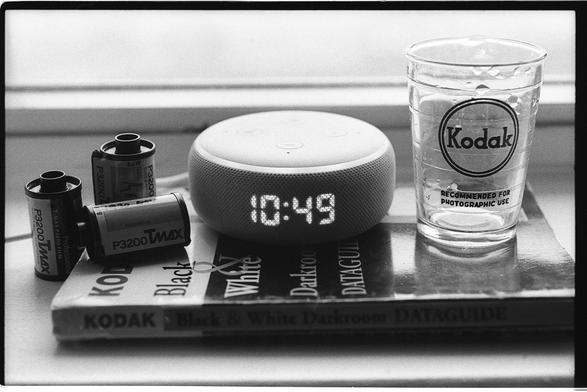
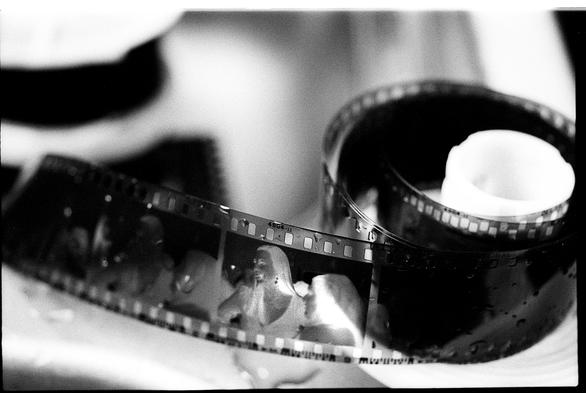
*All photos in this blog were shot on fresh Kodak film and processed within a week or two, using fresh Kodak chemistry

Thanks for reading and happy shooting!

_Follow, Favorite, Like, Add, Insult, ContactJohnny Martyr _

#filmphotography #martyrmusings #tipstricksadvice #affordable #bulkload #buy #cameracollection #cameras #cheap #cheaper #collect #costoffilm #costofliving #covid #expense #film #filmphotographer #filmprices #hobby #howtopayforfilm #moreaffordable #priceoffilm #prices #profit #risingcosts #risingexpenses #sell #sellcameras #sellfilm #shootfilmstaybroke #shootmorefilm #shop #supplychain #sustainable #trade #war
Film Prices are Skyrocketing – Shoot More Film!

Johnny Martyr

Leica and the Big Shutter Speed Dial Reversal

Leica is a funny camera brand. For many reasons. But one of the reasons is the company's vehement refusal to make significant changes to their products in any conventional amount of time. Often, no matter how much people complain or demand change, Leica model after Leica model remain nearly identical to the previous, sporting only very nuanced, deliberate, incremental updates.

And because Leica photographers have grown accustom to and content with this snail pace of evolution, some folks completely lose their minds at those pivotal moments when certain changes are finally made.

A great example is the Leica M5 of 1971. It was the most technologically advanced and arguably smartest camera design that Leica rolled out since the 1954 M3 and the 1925 Leica I. But the M5 was so wildly unpopular due to numerous deviations from the original Leica rangefinder style that it nearly took the company bankrupt and spawned a revision to the previous M4 model to tide photographers over until the release of the M6 in 1984 could put everything back on track again.
I'd like to talk about another head-spinning change that Leica sort of flip-flopped on before committing to - the reversal of the direction of the rotation of the shutter speed dial.

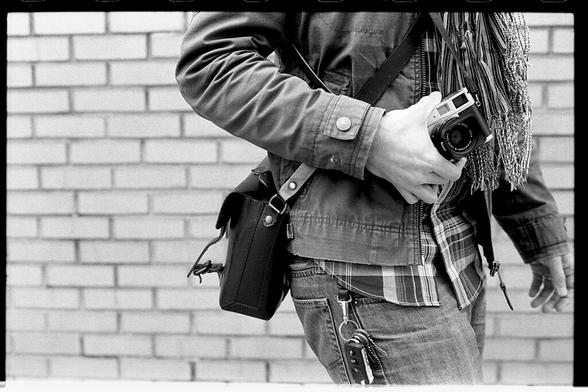
From 1925 to 1998, the shutter speed dial on all Leica cameras was about the same diameter (except the M5) and rotated clockwise to faster speeds. On knob-wind Leicas, the photographer has to advance the film, pull the SS dial up with the thumb and forefinger, rotate it to the desired position and drop it back down to lock in the speed. With M rangefinders, the SS no longer needed to be lifted up and dropped down but is usually still operated with thumb and forefinger. It's a little cumbersome to make this adjustment while keeping ones eye on the viewfinder. So you'll often see film photographers dropping the camera down off their face, looking at the SS dial, changing it and then putting the camera back to their eye. Not just Leica, but nearly all fully manual 35mm cameras.

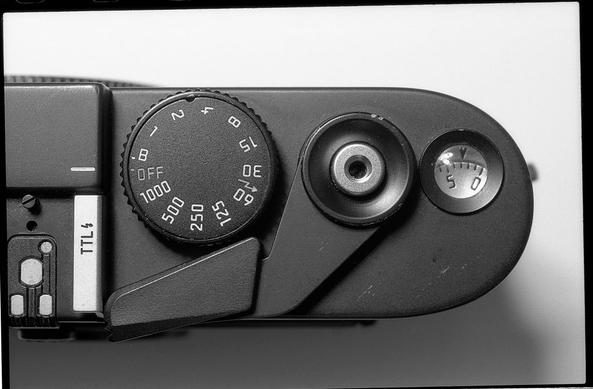
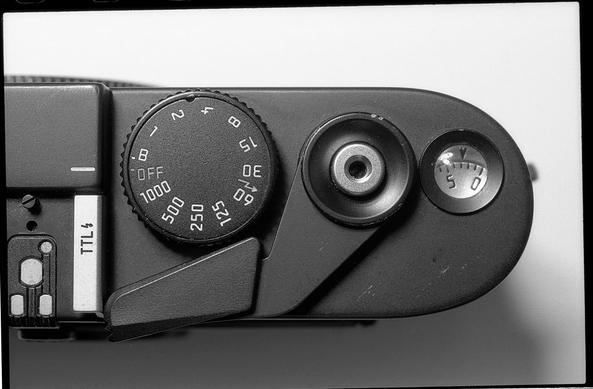
1999 Leica M6 TTL

Then came the M6 TTL of 1998 and M7 of 2002. The shutter speed dials on these otherwise conventional-looking Leica M bodies were larger, similar to the M5 in concept. The larger diameter made the SS dial flush with the front panel of the camera, allowing the photographer to adjust speeds with the forefinger only, without any need to remove the eye from the finder. Not only this but the direction of the shutter speed dial was reversed for the first time since the Leica was created. Rotation was now clockwise to slower speeds.

This change took place over two decades ago and some photographers are STILL complaining about it. People complained about it so much that when the successors of the M7, the MP and M-A were designed, Leica restored the size and direction of the shutter speed dials to their previous convention.

So why did Leica do this, and why should we care?

It was all in service to another mind-blowing change to Leica cameras - the light meter.

The introduction of a built-in light meter revealed a basic flaw in the seemingly irrefutable logic of Leica's controls - the aperture control and shutter control rotated in opposite directions. Before the M6 TTL, to admit more light using aperture, the photographer rotated the ring to the right but to admit more light using shutter, the photographer rotates the shutter dial to the left.

1930 Leica I/III

Your fingers of course just adapt to the camera and nobody cared about this contradiction until they were looking at a fully coupled light meter. In order to integrate a light meter that maintained Leica's legacy of perfect ergonomics, something would have to change. Rather than change the rotation of the aperture on all new lenses and limiting their use/appeal with older cameras, Leica wisely (in my opinion) chose to reverse the direction of the shutter speed on new cameras.

While the protests of meter-free veteran film photographers won out with the MP and M-A, Leica did take a cue from the M6 TTL and M7 when they launched their first digital M, the M8 of 2006 by retaining that large diameter, reverse-rotating shutter speed dial. And the feature has been conserved for each digital M since.

The results of all this controversy over seemingly trite details?

If you shoot digital Leica's, you might consider running an M6 TTL or M7 alongside your digital M.

And if you shoot only film Leica's you might consider avoiding the M6 TTL and M7, or doubling down on shooting ONLY M6 TTL and M7.

For me, I run an M6 TTL and an LTM Leica together and find that there are enough differences between bodies that the difference in SS dial direction is irrelevant. This may be the case for hybrid digital/film shooters too. For other shooters I talk to, they don't even mind the difference and shoot an M6 TTL and an MP, for example, alongside one another very comfortably.

What Leica cameras do you use together? Does the direction of the shutter speed dial have any affect on your muscle memory or not? How ridiculous is it that I've written a whole blog about the direction of the shutter speed dial?

Thanks for reading and happy shooting!

_Follow, Favorite, Like, Add, Insult, ContactJohnny Martyr _

#filmphotography #leica #martyrmusings #tipstricksadvice #35mmfilm #35mmleica #controls #design #digital #digitalleica #direction #ergonomics #feature #filmleica #haptics #leicadesign #leicafeatures #leicahistory #leicam10 #leicam5 #leicam6ttl #leicam7 #leicam8 #leicam9 #manualcamera #reversal #reverse #shutter #shutterspeed #shutterspeeddial #whichleicatobuy

Leica and the Big Shutter Speed Dial Reversal

Johnny Martyr

Seven Recommended Rangefinder Focusing Techniques

Many photographers struggle with focusing rangefinder cameras. Some photographers, unfortunately, tend to shoot only wider/slower lenses or give up on rangefinders entirely for this reason. But I don't think photography should always be easy and by learning to use simpler cameras, we can internalize concepts and develop instincts and reflexes that apply to any type of camera.

I think that peoples' trouble with rangefinders begins with SLRs. This may sound funny but what I mean to say is that, when we pick up our first rangefinder, we often try to use it like an SLR. I did that for years myself, and remember the frustration.

But I found that it takes more of a photographer to use less of a camera. And have no doubt about it, a rangefinder does less for you than an SLR and needs to be approached this way.

Leica M6 TTL 0.85 | Leitz 5cm 1.5 Summarit | Kodak Tri-X 400 | Kodak HC110b

By allowing us to focus through the taking lens itself, SLR's alleviate the need to adopt habits that rangefinders encourage and, I think, make us stronger photographers as a whole.

With an SLR, we tend to live inside the viewfinder.

By living inside the viewfinder, I mean that we tend to treat SLR finders like magic boxes that we look inside of to see the future; our images almost exactly as they will eventually appear on film.

When we look into a rangefinder we are immediately struck with how rudimentary the viewfinder is, and the fact that we are most definitely, not peering into a magic box. With a rangefinder, I think the photographer sheds any illusion that they are looking into something more than some of panes of glass. And thus one must accept more agency for the images that one wants to create.

I imagine that many photographers carry their live-inside-the-viewfinder method of focusing into their use of rangefinders. And this may be fine with conservative use. But why spend the money and time on any camera and not push the system to its limits as well as become a more effective shooter?

Below are seven techniques that I find are important to embrace in order to focus rangefinder cameras more quickly and more accurately. You'll notice that each technique involves and relies on the others to work and make sense. I may have even overlapped some of them too much in trying to describe what I do. But like everything with photography, all the elements affect one another. None are fully isolated. And therefore, you will find yourself employing different techniques and combinations of techniques for different subjects and scenes.

Before we get going, I also want to point out that while analog Leica cameras and lenses are my personal rangefinder preference, I also use Voigtlander and some Japanese fixed lens rangefinders too. Regardless of your brand preference or model, a rangefinder is a rangefinder and this advice should apply.

Technique One: Service Your Rangefinder

It's not a focusing technique per se, but I can't say it enough. Service your rangefinder.

Even a cheap, fixed lens RF like an Olympus XA will benefit from professional service. Will service cost more than the camera? Maybe. But so will the cost of film and processing over a short period of time. Why not make those shots count? And certainly if you purchase a costly interchangeable lens rangefinder camera and lenses, you owe it to yourself for them to be working properly!

Nikon FM2n | Nikkor 55mm 2.8 Micro AIS | Kodak TMAX 100 | Kodak HC110b |

Send out both the body and your fastest/longest lenses to be calibrated for one another, together. Specific bodies need to be set up with specific lenses in order to maximize focusing accuracy.

This is not SLR World where we just throw any old lens on any old camera then go shoot a portrait session at full aperture. The faster and longer a rangefinder lens is, the more carefully it must be calibrated for your camera and your camera for it. (Also, be sure that the rangefinder you're using has a long enough effective baselength to accurately focus the lens you've mounted to it!) Rangefinder windows can also become dim with age and require either interior cleaning or full out replacement of the beamsplitter. Be certain that your rangefinder is serviced and in top mechanical and optical condition before demanding perfect focus from it.

Failing to do this first will make all other efforts moot.

Technique Two: Pre-set Your Focus

Most of us probably learn to manually focus cameras by looking into the viewfinder and jockeying the focus ring back and forth until the image looks as it should. This is a bad habit encouraged by the SLR and it's the first step we take before falling into helpless dependency on our viewfinder. Remember, don't live inside your viewfinder - look at your surroundings! Be aware of what you're shooting.

There are a couple ways to pre-set your focus, including hyper focal distance and simply guessing distance.

1930 Leica III | Leitz 5cm f3.5 Nickel Elmar | Kodak Tri-X 400 | Kodak HC110b

Street photographers know to use hyperfocal distance to pre-set their focus and avoid looking into their viewfinders too often or unnecessarily. This is good practice for all of us, no matter what type of camera we're using or genre we're shooting.

Hyper focal distance can be set using the distance and depth of field scales on your lens. The technique works works best with wider lenses and apertures like f8 or smaller. Set the infinity mark of your distance scale on the f8 that appears right of center on your depth of field scale. Consult the number of feet indicated by the same aperture (f8 in this example) left of center. In the case of my Voigtlander 40mm 1.4 Nokton, using these settings puts everything from seven feet to infinity, in focus. Find a subject that's more than seven feet away and they will now be in focus. Your viewfinder is only for composition now.

Practice hyperfocal distance but also, in tandem, practice guessing distance.

Infinity is easy. If you're shooting landscapes or any subject on the horizon, there's no need to use your camera to focus at all, rotate the lens to infinity. There. You're in focus.

1930 Leica III | Leitz 9cm f4 Elmar | Kodak Tri-X 400 | Kodak HC110b

When I took fireworks photos with my 1930 Leica, for example, this is all that I did. I set the lens to infinity and then forgot about focus for the remainder of my shoot.

Focusing on infinity and using hyperfocal distance alleviates the need to depend on your rangefinder for focus at all. But when you're focusing a longer/faster lens at a wider aperture and closer distances, out of necessity or just because you want to blur the background, another technique must be employed.

Before even lifting your camera to your eye, guess the focus. Just take a guess and set it on your lens. The idea is to get the focus distance in the ballpark and to use the rangefinder simply to verify and refine your guess, not to do all of the work. At dimly light wedding receptions, I set my focus for five or six feet and walk towards and away from people to bring them within distance. Sometimes your subject will move into the frame and literally focus themselves!

Leica M6 TTL 0.85 | Leitz 5cm 1.5 Summarit | Ilford Delta 3200 @ 6400 | Kodak HC110b

I started out by learning what my minimum distance of three feet looked like, my middle distances of about ten feet and infinity. Three feet is a little further than the length of my arm and the closest that most rangefinder lenses can focus. I taught my daughter to extend her arm to subjects with her Instax viewfinder cameras. If she can touch the subject with the tips of her fingers, she's too close to it so she needs to take a couple steps backwards. This ensures that she is not too close to the subject for it to be in focus. Six feet is good to recognize for social distancing! Find some distances that you like to frame subjects at, then remember what those distances look like. Quiz yourself by guessing then focusing with your camera and checking the distance. Do this often, in different spaces and you'll pick it up quickly!

If you get into a grove with pre-focusing, you'll probably find that you don't need to jockey the focus ring back and forth so much, if at all. If you pre-focus AND use the rangefinder to focus, it's like a two factor authentication for focus; more accurate than using the rangefinder alone.

Technique Three: Know Your Depth of Field

Everyone loves lenses. We probably own many more lenses than we really need. And that's fun. But the problem is that it can be difficult to learn a particular lenses' depth of field on an instinctual level if we don't use a particular lens regularly enough.

Leica M6 TTL 0.85 | Leitz 90mm f2 Summicron E55 Pre-ASPH | Kodak Tri-X 400 | Kodak HC110b

A large part of the disconnect that one may feel when looking through a rangefinder is that they unapologetically offer no visual sense of depth of field. Alarming to some, liberating to others, no matter how you see it, this is another reason that you have to be more of a photographer to use less of a camera.

Zone focusing is a technique that is closely related to hyperfocal distance and guessing. Viewfinder-type cameras (such as Fuji Instax) sometimes employ zone focus marks such as a mountain symbol for infinity (a far away subject), two people symbol for middle distance (a subject 7-10 feet away) and a single person for close distance (a subject 3-5 feet way). I didn't discuss zone focusing with pre-setting focus because I recommend using it at an instinctual level that is rooted in ones understanding of depth of field.

Take some time to study the depth of field scale marked on your rangefinder lens. Gain an understanding of the relationship between focus distance and aperture of a particular lens. Most everyone knows that the smaller your aperture, the more depth of field you have. But notice that the further away your subject, the more depth of field also. For whatever reason, distance to subject is often forgotten about as an influencing factor on depth of field. Translate this knowledge into habits. You're more likely to miss focus on closer subjects than further ones, so spend more time focusing on the closer subjects.

1930 Leica III | Leitz 5cm f2 Nickel Summar | Kodak Tri-X 400 | Kodak HC110b

If a subject is ten feet away and you're stopped down, you might be able to snag the shot before or without even using the rangefinder to focus at all. If you're in a situation where action is unfolding quickly, stand further away and stop down. Regardless of if you use your rangefinder or not in a scene like this, you are increasing your chances for good focus.

However, if your subject is 3 feet away and you're wide open, guess and pre-set your focus then use your rangefinder to hone it in. Don't try to guess or zone focus this scene 100%, use guessing/zone merely as guides. Understanding the depth of field scale of your lens is not zone focusing alone, it's understanding when to and NOT to zone focus. So this is what I mean about learning particular lenses and being instinctual.

Very few modern SLR lenses even feature these scales anymore. But as a rangefinder photographer, you're concerned with doing things yourself and having a full sense of your surroundings so as to take the best photos that you can as quickly and as effectively as possible.

Leitz 5cm f2 Summitar as photographed with Olympus OM-1n | Zuiko 55mm 3.5 Macro | Kodak TMAX P3200 @ 1600 | Kodak HC110b

When you internalize a particular lenses' depth of field scale, you learn not only to control the DoF and lens performance more accurately, but you can use DoF as a focus aid. The smaller your aperture and wider your lens, the more sloppy your distance guessing from Technique Two can be and still work -because you're relying on depth of field to cover the inaccuracy of your guess.

Leica M6 TTL 0.85 | Leitz 5cm f2 Summitar | Kodak TMAX P3200 @ 6400 | Kodak HC110b

But knowing depth of field is not just for guessing focus. When focusing through the rangefinder window, you must place your subject in the center of the viewfinder where the focus patch is. Next you must re-compose. If your DoF is very shallow or your subject is not perfectly parallel to your lens as you re-compose, your focus may become inaccurate when using a longer lens and/or wider aperture. But if you re-compose and know that you have ample depth of field, you will know that your subject will be in focus, despite the slight move. And if you don't have enough DoF to cover a potential error, maybe you decide not to recompose or simply take a centered and off centered version of the shot to cover yourself.

So understanding depth of field also helps achieve accurately focused rangefinder photos.

Technique Four: Look For Lines

With standard matt screen focusing on SLR's, you many not have trained your eye to look for lines. Since rangefinders work by splitting the image and aligning it laterally to focus, a good habit is to look for vertical lines on your subject to verify focus.

Leica M6 TTL 0.85 | Voigtlander 40mm 1.4 Nokton | Kodak TMAX P3200 @ 6400 | Kodak HC110b

Eyes, of course, contain concentric circles that, like straight lines, are perfect to focus on when shooting people. This is where an accurately calibrated lens and rangefinder count. In this photo of fellow Leica enthusiast, Ben Eisendrath, I could focus perfectly on his eye at full aperture thanks to the clear line of contrast between his iris and the white of his eye. Notice that depth of field is so shallow and focus falls out from the center so quickly that only Ben's left eye is in focus. I'll admit to doing some focus jockeying on this one!

However, in less than perfect lighting conditions you may see that peoples' eyes are in shadow and difficult to find the lines in. In those instances, the vertical line of the bridge of the nose works nicely to focus on also, or eyeglasses if they wear them, presuming you have enough depth of field to cover the eye beyond the nose or glasses.

Leica M6 TTL 0.85 | Leitz 5cm 1.5 Summarit | Ilford Delta 3200 @ 6400 | Kodak HC110b

I took the image above of local burlesque performer, Lipstick Lamarr. Profile poses like this can be very fast to focus because the subject's nose contrasted sharply against the shadow that she cast on the wall behind her. Step-by-step; I guessed my distance from Lamarr and set my lens for that distance (I think it was about 3 feet). Next, I put her nose in the center of the viewfinder, in the rangefinder patch since the light was speckled and her eyes were in shadow. I set focus for the bridge of her nose and then recomposed, knowing that at f2.8 at 3 feet (guessing settings based on vague memory and the look of the image) I'd have pretty shallow DoF but enough to cover moving the lens. I recomposed now that focus was done and took the shot.

Leica M6 TTL 0.85 | Leitz 5cm 1.5 Summarit | Kodak TMAX 100 | Kodak HC110b

Speaking of lines, invariably you're going to get into a situation where the subject is covered in repeating lines such as shadows from window blinds or a fence, or some other pattern. But you don't have to panic because you've already pre-focused. And instead of jockeying back and forth hopelessly, unable to discern one line from the other, you'll very quickly see the correct alignment of the pattern with a single flick of the focus ring to one side or the other.

Another reason to look for lines in a scene, aside from aiding focus, is that they can be used to help level your photograph using the framelines in your viewfinder. Sure, this can be done with an SLR but for me, personally, I just feel it works more easily with RF framelines.

Like the awareness of space that depth of field and pre-focusing brings, looking for lines is another example of how being aware of your surroundings leads to holistic improvement in ones work, whereas using auto focus can completely deaden the senses.

**Technique Five: Wait For Your Subject **

SLR and particularly digital, auto-everything photographers tend to equate shooting fast with spraying and praying. But shooting with speed, also means setting up quickly so that you're ready when the time is right to shoot.

Effective rangefinder focusing is often about anticipation. Anticipate the future position of a subject and simply wait for them to come into focus, or make the moment you want.

Leica M6 TTL 0.85 | Voigtlander 40mm 1.4 Nokton | Kodak Tri-X 400 | Kodak HC110b

Jellyfish are slow-moving, unpredictable creatures. So I found vertical lines (tentacles) to focus on, understood I'd have enough depth of field regardless of how near or far they moved. And then I waited. I watched and waited for the jellies to get into a position that I found balanced and appealing. I stopped thinking about focus, and I just watched my subjects. Then I snapped. I did not keep jockeying my focus in a frenzy as the jellies floated about.

Leica M6 TTL 0.85 | Leitz 5cm 1.5 Summarit | Kodak TMAX P3200 @ 6400 | Kodak HC110b

When shooting live concerts, I will sometimes focus on the stationary mic or mic stand (Look For Lines), expecting the singer to get closer to it again, and then… snap. I did not follow the singer with my camera, focusing and refocusing as she moved up and down the stage.

The jellyfish and the singer came to my point of focus. I controlled the scene, not the subject.

If shooting a woman drinking wine, I might focus on her face when she's not taking a sip, shoot that and then shoot again when the glass is on her lips without changing focus. When she places the glass on the bar, I could get a close-up of the glass. I'd focus on the glass and shoot it without her hand, wait and then get a shot of her hand on the glass as she lifts it to her mouth again.

Leica M6 TTL 0.85 | Leitz 90mm f2 Summicron E55 Pre-ASPH | Kodak TMAX 100 | Kodak HC110b

This technique can be a way to grab different versions of a scene without refocusing over and over. Awareness of focus brings awareness of a scene and vice versa. This is how you get perfectly timed and composed moments. Not scrambling focus in and out as the scene changes. Not by chasing subjects. But watching movements and behaviors, anticipating moves and working smarter, not harder.

Technique Six: Focus On What You Can Focus On

Turn something difficult into an asset. Get creative. Don't rule out a scene because you can't focus on what you initially wanted to focus on. Don't throw up your hands and buy an auto-focus, mirrorless wonder! Don't blame the tools! Find something that you can focus on.

1930 Leica III | Leitz 5cm f2 Summar | Kodak TMAX 100 | Kodak HC110b

If your depth of field is too shallow or subject too close for hyperfocal distance, focus on something stationary and/or further away. I've gotten into the habit of doing this mostly when photographing kids because they are often just moving too damn fast to follow them! I can't tell you how many new parents I've talked to who've given up on taking family snapshots with their 35mm film rangefinders, and even SLR's, in favor of autofocus digitals, simply because they couldn't keep up with their kids.

Can't remember what camera/lens I took this with but it was on Kodak TMAX P3200 @ 6400 with Kodak HC110b

But we are not focus automatons! We are not dumb auto focus motors chasing movement. There's no need to live in the viewfinder. Find something stationary and make that your subject instead of fighting with your fast-moving subject. Listen to what the scene tells you. Cover the scene as the scene wants to be covered.

And this leads me to the final technique that I will recommend for focusing with a rangefinder camera… ****

Technique Seven: Accept Inaccurate Focus

We all know the famous Henri Cartier-Bresson quote - "sharpness is a bourgeois concept." Yet we often cast this lesson from the rangefinder master aside and obsess over which lens to buy or kick ourselves if focus is slightly off in a photo. So, if all else fails, just rock the soft focus!

Nikon FM2n | Nikkor 35mm 1.4 AIS | Ilford Delta 3200 @ 6400 | Kodak HC110b

Why do we obsess over sharp focus?

Many of the world's most celebrated and effective images are soft or completely out of focus.

What makes out of focus photographs great is that they are more than mere lens advertisements. They capture bare, unabashed emotion and make a clear, definitive statement - without being clear at all! Out of focus photographs can sometimes TRANSCEND FOCUS!

For me personally, I value shooting with all manual cameras because I believe that by doing so, one is not only rendering the scene but also documenting ones reaction to it. Missed focus can sometimes express excitement, chaos or simply cause the viewer to explore the other elements of design within an image.

I took the image above with an SLR, not a rangefinder and included it both to make a comment about how SLR focus isn't perfect either and also because I think it is a nice demonstration of how and why an out of focus image can still be successful. I always aim to nail focus but when it doesn't happen, as artists, we have to give up the dogma for a moment and be able to see things as they are.

So please folks, don't give up on your rangefinders! What they lack, you'll have to make up for with your own skill, talent and creativity! Are you up for the challenge?

Thanks for reading, happy shooting

_Follow, Favorite, Like, Add, Insult, ContactJohnny Martyr _

#filmphotography #leica #martyrmusings #tipstricksadvice #advice #anticipation #calibration #depthoffield #dof #focus #focusing #howtofocus #howtofocusarangefinder #hyperfocal #hyperfocaldistance #hyperfocaldistancescale #infinityfocus #kodak #learn #lines #motion #movement #moving #patience #presetfocus #predictfocus #rangefinder #rangefinderfocus #scalefocus #service #sharp #sharpnessisabourgeoisconcept #splitimage #stationary #technique #tips #wait

Seven Recommended Rangefinder Focusing Techniques

Johnny Martyr

Shining a Light on Bright-Line Viewfinders

Over the years, many different manufacturers have offered many different types of accessory viewfinders that have taken on numerous forms. I have tried only a handful but am pretty committed to what are known as as "bright-line" accessory viewfinders. Unlike early viewfinders that consist only of wire frames of appropriate sizes or even simple optical viewfinders that contain a magnifying lens element, bright-line finders are tiny optical treasures.

Dutch designer L.E.W. Van Albada came up with bright-line viewfinders in the early 1930's while working with Zeiss. He developed several types of viewfinders that were made both as accessories and built-into Contax cameras of the period. Albada's bright-line finders contain multiple glass lens elements in order to replicate the focal length of the taking lens. They also feature a concave mirror that focuses light onto printed or etched frame-lines. The result is viewfinder that is often at least as bright, or brighter than most newer built-in finders, as well as frame-lines that are projected onto the scene and are easily visible wherever there is ambient light. The latter being of particularly important historical note.

According to the Leica Accessories Guide, bright-line or Albada-type viewfinders were originally called sports finders due to the benefit of being able to see a subject enter the frame-lines within the viewfinder. Prior to the Leica SBOOI of 1951, bright-line viewfinders were just one of many types of finder designs. But Leica made an entire line of them with similar encasements that solidified bright-line finders as a particular accessory in and of themselves. Indeed, the Leica IIIg and M3 cameras contain the same bright-line viewfinder design, built-in.

Leica's adoption of Albada's viewfinder cemented the projected frame-line feature as standard in all subsequent rangefinder camera designs and ignited competition for brightest viewfinder as a benchmark for assessing the quality of a camera.

Each accessory bright-line finder is dedicated to just one, or sometimes two, focal lengths. This makes them less versatile than simple, multiple length wire frame finders or finders that contain basic magnifying optics mounted in a turret. If you choose a set of bright-line finders in favor of a turret finder, you are committing yourself to changing finders out and storing them appropriately each time you change lenses. Or are you?

For me, I typically only use one or two different lenses per body during a shoot. Therefore, I don't make a habit of swapping out my bright-line viewfinders mid-shoot, I simply use the built-in finder and leave the accessory finder atop the body at all times. So for example, my M6 TTL supports multiple frame-lines. I use one of these built-in lengths, such as 50 or 90 but I leave my 15mm bright-line finder in the accessory shoe, ready for whenever I mount my 15mm lens. On my 1930 Leica, I often prefer to use the 50mm bright-line SBOOI instead of the built-in finder and keep it mounted at most times.

If you like to swap lenses more frequently than I do, or use multiple lengths that require an accessory finder, you may want to get one of those turret finders. But personally, despite being what I consider a pretty fast photographer, I prefer the viewing quality and smaller physical size of bright-line finders than the speed of a larger turret finder, because my workflow doesn't require anything faster.

I particularly enjoyed using my Voigtländer 90mm bright-line viewfinder recently while practicing street photography. The ability to see slightly outside of the frame-lines and to concentrate strictly on composition made shooting this genre with this set-up fun and effective.

I wrote about bright-line finders a few years ago and got a number of questions about them that I thought deserved another blog. Below are some topics that came up - I hope you find my thoughts on each, useful. And if you have more, I'd love to hear them in the comments!

LEICA vs VOIGTLÄNDER vs ZEISS

I'm going to concentrate on just two noteworthy manufacturers of bright-line accessory viewfinders as they're discussed here; Leica and Cosina. Nikon of course made their own compliment of viewfinders and some Canon viewfinders even feature automatic parallax correction when used with some Canon rangefinders. I'm going to exclude these brands simpIy because I find that they are less available I don't use these brand cameras, though they also appear to be very nice. I'm also not going to include those early Zeiss bright-line viewfinders that Mr. Albada originally designed because each model does not fit into a model line as we know them today. No disrespect to the originators!

Cosina, of course makes products under the Voigtländer namesake and for Zeiss. Leica really embraced bright-line finders in the 1950's and they still make several which have a rectangular rather than the classic round silhouette and are a bit larger. Cosina began selling bright-line finders in the early 2000's. Voigtländer issued plastic finders that were black and metal finders that were a conventional satin silver chrome or gloss black paint. Modern Zeiss finders have a squared off housing and came only in black painted metal. Modern Leica bright-line finders are squared silver chrome or black painted metal.

I prefer the metal finders because I don't trust the rigidity of the plastic "foot" of the plastic finders. And practical concerns aside, I just don't like the idea of plastic. I like classic, metal and manual cameras and don't have any desire to top them off with glass encased in cheap, modern plastic. I appreciate the quality of paint filled etching on the metal finders and their general feel and cosmetic look. Sorry if that makes me vain or superficial! [ UPDATE: several readers have noted that they prefer plastic viewfinders because the metal versions scratch their eyeglasses. I don 't personally press my eyeglasses directly against my viewfinders so I don't find this to be a problem. I have some other solutions for glasses wearers too though, it may warrant a whole other blog!]

Where I'm not superficial though, is on brand. I believe vintage Leica and modern Voigtländer metal barreled bright-line finders are of totally equivalent build quality. And both are beautiful, jewel-like masterpieces of design and execution. Since neither company continues to sell these style finders (Leica's current bright-line finders support only a few focal lengths and are larger), we're not supporting or hurting either company by purchasing these products.

One difference between brands is that the Leica finders were mostly made during the 1950's vs Cosina being more contemporary. So some Leica bright-line finders have either been heavily used or improperly stored for decades and will require service. I have yet to see any examples that exhibit de-silvering of the mirror but it would only follow that this should be a concern. And particularly when choosing longer focal lengths such as 90 and 135mm that feature parallax correction, these finders contain a small, simple mechanism and vintage copies will likely require service. Voigtländer finders appeared in the early 2000's and were made for about ten years. So even the most heavily used and poorly stored Voigt's are likely to be in better shape than similarly used/stored 70 year old Leica's, all things being equal.

Zeiss viewfinders seem to sell for $300+, used or new. Leica finders, of which there are few modern models, sell for $900+ new. So that leaves now-discontinued Voigtländer and vintage Leica finders for reasonable prices. "Reasonable" is still in the $50-$150 range used, depending on focal length, condition and included packaging/accessories. There are some rarer finders such as the Voigtländer 40mm or Leica 85mm that command higher-than-average prices; more in the $250+ area. Since I've been purchasing and using bright-line finders though, for about ten years, they appear to at least hold their value. Used prices on metal Voigtländer finders seem to equal vintage Leica. I guess that if you wanted the look/specific function of the current Leica M type bright-line finders, the Zeiss versions provide an economical alternative. But even if you don't care about price, there are just more focal length options available for vintage Leica and Voigtländer than modern Leica and Zeiss.

FOCAL LENGTHS AND MODELS

I would like to catalog every single focal length bright-line viewfinder that each manufacturer has put out but I'm sure there will always be something missing. I'm going to list what I know from my research and experience and hope that I get most of them! If you know of others, please go ahead and let me know in the comments!

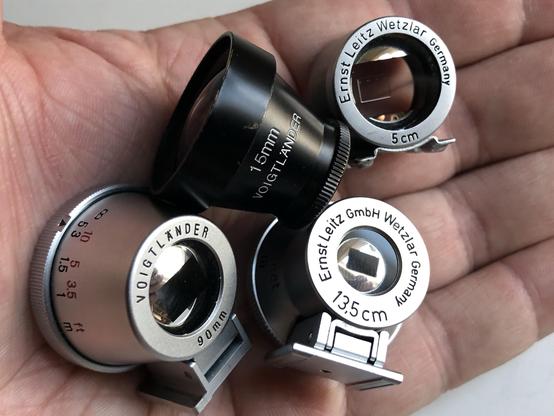
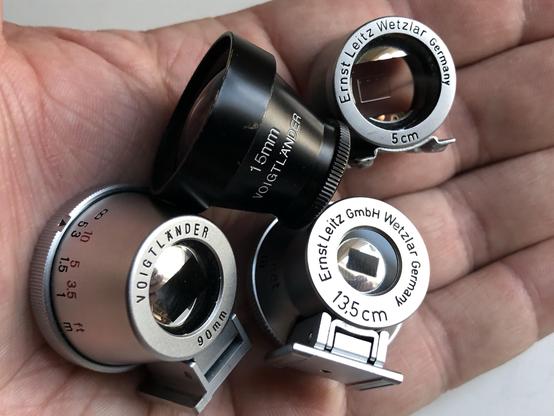
Leica's vintage bright-line finders were available in the following lengths and of course, correspond to some silly five letter words: 21mm (SBKOO), 28mm (SLOOZ), 35mm (SBLOO), 50mm (SBOOI), 85mm (SGOOD), 90mm (SGVOO) and 135mm (SHOOC). These were all brass (I presume brass) and finished in satin chrome with black and red paint-filled etched text. Earlier vintage Leica bright-line finders are marked in cm instead of mm and all versions that I've seen are marked in both metric and standard focus measurement using different colors of paint. Earlier Leica finders came in classic red boxes with gold lettering. Newer copies were sold in beige boxes with printed graphics. Leica's current bright-line finders are available in just 18mm (12023), 21mm (12002) and 24mm (12026) with a solid milled brass enclosure and finished in satin chrome or black paint with a rubber eyepiece. They feature a printed Leica logo but etched and paint-filled focal length text. In the 1980's the 21mm 12002 finder was also made in black plastic and there was a similarly constructed 28mm (12017) for some time that is no longer available new.

Voigtländer finders were sold both plastic barrel (Version I) and metal barrel (Version II) finders. I am not 100% certain that each of the following lengths were available in both plastic and metal and which metal were available in black or chrome, nor do I feel it necessary to go into specific years of production for each model. But sizes by Voigtländer included 10mm, 12mm, 15mm, 21mm, 28mm, 35mm, 40mm, 50mm, 75mm, 90mm, and 135mm. Voigtlander also made a 12mm D 1.5x finder for the Epson RD-1 and it's crop-sensor, as well a mini versions of the 28/35mm finders and a Heliar 101 anniversary 50mm finder that is not 1:1. All plastic barreled finders were black in color with the logo and text printed on. Voigt metal finders came in satin chrome or black paint finish. The Voigt satin chrome very closely matches vintage Leica in terms of color and weight. I don't know if the barrels themselves are made of brass or something cheaper but I can report that as the paint has worn off my Voigt 15mm finder, it has revealed a brass-colored metal. 12 and 21mm Voigts have two-piece housings with a silver chrome front bezel and the rear hemisphere is finished in black crinkle paint. The 12mm finder has no frame-lines and technically is not among Albada's design but does contain four elements of glass! The only way to tell an older Voigt finder apart from a newer one is the box. Older boxes were green and newer ones are black.

[ UPDATE: Thanks to Dagmar E. Baechli for providing image above and the following clarifications: "The 15 and 25mm black plastic don‘t have bright frame lines. Neither do the two big 12mm metal." He also pointed out that the Fujifilm VF-X21 bright-line finder which shows 21/28mm frame-lines also appears to have been made by Cosina.]

Zeiss finders were designed to follow the styling of modern Leica finders and are rectangular rather than round. They are also made of an unlisted type of metal and feature a raised blue Zeiss logo as well as etched and paint-filled focal distance text. Zeiss finders have been produced in the following lengths: 18mm, 21mm, 25/28mm, and 35mm.

CARE AND USE

This was probably the Number One topic of direct messaged question that I got the last time I posted about bright-line finders. People are nervous about how to store and protect a hunk of expensive, delicate glass sitting atop their camera or tossing around in their camera bag.

As I previously noted, I typically keep my finders mounted to the cameras, even when not actively using them. Certainly I leave them at home if I don't expect to use them at all but during a shoot where I'm using both 50 and 90mm lenses, I keep the 90mm viewfinder mounted while shooting the 50 and then I don't have to make any further changes to the rig when I switch to my 90 or back to the 50. Doing this not only allows for faster use but represents that much less time that the viewfinder needs to be tucked away and safely stored in ones camera bag.

When shooting my 1930 Leica III, I seldom remove the 50mm SBOOI finder and this is my daily or near daily carry rig. I have been using it this way for about three years and, knock on wood, the glass has yet to be damaged. I guess that concerns over outward facing glass is always a concern with rangefinders. But unless one is shooting in harsh conditions, where you may prefer an SLR anyway, I don't worry much about adding yet more outward facing glass to my rangefinder!

Leica bright-line finders sometimes come with an accessory leather button case for storage. I personally wouldn't recommend using these. Leather fitted cases, while attractive and properly vintage, seem to have a habit of causing oxidation or chemical reactions with chrome and painted surfaces. I tend to see vintage Leica finders on eBay that have a turquoise corrosion around the black paint part of the finder. I have seen this crud appear on vintage cameras that were stored in their case and likely in humid conditions also. So I just don't see any value in the risk. But admittedly I don't know or care to research the science on this. Your mileage my differ!

Voigtländers came in a blue velveteen pouch with a gold "V" printed on it. They open and close via a red draw-string. I keep Leica finders in similar jeweler's drawstring bags that my wife's ear rings etc. have come in. These are great for tossing into ones camera bag and keeping the bright-line finders safe and clean.

When I purchased a 135mm Leica finder recently, I had to use a cotton swab to apply lighter fluid to the focus ring in order to free up its movement. I'll still need to mail this out for service to ensure that it is properly lubricated long-term. But I wanted to mention a safe way to free these vintage finders up in case you com across one also. Thanks to Jay Javier, Leica photographer and professional repair technician for this tip.

Finally, I should note that not all bright-line finders fit all accessory shoes perfectly. I place a little bit of cardboard from a film box on the accessory shoe of my 1930 Leica in order to secure a tight fit. For the cost of these little guys, you certainly don't want them coming lose and disappearing!

CONCLUSION

Built-in and accessory viewfinders have evolved to offer light years more comprehensive information and feedback to us. Today's viewfinders are often either fully electronic or hybrid optical/electronic previews of scenes. They no longer let us see our subjects and scenes directly but, have turned into representations and speculations by, of and for computers. Bright-line viewfinders offer photographers something that has become an unusual luxury; a gorgeous, unencumbered view of the scenes that we're photographing. Sometimes you just don't need to see exposure scales, focus points and confirmation, to know if a flash is ready, how much power is left on your battery or contrast in a scene.

Believe it or not, there are times that all you want or need to do is see your subject!

And this is where one comes to appreciate bright-line viewfinders - beautifully crafted devices that, quite literally, get the camera out of the photographer's way.

Thanks to L.E.W. Van Albada for creating these little gems and thanks to you for reading. Happy shooting!

_Follow, Favorite, Like, Add, Insult, ContactJohnny Martyr _

#accessoryreviews #filmphotography #leica #martyrmusings #reviews #tipstricksadvice #voigtlander #10mm #12mm #135cm #135mm #15mm #21mm #28mm #35cm #35mm #40mm #50mm #5cm #75mm #85mm #90mm #9cm #accessoryviewfinder #albada #brass #brightlineviewfinder #cosina #film #filmcameras #frameline #framelines #glass #lewvanalbada #mirror #opticalviewfinder #optics #photography #projectedframelines #rangefinder #rangefinderaccessory #sbooi #shooc #spiegelsucher #sucher #viewfinder #voigtlaender #voigtländer #zeiss

Shining a Light on Bright-Line Viewfinders

Johnny Martyr

Shining a Light on Bright-Line Viewfinders

Over the years, many different manufacturers have offered many different types of accessory viewfinders that have taken on numerous forms. I have tried only a handful but am pretty committed to what are known as as "bright-line" accessory viewfinders. Unlike early viewfinders that consist only of wire frames of appropriate sizes or even simple optical viewfinders that contain a magnifying lens element, bright-line finders are tiny optical treasures.

Dutch designer L.E.W. Van Albada came up with bright-line viewfinders in the early 1930's while working with Zeiss. He developed several types of viewfinders that were made both as accessories and built-into Contax cameras of the period. Albada's bright-line finders contain multiple glass lens elements in order to replicate the focal length of the taking lens. They also feature a concave mirror that focuses light onto printed or etched frame-lines. The result is viewfinder that is often at least as bright, or brighter than most newer built-in finders, as well as frame-lines that are projected onto the scene and are easily visible wherever there is ambient light. The latter being of particularly important historical note.

According to the Leica Accessories Guide, bright-line or Albada-type viewfinders were originally called sports finders due to the benefit of being able to see a subject enter the frame-lines within the viewfinder. Prior to the Leica SBOOI of 1951, bright-line viewfinders were just one of many types of finder designs. But Leica made an entire line of them with similar encasements that solidified bright-line finders as a particular accessory in and of themselves. Indeed, the Leica IIIg and M3 cameras contain the same bright-line viewfinder design, built-in.

Leica's adoption of Albada's viewfinder cemented the projected frame-line feature as standard in all subsequent rangefinder camera designs and ignited competition for brightest viewfinder as a benchmark for assessing the quality of a camera.

Each accessory bright-line finder is dedicated to just one, or sometimes two, focal lengths. This makes them less versatile than simple, multiple length wire frame finders or finders that contain basic magnifying optics mounted in a turret. If you choose a set of bright-line finders in favor of a turret finder, you are committing yourself to changing finders out and storing them appropriately each time you change lenses. Or are you?

For me, I typically only use one or two different lenses per body during a shoot. Therefore, I don't make a habit of swapping out my bright-line viewfinders mid-shoot, I simply use the built-in finder and leave the accessory finder atop the body at all times. So for example, my M6 TTL supports multiple frame-lines. I use one of these built-in lengths, such as 50 or 90 but I leave my 15mm bright-line finder in the accessory shoe, ready for whenever I mount my 15mm lens. On my 1930 Leica, I often prefer to use the 50mm bright-line SBOOI instead of the built-in finder and keep it mounted at most times.

If you like to swap lenses more frequently than I do, or use multiple lengths that require an accessory finder, you may want to get one of those turret finders. But personally, despite being what I consider a pretty fast photographer, I prefer the viewing quality and smaller physical size of bright-line finders than the speed of a larger turret finder, because my workflow doesn't require anything faster.

I particularly enjoyed using my Voigtländer 90mm bright-line viewfinder recently while practicing street photography. The ability to see slightly outside of the frame-lines and to concentrate strictly on composition made shooting this genre with this set-up fun and effective.

I wrote about bright-line finders a few years ago and got a number of questions about them that I thought deserved another blog. Below are some topics that came up - I hope you find my thoughts on each, useful. And if you have more, I'd love to hear them in the comments!

LEICA vs VOIGTLÄNDER vs ZEISS

I'm only aware of two noteworthy manufacturers of bright-line accessory viewfinders as they're discussed here; Leica and Cosina. I'm not going to include those early Zeiss bright-line viewfinders that Mr. Albada originally designed simply because each model does not fit into a model line as we know them today. No disrespect to the originators!

Cosina, of course makes products under the Voigtländer namesake and for Zeiss. Leica really embraced bright-line finders in the 1950's and they still make several which have a rectangular rather than the classic round silhouette and are a bit larger. Cosina began selling bright-line finders in the early 2000's. Voigtländer issued plastic finders that were black and metal finders that were a conventional satin silver chrome or gloss black paint. Modern Zeiss finders have a squared off housing and came only in black painted metal. Modern Leica bright-line finders are squared silver chrome or black painted metal.

I prefer the metal finders because I don't trust the rigidity of the plastic "foot" of the plastic finders. And practical concerns aside, I just don't like the idea of plastic. I like classic, metal and manual cameras and don't have any desire to top them off with glass encased in cheap, modern plastic. I appreciate the quality of paint filled etching on the metal finders and their general feel and cosmetic look. Sorry if that makes me vain or superficial!

Where I'm not superficial though, is on brand. I believe vintage Leica and modern Voigtländer metal barreled bright-line finders are of totally equivalent build quality. And both are beautiful, jewel-like masterpieces of design and execution. Since neither company continues to sell these style finders (Leica's current bright-line finders support only a few focal lengths and are larger), we're not supporting or hurting either company by purchasing these products.

One difference between brands is that the Leica finders were mostly made during the 1950's vs Cosina being more contemporary. So some Leica bright-line finders have either been heavily used or improperly stored for decades and will require service. I have yet to see any examples that exhibit de-silvering of the mirror but it would only follow that this should be a concern. And particularly when choosing longer focal lengths such as 90 and 135mm that feature parallax correction, these finders contain a small, simple mechanism and vintage copies will likely require service. Voigtländer finders appeared in the early 2000's and were made for about ten years. So even the most heavily used and poorly stored Voigt's are likely to be in better shape than similarly used/stored 70 year old Leica's, all things being equal.

Zeiss viewfinders seem to sell for $300+, used or new. Leica finders, of which there are few modern models, sell for $900+ new. So that leaves now-discontinued Voigtländer and vintage Leica finders for reasonable prices. "Reasonable" is still in the $50-$150 range used, depending on focal length, condition and included packaging/accessories. There are some rarer finders such as the Voigtländer 40mm or Leica 85mm that command higher-than-average prices; more in the $250+ area. Since I've been purchasing and using bright-line finders though, for about ten years, they appear to at least hold their value. Used prices on metal Voigtländer finders seem to equal vintage Leica. I guess that if you wanted the look/specific function of the current Leica M type bright-line finders, the Zeiss versions provide an economical alternative. But even if you don't care about price, there are just more focal length options available for vintage Leica and Voigtländer than modern Leica and Zeiss.

FOCAL LENGTHS AND MODELS

I would like to catalog every single focal length bright-line viewfinder that each manufacturer has put out but I'm sure there will always be something missing. I'm going to list what I know from my research and experience and hope that I get most of them! If you know of others, please go ahead and let me know in the comments!

Leica's vintage bright-line finders were available in the following lengths and of course, correspond to some silly five letter words: 21mm (SBKOO), 28mm (SLOOZ), 35mm (SBLOO), 50mm (SBOOI), 85mm (SGOOD), 90mm (SGVOO) and 135mm (SHOOC). These were all brass (I presume brass) and finished in satin chrome with black and red paint-filled etched text. Earlier vintage Leica bright-line finders are marked in cm instead of mm and all versions that I've seen are marked in both metric and standard focus measurement using different colors of paint. Earlier Leica finders came in classic red boxes with gold lettering. Newer copies were sold in beige boxes with printed graphics. Leica's current bright-line finders are available in just 21mm (12002) with a solid milled brass enclosure and finished in satin chrome or black paint with a rubber eyepiece. They feature a printed Leica logo but etched and paint-filled focal length text. In the 1980's the 21mm 12002 finder was also made in black plastic and there was a similarly constructed 28mm (12017) for some time that is no longer available new.

Voigtländer finders were sold both plastic barrel (Version I) and metal barrel (Version II) finders. I am not 100% certain that each of the following lengths were available in both plastic and metal and which metal were available in black or chrome. But sizes by Voigtländer included 10mm, 12mm, 15mm, 21mm, 28mm, 35mm, 40mm, 50mm, 75mm, 90mm, and 135mm. Voigtlander also made a 12mm D 1.5x finder for the Epson RD-1 and it's crop-sensor, as well a mini versions of the 28/35mm finders and a Heliar 101 anniversary 50mm finder that is not 1:1. All plastic barreled finders were black in color with the logo and text printed on. Voigt metal finders came in satin chrome or black paint finish. The Voigt satin chrome very closely matches vintage Leica in terms of color and weight. I don't know if the barrels themselves are made of brass or something cheaper but I can report that as the paint has worn off my Voigt 15mm finder, it has revealed a brass-colored metal. 12 and 21mm Voigts have two-piece housings with a silver chrome front bezel and the rear hemisphere is finished in black crinkle paint. The 12mm finder has no frame-lines and technically is not among Albada's design but does contain four elements of glass! The only way to tell an older Voigt finder apart from a newer one is the box. Older boxes were green and newer ones are black.

Zeiss finders were designed to follow the styling of modern Leica finders and are rectangular rather than round. They are also made of an unlisted type of metal and feature a raised blue Zeiss logo as well as etched and paint-filled focal distance text. Zeiss finders have been produced in the following lengths: 18mm, 21mm, 25/28mm, and 35mm.

CARE AND USE

This was probably the Number One topic of direct messaged question that I got the last time I posted about bright-line finders. People are nervous about how to store and protect a hunk of expensive, delicate glass sitting atop their camera or tossing around in their camera bag.

As I previously noted, I typically keep my finders mounted to the cameras, even when not actively using them. Certainly I leave them at home if I don't expect to use them at all but during a shoot where I'm using both 50 and 90mm lenses, I keep the 90mm viewfinder mounted while shooting the 50 and then I don't have to make any further changes to the rig when I switch to my 90 or back to the 50. Doing this not only allows for faster use but represents that much less time that the viewfinder needs to be tucked away and safely stored in ones camera bag.

When shooting my 1930 Leica III, I seldom remove the 50mm SBOOI finder and this is my daily or near daily carry rig. I have been using it this way for about three years and, knock on wood, the glass has yet to be damaged. I guess that concerns over outward facing glass is always a concern with rangefinders. But unless one is shooting in harsh conditions, where you may prefer an SLR anyway, I don't worry much about adding yet more outward facing glass to my rangefinder!

Leica bright-line finders sometimes come with an accessory leather button case for storage. I personally wouldn't recommend using these. Leather fitted cases, while attractive and properly vintage, seem to have a habit of causing oxidation or chemical reactions with chrome and painted surfaces. I tend to see vintage Leica finders on eBay that have a turquoise corrosion around the black paint part of the finder. I have seen this crud appear on vintage cameras that were stored in their case and likely in humid conditions also. So I just don't see any value in the risk. But admittedly I don't know or care to research the science on this. Your mileage my differ!

Voigtländers came in a blue velveteen pouch with a gold "V" printed on it. They open and close via a red draw-string. I keep Leica finders in similar jeweler's drawstring bags that my wife's ear rings etc. have come in. These are great for tossing into ones camera bag and keeping the bright-line finders safe and clean.

When I purchased a 135mm Leica finder recently, I had to use a cotton swab to apply lighter fluid to the focus ring in order to free up its movement. I'll still need to mail this out for service to ensure that it is properly lubricated long-term. But I wanted to mention a safe way to free these vintage finders up in case you com across one also. Thanks to Jay Javier, Leica photographer and professional repair technician for this tip.

Finally, I should note that not all bright-line finders fit all accessory shoes perfectly. I place a little bit of cardboard from a film box on the accessory shoe of my 1930 Leica in order to secure a tight fit. For the cost of these little guys, you certainly don't want them coming lose and disappearing!

CONCLUSION

Built-in and accessory viewfinders have evolved to offer light years more comprehensive information and feedback to us. Today's viewfinders are often either fully electronic or hybrid optical/electronic previews of scenes. They no longer let us see our subjects and scenes directly but, have turned into representations and speculations by, of and for computers. Bright-line viewfinders offer photographers something that has become an unusual luxury; a gorgeous, unencumbered view of the scenes that we're photographing. Sometimes you just don't need to see exposure scales, focus points and confirmation, to know if a flash is ready, how much power is left on your battery or contrast in a scene.

Believe it or not, there are times that all you want or need to do is see your subject!

And this is where one comes to appreciate bright-line viewfinders - beautifully crafted devices that, quite literally, get the camera out of the photographer's way.

Thanks to L.E.W. Van Albada for creating these little gems and thanks to you for reading. Happy shooting!

_Follow, Favorite, Like, Add, Insult, ContactJohnny Martyr _

#accessoryreviews #filmphotography #leica #martyrmusings #reviews #tipstricksadvice #voigtlander #10mm #12mm #135cm #135mm #15mm #21mm #28mm #35cm #35mm #40mm #50mm #5cm #75mm #85mm #90mm #9cm #accessoryviewfinder #albada #brass #brightlineviewfinder #cosina #film #filmcameras #frameline #framelines #glass #lewvanalbada #mirror #opticalviewfinder #optics #photography #projectedframelines #rangefinder #rangefinderaccessory #sbooi #shooc #spiegelsucher #sucher #viewfinder #voigtlaender #voigtländer #zeiss

Shining a Light on Bright-Line Viewfinders

Johnny Martyr

Seven Recommended Rangefinder Focusing Techniques

Many photographers struggle with focusing rangefinder cameras. Some photographers, unfortunately, tend to shoot only wider/slower lenses or give up on rangefinders entirely for this reason. But I don't think photography should always be easy and by learning to use simpler cameras, we can internalize concepts and develop instincts and reflexes that apply to any type of camera.

I think that peoples' trouble with rangefinders begins with SLRs. This may sound funny but what I mean to say is that, when we pick up our first rangefinder, we often try to use it like an SLR. I did that for years myself, and remember the frustration.

But I found that it takes more of a photographer to use less of a camera. And have no doubt about it, a rangefinder does less for you than an SLR and needs to be approached this way.

Leica M6 TTL 0.85 | Leitz 5cm 1.5 Summarit | Kodak Tri-X 400 | Kodak HC110b

By allowing us to focus through the taking lens itself, SLR's alleviate the need to adopt habits that rangefinders encourage and, I think, make us stronger photographers as a whole.

With an SLR, we tend to live inside the viewfinder.

By living inside the viewfinder, I mean that we tend to treat SLR finders like magic boxes that we look inside of to see the future; our images almost exactly as they will eventually appear on film.

When we look into a rangefinder we are immediately struck with how rudimentary the viewfinder is, and the fact that we are most definitely, not peering into a magic box. With a rangefinder, I think the photographer sheds any illusion that they are looking into something more than some of panes of glass. And thus one must accept more agency for the images that one wants to create.

I imagine that many photographers carry their live-inside-the-viewfinder method of focusing into their use of rangefinders. And this may be fine with conservative use. But why spend the money and time on any camera and not push the system to its limits as well as become a more effective shooter?

Below are seven techniques that I find are important to embrace in order to focus rangefinder cameras more quickly and more accurately. You'll notice that each technique involves and relies on the others to work and make sense. I may have even overlapped some of them too much in trying to describe what I do. But like everything with photography, all the elements affect one another. None are fully isolated. And therefore, you will find yourself employing different techniques and combinations of techniques for different subjects and scenes.

Before we get going, I also want to point out that while analog Leica cameras and lenses are my personal rangefinder preference, I also use Voigtlander and some Japanese fixed lens rangefinders too. Regardless of your brand preference or model, a rangefinder is a rangefinder and this advice should apply.

Technique One: Service Your Rangefinder

It's not a focusing technique per se, but I can't say it enough. Service your rangefinder.

Even a cheap, fixed lens RF like an Olympus XA will benefit from professional service. Will service cost more than the camera? Maybe. But so will the cost of film and processing over a short period of time. Why not make those shots count? And certainly if you purchase a costly interchangeable lens rangefinder camera and lenses, you owe it to yourself for them to be working properly!

Nikon FM2n | Nikkor 55mm 2.8 Micro AIS | Kodak TMAX 100 | Kodak HC110b |

Send out both the body and your fastest/longest lenses to be calibrated for one another, together. Specific bodies need to be set up with specific lenses in order to maximize focusing accuracy.

This is not SLR World where we just throw any old lens on any old camera then go shoot a portrait session at full aperture. The faster and longer a rangefinder lens is, the more carefully it must be calibrated for your camera and your camera for it. (Also, be sure that the rangefinder you're using has a long enough effective baselength to accurately focus the lens you've mounted to it!) Rangefinder windows can also become dim with age and require either interior cleaning or full out replacement of the beamsplitter. Be certain that your rangefinder is serviced and in top mechanical and optical condition before demanding perfect focus from it.

Failing to do this first will make all other efforts moot.

Technique Two: Pre-set Your Focus

Most of us probably learn to manually focus cameras by looking into the viewfinder and jockeying the focus ring back and forth until the image looks as it should. This is a bad habit encouraged by the SLR and it's the first step we take before falling into helpless dependency on our viewfinder. Remember, don't live inside your viewfinder - look at your surroundings! Be aware of what you're shooting.

There are a couple ways to pre-set your focus, including hyper focal distance and simply guessing distance.

1930 Leica III | Leitz 5cm f3.5 Nickel Elmar | Kodak Tri-X 400 | Kodak HC110b

Street photographers know to use hyperfocal distance to pre-set their focus and avoid looking into their viewfinders too often or unnecessarily. This is good practice for all of us, no matter what type of camera we're using or genre we're shooting.

Hyper focal distance can be set using the distance and depth of field scales on your lens. The technique works works best with wider lenses and apertures like f8 or smaller. Set the infinity mark of your distance scale on the f8 that appears right of center on your depth of field scale. Consult the number of feet indicated by the same aperture (f8 in this example) left of center. In the case of my Voigtlander 40mm 1.4 Nokton, using these settings puts everything from seven feet to infinity, in focus. Find a subject that's more than seven feet away and they will now be in focus. Your viewfinder is only for composition now.

Practice hyperfocal distance but also, in tandem, practice guessing distance.

Infinity is easy. If you're shooting landscapes or any subject on the horizon, there's no need to use your camera to focus at all, rotate the lens to infinity. There. You're in focus.

1930 Leica III | Leitz 9cm f4 Elmar | Kodak Tri-X 400 | Kodak HC110b

When I took fireworks photos with my 1930 Leica, for example, this is all that I did. I set the lens to infinity and then forgot about focus for the remainder of my shoot.

Focusing on infinity and using hyperfocal distance alleviates the need to depend on your rangefinder for focus at all. But when you're focusing a longer/faster lens at a wider aperture and closer distances, out of necessity or just because you want to blur the background, another technique must be employed.

Before even lifting your camera to your eye, guess the focus. Just take a guess and set it on your lens. The idea is to get the focus distance in the ballpark and to use the rangefinder simply to verify and refine your guess, not to do all of the work. At dimly light wedding receptions, I set my focus for five or six feet and walk towards and away from people to bring them within distance. Sometimes your subject will move into the frame and literally focus themselves!

Leica M6 TTL 0.85 | Leitz 5cm 1.5 Summarit | Ilford Delta 3200 @ 6400 | Kodak HC110b

I started out by learning what my minimum distance of three feet looked like, my middle distances of about ten feet and infinity. Three feet is a little further than the length of my arm and the closest that most rangefinder lenses can focus. I taught my daughter to extend her arm to subjects with her Instax viewfinder cameras. If she can touch the subject with the tips of her fingers, she's too close to it so she needs to take a couple steps backwards. This ensures that she is not too close to the subject for it to be in focus. Six feet is good to recognize for social distancing! Find some distances that you like to frame subjects at, then remember what those distances look like. Quiz yourself by guessing then focusing with your camera and checking the distance. Do this often, in different spaces and you'll pick it up quickly!

If you get into a grove with pre-focusing, you'll probably find that you don't need to jockey the focus ring back and forth so much, if at all. If you pre-focus AND use the rangefinder to focus, it's like a two factor authentication for focus; more accurate than using the rangefinder alone.

Technique Three: Know Your Depth of Field

Everyone loves lenses. We probably own many more lenses than we really need. And that's fun. But the problem is that it can be difficult to learn a particular lenses' depth of field on an instinctual level if we don't use a particular lens regularly enough.

Leica M6 TTL 0.85 | Leitz 90mm f2 Summicron E55 Pre-ASPH | Kodak Tri-X 400 | Kodak HC110b

A large part of the disconnect that one may feel when looking through a rangefinder is that they unapologetically offer no visual sense of depth of field. Alarming to some, liberating to others, no matter how you see it, this is another reason that you have to be more of a photographer to use less of a camera.

Zone focusing is a technique that is closely related to hyperfocal distance and guessing. Viewfinder-type cameras (such as Fuji Instax) sometimes employ zone focus marks such as a mountain symbol for infinity (a far away subject), two people symbol for middle distance (a subject 7-10 feet away) and a single person for close distance (a subject 3-5 feet way). I didn't discuss zone focusing with pre-setting focus because I recommend using it at an instinctual level that is rooted in ones understanding of depth of field.

Take some time to study the depth of field scale marked on your rangefinder lens. Gain an understanding of the relationship between focus distance and aperture of a particular lens. Most everyone knows that the smaller your aperture, the more depth of field you have. But notice that the further away your subject, the more depth of field also. For whatever reason, distance to subject is often forgotten about as an influencing factor on depth of field. Translate this knowledge into habits. You're more likely to miss focus on closer subjects than further ones, so spend more time focusing on the closer subjects.

1930 Leica III | Leitz 5cm f2 Nickel Summar | Kodak Tri-X 400 | Kodak HC110b

If a subject is ten feet away and you're stopped down, you might be able to snag the shot before or without even using the rangefinder to focus at all. If you're in a situation where action is unfolding quickly, stand further away and stop down. Regardless of if you use your rangefinder or not in a scene like this, you are increasing your chances for good focus.

However, if your subject is 3 feet away and you're wide open, guess and pre-set your focus then use your rangefinder to hone it in. Don't try to guess or zone focus this scene 100%, use guessing/zone merely as guides. Understanding the depth of field scale of your lens is not zone focusing alone, it's understanding when to and NOT to zone focus. So this is what I mean about learning particular lenses and being instinctual.

Very few modern SLR lenses even feature these scales anymore. But as a rangefinder photographer, you're concerned with doing things yourself and having a full sense of your surroundings so as to take the best photos that you can as quickly and as effectively as possible.

Leitz 5cm f2 Summitar as photographed with Olympus OM-1n | Zuiko 55mm 3.5 Macro | Kodak TMAX P3200 @ 1600 | Kodak HC110b

When you internalize a particular lenses' depth of field scale, you learn not only to control the DoF and lens performance more accurately, but you can use DoF as a focus aid. The smaller your aperture and wider your lens, the more sloppy your distance guessing from Technique Two can be and still work -because you're relying on depth of field to cover the inaccuracy of your guess.

Leica M6 TTL 0.85 | Leitz 5cm f2 Summitar | Kodak TMAX P3200 @ 6400 | Kodak HC110b

But knowing depth of field is not just for guessing focus. When focusing through the rangefinder window, you must place your subject in the center of the viewfinder where the focus patch is. Next you must re-compose. If your DoF is very shallow or your subject is not perfectly parallel to your lens as you re-compose, your focus may become inaccurate when using a longer lens and/or wider aperture. But if you re-compose and know that you have ample depth of field, you will know that your subject will be in focus, despite the slight move. And if you don't have enough DoF to cover a potential error, maybe you decide not to recompose or simply take a centered and off centered version of the shot to cover yourself.

So understanding depth of field also helps achieve accurately focused rangefinder photos.

Technique Four: Look For Lines

With standard matt screen focusing on SLR's, you many not have trained your eye to look for lines. Since rangefinders work by splitting the image and aligning it laterally to focus, a good habit is to look for vertical lines on your subject to verify focus.

Leica M6 TTL 0.85 | Voigtlander 40mm 1.4 Nokton | Kodak TMAX P3200 @ 6400 | Kodak HC110b

Eyes, of course, contain concentric circles that, like straight lines, are perfect to focus on when shooting people. This is where an accurately calibrated lens and rangefinder count. In this photo of fellow Leica enthusiast, Ben Eisendrath, I could focus perfectly on his eye at full aperture thanks to the clear line of contrast between his iris and the white of his eye. Notice that depth of field is so shallow and focus falls out from the center so quickly that only Ben's left eye is in focus. I'll admit to doing some focus jockeying on this one!

However, in less than perfect lighting conditions you may see that peoples' eyes are in shadow and difficult to find the lines in. In those instances, the vertical line of the bridge of the nose works nicely to focus on also, or eyeglasses if they wear them, presuming you have enough depth of field to cover the eye beyond the nose or glasses.

Leica M6 TTL 0.85 | Leitz 5cm 1.5 Summarit | Ilford Delta 3200 @ 6400 | Kodak HC110b

I took the image above of local burlesque performer, Lipstick Lamarr. Profile poses like this can be very fast to focus because the subject's nose contrasted sharply against the shadow that she cast on the wall behind her. Step-by-step; I guessed my distance from Lamarr and set my lens for that distance (I think it was about 3 feet). Next, I put her nose in the center of the viewfinder, in the rangefinder patch since the light was speckled and her eyes were in shadow. I set focus for the bridge of her nose and then recomposed, knowing that at f2.8 at 3 feet (guessing settings based on vague memory and the look of the image) I'd have pretty shallow DoF but enough to cover moving the lens. I recomposed now that focus was done and took the shot.

Leica M6 TTL 0.85 | Leitz 5cm 1.5 Summarit | Kodak TMAX 100 | Kodak HC110b

Speaking of lines, invariably you're going to get into a situation where the subject is covered in repeating lines such as shadows from window blinds or a fence, or some other pattern. But you don't have to panic because you've already pre-focused. And instead of jockeying back and forth hopelessly, unable to discern one line from the other, you'll very quickly see the correct alignment of the pattern with a single flick of the focus ring to one side or the other.

Another reason to look for lines in a scene, aside from aiding focus, is that they can be used to help level your photograph using the framelines in your viewfinder. Sure, this can be done with an SLR but for me, personally, I just feel it works more easily with RF framelines.

Like the awareness of space that depth of field and pre-focusing brings, looking for lines is another example of how being aware of your surroundings leads to holistic improvement in ones work, whereas using auto focus can completely deaden the senses.

**Technique Five: Wait For Your Subject **

SLR and particularly digital, auto-everything photographers tend to equate shooting fast with spraying and praying. But shooting with speed, also means setting up quickly so that you're ready when the time is right to shoot.

Effective rangefinder focusing is often about anticipation. Anticipate the future position of a subject and simply wait for them to come into focus, or make the moment you want.

Leica M6 TTL 0.85 | Voigtlander 40mm 1.4 Nokton | Kodak Tri-X 400 | Kodak HC110b

Jellyfish are slow-moving, unpredictable creatures. So I found vertical lines (tentacles) to focus on, understood I'd have enough depth of field regardless of how near or far they moved. And then I waited. I watched and waited for the jellies to get into a position that I found balanced and appealing. I stopped thinking about focus, and I just watched my subjects. Then I snapped. I did not keep jockeying my focus in a frenzy as the jellies floated about.

Leica M6 TTL 0.85 | Leitz 5cm 1.5 Summarit | Kodak TMAX P3200 @ 6400 | Kodak HC110b

When shooting live concerts, I will sometimes focus on the stationary mic or mic stand (Look For Lines), expecting the singer to get closer to it again, and then… snap. I did not follow the singer with my camera, focusing and refocusing as she moved up and down the stage.

The jellyfish and the singer came to my point of focus. I controlled the scene, not the subject.

If shooting a woman drinking wine, I might focus on her face when she's not taking a sip, shoot that and then shoot again when the glass is on her lips without changing focus. When she places the glass on the bar, I could get a close-up of the glass. I'd focus on the glass and shoot it without her hand, wait and then get a shot of her hand on the glass as she lifts it to her mouth again.

Leica M6 TTL 0.85 | Leitz 90mm f2 Summicron E55 Pre-ASPH | Kodak TMAX 100 | Kodak HC110b

This technique can be a way to grab different versions of a scene without refocusing over and over. Awareness of focus brings awareness of a scene and vice versa. This is how you get perfectly timed and composed moments. Not scrambling focus in and out as the scene changes. Not by chasing subjects. But watching movements and behaviors, anticipating moves and working smarter, not harder.

Technique Six: Focus On What You Can Focus On

Turn something difficult into an asset. Get creative. Don't rule out a scene because you can't focus on what you initially wanted to focus on. Don't throw up your hands and buy an auto-focus, mirrorless wonder! Don't blame the tools! Find something that you can focus on.

1930 Leica III | Leitz 5cm f2 Summar | Kodak TMAX 100 | Kodak HC110b

If your depth of field is too shallow or subject too close for hyperfocal distance, focus on something stationary and/or further away. I've gotten into the habit of doing this mostly when photographing kids because they are often just moving too damn fast to follow them! I can't tell you how many new parents I've talked to who've given up on taking family snapshots with their 35mm film rangefinders, and even SLR's, in favor of autofocus digitals, simply because they couldn't keep up with their kids.

Can't remember what camera/lens I took this with but it was on Kodak TMAX P3200 @ 6400 with Kodak HC110b

But we are not focus automatons! We are not dumb auto focus motors chasing movement. There's no need to live in the viewfinder. Find something stationary and make that your subject instead of fighting with your fast-moving subject. Listen to what the scene tells you. Cover the scene as the scene wants to be covered.

And this leads me to the final technique that I will recommend for focusing with a rangefinder camera… ****

Technique Seven: Accept Inaccurate Focus

We all know the famous Henri Cartier-Bresson quote - "sharpness is a bourgeois concept." Yet we often cast this lesson from the rangefinder master aside and obsess over which lens to buy or kick ourselves if focus is slightly off in a photo. So, if all else fails, just rock the soft focus!

Nikon FM2n | Nikkor 35mm 1.4 AIS | Ilford Delta 3200 @ 6400 | Kodak HC110b

Why do we obsess over sharp focus?

Many of the world's most celebrated and effective images are soft or completely out of focus.

What makes out of focus photographs great is that they are more than mere lens advertisements. They capture bare, unabashed emotion and make a clear, definitive statement - without being clear at all! Out of focus photographs can sometimes TRANSCEND FOCUS!

For me personally, I value shooting with all manual cameras because I believe that by doing so, one is not only rendering the scene but also documenting ones reaction to it. Missed focus can sometimes express excitement, chaos or simply cause the viewer to explore the other elements of design within an image.

I took the image above with an SLR, not a rangefinder and included it both to make a comment about how SLR focus isn't perfect either and also because I think it is a nice demonstration of how and why an out of focus image can still be successful. I always aim to nail focus but when it doesn't happen, as artists, we have to give up the dogma for a moment and be able to see things as they are.

So please folks, don't give up on your rangefinders! What they lack, you'll have to make up for with your own skill, talent and creativity! Are you up for the challenge?

Thanks for reading, happy shooting

_Follow, Favorite, Like, Add, Insult, ContactJohnny Martyr _

#filmphotography #leica #martyrmusings #tipstricksadvice #advice #anticipation #calibration #depthoffield #dof #focus #focusing #howtofocus #howtofocusarangefinder #hyperfocal #hyperfocaldistance #hyperfocaldistancescale #infinityfocus #kodak #learn #lines #motion #movement #moving #patience #presetfocus #predictfocus #rangefinder #rangefinderfocus #scalefocus #service #sharp #sharpnessisabourgeoisconcept #splitimage #stationary #technique #tips #wait

Seven Recommended Rangefinder Focusing Techniques

Johnny Martyr

Leica and the Big Shutter Speed Dial Reversal

Leica is a funny camera brand. For many reasons. But one of the reasons is the company's vehement refusal to make significant changes to their products in any conventional amount of time. Often, no matter how much people complain or demand change, Leica model after Leica model remain nearly identical to the previous, sporting only very nuanced, deliberate, incremental updates.

And because Leica photographers have grown accustom to and content with this snail pace of evolution, some folks completely lose their minds at those pivotal moments when certain changes are finally made.

A great example is the Leica M5 of 1971. It was the most technologically advanced and arguably smartest camera design that Leica rolled out since the 1954 M3 and the 1925 Leica I. But the M5 was so wildly unpopular due to numerous deviations from the original Leica rangefinder style that it nearly took the company bankrupt and spawned a revision to the previous M4 model to tide photographers over until the release of the M6 in 1984 could put everything back on track again.

I'd like to talk about another head-spinning change that Leica sort of flip-flopped on before committing to - the reversal of the direction of the rotation of the shutter speed dial.

From 1925 to 1998, the shutter speed dial on all Leica cameras was about the same diameter (except the M5) and rotated clockwise to faster speeds. On knob-wind Leicas, the photographer has to advance the film, pull the SS dial up with the thumb and forefinger, rotate it to the desired position and drop it back down to lock in the speed. With M rangefinders, the SS no longer needed to be lifted up and dropped down but is usually still operated with thumb and forefinger. It's a little cumbersome to make this adjustment while keeping ones eye on the viewfinder. So you'll often see film photographers dropping the camera down off their face, looking at the SS dial, changing it and then putting the camera back to their eye. Not just Leica, but nearly all fully manual 35mm cameras.

1999 Leica M6 TTL

Then came the M6 TTL of 1998 and M7 of 2002. The shutter speed dials on these otherwise conventional-looking Leica M bodies were larger, similar to the M5 in concept. The larger diameter made the SS dial flush with the front panel of the camera, allowing the photographer to adjust speeds with the forefinger only, without any need to remove the eye from the finder. Not only this but the direction of the shutter speed dial was reversed for the first time since the Leica was created. Rotation was now clockwise to slower speeds.

This change took place over two decades ago and some photographers are STILL complaining about it. People complained about it so much that when the successors of the M7, the MP and M-A were designed, Leica restored the size and direction of the shutter speed dials to their previous convention.

So why did Leica do this, and why should we care?

It was all in service to another mind-blowing change to Leica cameras - the light meter.

The introduction of a built-in light meter revealed a basic flaw in the seemingly irrefutable logic of Leica's controls - the aperture control and shutter control rotated in opposite directions. Before the M6 TTL, to admit more light using aperture, the photographer rotated the ring to the right but to admit more light using shutter, the photographer rotates the shutter dial to the left.

1930 Leica I/III

Your fingers of course just adapt to the camera and nobody cared about this contradiction until they were looking at a fully coupled light meter. In order to integrate a light meter that maintained Leica's legacy of perfect ergonomics, something would have to change. Rather than change the rotation of the aperture on all new lenses and limiting their use/appeal with older cameras, Leica wisely (in my opinion) chose to reverse the direction of the shutter speed on new cameras.

While the protests of meter-free veteran film photographers won out with the MP and M-A, Leica did take a cue from the M6 TTL and M7 when they launched their first digital M, the M8 of 2006 by retaining that large diameter, reverse-rotating shutter speed dial. And the feature has been conserved for each digital M since.

The results of all this controversy over seemingly trite details?

If you shoot digital Leica's, you might consider running an M6 TTL or M7 alongside your digital M.

And if you shoot only film Leica's you might consider avoiding the M6 TTL and M7, or doubling down on shooting ONLY M6 TTL and M7.

For me, I run an M6 TTL and an LTM Leica together and find that there are enough differences between bodies that the difference in SS dial direction is irrelevant. This may be the case for hybrid digital/film shooters too. For other shooters I talk to, they don't even mind the difference and shoot an M6 TTL and an MP, for example, alongside one another very comfortably.

What Leica cameras do you use together? Does the direction of the shutter speed dial have any affect on your muscle memory or not? How ridiculous is it that I've written a whole blog about the direction of the shutter speed dial?

Thanks for reading and happy shooting!

_Follow, Favorite, Like, Add, Insult, ContactJohnny Martyr _

#filmphotography #leica #martyrmusings #tipstricksadvice #35mmfilm #35mmleica #controls #design #digital #digitalleica #direction #ergonomics #feature #filmleica #haptics #leicadesign #leicafeatures #leicahistory #leicam10 #leicam5 #leicam6ttl #leicam7 #leicam8 #leicam9 #manualcamera #reversal #reverse #shutter #shutterspeed #shutterspeeddial #whichleicatobuy

Leica and the Big Shutter Speed Dial Reversal

Johnny Martyr

What is a Snapshot?

It's what we call a photograph that appears to be made with little consideration for the tenants of imaging and principles of design. Voigtländer has a lens named after it. It's usually proceeded by the word "quick."

What is really meant when we call something a "snapshot?"

I started thinking about this because, when I was in my 20's, in art school and had loftier goals for my photography, "snapshot" was my favorite way to insult an image. But recently, being a bit older and having relaxed expectations of myself and others, another insecure 20 year old, who could very well also be currently enrolled in art school and be some sort of time-traveling doppelgänger, referred to one of my images as a snapshot, as a means to undermine it.

Maybe it was karma. But in any case, my thinking about the word had perhaps come full circle. Here's why.

1930 Leica I/III | 1935 Leitz 5cm f2 Nickel Summar | Kodak Tri-X 400 | Kodak HC110b | www.JohnnyMartyr.com

I thought to myself; how could anyone who understands what its like to shoot on a vintage, all manual 35mm camera, call anything that I take, a snapshot?

But then I thought, haphazard is haphazard. Why should it matter how much effort went into setting up a camera if the resulting photo appears to be haphazardly taken?

I mean, it's a blurry line, right? The Voigtländer Snapshot Skopar is a 25mm f4 lens, intended to be used with the hyperfocal distance method - ie. not accurately measuring focus via a viewfinder for each image. One could throw Sunny 16 exposure in with hyperfocal distance as a means of unmeasured snapshooting also.

And yet, we've all seen, and perhaps taken beautifully, well-composed, well-focused, well-exposed and beautifully deliberate-looking photos with wider lenses, using hyperfocal distance and Sunny 16. Or perhaps even less - using a pinhole camera.

And would we call any image taken with a fully automated camera a snapshot?

So what makes an image a snapshot, if it is in fact not determined by the amount of effort that went into setting the camera at the moment of exposure?

Is it simply composition alone? Surely there's more to photography than just composition.

Is it forethought? Was there a lot or very little planning ahead that went into the creation of the image? How does that apply to photojournalism? Are all examples of photojournalism, examples of snapshots?

None of that seems right either.

1930 Leica I/III | 1932 Leitz 5cm f3.5 Nickel Elmar | Kodak Tri-X 400 | Kodak HC110b | www.JohnnyMartyr.com

The conclusion that I came to is what finally put my mind to rest regarding what snapshots are and if my photography could be considered mere snapshotography.

It doesn't really matter.

"Snapshot" doesn't have to be a negative word. Just as when Cosina dubbed their Skopar a Snaspshot lens, and just as people will say "let me take a quick snapshot," the intentions are merely reflective of a particular method. Not necessarily a positive or a negative method, just another arrow in the photographers quiver.

Snapshots remind me that the measure of good photography has very little to do with how much effort that the photographer went to to make the image, though consideration of effort can add to the appeal.

A good photograph is simply a photograph that people enjoy.

And that's all.

1930 Leica I/III | 1932 Leitz 5cm f3.5 Nickel Elmar | Kodak Tri-X 400 | Kodak HC110b | www.JohnnyMartyr.com

Photographers may enjoy recalling their efforts. But if nobody likes the image, nobody will care about these efforts. Only if audiences enjoy a photo might they then additionally find interest and potentially more appeal in understanding how it came to be.

For me, my photographs are sometimes very basic and maybe even bland, in terms of light and subject and composition. I tend to grasp at the efforts of the photographer to determine if an image is good or not because "good" is just so nebulous and fickle to define. But I like to think that if enjoyed, people will appreciate the backstory that I'm so passionate about; shot on film, with a cool old camera, processed and digitized by hand. From the heart and soul. But I have to remember, I can't lean on the backstory to make the photo good.

For this blog, I chose some recent images that I took with my 1930 Leica. For me, shooting on this camera adds a little mythos to my photos. But does that matter? Would they be any stronger or weaker if taken with an iPhone? Are they snapshots because I didn't set an 8×10 camera up on a tripod and wait for the perfect time of day to take them? Are they snapshots because I didn't reserve studio time and coordinate with models/owners of the objects and put lights around them and have assistants to orchestrate every detail with me? Would doing any of that have resulted in stronger images?

So, snapshot or carefully crafted apex of achievement, they are both players on the same field. And either one can be a winner. Or a loser.

Thanks for reading, happy shooting.

_Follow, Favorite, Like, Add, Insult, ContactJohnny Martyr _

#filmphotography #kodak #leica #martyrmusings #tipstricksadvice #1930leica #35mm #35mmfilm #barnackleica #blackandwhitephotography #composition #criticism #evaluation #exposure #film #focus #ideas #image #leicaiii #leitz #photography #principlesofdesign #review #snapshot #thinking #thoughts #value

What is a Snapshot?

Johnny Martyr

“Alexa, Process My Film!”

If you’re okay with giving inconceivable amounts and forms of personal information to Big Data, you may as well use your smart voice assistant to help you process your film too! And while there are no consumer AI's that have hands yet, they are still willing to help film photographers the best that they can.

My household is spied on by Alexa via several Amazon Echo Dots, standing alone or feeding vacuum tube amplifiers. But I'm sure that Google, Siri, Bigsby and Cortina are just as capable - of film processing, not spying. Well, that too.

3rd Generation Amazon Echo Dot - Nikon Nikon FM2n | Nikkor 55mm 2.8 Micro AIS | Kodak Tri-X @ 1600 | Kodak HC110b

So, what do I use Alexa for in terms of processing, exactly? The most useful thing, among a laundry list, is that I've found she is a very good timing device. In darkrooms, I used one of those common, classic GraLab Model 300's without the enlarger plugged in. At home, I got in the habit of just using the timer built into my oven. But the problem with these is that they inevitably and eventually get caked with fixer crud and need to be cleaned regularly and thoroughly. How many GraLab timers have you seen that are so rusty that they resemble one of Damien Hirst's Treasures from the Wreck of the Unbelievable?

I've found that the hands-free nature of the voice assistant is well-suited for reducing the amount of chemistry that ones fingers tend to shed on belongings while processing.

It's easy. I start pouring, and once my two 5 reel Patterson tanks are filled, I simply say "Alexa, start timer for 10 minutes." Or whatever the amount of time is. She replies "Your timer for 10 minutes is staring now." And the countdown begins.

2nd Generation Amazon Echo Dot with Nobsound MS-10D - Nikon FM2n | Nikkor 55mm 2.8 Micro AIS | Kodak Tri-X @ 1600 | Kodak HC110b

Amazon Echo app on my iPhone - Nikon FM2n | Nikkor 55mm 2.8 Micro AIS | Kodak Tri-X @ 1600 | Kodak HC110b

In my kitchen, where I do my processing, I keep a 3rd generation Echo Dot on the windowsill. It's the version with the embedded LED clock display which is critical to catching the agitation times throughout a cycle. If your voice assistant does not have some way of displaying time, this would be a deal-breaker for my recommendation but many of them do now, so I'll submit this consideration for your next voice assistant purchase.

In the same vein as the timer, playing music is made much simpler and cleaner while processing when using a voice assistant. Now I don't need to ruin the face of one of my antique radios with my chemical-dripping fingers. I can just say "Alexa, play songs by the Clash." Or "Alexa, play songs by Matt and Kim." Or "Alexa, play songs by My Life with the Thrill Kill Kult." Or "Alexa, play songs by Veruca Salt." Alexa can even play music from bands that I haven't photographed or written about!

Oh, and you can also play your favorite film photography podcasts too. Or even order more film "Alexa, order more Tri-X!" (Though, I actually advocate buying from Film Photography Project instead.)

2nd Generation Amazon Echo Dot with 1939 Zenith 7s363 - Nikon FM2n | Nikkor 55mm 2.8 Micro AIS | Kodak Tri-X @ 1600 | Kodak HC110b

Smart assistants are also great for doing math and conversions that one sometimes needs while processing. Ounces to milliliters, Fahrenheit to Celsius, etc. You can even text notes to your phone to mark what dates particular chemistry was mixed or how many rolls you've processed since making a particular solution etc. It's also handy to answer the phone or door hands free, without interrupting processing. If you use one of those cool Beseler motorized film agitators, maybe you could hook it up to a smart switch and tell Alexa to turn it on every 30 seconds. And if you have an iRobot Braava, Alexa can also mop the chemicals off your floor after you're through with processing. The possibilities are as endless as your analog imagination! Though I have yet to see any film-specific skills in the Alexa app. Who will be the first to write one? It seems like connecting the Massive Development Chart would be useful.

When it comes time to scan and edit, you can be sure Alexa is there to keep me entertained and informed too. No need to waste any processor power from the computer I'm scanning with. And if I'm scheduling clients while working, I can ask "Alexa, what is on my calendar?" or "Alexa, what time is sunset?" without taking a break from cloning dust!

Forth Generation Amazon Echo Dot with my 1960's AGFA light box - Nikon FM2n | Nikkor 55mm 2.8 Micro AIS | Kodak Tri-X @ 1600 | Kodak HC110b

So you see, while Alexa isn't quite ready to feed you a sandwich and squeegee your film for you as Charlie Chaplin may have envisioned…

Charlie Chaplin in Modern Times

…she is ready to start working alongside luddite film shooters towards a cleaner kitchen and a loving embrace of our robotic, cloud-based futures.

Recently, I even upgraded my refrigerator so that I can watch Matt Osborne aka Mr. Leica videos while I process.

Matt Osborne aka Mr. Leica on my Alexa-enabled Samsung Smart Fridge - Nikon FM2n | Nikkor 55mm 2.8 Micro AIS | Kodak Tri-X @ 1600 | Kodak HC110b

What smart assistant tasks do you recommend? What heavy film camera would be best to bludgeon Alexa with?

Thanks for reading and happy shooting!

_Follow, Favorite, Like, Add, Insult, ContactJohnny Martyr _

#accessoryreviews #filmphotography #martyrmusings #tipstricksadvice #120film #120filmportraits #35mmfilm #55micro #alexa #amazon #amazonecho #amazonechodot #apple #artificialintelligence #cortina #darkroomtimer #film #filmdeveloping #filmdevelopingathome #filmdevelopingtimer #filmdevelopingtips #filmphotographypodcast #filmprocessing #filmprocessingathome #filmprocessingtimer #filmprocessingtips #filmtimer #fm2n #google #googlehome #heygoogle #heysiri #kodak #kodaktrix1600 #mattosborne #microsoft #mrleica #nikon #samsung #samsungalexa #samsungsmarthub #samsungsmartrefrigerator #samsungsmartthings #siri #smartassistant #smartspeaker #smartvoiceassistant #trix #voiceassistant

“Alexa, Process My Film!”

Johnny Martyr

“Alexa, Process My Film!”

If you’re okay with giving inconceivable amounts and forms of personal information to Big Data, you may as well use your smart voice assistant to help you process your film too! And while there are no consumer AI's that have hands yet, they are still willing to help film photographers the best that they can.

My household is spied on by Alexa via several Amazon Echo Dots, standing alone or feeding vacuum tube amplifiers. But I'm sure that Google, Siri, Bigsby and Cortina are just as capable - of film processing, not spying. Well, that too.

3rd Generation Amazon Echo Dot - Nikon Nikon FM2n | Nikkor 55mm 2.8 Micro AIS | Kodak Tri-X @ 1600 | Kodak HC110b

So, what do I use Alexa for in terms of processing, exactly? The most useful thing, among a laundry list, is that I've found she is a very good timing device. In darkrooms, I used one of those common, classic GraLab Model 300's without the enlarger plugged in. At home, I got in the habit of just using the timer built into my oven. But the problem with these is that they inevitably and eventually get caked with fixer crud and need to be cleaned regularly and thoroughly. How many GraLab timers have you seen that are so rusty that they resemble one of Damien Hirst's Treasures from the Wreck of the Unbelievable?

I've found that the hands-free nature of the voice assistant is well-suited for reducing the amount of chemistry that ones fingers tend to shed on belongings while processing.

It's easy. I start pouring, and once my two 5 reel Patterson tanks are filled, I simply say "Alexa, start timer for 10 minutes." Or whatever the amount of time is. She replies "Your timer for 10 minutes is staring now." And the countdown begins.

2nd Generation Amazon Echo Dot with Nobsound MS-10D - Nikon FM2n | Nikkor 55mm 2.8 Micro AIS | Kodak Tri-X @ 1600 | Kodak HC110b

Amazon Echo app on my iPhone - Nikon FM2n | Nikkor 55mm 2.8 Micro AIS | Kodak Tri-X @ 1600 | Kodak HC110b

In my kitchen, where I do my processing, I keep a 3rd generation Echo Dot on the windowsill. It's the version with the embedded LED clock display which is critical to catching the agitation times throughout a cycle. If your voice assistant does not have some way of displaying time, this would be a deal-breaker for my recommendation but many of them do now, so I'll submit this consideration for your next voice assistant purchase.

In the same vein as the timer, playing music is made much simpler and cleaner while processing when using a voice assistant. Now I don't need to ruin the face of one of my antique radios with my chemical-dripping fingers. I can just say "Alexa, play songs by the Clash." Or "Alexa, play songs by Matt and Kim." Or "Alexa, play songs by My Life with the Thrill Kill Kult." Or "Alexa, play songs by Veruca Salt." Alexa can even play music from bands that I haven't photographed or written about!

Oh, and you can also play your favorite film photography podcasts too. Or even order more film "Alexa, order more Tri-X!" (Though, I actually advocate buying from Film Photography Project instead.)

2nd Generation Amazon Echo Dot with 1939 Zenith 7s363 - Nikon FM2n | Nikkor 55mm 2.8 Micro AIS | Kodak Tri-X @ 1600 | Kodak HC110b

Smart assistants are also great for doing math and conversions that one sometimes needs while processing. Ounces to milliliters, Fahrenheit to Celsius, etc. You can even text notes to your phone to mark what dates particular chemistry was mixed or how many rolls you've processed since making a particular solution etc. It's also handy to answer the phone or door hands free, without interrupting processing. If you use one of those cool Beseler motorized film agitators, maybe you could hook it up to a smart switch and tell Alexa to turn it on every 30 seconds. And if you have an iRobot Braava, Alexa can also mop the chemicals off your floor after you're through with processing. The possibilities are as endless as your analog imagination! Though I have yet to see any film-specific skills in the Alexa app. Who will be the first to write one? It seems like connecting the Massive Development Chart would be useful.

When it comes time to scan and edit, you can be sure Alexa is there to keep me entertained and informed too. No need to waste any processor power from the computer I'm scanning with. And if I'm scheduling clients while working, I can ask "Alexa, what is on my calendar?" or "Alexa, what time is sunset?" without taking a break from cloning dust!

Forth Generation Amazon Echo Dot with my 1960's AGFA light box - Nikon FM2n | Nikkor 55mm 2.8 Micro AIS | Kodak Tri-X @ 1600 | Kodak HC110b

So you see, while Alexa isn't quite ready to feed you a sandwich and squeegee your film for you as Charlie Chaplin may have envisioned…

Charlie Chaplin in Modern Times

…she is ready to start working alongside luddite film shooters towards a cleaner kitchen and a loving embrace of our robotic, cloud-based futures.

Recently, I even upgraded my refrigerator so that I can watch Matt Osborne aka Mr. Leica videos while I process.

Matt Osborne aka Mr. Leica on my Alexa-enabled Samsung Smart Fridge - Nikon FM2n | Nikkor 55mm 2.8 Micro AIS | Kodak Tri-X @ 1600 | Kodak HC110b

What smart assistant tasks do you recommend? What heavy film camera would be best to bludgeon Alexa with?

Thanks for reading and happy shooting!

_Follow, Favorite, Like, Add, Insult, ContactJohnny Martyr _

#accessoryreviews #filmphotography #martyrmusings #tipstricksadvice #120film #120filmportraits #35mmfilm #55micro #alexa #amazon #amazonecho #amazonechodot #apple #artificialintelligence #cortina #darkroomtimer #film #filmdeveloping #filmdevelopingathome #filmdevelopingtimer #filmdevelopingtips #filmphotographypodcast #filmprocessing #filmprocessingathome #filmprocessingtimer #filmprocessingtips #filmtimer #fm2n #google #googlehome #heygoogle #heysiri #kodak #kodaktrix1600 #mattosborne #microsoft #mrleica #nikon #samsung #samsungalexa #samsungsmarthub #samsungsmartrefrigerator #samsungsmartthings #siri #smartassistant #smartspeaker #smartvoiceassistant #trix #voiceassistant

“Alexa, Process My Film!”

Johnny Martyr