 johnny martyr rss (unofficial)
It's what we call a photograph that appears to be made with little consideration for the tenants of imaging and principles of design. Voigtländer has a lens named after it. It's usually proceeded by the word "quick."
What is really meant when we call something a "snapshot?"
I started thinking about this because, when I was in my 20's, in art school and had loftier goals for my photography, "snapshot" was my favorite way to insult an image. But recently, being a bit older and having relaxed expectations of myself and others, another insecure 20 year old, who could very well also be currently enrolled in art school and be some sort of time-traveling doppelgänger, referred to one of my images as a snapshot, as a means to undermine it.
Maybe it was karma. But in any case, my thinking about the word had perhaps come full circle. Here's why.
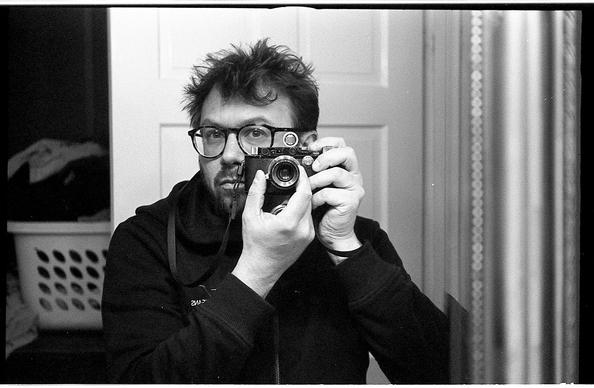
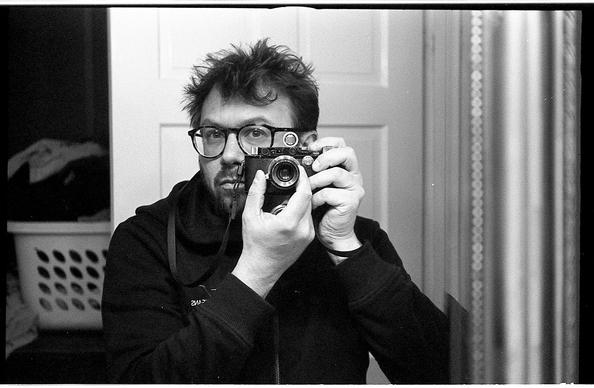
1930 Leica I/III | 1935 Leitz 5cm f2 Nickel Summar | Kodak Tri-X 400 | Kodak HC110b | www.JohnnyMartyr.com
I thought to myself; how could anyone who understands what its like to shoot on a vintage, all manual 35mm camera, call anything that I take, a snapshot?
But then I thought, haphazard is haphazard. Why should it matter how much effort went into setting up a camera if the resulting photo appears to be haphazardly taken?
I mean, it's a blurry line, right? The Voigtländer Snapshot Skopar is a 25mm f4 lens, intended to be used with the hyperfocal distance method - ie. not accurately measuring focus via a viewfinder for each image. One could throw Sunny 16 exposure in with hyperfocal distance as a means of unmeasured snapshooting also.
And yet, we've all seen, and perhaps taken beautifully, well-composed, well-focused, well-exposed and beautifully deliberate-looking photos with wider lenses, using hyperfocal distance and Sunny 16. Or perhaps even less - using a pinhole camera.
And would we call any image taken with a fully automated camera a snapshot?
So what makes an image a snapshot, if it is in fact not determined by the amount of effort that went into setting the camera at the moment of exposure?
Is it simply composition alone? Surely there's more to photography than just composition.
Is it forethought? Was there a lot or very little planning ahead that went into the creation of the image? How does that apply to photojournalism? Are all examples of photojournalism, examples of snapshots?
None of that seems right either.
1930 Leica I/III | 1932 Leitz 5cm f3.5 Nickel Elmar | Kodak Tri-X 400 | Kodak HC110b | www.JohnnyMartyr.com
The conclusion that I came to is what finally put my mind to rest regarding what snapshots are and if my photography could be considered mere snapshotography.
It doesn't really matter.
"Snapshot" doesn't have to be a negative word. Just as when Cosina dubbed their Skopar a Snaspshot lens, and just as people will say "let me take a quick snapshot," the intentions are merely reflective of a particular method. Not necessarily a positive or a negative method, just another arrow in the photographers quiver.
Snapshots remind me that the measure of good photography has very little to do with how much effort that the photographer went to to make the image, though consideration of effort can add to the appeal.
A good photograph is simply a photograph that people enjoy.
And that's all.
1930 Leica I/III | 1932 Leitz 5cm f3.5 Nickel Elmar | Kodak Tri-X 400 | Kodak HC110b | www.JohnnyMartyr.com
Photographers may enjoy recalling their efforts. But if nobody likes the image, nobody will care about these efforts. Only if audiences enjoy a photo might they then additionally find interest and potentially more appeal in understanding how it came to be.
For me, my photographs are sometimes very basic and maybe even bland, in terms of light and subject and composition. I tend to grasp at the efforts of the photographer to determine if an image is good or not because "good" is just so nebulous and fickle to define. But I like to think that if enjoyed, people will appreciate the backstory that I'm so passionate about; shot on film, with a cool old camera, processed and digitized by hand. From the heart and soul. But I have to remember, I can't lean on the backstory to make the photo good.
For this blog, I chose some recent images that I took with my 1930 Leica. For me, shooting on this camera adds a little mythos to my photos. But does that matter? Would they be any stronger or weaker if taken with an iPhone? Are they snapshots because I didn't set an 8×10 camera up on a tripod and wait for the perfect time of day to take them? Are they snapshots because I didn't reserve studio time and coordinate with models/owners of the objects and put lights around them and have assistants to orchestrate every detail with me? Would doing any of that have resulted in stronger images?
So, snapshot or carefully crafted apex of achievement, they are both players on the same field. And either one can be a winner. Or a loser.
Thanks for reading, happy shooting.
_Follow, Favorite, Like, Add, Insult, ContactJohnny Martyr _
#filmphotography #kodak #leica #martyrmusings #tipstricksadvice #1930leica #35mm #35mmfilm #barnackleica #blackandwhitephotography #composition #criticism #evaluation #exposure #film #focus #ideas #image #leicaiii #leitz #photography #principlesofdesign #review #snapshot #thinking #thoughts #value