 Chris U
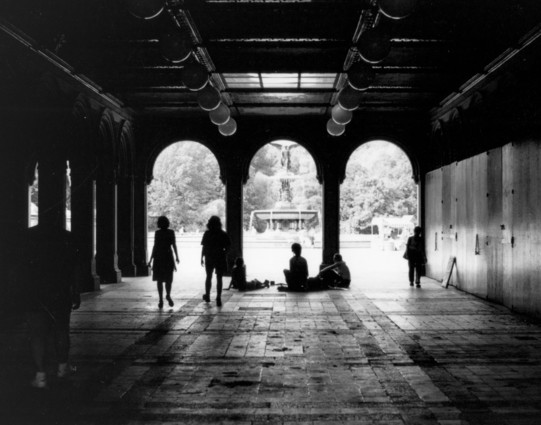
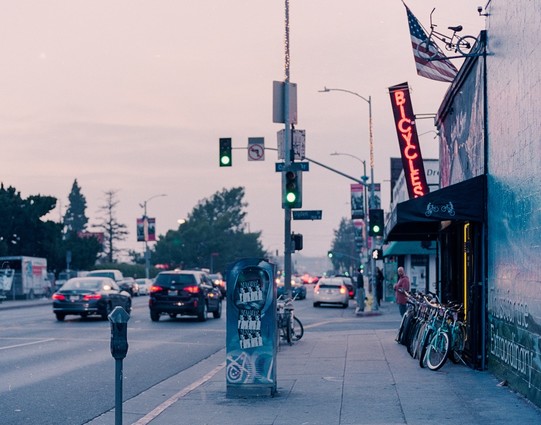
Trying to do one photo a day (hopefully). Here’s one from a trip to Colorado last year. Photographed with #Nikon #FM2n on #Cinestill800T #BelieveInFilm #FilmIsNotDead #GrainIsGood

If you’re okay with giving inconceivable amounts and forms of personal information to Big Data, you may as well use your smart voice assistant to help you process your film too! And while there are no consumer AI's that have hands yet, they are still willing to help film photographers the best that they can.
My household is spied on by Alexa via several Amazon Echo Dots, standing alone or feeding vacuum tube amplifiers. But I'm sure that Google, Siri, Bigsby and Cortina are just as capable - of film processing, not spying. Well, that too.
3rd Generation Amazon Echo Dot - Nikon Nikon FM2n | Nikkor 55mm 2.8 Micro AIS | Kodak Tri-X @ 1600 | Kodak HC110b
So, what do I use Alexa for in terms of processing, exactly? The most useful thing, among a laundry list, is that I've found she is a very good timing device. In darkrooms, I used one of those common, classic GraLab Model 300's without the enlarger plugged in. At home, I got in the habit of just using the timer built into my oven. But the problem with these is that they inevitably and eventually get caked with fixer crud and need to be cleaned regularly and thoroughly. How many GraLab timers have you seen that are so rusty that they resemble one of Damien Hirst's Treasures from the Wreck of the Unbelievable?
I've found that the hands-free nature of the voice assistant is well-suited for reducing the amount of chemistry that ones fingers tend to shed on belongings while processing.
It's easy. I start pouring, and once my two 5 reel Patterson tanks are filled, I simply say "Alexa, start timer for 10 minutes." Or whatever the amount of time is. She replies "Your timer for 10 minutes is staring now." And the countdown begins.
2nd Generation Amazon Echo Dot with Nobsound MS-10D - Nikon FM2n | Nikkor 55mm 2.8 Micro AIS | Kodak Tri-X @ 1600 | Kodak HC110b
Amazon Echo app on my iPhone - Nikon FM2n | Nikkor 55mm 2.8 Micro AIS | Kodak Tri-X @ 1600 | Kodak HC110b
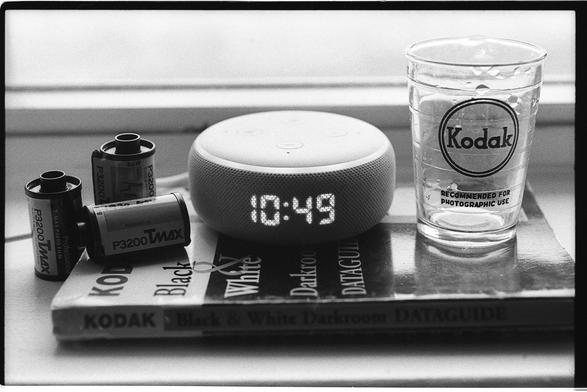
In my kitchen, where I do my processing, I keep a 3rd generation Echo Dot on the windowsill. It's the version with the embedded LED clock display which is critical to catching the agitation times throughout a cycle. If your voice assistant does not have some way of displaying time, this would be a deal-breaker for my recommendation but many of them do now, so I'll submit this consideration for your next voice assistant purchase.
In the same vein as the timer, playing music is made much simpler and cleaner while processing when using a voice assistant. Now I don't need to ruin the face of one of my antique radios with my chemical-dripping fingers. I can just say "Alexa, play songs by the Clash." Or "Alexa, play songs by Matt and Kim." Or "Alexa, play songs by My Life with the Thrill Kill Kult." Or "Alexa, play songs by Veruca Salt." Alexa can even play music from bands that I haven't photographed or written about!
Oh, and you can also play your favorite film photography podcasts too. Or even order more film "Alexa, order more Tri-X!" (Though, I actually advocate buying from Film Photography Project instead.)
2nd Generation Amazon Echo Dot with 1939 Zenith 7s363 - Nikon FM2n | Nikkor 55mm 2.8 Micro AIS | Kodak Tri-X @ 1600 | Kodak HC110b
Smart assistants are also great for doing math and conversions that one sometimes needs while processing. Ounces to milliliters, Fahrenheit to Celsius, etc. You can even text notes to your phone to mark what dates particular chemistry was mixed or how many rolls you've processed since making a particular solution etc. It's also handy to answer the phone or door hands free, without interrupting processing. If you use one of those cool Beseler motorized film agitators, maybe you could hook it up to a smart switch and tell Alexa to turn it on every 30 seconds. And if you have an iRobot Braava, Alexa can also mop the chemicals off your floor after you're through with processing. The possibilities are as endless as your analog imagination! Though I have yet to see any film-specific skills in the Alexa app. Who will be the first to write one? It seems like connecting the Massive Development Chart would be useful.
When it comes time to scan and edit, you can be sure Alexa is there to keep me entertained and informed too. No need to waste any processor power from the computer I'm scanning with. And if I'm scheduling clients while working, I can ask "Alexa, what is on my calendar?" or "Alexa, what time is sunset?" without taking a break from cloning dust!
Forth Generation Amazon Echo Dot with my 1960's AGFA light box - Nikon FM2n | Nikkor 55mm 2.8 Micro AIS | Kodak Tri-X @ 1600 | Kodak HC110b
So you see, while Alexa isn't quite ready to feed you a sandwich and squeegee your film for you as Charlie Chaplin may have envisioned…
Charlie Chaplin in Modern Times
…she is ready to start working alongside luddite film shooters towards a cleaner kitchen and a loving embrace of our robotic, cloud-based futures.
Recently, I even upgraded my refrigerator so that I can watch Matt Osborne aka Mr. Leica videos while I process.
Matt Osborne aka Mr. Leica on my Alexa-enabled Samsung Smart Fridge - Nikon FM2n | Nikkor 55mm 2.8 Micro AIS | Kodak Tri-X @ 1600 | Kodak HC110b
What smart assistant tasks do you recommend? What heavy film camera would be best to bludgeon Alexa with?
Thanks for reading and happy shooting!
_Follow, Favorite, Like, Add, Insult, ContactJohnny Martyr _
#accessoryreviews #filmphotography #martyrmusings #tipstricksadvice #120film #120filmportraits #35mmfilm #55micro #alexa #amazon #amazonecho #amazonechodot #apple #artificialintelligence #cortina #darkroomtimer #film #filmdeveloping #filmdevelopingathome #filmdevelopingtimer #filmdevelopingtips #filmphotographypodcast #filmprocessing #filmprocessingathome #filmprocessingtimer #filmprocessingtips #filmtimer #fm2n #google #googlehome #heygoogle #heysiri #kodak #kodaktrix1600 #mattosborne #microsoft #mrleica #nikon #samsung #samsungalexa #samsungsmarthub #samsungsmartrefrigerator #samsungsmartthings #siri #smartassistant #smartspeaker #smartvoiceassistant #trix #voiceassistant


If you’re okay with giving inconceivable amounts and forms of personal information to Big Data, you may as well use your smart voice assistant to help you process your film too! And while there are no consumer AI's that have hands yet, they are still willing to help film photographers the best that they can.
My household is spied on by Alexa via several Amazon Echo Dots, standing alone or feeding vacuum tube amplifiers. But I'm sure that Google, Siri, Bigsby and Cortina are just as capable - of film processing, not spying. Well, that too.
3rd Generation Amazon Echo Dot - Nikon Nikon FM2n | Nikkor 55mm 2.8 Micro AIS | Kodak Tri-X @ 1600 | Kodak HC110b
So, what do I use Alexa for in terms of processing, exactly? The most useful thing, among a laundry list, is that I've found she is a very good timing device. In darkrooms, I used one of those common, classic GraLab Model 300's without the enlarger plugged in. At home, I got in the habit of just using the timer built into my oven. But the problem with these is that they inevitably and eventually get caked with fixer crud and need to be cleaned regularly and thoroughly. How many GraLab timers have you seen that are so rusty that they resemble one of Damien Hirst's Treasures from the Wreck of the Unbelievable?
I've found that the hands-free nature of the voice assistant is well-suited for reducing the amount of chemistry that ones fingers tend to shed on belongings while processing.
It's easy. I start pouring, and once my two 5 reel Patterson tanks are filled, I simply say "Alexa, start timer for 10 minutes." Or whatever the amount of time is. She replies "Your timer for 10 minutes is staring now." And the countdown begins.
2nd Generation Amazon Echo Dot with Nobsound MS-10D - Nikon FM2n | Nikkor 55mm 2.8 Micro AIS | Kodak Tri-X @ 1600 | Kodak HC110b
Amazon Echo app on my iPhone - Nikon FM2n | Nikkor 55mm 2.8 Micro AIS | Kodak Tri-X @ 1600 | Kodak HC110b
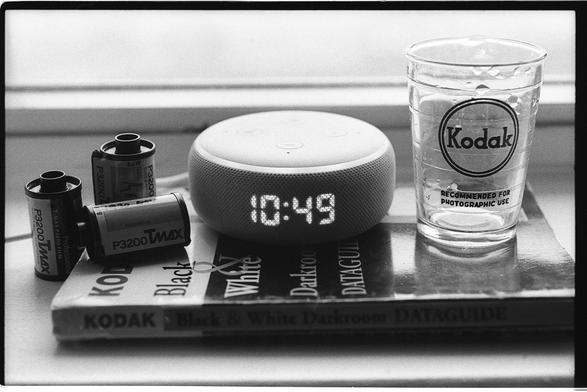
In my kitchen, where I do my processing, I keep a 3rd generation Echo Dot on the windowsill. It's the version with the embedded LED clock display which is critical to catching the agitation times throughout a cycle. If your voice assistant does not have some way of displaying time, this would be a deal-breaker for my recommendation but many of them do now, so I'll submit this consideration for your next voice assistant purchase.
In the same vein as the timer, playing music is made much simpler and cleaner while processing when using a voice assistant. Now I don't need to ruin the face of one of my antique radios with my chemical-dripping fingers. I can just say "Alexa, play songs by the Clash." Or "Alexa, play songs by Matt and Kim." Or "Alexa, play songs by My Life with the Thrill Kill Kult." Or "Alexa, play songs by Veruca Salt." Alexa can even play music from bands that I haven't photographed or written about!
Oh, and you can also play your favorite film photography podcasts too. Or even order more film "Alexa, order more Tri-X!" (Though, I actually advocate buying from Film Photography Project instead.)
2nd Generation Amazon Echo Dot with 1939 Zenith 7s363 - Nikon FM2n | Nikkor 55mm 2.8 Micro AIS | Kodak Tri-X @ 1600 | Kodak HC110b
Smart assistants are also great for doing math and conversions that one sometimes needs while processing. Ounces to milliliters, Fahrenheit to Celsius, etc. You can even text notes to your phone to mark what dates particular chemistry was mixed or how many rolls you've processed since making a particular solution etc. It's also handy to answer the phone or door hands free, without interrupting processing. If you use one of those cool Beseler motorized film agitators, maybe you could hook it up to a smart switch and tell Alexa to turn it on every 30 seconds. And if you have an iRobot Braava, Alexa can also mop the chemicals off your floor after you're through with processing. The possibilities are as endless as your analog imagination! Though I have yet to see any film-specific skills in the Alexa app. Who will be the first to write one? It seems like connecting the Massive Development Chart would be useful.
When it comes time to scan and edit, you can be sure Alexa is there to keep me entertained and informed too. No need to waste any processor power from the computer I'm scanning with. And if I'm scheduling clients while working, I can ask "Alexa, what is on my calendar?" or "Alexa, what time is sunset?" without taking a break from cloning dust!
Forth Generation Amazon Echo Dot with my 1960's AGFA light box - Nikon FM2n | Nikkor 55mm 2.8 Micro AIS | Kodak Tri-X @ 1600 | Kodak HC110b
So you see, while Alexa isn't quite ready to feed you a sandwich and squeegee your film for you as Charlie Chaplin may have envisioned…
Charlie Chaplin in Modern Times
…she is ready to start working alongside luddite film shooters towards a cleaner kitchen and a loving embrace of our robotic, cloud-based futures.
Recently, I even upgraded my refrigerator so that I can watch Matt Osborne aka Mr. Leica videos while I process.
Matt Osborne aka Mr. Leica on my Alexa-enabled Samsung Smart Fridge - Nikon FM2n | Nikkor 55mm 2.8 Micro AIS | Kodak Tri-X @ 1600 | Kodak HC110b
What smart assistant tasks do you recommend? What heavy film camera would be best to bludgeon Alexa with?
Thanks for reading and happy shooting!
_Follow, Favorite, Like, Add, Insult, ContactJohnny Martyr _
#accessoryreviews #filmphotography #martyrmusings #tipstricksadvice #120film #120filmportraits #35mmfilm #55micro #alexa #amazon #amazonecho #amazonechodot #apple #artificialintelligence #cortina #darkroomtimer #film #filmdeveloping #filmdevelopingathome #filmdevelopingtimer #filmdevelopingtips #filmphotographypodcast #filmprocessing #filmprocessingathome #filmprocessingtimer #filmprocessingtips #filmtimer #fm2n #google #googlehome #heygoogle #heysiri #kodak #kodaktrix1600 #mattosborne #microsoft #mrleica #nikon #samsung #samsungalexa #samsungsmarthub #samsungsmartrefrigerator #samsungsmartthings #siri #smartassistant #smartspeaker #smartvoiceassistant #trix #voiceassistant


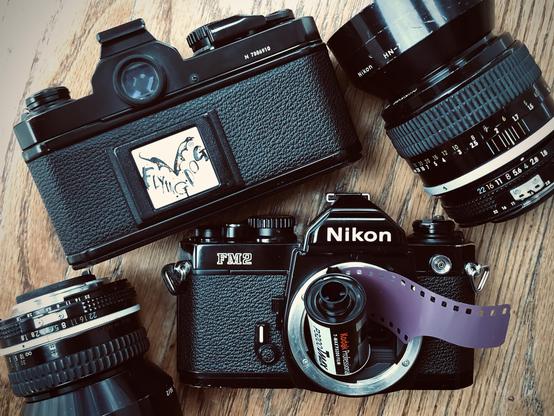
Three Common Issues with the Nikon FM2n
If you currently own or are interesting in buying a Nikon FM2n, you'll want to know about the three common issues that I've found with these cameras.
As previously noted, I'm a big fan of the Nikon FM2n. I've owned five and have whittled down to just two black FM2n's. I've been shooting on them for over a decade and have put thousands of rolls through them; from weddings, concerts, political rallies and just out drinking with friends. While my income and art depend on these cameras, I'll be the first to tell you, they're not perfect!
My beat old F2sb and even my cheap old Pentax K1000's are more mechanically and electronically dependable despite CLA's all around. That being said, I've only had three, very solvable, but critical issues with the FM2's that I've owned.
TITTANIUM SHUTTER
The first issue I want to talk about is with the FM2 and early FM2n's. Ironically, it's what they're famous for; the titanium shutter.
While I've heard great praise for Nikon's early and long time adoption/implementation of light weight, durable titanium shutter curtains, the FM2 seems to have missed the memo.
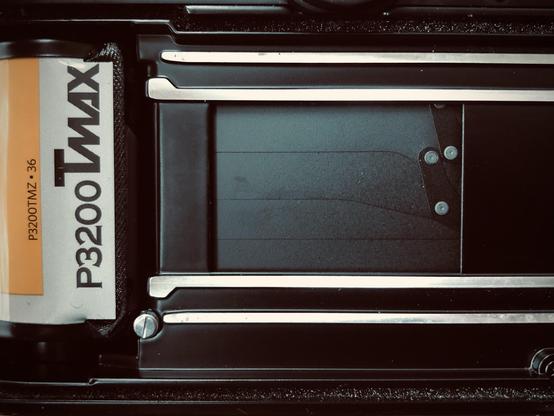
Two of the first FM2's I owned were models that featured that fabled honeycomb shutter and they failed with little use in the early 2010's. For one, the FM2, since I advocate buying from reputable retailers instead of rando's on eBay, I returned it to whence it came and there was no real harm done. For the other, an FM2n in near mint condition when purchased, I went with a full shutter replacement since its warranty was up. Set the old girl back to zero and all. But what kind of shutter did my early FM2n receive? Aluminum (as pictured above.) And it's worked beautifully ever since.
From what I understand, all FM2's and some early FM2n's have the titanium shutter. The titanium shutter is strikingly unique looking and easy to spot when opening the film door. I don't have a photo of the titanium honeycomb shutter because I got rid of the ones I had! But yeah, it has a honeycomb pattern stamped in it. Looks like bumblebees made it!
Newer FM2n's and any FM2 with failed titanium shutters in the last, oh, decade or so, have been bestowed with aluminum shutters as I've read. Why? Because even Nikon realised that titanium, in the case of this particular body, for reasons beyond my knowledge or interest, just didn't work. So if you own a working FM2 or FM2n that contains titanium, be careful and consider an aluminum shuttered back-up or upgrade of your existing camera pre-emptively while the service is still available (is it still available?). I have owned three aluminum shutter FM2n's and haven't had any issues with their less glamorous innards. My advice on the topic is not even to buy FM2's or FM2n's with titanium shutters.
APERTURE INDEXING TAB
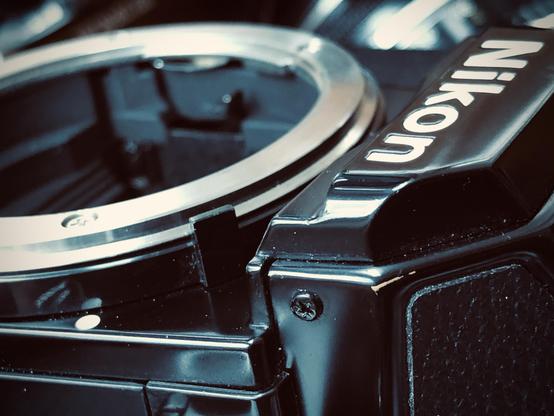
The second issue first arose right before a wedding. Amazingly Lev at BP-ES repaired my FM2n in just two days, in time for my shoot. Anyway, the Auto Indexing Tab, which is located on the lens mount of the camera, started to stick.
This gives bad meter readings and promotes confusion during a fast paced shoot. And since then, I've seen the sticking AI tab occur on three FM2n's I've owned, over time and with use, after full CLA's.
Remove your lens and find that little black plastic rectangle that sticks off of the ring around the lens mount. That's the AI Tab; the feature that replaced the earlier, more beautiful, less elegant and reliable crab-claw-and-pin rig that you find on pre-AI bodies and lenses.
I once disassembled it and found that under the lens mount of the FM2 is a string that attaches to the inner part of that AI tab and the string is tensioned by a spring. As you close your lens down, the string pulls the tab along the circumference of the lens mount to follow the corresponding AI Tab on your lens. The spring keeps the two tabs in exact contact, thus feeding the aperture position to the meter. It's a very basic mechanism that isn't THAT much more clever than the crab claw rig, but it's a hell of a lot more compact and modern looking.
On the FM/FE, the AI Tab and ring were made of metal. But on the FM2 and FE2, they are plastic. The problem with plastic, besides being ugly, is that it binds. So the mechanism seems to need more lubrication than its first iteration on the FM. I have lubricated the AI mechanism myself a couple times by rubbing graphite into the parts that touch. However, it's perhaps best to pay a friendly repair tech to show you how to do it rather than hazard this oneself. I just like to understand what I'm paying people to do!
Anyway, when the AI Tab no longer springs back and forth rapidly, the responsiveness of your light meter is affected. Sometimes, the meter simply responds to aperture changes a little slower and it's difficult to even notice the problem but it will only worsen.
You can learn about the relationship of the AI tabs by switching on the FM2's light meter with the lens removed, your hand out of the path of the mirrorbox and running the AI tab back and forth with your finger. You'll see that the meter reading changes even though you have not changed the SS or the amount of light entering the camera.
LIGHT METER POWER
Finally, the third problem happened to me while I was writing my last blog about NEW products that you can still buy for film Nikons. The light meter on one of my FM2n's just abruptly stopped responding. I pulled the advance lever to the standby position, pressed my shutter release half way and bam! No light meter.
I tried connecting one of my MD-12 motordrives and pressing it's shutter release half way. But still, no dice. What this told me is that the problem was not the on/off switch but either the meter display or the power to the meter. I did a little reading and very quickly found that a number of people had this problem and that most of the time it had been resolved by simple work done under the bottom plate.
I removed the bottom plate by unscrewing the three tiny screws that hold it in place. There were no signs of corrosion anywhere, everything looked very clean as it should be. Using my multi-meter, I tested the blue wire which comes off the battery box and to the motordrive terminals. I found that power was not getting from one end of the short, half inch or less wire, to the other end. At least not consistently. Different places on the battery box that I touched while holding the other side to the end of the wire, resulted in current or no current.
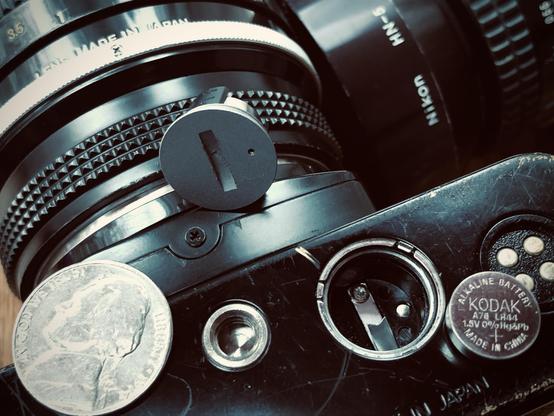
So I simply removed the battery cover and, using alcohol because DeOxit wasn't available, I cleaned the battery cover as well as the threads to the cover and box. I got ALOT of black oily material out of those threads. I put the batteries back in, screwed on the cover and tested the meter again. It was ALIVE!
When I get a chance, I'll apply some DeOxit all around the battery box. I also GENTLY pulled up on the negative contact prong at the bottom of the battery box to ensure a tight fit of the classic A76/LR44 batteries. I re-installed the bottom plate and then checked more carefully with a lens and different settings. All good. This isn't an issue I've had with any other camera, though I have always as a first response to electronics issues, performed this procedure. Yet I get the impression that this happens with some frequency to the FM2n. Maybe it has to do with loading all that graphite into the lens mount! Who knows?
So my FM2n's soldier on! Yes, there are obviously more complicated things that can go wrong with the FM2n or any classic camera and of course replacing the light seals is critical too! But like I said, these three seem most common with and unique to this model, occurring in spite of necessary, regular maintenance. Also, luckily, these three issues are easily addressed by any competent repair tech (though shutter replacement, if necessary, is somewhat costly).
Hopefully you find my experience useful in getting a dusty forgotten FM2n working again or for when one of these issues occur on the FM2n that you're currently running.
Have you come across any other problems with the FM2n? Got a solution? Let me know in the comments section.
Thanks for reading and happy shooting!
_Follow, Favorite, Like, Add, Insult, ContactJohnny Martyr _
#camerareviews #filmphotography #martyrmusings #nikon #reviews #tipstricksadvice #35mm #35mmfilm #a76 #aibody #ailens #aitab #aisbody #aislens #aluminumshutter #autoindexing #autoindexingtab #battery #best35mmslr #bestfilmcamera #bestslr #bpes #cla #cleanlubeandadjust #cost #favorite35mmslr #favoritefilmcamera #favoriteslr #film #filmphotographer #filmweddingphotographer #filmweddingphotography #fm #fm2 #fm2n #focalplaneshutter #honeycomb #honeycombshutter #kodaka76 #kodakbattery #kodaksr77 #kodaktmaxp3200 #lightmeter #maintenance #nikkor #nikkorai #nikkorais #nikonai #nikonais #nikonfm #nikonfmbattery #nikonfmlightmeternotworking #nikonfmshutter #nikonfm2 #nikonfm2battery #nikonfm2lightmeternotworking #nikonfm2shutter #nikonfm2n #nikonfm2nbattery #nikonfm2nlightmeternotworking #nikonfm2nshutter #nikonmaintenance #nikonrepair #photographer #photography #power #reliable #repair #shutter #shutterreplacement #singlelensreflex #slr #sr77 #tinker #titaniumhoneycombshutter #titaniumshutter #verticaltravelingshutter
 johnny martyr rss (unofficial)
