Book Review: The Thirty Years’ War: Europe’s Tragedy

By Peter H. Wilson Publisher: Belknap Press / Harvard University Press (2009,2011) Audiobook (2023)

Rating: ★★★★★ (Historical Scholarship) | ★★★★☆ (Classroom Use)

Audience: Advanced High School to Undergraduate Level

Recommended for: AP European History, World History, and Advanced English Language Arts courses

Audible Link

Why This Book Matters for Social Studies Classrooms

Peter H. Wilson’s The Thirty Years’ War: Europe’s Tragedy is what historians call a “fat boy” — and proudly so. Clocking in at over thirty-three hours in audiobook format, this monumental work covers one of European history’s most consequential and misunderstood conflicts with the kind of exhaustive, nuanced analysis that serious students of history genuinely need. For educators teaching the formation of modern Europe, the development of the state system, or the roots of religious and political conflict, this book delivers something rare: a complete reckoning with a war that remade an entire continent.

Wilson’s central argument challenges nearly everything students think they know about this conflict. Most approach the Thirty Years’ War (1618–1648) as a Protestant-Catholic religious war, a simplistic frame that Wilson systematically dismantles. What he reveals instead is far more interesting and far more instructive for contemporary students: a conflict that began as a localized religious rebellion in Bohemia before devolving, through shifting alliances built on power calculations rather than faith, into a continent-wide catastrophe that killed millions and reshaped European political geography for centuries.

A Masterclass in Historical Complexity

Wilson’s greatest contribution is his insistence that the Thirty Years’ War cannot be reduced to religious ideology. Yes, the Protestant-Catholic divide provided the initial spark and continued to shape rhetoric and recruitment throughout the conflict. But Wilson demonstrates with compelling clarity that the Franco-Swedish alliance, the maneuverings of the Habsburg imperial court, the Ottoman Empire’s peripheral involvement, and the conflicts between Poland and Russia all fed into what became a cascading system of interlocking engagements. As more battlefields opened, more powers joined; as more powers joined, more grievances accumulated; and as grievances multiplied, the original religious framing became less a cause than a convenient justification.

The book is particularly strong in explaining how the papacy during this era wielded enormous symbolic influence while possessing surprisingly little actual military or political power over the war’s trajectory. This is the kind of historical nuance that textbooks flatten into a single sentence, and Wilson refuses to let it disappear. Students who arrive expecting a simple narrative of papal armies versus Protestant reformers will leave with something far more sophisticated: an understanding of how institutional authority and actual power diverge, and what happens when they do.

The Peace of Westphalia: History’s Most Misunderstood Settlement

For educators whose students encounter the Peace of Westphalia in international relations or political science courses, this book provides essential context that most treatments ignore entirely. Wilson demonstrates that the peace negotiations, which lasted more than five years, were not a clean diplomatic resolution but a constantly shifting negotiation among parties whose battlefield fortunes changed even as diplomats argued. Alliance systems that had solidified during the middle years of the war continued to fracture and reform at the negotiating table itself, meaning that the final settlement reflected not some agreed-upon principle of state sovereignty but the exhausted pragmatism of powers who could no longer afford to fight.

Wilson also delivers one of the book’s most intellectually bracing sections in his treatment of how the war’s historical memory was subsequently manipulated. He explains that European powers in the years immediately following 1648 had strong financial incentives to exaggerate the populations of their territories, since reparations and restitution payments were calculated partly on the basis of how many people lived where. As a result, the primary documents from the war’s aftermath cannot be taken at face value. Modern research suggests that a substantial portion of the deaths attributed to the war’s violence were actually caused by plague; armies moving across the continent carried disease with them into communities that had no immunity, and the resulting mortality was staggering but distinct from combat casualties. Wilson’s methodological transparency here is itself a lesson in historical thinking.

Three Phases, One Classroom Strategy

Wilson structures the war in recognizable phases; the Bohemian, Danish, Swedish, and French periods follow the entry of successive powers into the conflict. For educators, this structure offers a useful classroom scaffold, though it comes with a critical caveat: the middle sixty percent of the book, covering the war’s operational details, is dense military and diplomatic history that rewards specialists more than general high school readers. The alliances of 1630 differ substantially from those of 1640, and students who skip the middle sections will arrive at the Peace of Westphalia without understanding why the participants at the table were sitting where they were.

The practical recommendation, tested against the book’s actual content, is this: assign or excerpt the opening sections, which cover the war’s origins and the interconnected religious, dynastic, and constitutional tensions of the late sixteenth and early seventeenth centuries; then jump to the final sections on the peace negotiations and their aftermath. The opening establishes the “why,” and the conclusion establishes the “what it meant.” Together, they give students a coherent arc without requiring them to track every siege and countermarch of the middle decades.

Social History and the Unexpected Details

One of the book’s most memorable qualities is Wilson’s attention to the social fabric of the era. He documents how tobacco smoking, practically unknown in Central Europe before 1618, had become a widespread habit among soldiers by the war’s end; the habit spread through armies regardless of their religious or national identity, crossing confessional lines that theology could not. Religious communities that condemned smoking as a moral failing found themselves debating the practice in ways that revealed the war’s capacity to dissolve social norms alongside political ones.

This kind of social history is gold for classroom instruction. It gives students a human-scale entry point into an otherwise overwhelming narrative and illustrates how warfare reshapes everyday life in ways that military history alone cannot capture. These details are also excellent prompts for analytical writing: how does prolonged conflict change the culture of the societies involved, and what does that change tell us about the relationship between war and social transformation?

The Audiobook Advantage (and Its Map Problem)

I listened to this book via audiobook, and I want to be direct about both why that format works well here and where it creates genuine difficulty. The book’s roster of historical figures is enormous, drawn from Scandinavian, German, Eastern European, French, Italian, and Spanish naming traditions; hearing those names spoken consistently by a skilled narrator is genuinely helpful. The narrator handles the linguistic variety with confidence, and that consistency matters when you are tracking dozens of commanders, diplomats, and rulers across three decades of conflict.

The limitation is equally real: the Thirty Years’ War was fought across a vast and shifting geographic theater, and without maps, the operational sections of the book become significantly harder to follow. Rivers serve as Wilson’s primary geographic anchors, and he uses them consistently, but listeners who do not already have a strong mental map of Central Europe will find themselves occasionally adrift. The practical solution is to maintain access to a set of period maps alongside the audiobook; maps showing the Holy Roman Empire’s political geography around 1600, the territorial changes through roughly 1635, and the final settlement of 1648 will pay dividends throughout. Free, high-quality options are available through university history departments and resources like the Perry-Castañeda Library Map Collection.

Suggested Maps from the Perry-Castañeda Library Map Collection.

The Religious Situation in Central Europe about 1618 (581K) [p.120] [1923 ed.]
Sweden about 1658 (387K) [p.120] [1923 ed.]
Principal Seats of War in Europe, I. 1618-1660 (581K) [p.121] [1923 ed.]
Treaty of the Pyrenees 1659 (194K) [p.121] [1923 ed.]Treaty Adjustments, 1648-1660. Treaty of Pyrenees, 1659; Peace of Roeskilde-Oliva, 1658, 1660
Treaty of Westphalia 1648 (258K) [p.121] [1923 ed.]Treaty Adjustments, 1648-1660. Treaty of Westphalia 1648.
Central Europe about 1648 (926K) [p.122-123] [1926 ed.]
The Ottoman Empire, 1481-1683 (581K) [p.124] [1923 ed.]
Principal Seats of War in Europe, II. 1672-1699 (276K) [p.125] [1926 ed.]
Treaty Adjustments, 1668-1699 (122K) [p.125] [1926 ed.]Treaties of Aix-la-Chapelle, Nimwegen, St. Germain, Ryswick, Carlowitz.

Classroom Applications and Discussion Opportunities

The Thirty Years’ War offers rich opportunities for advanced classroom engagement. The book’s treatment of historiography, particularly Wilson’s explanation of how and why the war’s memory was reshaped by subsequent generations, is excellent preparation for document-based question analysis. Students can examine primary sources from the war alongside Wilson’s methodological cautions and practice the critical reading skills that distinguish sophisticated historical inquiry from simple source acceptance.

The war’s alliance dynamics provide a compelling case study in realpolitik that connects naturally to later units on the Concert of Europe, World War I’s alliance system, and contemporary international relations. Wilson’s demonstration that religious ideology and power politics operated simultaneously, with neither fully explaining the war’s trajectory, gives students a model for analyzing complex historical causation that transfers across periods and topics.

For English Language Arts courses at the advanced level, Wilson’s integration of social history into military and diplomatic narrative offers a strong model for analytical writing that operates at multiple scales simultaneously. His capacity to move from the macrohistorical (why did France intervene in 1635?) to the microhistorical (what was daily life like in a besieged city?) without losing argumentative coherence is a skill worth naming and studying explicitly.

Areas for Classroom Consideration

Teachers should be candid with students about the book’s demands. The middle sections covering the war’s operational history require either strong prior knowledge of Central European geography or a committed willingness to pause and locate the places being discussed. The sheer number of historical actors, many sharing similar dynastic names across different branches of the same families, creates genuine cognitive load. These are not reasons to avoid the book; they are reasons to scaffold it carefully.

The book also assumes familiarity with the basic structures of the Holy Roman Empire, the confessional divisions established by the Peace of Augsburg in 1555, and the general contours of early modern European statecraft. It works best as a capstone text or a focused supplementary source rather than an introduction to the period.

Final Assessment

Peter H. Wilson’s The Thirty Years’ War: Europe’s Tragedy earns its reputation as the definitive English-language account of this conflict. Its five-star rating for historical scholarship is unambiguous; the depth of research, the methodological rigor, and the analytical sophistication place it in the company of the great works of European military and political history. The four-star classroom rating reflects not a weakness in the book but an honest accounting of what advanced high school students can navigate without substantial teacher support.

The book’s most lasting contribution for educators may be its insistence on complexity as a historical value rather than an obstacle. Students who work through Wilson’s argument will emerge with a genuine understanding of how religious conflict, dynastic ambition, economic desperation, and institutional collapse can combine to produce catastrophe, and why that combination has proven so durable as a pattern in modern history. From the perspective of a teacher preparing students to understand both seventeenth-century Europe and the twenty-first century world, that is exactly the right lesson.

Recommended for: AP European History students studying the formation of the modern state system; World History courses covering the religious and political conflicts of early modern Europe; advanced students seeking a model of rigorous, multi-causal historical argument; educators looking for a sophisticated treatment of the war that will anchor discussions of Westphalian sovereignty and international order.

About the Audiobook Edition

I listened to this book via Audible, and the narrator handles the book’s extraordinary linguistic variety with consistent skill. For a text covering Scandinavian, German, Eastern European, French, Italian, and Spanish historical figures, that consistency is no small achievement. My strong recommendation is to pair the audiobook with a set of period maps; the geographic dimensions of the conflict deserve visual support that audio cannot provide on its own. At over thirty-three hours, this is a serious commitment, and it rewards serious listeners in proportion.

This is part of a collection of book and movie reviews intended to help educators. I have read/screened of of these books and at times included excerpts in my classroom over the years and highly recommend them. Keep in mind that not all classrooms are the same and every educator should evaluate school and district recommendations before using any book, movie, or podcast in classes.
To read more of my reviews follow the link.

#APEuropeanHistory #audiobookHistory #book #BookReview #bookReviewForTeachers #BookReviews #classroomResourcesHistory #documentBasedQuestions #earlyModernEurope #educatorBookReview #HabsburgDynasty #HistoricalThinkingSkills #HolyRomanEmpire #PeaceOfWestphalia #PeterHWilson #ProtestantReformation #stateSovereigntyOrigins #ThirtyYearsWar #WorldCultures #WorldHistoryHighSchool
Amazon.com: The Thirty Years War: Europe's Tragedy (Audible Audio Edition): Peter H. Wilson, Matthew Waterson, Tantor Audio: Audible Books & Originals
Amazon.com: The Thirty Years War: Europe's Tragedy (Audible Audio Edition): Peter H. Wilson, Matthew Waterson, Tantor Audio: Audible Books & Originals

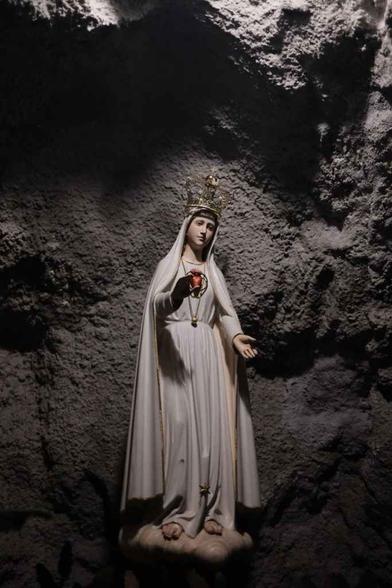
The Perpetual Virginity of Mary

This is a Christian doctrine that Jesus’ mom, Mary, was a virgin before, during, & after Jesus’ birth.

In Western Christianity, Catholics, many Anglicans, some Lutherans, Reformed, & other Protestant sects believe in this doctrine. It’s 1 of the 4 Marian dogmas of the Catholic Church. In Eastern Christianity, the Oriental Orthodox Churches & the Church of the East both follow this doctrine. Eastern Orthodox churches recognize Mary as Aeiparthenos, meaning “ever-virgin.”

The surviving written tradition of the perpetual virginity of Mary 1st appears in a 2nd century text called the Protoevangelium of James. The Second Council of Constantinople in 533 gave her the title of “Aeiparthenos.”

At the Lateran Synod of 649, Pope Martin I emphasized the 3-fold character of the perpetual virginity, before, during, & after the birth of Jesus.

The Lutheran Smalcald Articles (1537) & the Reformed Second Helvetic Confession (1562) codified the doctrine of perpetual virginity of Mary as well.

The doctrine of Mary’s perpetual virginity has been challenged on the basis that the New Testament doesn’t say that Joseph had adult spicy adult time with Mary until AFTER the birth of Jesus. It mentions that Jesus had brothers (adolphoi).
The brothers (& sisters for that matter) are the basis for contention because they may have been:

  • Sons of Mary & Joseph, born AFTER Jesus (making Jesus the 1st born son, which is a HUGE deal in that time period).
  • The sons of Joseph from a previous marriage. Joseph was married before Mary came into the picture, but it’s theorized that Joseph’s 1st wife passed away. Thus making way for Mary to be these kids’ stepmom. Jesus would be Mary’s 1st born son.
  • The sons of another woman named Mary in Mark 15:40, whose been identified as the wife of Clopas & the sister of the Virgin Mary, or a sister-in-law to Joseph.

The infancy narratives in Matthew & Luke show Mary as a virgin at the time she conceives Jesus. A conception that doesn’t involve sexual relations with a man. But this fact by itself doesn’t require the further claims that she remained a virgin in childbirth or afterward.

Only in later doctrinal reflection do Christians explicitly describe Mary as a virgin before, during, & after Jesus’ birth. The Protevangelium of James provides the earliest surviving text that clearly supports this view.

The Gospel of James states that Mary remained a lifelong virgin. Because Joseph was an old man who married her without physical desire (Sure guys, sure.). The brothers of Jesus mentioned in the canonical Gospels are explained, again, as Joseph’s sons from a previous marriage.

The Second Apocalypse of James portrays James (James the Just or James, brother of Jesus) as the canonical bio brother of Jesus. Not as a kid of Joseph’s. But of a certain “Theudas,” who was a relative of Jesus.

The 8th book of the Christian Sibylline Oracles (circa late 2nd or early 3rd centuries) describes Mary as “always virgin” & that she received God in her “intact bosom.” (Umm…not to be disrespectful but did we miss that day in human biology class?)

The Ebionites denied the virgin birth & Mary perpetual virginity.

The Protestant Reformation saw a rejection of the special moral status of lifelong celibacy. As a result, marriage & parenthood were praised. Mary & Joseph were seen as a normal married couple.

Mary’s perpetual virginity was upheld by Martin Luther (who named her “ever-virgin” in the Smalcald Articles, a Lutheran confession of faith written in 1537), Huldrych Zwingli, John Wycliffe, & later Protestant leaders, including John Wesley (co-founder of Methodism).

In Evangelical Lutheranism, the Formula of Concord upholds the perpetual virginity of Mary. This is in addition to the Smalcald Articles.

Make a one-time donation

Your contribution is appreciated.

Donate

Make a monthly donation

Your contribution is appreciated.

Donate monthly

Make a yearly donation

Your contribution is appreciated.

Donate yearly #1537 #1562 #2ndCentury #533 #649 #Adelphoi #Aeiparthenos #Anglicans #BookOfLuke #BookOfMatthew #CatholicChurch #Catholics #Christian #ChristianSybyllineOracles #CircaEarly3rdCentury #CircaLate2ndCentury #Clopas #EasternChristianity #Ebionites #EvangelicalLutherianism #FormulaOfConcord #GospelOfJames #HuldrychZwingli #James #JamesTheJust #Jesus #JohnWesley #JohnWycliffe #Joseph #LateranSynod #LateranSynodOf649 #Lutheran #LuthernSmalcaldArticles #MarianDogmas #Mark1540 #MartinLuther #Methodism #NewTestament #OrientalOrthodoxChurch #PerpetualVirginityOfMary #PopeMartinI #Protestant #ProtestantReformation #ReformedChurches #ReformedSecondHelveticConfession #SecondApocalypseOfJames #SecondCouncilOfConstantinople #TheProtoevangeliumOfJames #Theudas #VirginMary #WesternChristianity

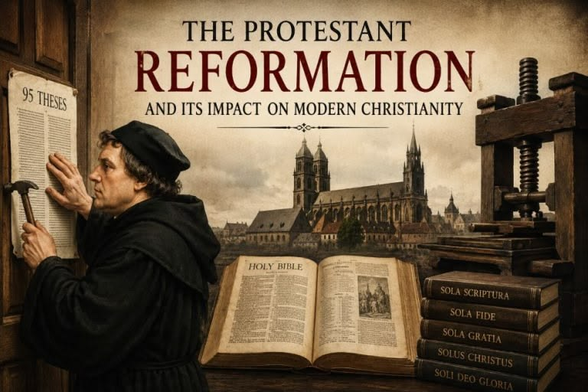
The Protestant Reformation was a major 16th-century movement that challenged the authority and practices of the Catholic Church and reshaped Christianity across Europe.

Click here: https://www.ojgreenministries.com/protestant-reformation-modern-christianity/

#ProtestantReformation #ChristianHistory #FaithAndScripture #ChurchHistory #BiblicalTruth #ModernChristianity

The Protestant Reformation and Its Impact on Modern Christianity

The Protestant Reformation reshaped religious life in Europe and influenced how many Christians approached Scripture, worship, and theology. Historians continue to examine its long-term impact on church traditions and intellectual history.

A longer historical overview appears at www.ojgreenministries.com/protestant-reformation-modern-christianity

#ChristianHistory #ProtestantReformation #History #ChurchHistory #Christianity

Authority, Scripture, and Who Gets to Speak for God

By Cliff Potts
Editor-in-Chief, WPS News

Baybay City, Leyte, Philippines — May 3, 2026

Christianity presents itself as a faith grounded in revealed truth. Yet from its earliest centuries, it has been equally grounded in argument—over texts, authority, interpretation, and power. These debates are not modern intrusions or signs of decline. They are structural. Christianity has never existed without human hands deciding who speaks for God, what counts as Scripture, and how certainty is enforced.

That tension matters, because claims of absolute authority still shape law, culture, and politics. If those claims rest on historical processes rather than self-evident divine transmission, then authority itself must be examined honestly.

This essay emerges from the long arc of questions explored in SpiritFlight (https://www.amazon.com/dp/B0DKXPLBXL)—not as answers delivered, but as questions finally allowed to be asked. That work does not claim theological authority, nor does it attempt to replace belief with certainty. Instead, it traces how faith survives once institutional explanations fail, and how Scripture becomes more complicated—not weaker—when its human transmission is taken seriously. The questions raised here are not academic abstractions, but the product of lived experience, historical study, and decades spent inside the tension between belief and authority.

Who Decided What Counts as Scripture—and When?

The New Testament did not arrive as a finished book. For the first several centuries after Jesus, Christian communities circulated letters, gospels, homilies, and apocalyptic texts with no universally agreed canon. Some texts were read aloud in worship; others were disputed, ignored, or rejected outright.

Formal canonization unfolded gradually, primarily between the fourth and sixth centuries. Councils and church leaders weighed criteria such as apostolic attribution, doctrinal consistency, and liturgical usefulness. These were not neutral filters. They reflected theological priorities and institutional needs—especially once Christianity became aligned with imperial power.

What is often forgotten is that Paul’s letters were not universally treated as Scripture for generations. They circulated as correspondence and instruction, not as settled holy writ. Their later elevation required interpretation, translation, and theological framing long after Paul himself was gone.

The Meaning of a Canon Codified Centuries Later

The fact that the biblical canon was finalized long after Jesus raises a basic problem for claims of immediate, self-authenticating authority. Whatever one believes about inspiration, the form of Scripture believers now hold is the result of historical decisions made by fallible people responding to specific contexts.

This does not negate faith—but it does undermine certainty claims that pretend the Bible simply “fell from heaven” complete and unambiguous. The canon reflects continuity and conflict, preservation and exclusion. Some voices were elevated; others were silenced.

Catholic and Protestant Bibles: One Authority or Many?

The differences between Catholic and Protestant canons expose the fragility of claims to a single, self-evident authority. The inclusion or exclusion of the Deuterocanonical books was not settled by revelation but by institutional allegiance.

If Scripture were truly self-interpreting and universally obvious, such divergence would be inexplicable. Instead, it reveals that authority is mediated—transferred through churches, traditions, and power structures that assert legitimacy after the fact.

On What Basis Did Reformers Redefine Scripture?

Reformers claimed the right to alter or redefine Scripture by appealing to conscience, original languages, or divine mandate. Martin Luther removed books he judged theologically suspect. Henry VIII asserted ecclesiastical authority largely to resolve a dynastic crisis.

Their appeals to Scripture over church authority were themselves acts of authority. They did not escape power; they relocated it. The Reformation did not eliminate institutional control—it multiplied institutions.

Inerrancy and the Problem of Missing Originals

Modern claims of “inerrancy in the original manuscripts” collapse under their own logic. No original manuscripts exist. What remains are copies of copies, shaped by translation choices, scribal errors, and theological agendas.

Inerrancy functions less as a historical claim than as a doctrinal safeguard—a way to protect authority by relocating perfection to an unreachable past. It asks believers to trust certainty that cannot be examined.

Scripture, Tradition, and Institutional Power

Early Christianity relied heavily on oral tradition. Written texts gained authority gradually, often in response to heresy disputes and administrative needs. Orthodoxy and heresy were not discovered; they were defined.

This process was deeply influenced by philosophy. Plato shaped Christian metaphysics indirectly through thinkers like Augustine of Hippo, whose synthesis of Greek thought and Christian doctrine profoundly influenced Western theology. These developments were responses to empire, culture, and intellectual inheritance—not fresh revelation descending intact.

Faith Versus Institutional Authority

None of this demands the abandonment of faith. Belief can remain meaningful without pretending that authority is pure, singular, or immune to history.

What must be questioned is certainty—especially when it is enforced rather than lived. Institutional claims of divine authority often mask human struggles for control, legitimacy, and continuity. Scripture may inspire faith, but institutions define how that inspiration is constrained.

Christianity’s debates over authority are not signs of corruption. They are foundational tensions. Honest faith does not deny them—it confronts them.

If authority is humanly transmitted, how much certainty can it honestly claim?

If you read this and it matters, help me keep it going: https://www.patreon.com/cw/WPSNews

#AugustineOfHippo #biblicalCanon #biblicalInerrancy #CatholicChurch #ChristianTheology #churchHistory #earlyChristianity #faithAndAuthority #HenryVIII #MartinLuther #Plato #ProtestantReformation #religiousAuthority #ScriptureAndPower #theologyAndEmpire

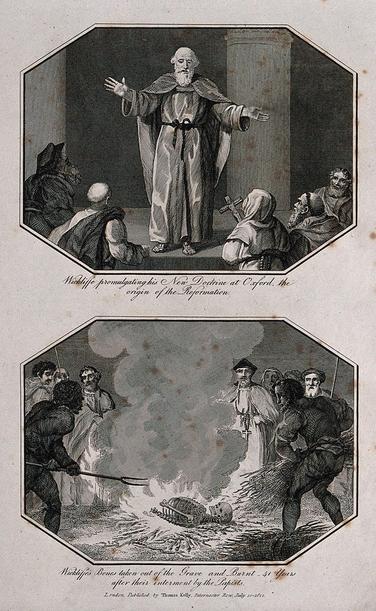
John Wycliffe

His last name is also spelled: Wyclif, Wickliffe, & Wicklyf.

He’s an English scholastic philosopher, Christian reformer, Catholic priest, & a theology professor at the University of Oxford. He’s often called the “Morning Star of the Reformation.”

He made radical challenges to the Roman Catholic Church like advocating for or made a vernacular translation of the Vulgate Bible into Middle English. He paved the way for the Protestant Reformation nearly 200 years before Martin Luther.

Before he was a reformer, Wycliffe was a titan of Scholasticism at Oxford. At the time, the intellectual world was divided between Realist & Norminalists. The Norminalists, like William of Ockham, argued that “universals” (like the concept of “justice” or “humanity”) were just names (nomina) we give to groups of individual things.

John was a fierce Realist. He believed that universals were real entities that existed in the mind of God. For Wycliffe, everything in the physical world was a direct reflection of a divine archetype.

Wycliffe’s most radical political theory was the Dominion of Grace. He argued that all authority (dominium) is a gift from God. Which meant that the church wasn’t allowed to own property or have ecclesiastic courts, & men in mortal sin weren’t entitled to exercise authority in the church or state, nor to own property. He added a dangerous caveat: only those in a state of grace have a right to exercise authority.

Wycliffe’s later followers (derogatorily called Lollards by their orthodox contemporaries in the 15th & 16th centuries. Lollards meaning “mumblers” or “idlers.”) adopted a number of the beliefs attributed to Wycliff such as theological virtues, predestination, iconoclasm, & the notion of caesaropapism, with some questioning the veneration of saints, the sacraments, requiem masses, transubstantiation, monasticism, & the legitimacy/role of the Papacy.

Wycliffe was born in the village of Hipswell, near Richmond in the North Riding of Yorkshire, England. In 1356, Wycliffe completed his bachelor of arts degree at Merton College as a junior fellow. That same year, he produced a small treatise, The Last Age of the Church.

In 1361, he was Master of Balliol College in Oxford. That year, he was presented by the college to the parish of Fillingham in Lincolnshire. For this, he had to give up the headship of Balliol College, though he could continue to live at Oxford.

Wycliffe’s greatest legacy is his role in the 1st complete translation of the Bible into Middle English (circa 1382). At the time, the Bible was only available in the Latin Vulgate. This was accessible solely to the educated clergy.

Wycliffe believed that the Bible was the ultimate authority. Then every person (from the King to the “plowman”), needed to be able to read it.

Wycliffe didn’t just translate words. He helped create the English language. He’s credited with introducing, or popularizing, over 1,000 words into English, including: female, justice, communication, treasure, & glory.

His “potent” ideas were blamed for the Peasants’ Revolt of 1381. Wycliffe didn’t endorse the violence, however the rebels used his discourse of “equality before God” & Wycliffe’s critiques of Church wealth to justify their demands.

In the U.S. culture, Wycliffe’s legacy is preserved in 2 distinct ways:

  • The Democratic Spirit of the Bible: The American religious tradition of individual Bible interpretation & the rejection of centralized ecclesiastical authority can be traced directly back to Wycliffe’s “priesthood of all believers.”
  • Wycliffe Bible Translators: Founded in 1942 in California by William Cameron Townsend. This organization (now 1 of the largest of its kind in the world) was named in honor of John Wycliffe. It carries on his mission by translating the Bible into thousands of indigenous languages worldwide.

Wycliffe passed away from a stroke, during a Mass, in 1834. In 1415, the Council of Constance declared him a heretic. In 1428, by order of Pope Martin V, his remains were exhumed from his grave in Lutterworth, burned to ashes, & cast into the River Swift.

Make a one-time donation

Your contribution is appreciated.

Donate

Make a monthly donation

Your contribution is appreciated.

Donate monthly

Make a yearly donation

Your contribution is appreciated.

Donate yearly

#1356 #1361 #1382 #1415 #1428 #15thCentury #16thCentury #1834 #1842 #BalliolCollege #bible #Caesaropapism #California #Catholic #DominionOfGrace #Dominium #England #Fillingham #Hipswell #Iconoclasm #IndigenousLanguages #JohnWycliffe #LatinVulgate #Lincolnshire #Lollards #MartinLuther #Mass #MertonCollege #MiddleEnglish #Monasticism #MorningStarOfTheReformation #Nomina #Norminalists #NorthRiding #Oxford #Papacy #PeasantsRevoltOf1381 #Pope #PopeMartinV #Predestination #ProtestantReformation #Realists #RequiemMasses #Richmond #RiverSwift #RomanCatholicChurch #Sacraments #Scholasticism #TheLastAgeOfTheChurch #Translate #Transubstantiation #Universals #UniversityOfOxford #VulgateBible #WilliamCameronTownsend #WilliamOfOckham #WycliffeBibleTranslators #WycliffeSBible #Yorkshire

Charles Borromeo

We’re delving into Charles Borromeo because there’s a church named after him in our founder’s hometown. We hope you enjoy this read.

His name in Italian is: Carlo Borromeo. In Latin, his name: Carolus Borromeus. He was an Italian Catholic prelate who served as the Archbishop of Milan from 1564-1584. He became a cardinal in 1560. A prelate is a high-ranking cleric with special jurisdiction or authority, essentially anyone exercising public power or holding a position of prominence above ordinary clergy.

Charles founded the Confraternity of Christian Doctrine together with St. Ignatius of Loyola & St. Philip Neri. In this role, he was responsible for significant reforms in the Catholic Church. Including the founding of seminaries for the education of priests. He was canonized in 1610 & his feast day is November 4.

Charles was a descendant of nobility. The Borromeo family was 1 of the most ancient & wealthiest in Lombardy. The family coat of arms included the Borromean rings, sometimes taken to symbolize the Holy Trinity.

Charles’ dad, Gilbert, was the Count of Arona. His mom, Margaret, was a member of the Milanese branch of the House of Medici. He was the 2nd son in a family of 6 kids. He was born in the castle of Arona on Lake Maggiore 36 miles from Milan on October 2, 1538.

Charles received the tonsure when he was about 12 years old. At this time, his paternal uncle (dad’s brother), Giulio Cesare Borromeo turned over to him the income from the rich Benedictine abbey of Saints Gratinian & Felin, 1 of the ancient requirements of the family.

Charles let his dad know on no uncertain terms that all revenues from the abbey beyond what was required to prepare him for a career in the church belonged to the poor & couldn’t be applied to secular use.

Charles went to the University of Pavia. He applied himself to the study of civil & canon law. Because of a slight speech impediment, he was thought of as slow but his thoroughness & industry meant that he made fast progress.

In 1554, his dad died. Although he had an older brother, Count Federico, he was requested by the family to take the management of their domestic affairs. After a time, he restarted his studies. On December 6, 1559, he earned a doctorate in canon & civil law.

On December 25, 1559, Charles’ uncle, Cardinal Giovanni Angelo Medici, was elected as Pope Pius IV. The newly elected Pope requested his nephew to go to Rome. On January 13, 1560, Pope Pius IV appointed him as protonotary apostolic. Protonotary apostolic is the title for a member of the highest non-episcopal college of prelates in Roman Curia, or outside Rome.

Shortly after, on January 31, 1560, the Pope made him a cardinal. This made Charles a cardinal-nephew. He was entrusted with both the public & the privy seal of the ecclesiastical state. A cardinal-nephew was a high-ranking Cardinal in the Catholic Church. Usually the pope’s actual nephew or another close relative(s), who served as the pontiff’s chief assistant & confidant. He was also brought into the government of Papal States & appointed a supervisor of the Franciscans, Carmelites, & Knights of Malta.

During his 4 years in Rome, Charles lived in austerity, required the Roman Curia to wear black (The Roman Curia is the administrative arm of the Holy See.), & established an academy of learned persons, the Academy of the Vatican Knights.

Charles organized the 3rd, & last, session of the Council of Trent, in 1562-63. He had a large hand in making the Tridentine Catechism (Catechismus Romanus). In 1561, Charles founded & endowed a college at Pavia. Today the college is known as Almo Collegio Borromeo. Charles dedicated the college to Justina of Padua.

On November 19, 1562, Charles’ older brother, Federico, suddenly died. His family urged Charles to seek permission to return to the laity (laicization), to marry & have kids so that the family name wouldn’t become extinct. But he decided not to leave the ecclesiastic state.

His brother’s death, along with his contacts (with the Jesuits, the Theatines, & the example of bishops such as Bartholomew of Braga) were causes of the conversion Charles towards a more strict & operative Christian life. His aim became to put into practice the dignity & duties of the bishop as drafted by the Council of Trent.

After the death of his uncle, Pope Pius IV (1566), Charles sent a galley (a type of ship) to get Cardinal Ugo Boncompagni, the Nuncio of Spain. The nuncio (or apostolic nuncio) is the Pope’s personal ambassador (like an embassy’s ambassador) to a country & plays a key role in appointing bishops.

But the Cardinal didn’t arrive in time to be considered at the conclave. Charles reached an agreement with Alessandro Farnese, who held a significant number of conclave votes, to support Antonio Ghislieri (who was rumored to have the support of King Philip II of Spain). Ghislieri was elected Pope & took the name: Pius V.

He devoted himself to the reformation of his diocese which had deteriorated in practice owing to the 80-year absence of previous archbishops. Milan was the largest archdiocese in Italy at the time, with more than 3,000 clergy & 800,000 people. Both its clergy & laity had drifted from church teaching. The selling of indulgences & ecclesiastical positions was prevalent.

Charles believed that abuses in the church arose from ignorant clergy. His emphasis on Catholic learning greatly increased the preparation of men for the priesthood & benefited their congregations.

He founded the fraternity of Oblates of St. Ambrose (a society of secular men who didn’t take orders), but devoted themselves to the church & followed a discipline of monastic prayers & study. The new archbishop’s efforts for catechesis & the instruction of youth included the initiation of the 1st Sunday School classes & the work of the Confraternity for Christian Doctrine.

Charles’ diocesan reforms faced opposition from several religious orders. Particularly that of the Humiliati (Brothers of Humility), a penitential order which owned some 90 monasteries. Some members of that society formed a conspiracy against his life.

A shot was fired at him with an arquebus in the archepiscopal chapel. His survival was considered miraculous.

Even though the Diet of Ilanz of 1524 & 1526 had proclaimed freedom of worship in the 3 Leagues, Charles repressed Protestantism in the Swiss valleys. During his pastoral visit to the region, 150 people were arrested for practicing witchcraft. 11 women & the provost were condemned by the civil authorities to be burned alive.

Reacting to the pressure of the Protestant Reformation, Charles encouraged Ludwig Pfyffer in his development of the “Golden League” but didn’t live to see its formation in 1586.

Based in Lucerne, the organization (also called the Borromean League) linked activities of several Swiss Catholic cantons of Switzerland. This became the center of Catholic Counter-Reformation efforts & caused the break-up of Appenzell canton along religious lines.

Following his departure from this mortal coil, devotion to Charles grew quickly & continued to grow. The Milanese memorializes his anniversary as though he were already a saint. Supporters in a number of cities collected documentation to support his canonization.

In 1602, Pope Clement VIII beatified Charles. 2 years later, his “case” was sent to the Congregation of Rites. On November 1, 1610, Pope Paul V canonized Charles. 3 years later, the church added his feast day to the General Roman Calendar for celebration on November 4.

Along with Guarinus of Palestrina & Anselm of Lucca, he’s 1 of only 2-3 cardinal-nephews to have been canonized. Charles Borromeo is the patron saint of bishops; catechists; seminarians; against ulcers; apple orchards; bishops; catechumens; colic; intestinal disorders; Lombardy, Italy; Monterey, California; cardinals; seminarians; spiritual directors; spiritual leaders; starch makers; stomach diseases; & Sao Carlos (Brazil).

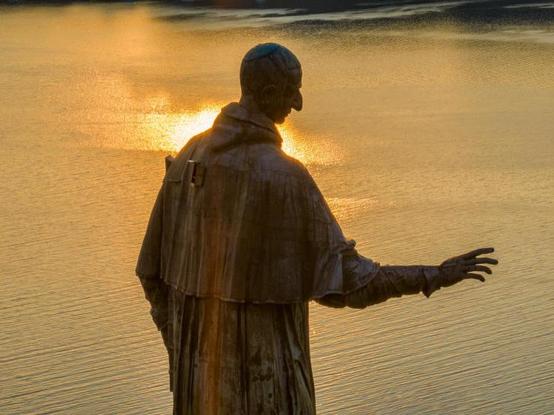
Charles’ emblem is the Latin word humilitas (humility), which is a portion of the Borromeo shield. He’s usually represented in art in his robes, barefoot, carrying the cross as archbishop, a rope around his neck and 1 hand raised in blessing. Thus recalling his work during the plague.

A large number of churches dedicated to St. Charles Borromeo exist in: Austria; Sheffield, England; Scotland; Belgium; Italy; Serbia; Poland; Switzerland; Vienna; Ireland; England; Indiana; Louisiana; Canada, California; Florida; Illinois; New York; Texas; Missouri; Minnesota; North Dakota; Ohio; Maryland; Massachusetts; Nebraska; New Jersey; North Carolina; Pennsylvania; Rhode Island; Virginia; Washington; Oklahoma; New Hampshire; Argentina; Brazil; Peru; Uruguay; Venezuela; & Chile.

Make a one-time donation

Your contribution is appreciated.

Donate

Make a monthly donation

Your contribution is appreciated.

Donate monthly

Make a yearly donation

Your contribution is appreciated.

Donate yearly

#1November1610 #13January1560 #1526 #1554 #1560 #1561 #1562 #1563 #1564 #1566 #1584 #1586 #1602 #1610 #19November1562 #2October1538 #25December1559 #31January1560 #6December1559 #AcademyOfTheVaticanKnights #AlessandroFarnese #AlmostCollegioBorromeo #AnselmOfLucca #AntonioGhislieri #ApostolicNuncio #Appenzell #ArchbishopOfMilan #Argentina #Arona #Austria #BartholomewOfBraga #Belgium #BorromeanLeague #Brazil #BrothersOfHumility #Califronia #Canada #CanonLaw #Cantons #Cardinal #CardinalGiovanniAngeloMedici #CardinalUgoBoncompagni #CardinalNephew #CardinalNephews #CarloBorromeo #Carmelites #CarolusBorromeus #Catechesis #CatechismusRomanus #Catholic #CatholicChurch #CatholicCounterReformation #CharlesBorromeo #Chile #CivilLaw #Conclave #ConfraternityForChristianDoctrine #ConfraternityOfChristianDoctrine #CongregationOfRites #CouncilOfTrent #CountFederico #CountOfArona #DietOfIlanzOf1524 #England #Franciscans #GeneralRomanCalendar #GilbertBorromeo #GiulioCesareBorromeo #GoldenLeague #GuarinusOfPalestrina #HolySee #HolyTrinity #Humiliati #Illinois #Indiana #Ireland #Italy #Jesuits #JustinaOfPadua #KingPhilipIIOfSpain #KnightsOfMalta #Laicization #LakeMaggiore #Lombardy #Louisiana #LudwigPfyffer #MargaretBorromeo #Massachusetts #MilaneseHouseOfMedici #Missouri #Nebraska #NewHampshire #NewJersey #NorthCarolina #NorthDakota #November4 #Nuncio #Ohio #Oklahoma #PapalStates #Pavia #Pennsylvania #Peru #PiusV #Poland #PopePaulV #PopePiusIV #Prelate #ProtestantReformation #Protestantism #ProtonotaryApostolic #RomanCuria #Rome #Scotland #Serbia #StAmbrose #StFelin #StGratinian #StIgnatiusOfLoyola #StPhilipNeri #SundaySchool #SwissValleys #Switzerland #Texas #Theatines #ThreeLeagues #Tonsure #TridentineCatechism #UniversityOfPavia #Uruguay #Venezuela #Vienna #Washington