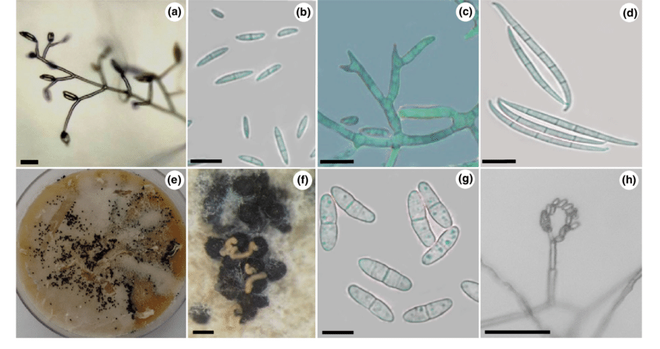
Fusarium sacchari is a #fungal and #plantPathogen of crops including #sugarcane in China.

How Plants are Learning to Spot Sneaky Bacterial Invaders

Scientists at the University of California, Davis, used artificial intelligence to help plants recognize a wider range of…
#NewsBeep #News #Headlines #ArtificialIntelligence #DepartmentofPlantPathology #Latvia #LV #PlantDisease #PlantPathogen
https://www.newsbeep.com/24069/

New NIOO publication: Unraveling the prevalence of soil-borne fungal #pathogens in the #NorthChinaPlain: a global analysis approach. #maize #wheat #soybean #plantpathogen #hostavailability #environmentaldrivers
https://doi.org/10.1007/s10658-023-02790-0

🦠#Xylellafastidiosa is a vector-transmitted #PlantPathogen ⚠️#QuarantinePest under the #PlantHealthLaw🌱X. fastidiosa is capable to infect more than 400 plant species🤔Do you want to know how #Xfastidiosa arrived to EU? Check out the new #ComicSeries ➡️https://shorturl.at/huCNZ

🐦🔗: https://n.respublicae.eu/Plants_EFSA/status/1658816165458616320

Kaboom! Blast-off for EFSA plants comic

Don't miss our new comic strip “Fastidious X, the fearsome killer” and join us as we unmask the culprit Xylella fastidiosa, a plant pest causing severe damage to the economy and the environment.

European Food Safety Authority
Monitoring and forecasting #PlantPathogen outbreaks with spore traps: The complex dispersal and movement of spores of fungal #plant pathogens in the air in agricultural fields has to be considered to optimize the placement of spore traps - review and simulation studies in the journal Plant Disease (2023, vol. 107, issue 1, pp. 13-33) by Walter F. Mahaffee and others - https://doi.org/10.1094/PDIS-11-21-2570-FE
Catching Spores: Linking Epidemiology, Pathogen Biology, and Physics to Ground-Based Airborne Inoculum Monitoring | Plant Disease

Monitoring airborne inoculum is gaining interest as a potential means of giving growers an earlier warning of disease risk in a management unit or region. This information is sought by growers to aid in adapting to changes in the management tools at their disposal and the market-driven need to reduce the use of fungicides and cost of production. To effectively use inoculum monitoring as a decision aid, there is an increasing need to understand the physics of particle transport in managed and natural plant canopies to effectively deploy and use near-ground aerial inoculum data. This understanding, combined with the nuances of pathogen-specific biology and disease epidemiology, can serve as a guide to designing improved monitoring approaches. The complexity of any pathosystem and local environment are such that there is not a generalized approach to near-ground air sampler placement, but there is a conceptual framework to arrive at a “semi-optimal” solution based on available resources. This review is intended as a brief synopsis of the linkages among pathogen biology, disease epidemiology, and the physics of the aerial dispersion of pathogen inoculum and what to consider when deciding where to locate ground-based air samplers. We leverage prior work in developing airborne monitoring tools for hops, grapes, spinach, and turf, and research into the fluid mechanics governing particle transport in sparse canopies and urban and forest environments. We present simulation studies to demonstrate how particles move in the complex environments of agricultural fields and to illustrate the limited sampling area of common air samplers.

Plant Disease
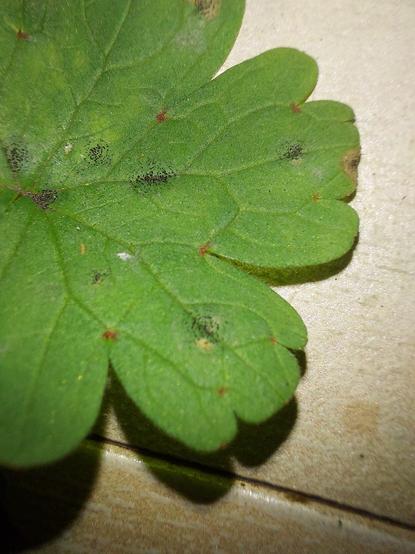
Found this interesting fungus on geranium leaf today. Its called Coleroa circinans. Not common but think its heavily under recorded. #fungi #plantdisease #plantpathogen

This scale 1:82 model of a kauri tree was built by Wētā Workshop for Waikato Regional Council to help spread the message about protecting kauri.

#Kauri are affected by the disease 'kauri dieback' caused by the fungus-like organism #Phytophthora agathidicida (that I described in 2015) .

The roots of the trees are infected by this #PlantPathogen, so it is important to not disturb the roots or move any soil into their zone. This model helps illustrate the extent of the root zone.

How to make a map of my team interests? 🗺️🔬💻
1. First, ask them their key-words 👀
2. Then... Good luck 😂🍀
3. First draft done 🤗
#team #Evolution #Genomics #epigenetics #plantpathogen #methods #interactions #lab

I have a #PhDposition open on Climate Change effects on plant-enemy interactions starting early 2023! If you are interested in #PlantInsect #Interaction and #PlantPathogen #Interactions, and how they are altered by #ClimateChange have a look! https://apply.refline.ch/273855/1408/pub/1/index.html

The position is within our #BugNet project, will be co-supervised by Eric Allan and in close collaboration with @rr_junker and Jake Alexander.
#Job #PhD

@jobsecoevo

PhD in „Climate change effects on plant-enemy interactions”

The Group Mountain Ecosystems within the Research Unit Alpine Environments and Natural Hazards investigates how climate change and land use affects the diversity and functioning of alpine ecosystems and is looking for a

Eidg. Forschungsanstalt WSL

#introduction
Here we go!
I freshly joined Daniel Croll's team as a #PhD student, at #unineuchatel.
I'm mainly interested about #epigenetics, #transposons, #genomics and #evolution in a #plantpathogen context.
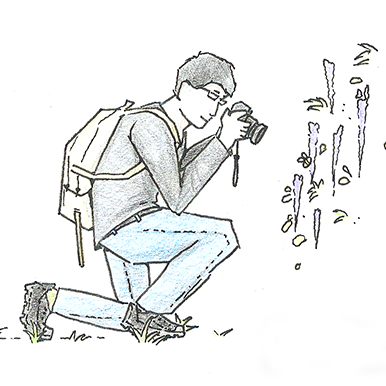
Love to #climb, do some #kayak and hike, but also draw and make some #vulgarisationscientifique/#popularscience!

Would love to see more about:
#Bioinfomatics, #ngs, #sequencing, #hostpathogen, #plants, #fungi, #nextflow & #python