

Alice Laigle

16 Followers
29 Following
37 Posts
PhD student in Daniel Croll's team (Neuchâtel 🇨🇭). Epigenetics & Evolution 🍄-🌾. Travels 🌍 🇨🇵 She/her
@molly0xfff same energy

In this episode we caught up with @PSarkies from University of Oxford Biochemistry to talk about his work on #Transgenerational Inheritance of #Epimutations. #chromatin #epigenetics #podcast @epigenetics

Listen here:
https://activemotif.com/podcasts#peter-sarkies

Epigenetics Podcast from Active Motif

Join us for the Active Motif Epigenetics Podcast in which our host, Dr. Stefan Dillinger, speaks with experts in the field of epigenetics. Recent guests include Shelley Berger, Gary Karpen, Edith Heard, Susan Gasser, Wendy Bickmore, Asifa Akhtar, and many more.

📢 Yes we can! Only 19 more researchers' signatures are needed for the #PCIManifesto to reach 🌟 the symbolic threshold of 1️⃣0️⃣0️⃣0️⃣! Spread the word! #openedu #openscience #openaccess https://peercommunityin.org/pci-manifesto/
PCI Manifesto - Peer Community In

Peer Community In

A new #preprint #OpenScience #PeerReview by PCI Ecology: Delattre T, Memah M-M, Franck P, Valsesia P, Lavigne C (2023) Best organic farming deployment scenarios for pest control: a modeling approach. bioRxiv, 2022.05.31.494006, ver. 2 peer-reviewed and recommended by PCI Ecology. https://doi.org/10.1101/2022.05.31.494006

Recommended by Sandrine Charles for PCI Ecology based on published reviews by Lionel Hertzog, Julia Astegiano and Sylvain Bart #OpenScience https://doi.org/10.24072/pci.ecology.100425

📢#Job alert! My workgroup at the Department of Evolutionary Biology at Bielefeld University in #Germany has an open #PhD student position in chemical (#evolution ary) #ecology. We study #snail (#gastropod) alarm cues and would like you to start as soon as possible! Application deadline: 23th February 2023.
Details below!
Contact: [email protected] #JobOffer #JobAd
@jobsecoevo
@joboffersecoevo
Recent transposable element bursts are associated with the proximity to genes in a fungal plant pathogen

Author summary Transposable elements (TEs) are engines of evolution over short and long evolutionary time scales and have played crucial roles in pathogen evolution. The impacts of TEs are multifaceted, ranging from creating adaptive sequence variants, gene disruptions, chromosomal rearrangements or even triggers of genome expansions. As a defense, pathogen genomes have evolved sophisticated mechanisms to silence or mutate TEs. Pathogens have also benefited from TEs thanks to altered virulence genes and increased antifungal resistance. How TEs cope with genomic defenses and expand in genomes (i.e., cause TE bursts) remains poorly understood though. We analyzed over a dozen high-quality genomes of a fungal wheat pathogen species, which has recently experienced TE reactivations. We reconstructed the evolutionary history of many TEs by building phylogenetic trees. Using this approach, we identified "invasion routes", i.e., tracking TE copies that constitute the most likely ancestors of renewed activity of TEs (i.e. a bursts). Our work showed that specific features, in particular the proximity to genes, were likely important drivers leading the reactivation of TEs.

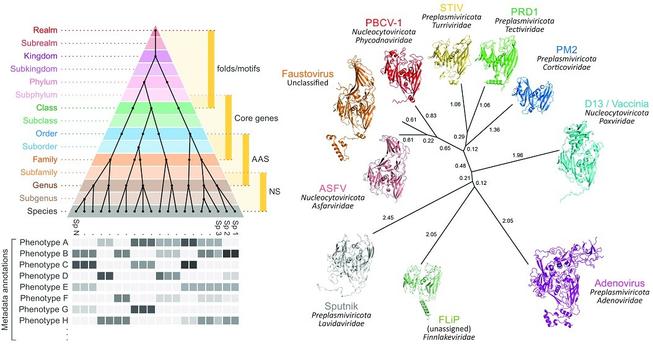
#Viral #taxonomy: transforming the existing classification of #viruses into a phylogenetic one is an ongoing challenge. This Consensus View explains how such #taxonomy can encapsulate viral diversity & recognize independent biological origins #PLOSBiology https://plos.io/3xnbLqi
Four principles to establish a universal virus taxonomy

Transforming an existing phenotypic classification of viruses into one based on evolutionary relationships that can accommodate the vast number of viruses characterized in metagenomics and environmental studies is an ongoing challenge. This Consensus View explains how such a taxonomy can be expanded to encapsulate viral diversity and to recognize independent biological origins of different virus groups.

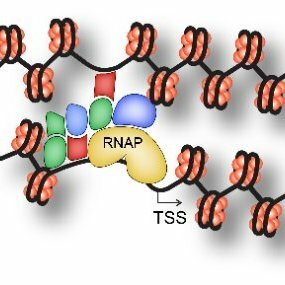
Role of the histone tails in histone octamer transfer

Abstract. The exceptionally high positive charge of the histones, concentrated in the N- and C-terminal tails, is believed to contribute to the stability of the

OUP Academic
RT @eco_genome
My new paper is out in @PLOSBiology about art 🎨 and science 🧪collaborations! We argue that ✨art and science are one in the same✨ and provide recommendations for researchers & universities about how to support sci/art synergy.
👉🏽Read it here: https://journals.plos.org/plosbiology/article?id=10.1371/journal.pbio.3001992
Fostering science–art collaborations: A toolbox of resources

Scientists and artists are both motivated by creativity and curiosity. Similarly, science and art can be mutually reinforcing, supporting discovery and innovation. This Community Page provides resources for individuals, groups, and institutions to advance science–art collaborations.

PHYLOPIC 2.0 HAS BEEN OFFICIALLY RELEASED! Check out the new, faster, more useful version here, with 6320 free silhouettes (and counting): https://www.phylopic.org
#sciart #science #evolution #evolutionarybiology #phylogenetics #illustration #viz #art #visualization #biology
PhyloPic

PhyloPic is an open database of free silhouette images of animals, plants, and other life forms, available for reuse under Creative Commons licenses. Download silhouettes for use in educational materials, research articles, and other projects.

PhyloPic