🧬 Ready for AI to crack the RNA-disease code?

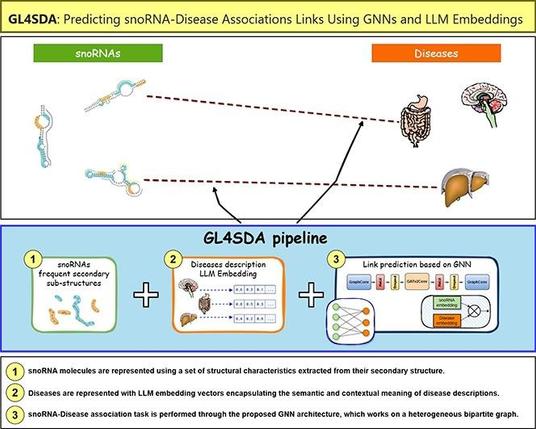
🔗 GL4SDA: Predicting snoRNA-disease associations using GNNs and LLM embeddings. Computational and Structural Biotechnology Journal, DOI: https://doi.org/10.1016/j.csbj.2025.03.014

📚 CSBJ: https://www.csbj.org/

#AIinBiomedicine #GraphNeuralNetworks #LLM #ncRNA #snoRNA #CancerResearch #Bioinformatics #PrecisionMedicine #XAI #Genomics

Prevalence of Problematic Papers in Non-Coding RNA Research
https://www.biorxiv.org/content/10.1101/2024.08.28.607530v1?rss=1

* prevalence of problematic papers in field of non-coding RNA (ncRNA) research
* 1.79% retracted; 5.68% raised concerns on PubPeer
* unreliable papers widely disseminated
* hundreds of thousands citations
* significant threat to research integrity / public health

#biology #MolecularBiology #MolecularGenetics #PeerReview #PubPeer #AcademicPublishing #AcademicJournals #RNA #ncRNA #FraudulentScience #JunkScience

Bacteria encode hidden genes outside their genome; do we?

Since the genetic code was first deciphered in the 1960s, our genes have seemed like an open book. By reading and decoding our chromosomes as linear strings of letters, like sentences in a novel, we can identify the genes in our genome and learn why changes in a gene's code affect health.

Phys.org
Expanding and Enriching the LncRNA Gene–Disease Landscape Using the GeneCaRNA Database. https://doi.org/10.3390/biomedicines12061305 #NonCodingRna #LongNonCodingRna #HumanNoncodingRna #Ncrna #Lncrna
Expanding and Enriching the LncRNA Gene–Disease Landscape Using the GeneCaRNA Database

The GeneCaRNA human gene database is a member of the GeneCards Suite. It presents ~280,000 human non-coding RNA genes, identified algorithmically from ~690,000 RNAcentral transcripts. This expands by ~tenfold the ncRNA gene count relative to other sources. GeneCaRNA thus contains ~120,000 long non-coding RNAs (LncRNAs, >200 bases long), including ~100,000 novel genes. The latter have sparse functional information, a vast terra incognita for future research. LncRNA genes are uniformly represented on all nuclear chromosomes, with 10 genes on mitochondrial DNA. Data obtained from MalaCards, another GeneCards Suite member, finds 1547 genes associated with 1 to 50 diseases. About 15% of the associations portray experimental evidence, with cancers tending to be multigenic. Preliminary text mining within GeneCaRNA discovers interactions of lncRNA transcripts with target gene products, with 25% being ncRNAs and 75% proteins. GeneCaRNA has a biological pathways section, which at present shows 131 pathways for 38 lncRNA genes, a basis for future expansion. Finally, our GeneHancer database provides regulatory elements for ~110,000 lncRNA genes, offering pointers for co-regulated genes and genetic linkages from enhancers to diseases. We anticipate that the broad vista provided by GeneCaRNA will serve as an essential guide for further lncRNA research in disease decipherment.

MDPI
I’m happy to share our preprint
“Flawed machine-learning confounds coding sequence annotation“
https://doi.org/10.1101/2024.05.16.594598
A collaboration with @OtagoBiochemist and @plantandfood scientists @mikblacknz @TingHsuanTHC #Genomics #Bioinformatics #ncRNA #lncRNA #protein 1/n

The beauty, succinctness & speed of #bioperl #perl
(creating and accessing an index of 191,106 sequences ~ 275MB of biological (human #cDNA and #ncRNA) sequence data

5 sec to create the index (using BerkeleyDB), and 12 sec to transverse the sequence data
#bioinformatics @Perl

(Code in alt text of the left image edited to fit the character limit)

Our work to predict transcription of #ncRNA, especially for #eRNA, from DNA sequences is finally out in @[email protected].
Our machine learning tool, MENTR, is available at https://github.com/koido/MENTR. MENTR can link non-coding #GWAS associations and cell-type-specific #ncRNA expressions!

https://www.nature.com/articles/s41551-022-00961-8

This was my main work in @[email protected] lab in @[email protected]. Many thanks to excellent collaborators, amazing #FANTOM5 datasets, and GPU supercomputer #ABCI.

GitHub - koido/MENTR

Contribute to koido/MENTR development by creating an account on GitHub.

GitHub
The emerging power and promise of non-coding RNAs in chronic pain

Chronic pain (CP) is an unpleasant sensory and emotional experience associated with, or resembling that associated with, actual or potential tissue damage lasting longer than 3 months. CP is the main reason why people seek medical care and exerts an enormous economic burden. Genome-wide expression analysis has revealed that diverse essential genetic elements are altered in CP patients. Although many possible mechanisms of CP have been revealed, we are still unable to meet all the analgesic needs of patients. In recent years, non-coding RNAs (ncRNAs) have been shown to play essential roles in peripheral neuropathy and axon regeneration, which is associated with CP occurrence and development. Multiple key ncRNAs have been identified in animal models of CP, such as microRNA-30c-5p, ciRS-7, and lncRNA MRAK009713. This review highlights different kinds of ncRNAs in the regulation of CP, which provides a more comprehensive understanding of the pathogenesis of the disease. It mainly focuses on the contributions of miRNAs, circRNAs, and lncRNAs to CP, specifically peripheral neuropathic pain (NP), diabetic NP, central NP associated with spinal cord injury, complex regional pain syndrome, inflammatory pain, and cancer-induced pain. In addition, we summarize some potential ncRNAs as novel biomarkers for CP and its complications. With an in-depth understanding of the mechanism of CP, ncRNAs may provide novel insight into CP and could become new therapeutic targets in the future.

Frontiers

Down with #ncRNA! Long live #fRNA!

http://judgestarling.tumblr.com/post/157946630121/down-with-ncrna-long-live-frna

"As opposed to ncRNA, the term long noncoding RNA (lncRNA) is only partially meaningless because in addition to its being defined negatively, the definition also includes a positive, albeit arbitrary character. To be called lncRNA, an ncRNA molecule must be 200 nucleotides or longer. Unfortunately, while not being meaningless per se, this term is useless."