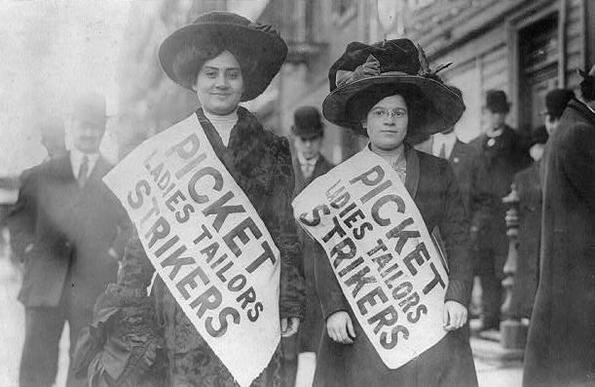
Today in Labor History February 15, 1910: The ILGWU declared the Uprising of Twenty Thousand shirtwaist strike officially over. The garment workers strike began September 27, 1909, in response to abysmal wages and safety conditions. The majority of striking workers were immigrant women, mostly Yiddish-speaking Jews (75%) and Italians (10%), and mostly under the age of 20. Five women died in the strike, which the union won, signing contracts with 339 manufacturing firms. However, 13 firms, including Triangle Shirtwaist Company, never settled. One of the demands had been for adequate fire escapes and for open doors to the streets for emergencies. In 1911, 146 girls and women were killed in the Triangle Shirtwaist fire.

#workingclass #LaborHistory #TriangleShirtwaistFire #strike #ilgwu #uprising #union #PoliceBrutality #massacre #immigrants #wages #yiddish #italian #women #feminism #police

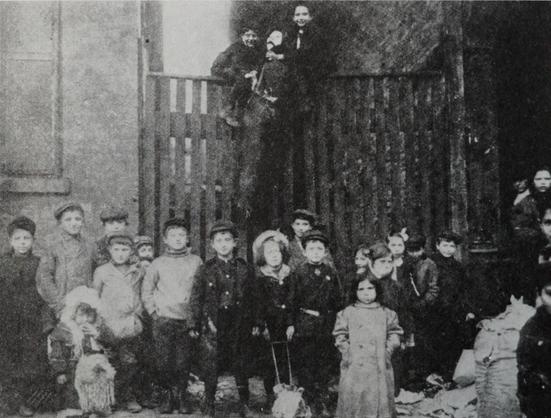
Today in Labor History December 28, 1907: The New York Rent Strike began in the Lower Eastside, in response to proposed rent increases during the Panic of 1907, when tens of thousands lost their jobs. The organizers were Jewish immigrant women, but leadership was eventually taken over by the Socialist Party of America. One of the early organizers of the rent strike was Pauline Newman, who had been working at the Triangle Shirtwaist Factory since age 11. By age 15, she was active in Socialist organizations. She survived the deadly fire at the Triangle factory in 1911, which killed 146 young women and girls, mostly Jewish and Italian immigrants, and became an effective organizer with the ILGWU. She helped organize a 1909 General Strike among women garment worikers. Her organizing earned her the moniker “East Side Joan of Arc.”

The Lower Eastside rent strike soon spread to other parts of Manhattan and Brooklyn, with roughly 10,000 tenants taking part. The landlords ultimately broke the strike through mass evictions and police brutality. Nevertheless, approximately 2,000 people did successfully block rent increases. The rent strike was the larges the city had ever seen until then, and it helped to spawn decades of radical tenant organizing in New York.

#workingclass #LaborHistory #housing #rent #rentstrike #strike #police #policebrutality #evictions #jewish #immigration #socialism #paulinenewman #feminism #ilgwu #triangleshirtwaist #childlabor #GeneralStrike

Today in Labor History November 27, 1937: The ILGWU-commissioned musical "Pins & Needles" opened on Broadway, with a cast made up entirely of International Lady Garment Worker Union (ILGWU) members. Rehearsals were held at night and on weekends, and performances were all on Fridays and Saturdays to appease their bosses (i.e., keep their jobs). In 1962, a 25th anniversary edition of the score was released featuring Barbra Streisand.

Check out Streisand singing “Doing the Reactionary” from Pins and Needles: https://www.youtube.com/watch?v=GQnUOQbjFxY

#workingclass #LaborHistory #union #ilgwu #broadway #theatre #musical #singer #barbarastreisand

Doing the Reactionary

YouTube

Today in Labor History November 20, 1896: Rose Pesotta was born on this date to a Jewish family in Ukraine. Pesotta was an anarchist labor activist and the only woman on the General Executive Board of the International Ladies' Garment Workers (ILGWU) from 1933-1944. She learned about anarchism by reading books by Bakunin in her father’s library. Her parents set up an arranged marriage for her, which she did not approve. So, she emigrated to the U.S. in 1913, joining the ILGWU the next year. Her local, #25, was filled with militant women veterans of the 1909 Shirtwaist Strike. She wrote regularly for the New York Anarchist press, in both English and in Yiddish. She was friends with Italian-American anarchist Bartolomeo Vanzetti. In 1933, she organized immigrant Mexican garment workers, leading to the Los Angeles Garment Workers Strike. She also organized workers in Canada and Puerto Rico. Later in life, she worked briefly for the B’nai B’rith. She also wrote two memoirs, Bread Upon the Waters (1944),[6] and Days of Our Lives (1958).

#workingclass #LaborHistory #anarchism #rosepesotta #feminism #ilgwu #ukraine #jewish #yiddish #union #strike #immigration #memoir #writer #author #books @bookstadon

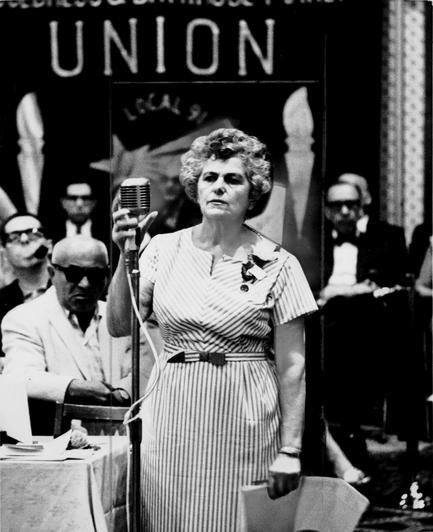
Today in Labor History June 3, 1900: The International Ladies’ Garment Workers Union (ILGWU) was founded. In 1909, they led the Uprising of 20,000, a 14-wk strike sparked by a walkout at the Triangle Shirtwaist Company, that led to a General Strike. Management used thugs to brutally beat the women, while police looked the other way. In 1910, they led an even bigger strike, The Great Revolt, of 60,000 cloak-makers. The Triangle Shirtwaist fire, in 1911, prompted many more women to join the union. In 1919, many members left to join the Communist Party. Many of those who remained were anarchists with dual membership in the radical IWW. They challenged the autocratic leadership of the ILGWU. The 1920s was marred by sectarian battles between left- and right-wing factions and violence by hired gangsters. Ironically, it was Arnold Rothstein (the Jewish gangster behind the Chicago Black Sox scandal, and who mentored mobsters Meyer Lansky and Lucky Luciano) who got the gangsters to withdraw from the union.

#workingclass #LaborHistory #union #strike #ilgwu #IWW #TriangleShirtwaist #mafia #LuckyLuciano #GeneralStrike #communism #anarchism #arnoldrothstein #meyerlansky

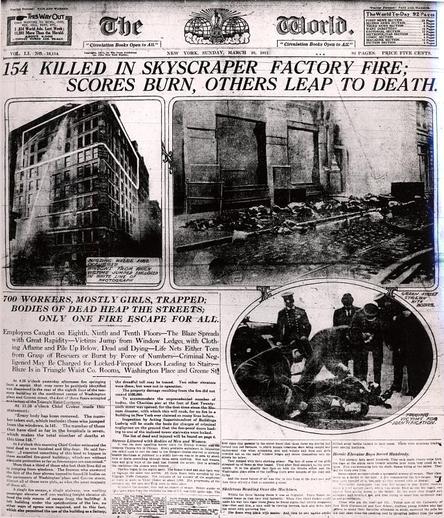
Today is the anniversary of the Triangle Shirtwaist Fire that killed 146 garment workers.

This led me to look at ReadThePlaque. I found three plaques which give three very different perspectives of the events around it
https://readtheplaque.com/plaque/triangle-shirtwaist-factory#gsc.tab=0

#TriangleShirtwaist #ILGWU #History

Notable in these times when history is contested. As far as I know, all 3 of them are factually accurate, but they present and emphasize different facts.

Triangle Shirtwaist Factory

There are three plaques on the building marking very different interpretation. Submitted by @AmeliaTGrabow

Read the Plaque

The Triangle Shirtwaist Factory in New York City caught fire on this day 114 years ago, causing the deaths of 146 garment workers -- mostly young immigrant women, of Jewish and Italian heritage, who jumped from the 9th and 10th floors because the fire department's ladders weren’t long enough to reach them. Factory owners had locked doors to stairwells and exits to keep out union organizers and prevent workers from taking breaks and stealing fabric.

An era of great wealth and urban squalor, underpaid, overworked employees, along with overcrowded and unsafe working conditions, add to that state legislators whose votes were bought by industrial magnates. The president of New York’s Real Estate Board warned AGAINST improving safety standards. "The experience of the past proves conclusively that the best government is the least possible government,” he argued (ie: small government). The Board predicted safety laws would drive "manufacturers out of the City and State of New York" (drying up the pipeline that fed the graft and corruption.)

But, safety standards were established, and the International Ladies Garment Worker's Union (ILGWU) became powerful enough to protect workers against the worst forms of exploitation.
#TriangleShirtwaistFire #ILGWU

The Immigrant by Julie Standig

The Immigrant My aunt’s apartment on Surf Avenue was immaculate. I thought. Until I had to clean it out. Shopping bags overfilled, one on top of another— in every closet, pantry, and storage bin. I…

ONE ART: a journal of poetry

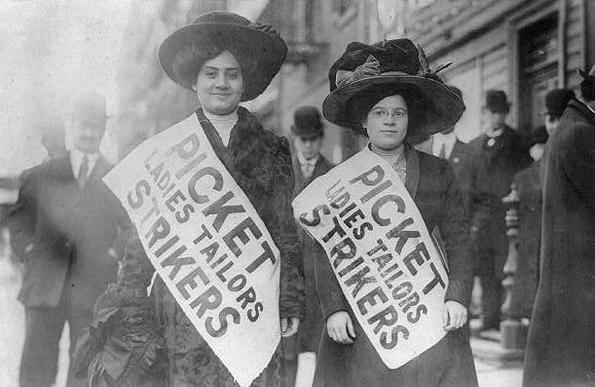
Today in Labor History February 15, 1910: The ILGWU declared the Uprising of Twenty Thousand shirtwaist strike officially over. The garment workers strike began September 27, 1909, in response to abysmal wages and safety conditions. The majority of striking workers were immigrant women, mostly Yiddish-speaking Jews (75%) and Italians (10%), and mostly under the age of 20. Five women died in the strike, which the union won, signing contracts with 339 manufacturing firms. However, 13 firms, including Triangle Shirtwaist Company, never settled. One of the demands had been for adequate fire escapes and for open doors to the streets for emergencies. In 1911, 146 girls and women were killed in the Triangle Shirtwaist fire.

#workingclass #LaborHistory #TriangleShirtwaistFire #strike #ilgwu #uprising #union #PoliceBrutality #massacre #immigrants #wages #yiddish #italian #women #feminism #police #WorkplaceSafety

Today in Labor History November 27, 1937: The ILGWU-commissioned musical "Pins & Needles" opened on Broadway, with a cast made up entirely of International Lady Garment Worker Union (ILGWU) members. Rehearsals were held at night and on weekends, and performances were all on Fridays and Saturdays to appease their bosses (i.e., keep their jobs). In 1962, a 25th anniversary edition of the score was released featuring Barbra Streisand.

Check out Streisand singing “Doing the Reactionary” from Pins and Needles: https://www.youtube.com/watch?v=GQnUOQbjFxY

#workingclass #LaborHistory #union #ilgwu #broadway #theatre #musical #singer #barbarastreisand

Doing the Reactionary

YouTube