GWANGJU UPRISING
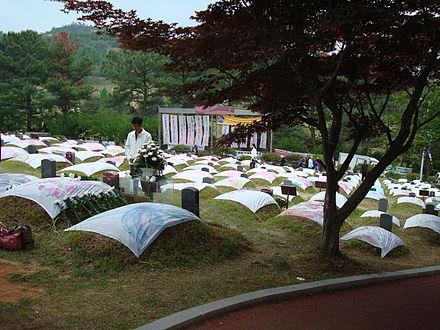
Today in Labor History May 18, 1980: Koreans rose up in Gwangju against the repressive U.S.-supported government. The uprising lasted from May 18 to May 27. According to official reports, 165 civilians were killed and 3,515 were injured in the uprising. 37 soldiers and 4 cops were killed and 253 were injured. Another 14 soldiers died from “friendly” fire. However, Gwangju’s death records for May of 1980 were 2,300 above normal. Many believe the actual death toll from the uprising is closer to 2,000. In addition to the casualties from the uprising, nearly 1,400 people were arrested and 7 were given death sentences. 12 were sentenced to life in prison.
The background for the uprising is complex. However, the country had been living under the 18-year dictatorship of Park Chun-hee, who was assassinated on October 26, 1979. A series of pro-democracy demonstrations developed in the wake of his death. But on December 12, Chun Doo-hwan led a military coup in order to quell the protests. He did not officially take over as “president” until after the Gwangju Uprising. But he was acting as the de facto ruler and the country was still under martial law from the coup.
In March, protests picked up again. People wanted democratization, human rights, minimum wage increases, freedom of the press, and an end to martial law. On May 15, 100,000 people demonstrated at Seoul Station. Chun Doo-hwan responded by extending martial law to the entire nation, closing the universities, banning all political activities and further curtailing the press. Furthermore, he dispatched troops throughout the country to suppress any potential demonstrations.
On May 18, students demonstrated at Chonnam University in defiance of its closing. At first, there were only 30 paratroopers and hundreds of students. They started to clash. By afternoon, at least 2,000 people had joined the protest. The government sent in hundreds of troops. Soldiers started to club demonstrators and onlookers. They attacked with bayonets and raped people, and they beat a deaf man to death. Outraged, the number of protesters swelled to over 10,000. Street battles continued for days, climaxing on May 21, when soldiers fired into a crowd of protesters. In response, citizens took up arms by robbing local armories and police stations, arming themselves with M1 rifles and carbines. By afternoon, there were bloody gunfights between ad hoc civilian militias and the army. By 5:30, the citizens militias had obtained two machine guns and used them, forcing the army to retreat.
The troops retreated to the suburbs to await reinforcements. However, they also blocked all routes and communications leading into and out of the city. Meanwhile, inside of Liberated Gwangju, the Citizens’ Settlement Committee negotiated with the army, demanding the release of arrested citizens, compensation for the victims, and a prohibition of retaliation in exchange for disarming themselves. The army demanded immediate surrender and some in the committee were willing to give it to them. But those who wanted to resist until their demands were met took control of the committee.
On May 27, at 4 am, troops from five divisions moved on the protesters and defeated the civilian militias within 90 minutes.
#workingclass #LaborHistory #korea #massacre #Gwangju #imperialism #dictatorship #uprising #humanrights #freespeech #demonstration #censorship #police
 Darren Fower
 MikeDunnAuthor
 PugJesus