 NIOO-KNAW
New publication: #Genomic insights into #adaptative #traits of phyllosphere #yeasts.
https://doi.org/10.1186/s40793-025-00839-7
https://doi.org/10.1186/s40793-025-00839-7

🦠 Ready for market: Engineered yeast boosts clean, cost-efficient chemical production
https://phys.org/news/2025-08-ready-yeast-boosts-efficient-chemical.html
#biotech #molbio #yeasts #manufacturing #gmo #biology #syntheticbiology #chemistry

Building on their success developing a cleaner way to make valuable organic acids, researchers from the Center for Advanced Bioenergy and Bioproducts Innovation (CABBI) have pushed one product closer to commercialization with a major upgrade in yield.
A citizen science project to characterize sourdough starters based on aroma, time to rise, height of rise and appearance and to see how these factors vary depending on geographic location and flour type: https://robdunnlab.com/projects/wildsourdough/
Professional science: https://elifesciences.org/articles/61644
#yeast #yeasts #sourdough #bread #panning #fermentation #homeMade #DIY #cooking #bakery #joy

A Science of Sourdough Project Capture wild microbes and turn them into bread – for science! To make your own sourdough starter, all you need is flour, water, and a little bit of time. Whether you are here because your favorite bakery is currently closed and you need your bread fix, or

Aerobic fermentation (Evolution 🧬)
Aerobic fermentation or aerobic glycolysis is a metabolic process by which cells metabolize sugars via fermentation in the presence of oxygen and occurs through the repression of normal respiratory metabolism. Preference of aerobic fermentation over aerobic respiration is referred to as the Crabtree effect in yeast, and is part of the Warburg effect in t...
Dive into the intriguing phenomenon of dimorphic fungi with my latest video! 🍄
Learn about the unique ability of these fungi to switch between different forms and the factors driving this transformation. 🦠
👉🏻 Enjoy the video? Then 👍🏻 and subscribe to my channel. Your support motivates me to create more Fungal content!
#mycology #fungi #yeasts #conidia #dimorphism #youtube #nature #mushrooms #education #academia
How #microbes produce the delicious flavour of chocolate https://fems-microbiology.org/femsmicroblog-how-microbes-produce-the-delicious-flavour-of-chocolate/
Prof. Rosane Freitas Schwan: "The microbial #fermentation process of #cocoa beans successively involves a wide range of #yeasts, lactic acid & acetic acid #bacteria. The pulp is rich in citric acid but low in oxygen; conditions that favour the initial colonization by #yeasts. The abundant diversity of yeasts involved in cocoa fermentation is a true testament to the complexity and richness of this process."


Among the many steps in the manufacturing of chocolate, microbial fermentation of the cocoa beans stands out as a crucial process. Unfermented cocoa beans are highly bitter and astringent, nothing like the well-known delicious chocolate flavour. For today’s World Chocolate Day, Rosane Freitas Schwan explains which microbes are responsible for cocoa fermentation and the challenges […]
#Coffee and #Yeasts: From Flavor to #Biotechnology

Coffee is one of the most consumed beverages in the world, and its popularity has prompted the necessity to constantly increase the variety and improve the characteristics of coffee as a general commodity. The popularity of coffee as a staple drink has also brought undesired side effects, since coffee production, processing and consumption are all accompanied by impressive quantities of coffee-related wastes which can be a threat to the environment. In this review, we integrated the main studies on fermentative yeasts used in coffee-related industries with emphasis on two different directions: (1) the role of yeast strains in the postharvest processing of coffee, the possibilities to use them as starting cultures for controlled fermentation and their impact on the sensorial quality of processed coffee, and (2) the potential to use yeasts to capitalize on coffee wastes—especially spent coffee grounds—in the form of eco-friendly biomass, biofuel or fine chemical production.
 Paul Houle
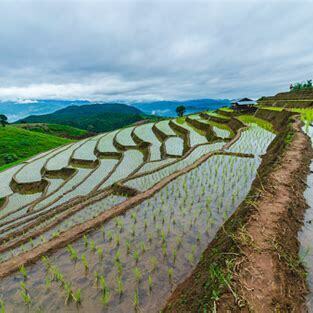 Enjoy
Enjoy Trevor
 Colin from Edinburgh.
 Planetary Ecologist
 Vanda Lerer, PhD
 Lukas VFN 🇪🇺
 🐦🔥nemo™🐦⬛ 🇺🇦🍉