 Kraken
🔴 Explosion | 10/10
🇵🇰
Railway explosion in Pakistan: at least 10 killed
An explosion struck a railway track in Quetta, Pakistan, causing a train to derail. At least 10 killed and dozens injured; casualty count expected to rise.
🔴 Explosion | 10/10
🇵🇰
Railway explosion in Pakistan: at least 10 killed
An explosion struck a railway track in Quetta, Pakistan, causing a train to derail. At least 10 killed and dozens injured; casualty count expected to rise.
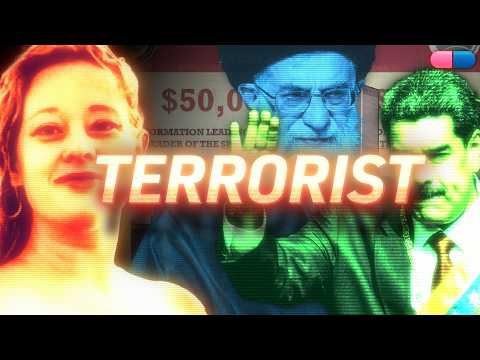
Disobedience is Terrorism Now | Plastic Pills
In 2001 everyone knew what terrorism was; in 2026 everyone’s a terrorist. The US regime has broadened the sign “terrorist” to include all opposition, from acts of mild disobedience, to Foreign Leaders, and the entire opposition party.
Though the signifier “terrorist” has always been floating, either meaning too much or too little, such that Nelson Mandela was simultaneously a global symbol of social justice and a terrorist. As this year is the 25th anniversary of 9/11, it is worth remembering that Jean Baudrillard had already predicted 9/11 and it’s aftermath way back in the 1970s when he wrote “Symbolic Exchange and Death.” We are only now catching up to his prophecies.
Cited:
Marcel Mauss. The Gift.
Jean Baudrillard. Symbolic Exchange and Death.
Jean Baudrillard. The Spirit of Terrorism.
0:00 Terrorist is a Sign
22:28 Everyone’s a Terrorist
24:09 Terrorism Doesn’t Exist
32:50 Terrorists Blow Sh*t Up
34:05 Everyone’s A Terrorist (now)
40:06 What 9/11 Really Meant
1:13:28 The Gift of Terror
1:28:07 Baudrillard was right about Everything
🔴 Explosion | 9/10
🇵🇰
Explosion at railway station in Quetta, Pakistan
An explosion at a railway station in Quetta has killed 24 people and injured 82.
🟡 Explosion | 7/10
🇵🇰
Railway explosion in Quetta, Pakistan: at least 10 killed
An explosion on a railway track in Quetta, Pakistan, caused a train derailment. At least 10 people were killed and dozens injured. No group has claimed responsibility.
Fascists can run about the streets, attacking anybody who does fit in, but go after Big Business and the State will come down on you for holding a sign...
#UKPol #UKPolitics #UKLaw #UKCrime #Fascists #Terrorism #Protest #DirectAction #JustStopOil

Economy Of Japan Grows 2.1% In 1st Quarter Of 2026
Thanks to the recovery in exports and private consumption, the economy of Japan grew by 2.1% in the first quarter this year, according to a Kyodo News report. Still, there will be challenges ahead for the Japanese economy as the nation is still dependent on the Middle East for its crude oil needs and there is the possibility that the Islamic terrorist regime of Iran could start a new series of conflicts in the said region.
To put things in perspective, posted below is an excerpt from the news report of Kyodo News Some parts in boldface…
Japan’s economy grew an annualized real 2.1 percent in the January-March period, marking the second straight quarterly expansion, led by a recovery in exports and private consumption, government data showed Tuesday, with the full impact of the Middle East conflict yet to be felt.
In the first quarter of 2026, gross domestic product adjusted for inflation increased 0.5 percent from the October-December period, the Cabinet Office said in its preliminary report, beating market expectations. GDP is the total value of goods and services produced in a country.
Economists polled by the Japan Center for Economic Research had forecast an annualized real expansion of 1.56 percent while expecting growth to slow to 0.45 percent in the April-June quarter, amid concern that the Middle East crisis and surging crude oil prices will weigh on corporate profits and consumer spending.
In the January-March period, private consumption, which accounts for more than half of the economy, grew 0.3 percent, rising for the fifth straight quarter, helped by strong demand for clothing and a boost in spending at restaurants, an official said.
Spending was also underpinned by state subsidies for gas and electricity bills and solid wage growth, as rising earnings saw companies move to attract and retain talent, economists said.
But with data showing a rapid deterioration in consumer sentiment due to the Middle East conflict, its impact on private consumption warrants close attention, another government official said.
In the January-March period, exports rose 1.7 percent from the October-December quarter on a recovery in auto shipments bound for the U.S. market and strong demand for machinery and electrical devices for industrial purposes. Imports edged up 0.5 percent.
Economists said shipments to the world’s largest economy have been recovering due to receding uncertainty over U.S. tariff policy following a bilateral deal struck last year.
Business investment rose 0.3 percent from the previous quarter, with increased expenditure for research and development on the back of robust corporate profits and for general-purpose machinery and electric lighting fixtures, the first official said.
She said the impact on the data of the Middle East conflict, triggered by U.S.-Israeli attacks on Iran that began in late February, was unclear.
Prolonged tensions in the Middle East could affect imports of crude oil and petroleum products such as naphtha and hit exports bound for the region, economists said.
GDP was dampened 0.1 percentage point by a reduction in private inventories, apparently due to the government’s decision to release oil from stockpiles, starting with those held by the private sector.
Japan’s heavy reliance on oil imports from the Middle East makes the country vulnerable to the effective closure of the Strait of Hormuz, a key shipping artery, with surging oil prices feared to drive up inflation.
Prime Minister Sanae Takaichi said Monday the government will consider compiling a supplementary budget for fiscal 2026 to ease the impact of elevated crude oil prices.
Let me end this piece by asking you readers: What is your reaction to this development? Do you think the economy of Japan can still maintain its growth rate in the 2nd quarter? Do you think Japan will soon import oil from other parts of the world to reduce its dependence on the Middle East? Do you think Japan’s ties with Trump-led America will open new windows that will help Japanese exporters a lot?
You may answer in the comments below. If you prefer to answer privately, you may do so by sending me a direct message online.
+++++
Thank you for reading. If you find this article engaging, please click the like button below, share this article to others and also please consider making a donation to support my publishing. If you are looking for a copywriter to create content for your special project or business, check out my services and my portfolio. Feel free to contact me with a private message. Also please feel free to visit my Facebook page Author Carlo Carrasco and follow me on Twitter at @CarloCarrascoPH as well as on Tumblr at https://carlocarrasco.tumblr.com/ and on Instagram athttps://www.instagram.com/authorcarlocarrasco
#Asia #Bing #business #businessNews #CarloCarrasco #ChatGPT #Communist #democracy #diversity #DonaldJTrump #DonaldTrump #economicDynamism #economicGrowth #economics #economy #EconomyOfJapan #energy #Facebook #geek #geopolitics #Google #GoogleSearch #governance #grossDomesticProductGDP #Inclusion #inflation #Instagram #Instapundit #Investagrams #Iran #IslamicTerrorists #Islamist #IslamoLeft #Israel #Japan #Japanese #JewishState #KyodoNews #liberal #MAGA #MakeAmericaGreatAgain #MakeAmericaGreatAgainMAGA #Marxist #MiddleEast #nationalSecurity #Nippon #oil #PresidentTrump #SanaeTakaichi #security #socialMedia #socialist #StateOfIsrael #StraitOfHormuz #TakaichiSanae #terrorism #terroristStateOfIran #terrorists #Trump #TrumpSAmerica #Tumblr #UnitedStatesOfAmerica #UnitedStatesOfAmericaUSA #USA #WordPress #WordPressCom
The Rainbow Warrior Affair
#Nuclear #Power, State #Secrecy, and the Slow Machinery of #Truth
On the night of July 10, 1985, the #harbor of #Auckland, New Zealand, looked calm. The water reflected the city lights. Crew members aboard the #Greenpeace ship #Rainbow Warrior were asleep after a long day of preparations. Nothing suggested that a Western #democracy was about to launch a covert #military #operation against a civilian vessel.
Then the #explosions came.
Within minutes, the #ship sank into the dark harbor water. One man died: photographer Fernando #Pereira. What initially looked like #sabotage soon evolved into one of the most revealing #intelligence #scandals of the Cold #War.
The sinking of the Rainbow Warrior was not only an #attack on a ship. It was an attack on visibility itself. Greenpeace wanted to bring cameras, journalists, and public attention to French nuclear testing in the #Pacific. #France wanted silence.
The #conflict between those two goals shaped everything that followed.
The Nuclear #Logic of the Cold War
To understand act of #terrorism, one must first understand the political #psychology of nuclear powers during the Cold War.
After the United States used atomic bombs against Hiroshima and Nagasaki in 1945, nuclear weapons became symbols of strategic prestige and geopolitical survival. Possessing the bomb meant entering an exclusive club of global influence. France joined that club in 1960 under President Charles de Gaulle.
For French political elites, nuclear independence was not merely military policy. It became part of national identity. France viewed its nuclear deterrent — the force de frappe — as proof that the country remained a sovereign world power independent from both #Washington and #Moscow.
But nuclear #weapons require testing.
France first conducted tests in colonial #Algeria. After Algerian independence in 1962, Paris moved its testing program to French #Polynesia, especially the #Mururoa and #Fangataufa #atolls in the Pacific #Ocean.
To #Paris, these remote islands seemed strategically ideal.
To environmental activists, they became symbols of colonial #arrogance and ecological #violence.
Greenpeace emerged directly from this historical moment. Founded in #Vancouver in 1971, the #organization pioneered a new form of political #activism: media-centered confrontation. Instead of fighting states militarily, Greenpeace used images, ships, and public spectacle. Activists understood that modern #politics increasingly depended on #television and emotional #symbolism.
In this sense, the Rainbow Warrior was more than a ship. It was a floating camera and cameras threaten secrecy.
Why France Saw Greenpeace as a Strategic #Threat
By 1985, Greenpeace planned to protest French nuclear testing directly at Mururoa Atoll. The Rainbow Warrior was expected to transport activists and assist Pacific #island communities opposing the tests.
French intelligence services feared international humiliation.
This fear is important. Governments rarely conduct covert operations because they are physically weak. They do so because they fear symbolic weakness. Nuclear powers depend heavily on credibility, prestige, and deterrence. In the logic of Cold War #geopolitics, allowing activists to disrupt military testing risked projecting vulnerability.
The French external intelligence service, the #DGSE (Direction Générale de la Sécurité Extérieure), therefore received orders to neutralize the ship.
The operation was given the #codename Opération Satanique.
The name itself reveals the strange theatricality often surrounding covert operations. Intelligence agencies frequently cloak violence in bureaucratic language, technical terminology, or symbolic code names. Such language creates psychological distance between planners and consequences.
It transforms people into “targets.” Ships into “objectives.” Deaths into “collateral effects.”
The Architecture of a Covert Operation
The attack on the Rainbow Warrior was sophisticated but not flawless.
French agents entered New Zealand under false identities. Combat divers secretly attached limpet mines to the hull of the ship while undercover operatives monitored the harbor area. Another agent, Christine #Cabon, infiltrated Greenpeace itself months before the bombing. Posing as a volunteer, she gathered internal information and transmitted it to Paris.
The operation reveals four classic mechanisms of covert state power:
1. #Infiltration
Intelligence agencies often penetrate organizations by exploiting openness and trust. Greenpeace depended heavily on volunteers. That #vulnerability allowed Cabon to enter the group with relative ease.
The strategy resembles modern #cyberwarfare. Instead of hacking computers, intelligence services inserted a human being into the system.
2. Plausible Deniability
Operations are designed so political leaders can deny direct involvement. Orders are often transmitted orally. Written evidence remains minimal.
This structure creates distance between decision-makers and operational violence.
In public, leaders appear uninvolved. In private, command chains remain understood.
3. Controlled Narratives
After the bombing, French officials denied responsibility. #Defense Minister Charles #Hernu publicly insisted that no French service had carried out the attack.
The first official investigations minimized state involvement.
Such reactions are common after intelligence scandals. Governments initially attempt to control information flow long enough to stabilize political damage. Historians repeatedly encounter this pattern across different countries and eras.
4. Sacrificial Containment
When #evidence becomes overwhelming, lower-ranking officials are often sacrificed to protect higher political #authority.
In the Rainbow Warrior #affair, DGSE chief Pierre #Lacoste and Defense Minister Hernu lost their positions. President François #Mitterrand, however, remained politically untouched and won reelection in 1988.
The structure resembles a firewall in computer systems: expendable layers absorb damage before it reaches the center.
The #Mistake That #Broke the #Operation
Despite careful planning, the operation failed because of an almost banal #error.
Witnesses observed suspicious activity near a rented van and noted its license plate number. This small #observation enabled New Zealand investigators to identify two French operatives: Alain #Mafart and Dominique #Prieur.
Their arrest transformed the bombing from #rumor into #international #crisis.
New Zealand reacted with unusual determination. Prime Minister David Lange rejected French attempts to frame the affair as a regrettable misunderstanding. He insisted that state #terrorism had occurred on New Zealand soil.
His response mattered historically because it challenged a powerful Western ally publicly and directly. Small states rarely confront nuclear powers successfully. New Zealand did.
The Long Silence Around François Mitterrand
The central mystery persisted for years:
Did #President François Mitterrand personally #authorize the operation?
For a long time, the answer remained hidden behind silence.
Mitterrand refused detailed public discussion of the affair. This #silence itself became politically effective. Modern #media systems often reward emotional immediacy. But silence can outlast outrage. News cycles move on. Public attention fragments.
Mitterrand understood this dynamic well. He remained silent until his death.
This delayed revelation illustrates a central challenge in intelligence history:
Truth often emerges only after institutions lose control over memory.
Retired officials write memoirs. Classified archives slowly open. Participants age. Political loyalties weaken.
#History is frequently reconstructed backward, fragment by fragment, like archaeologists rebuilding a shattered statue from scattered pieces.
Fernando Pereira and the Politics of #Witnessing
At the #moral center of the story stands Fernando Pereira.
His #death transformed the operation from sabotage into #tragedy.
Pereira returned below deck to recover his photographic equipment after the first explosion. In doing so, he demonstrated a principle central to both journalism and activism: evidence matters.
Without documentation, suffering becomes abstract. Without images, distant violence remains politically invisible.
This explains why authoritarian systems and covert operations so often target journalists, photographers, and witnesses. Cameras challenge monopoly over #narrative.
The Rainbow Warrior affair therefore was never simply about one ship. It was about who controls #reality in the public #imagination.
Greenpeace sought exposure. The French state sought containment.
One side used cameras. The other used #explosives.
Why the Affair Still Matters
The sinking of the Rainbow Warrior remains historically significant because it exposed uncomfortable truths about democratic governments and covert violence.
The affair demonstrated that even liberal democracies can authorize illegal operations when strategic interests feel threatened. It revealed how intelligence agencies rely on secrecy, infiltration, deniability, and narrative management. It also showed how difficult accountability becomes once national #security enters political discourse.
Most importantly, the case demonstrated that truth emerges slowly.
Not in dramatic cinematic revelations. Not through a single leaked document. But through decades of persistence by investigators, journalists, historians, witnesses, and former participants.
The Rainbow Warrior sank in #Auckland Harbor in 1985. But the deeper story surfaced much later.
#conspiracy #press #journalism #terror #military #crime #justice #democracy #fail #guilty
France - Politics, Culture, Economy: During his years of self-imposed exile, de Gaulle had scorned and derided the Fourth Republic and its leaders. He had briefly sought to oppose the regime by organizing a Gaullist party, but he had soon abandoned this venture as futile. Back in power, he adopted a more conciliatory line; he invited a number of old politicians to join his cabinet, but, by naming his disciple Michel Debré head of a commission to draft a new constitution, de Gaulle made sure that his own ideas would shape the future. This draft, approved in a referendum in September by 79 percent of
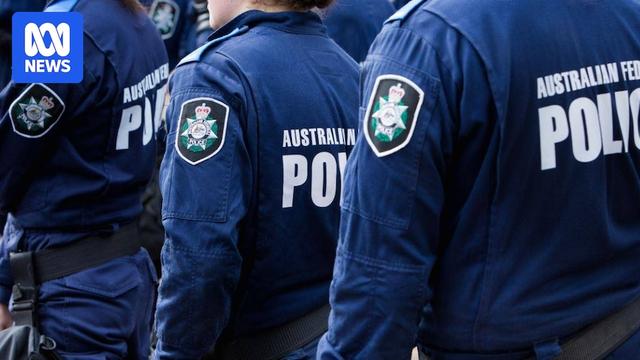
Queensland man charged by anti-terrorism police
By Owen Jacques
A 48-year-old has been arrested by the state's Joint Counter Terrorism Team over alleged "concerning posts" on social media.
https://www.abc.net.au/news/2026-05-23/qld-man-charged-joint-counter-terrorism-team/106714206
 dumnezero
 PugJesus
 Lazarou Monkey Terror 🚀💙🌈
 Author Carlo Carrasco
 Phil Gurski
 Script Kiddie
 ABC Feeds