Sheol

This is in the Hebrew Bible (the Tanakh). Sheol is the underworld, or the place of the dead. This is a place of stillness & darkness & dust, which is death.

Within the Tanakh (Hebrew Bible), there are a few, brief (& nondescript) mentions of Sheol. Sheol wasn’t a punishment or reward. It was the great equalizer. Whether King or beggar, wicked or righteous, every single person went to Sheol. Irregardless of their moral decision in their mortal life.

Even though such practices are prohibited, the residents of Sheol can, under certain circumstances, be summoned/called by the living to the mortal realm. Like when the infamous Witch of Endor makes Samuel’s spirit show up for King Saul.

It’s often pictured as being “down.” Either deep under the earth or the floor of the ocean.

The residents of Sheol were called Raphaim (shades or ghosts). They weren’t exactly “alive” per se. But they weren’t totally gone either. They exist in a state of extreme lethargy, cut off from the living & importantly, often pictured as being cut off from active communion with God.

As Jewish thought evolved, particularly during the Second Temple period (circa 500 BCE to 70 BCE), the idea of Sheol began to change. Sheol began to be viewed as having “compartments.” Like a pleasant area for the righteous (often called “Abraham’s Bosom”) & a separate place for the suffering of the wicked.

When the Hebrew Bible was translated into Greek (the Septuagint), Sheol was almost always translated as Hades. By the time the New Testament was written, the focus shifted further toward Gehenna (a place of fiery judgment) & Tartarus. So in the New Testament, Hades is both the underworld of the dead & the personification of the evil it represents.

Sheol is mentioned 66x throughout the Hebrew Bible. The 1st mentions of Sheol within the text associate it with the state of death & eternal finality. Jacob says that he’ll “go down to Sheol,” because he was still mourning the apparent death of his favorite son, Joseph (of Technicolor Dreamcoat fame).

Later in Genesis, the same scene plays out for a 2nd time when Jacob’s sorrow is repeated when another 1 of his sons, Benjamin, couldn’t return to him with his other brothers.

Sheol shows up again during Korah’s story in the Book of Numbers. After Korah attempted to provoke the Israelites to rebel against Moses, Moses vows that Yahweh will prove his legitimacy by splitting open the earth to hurl Korah & his conspirators into Sheol. Sure enough, after Moses stops talking, Yahweh splits the earth open. This causes Korah, his family, & all of his earthly possessions to “enter Sheol alive.”

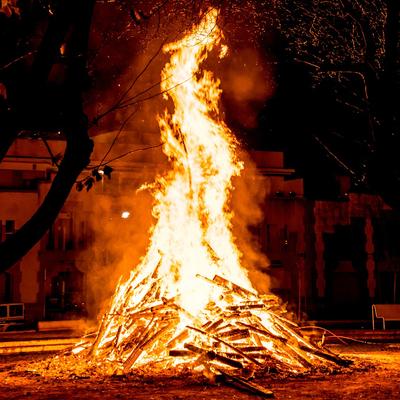
In Deuteronomy, Moses sings that the anger of Yahweh is a flame which burns in the “depths” of Sheol, consuming the entire earth from the bottom up.

Later mentions of Sheol in the Tanakh picture it as a representation of death. Suggesting that entry into Sheol is an unavoidable consequence of dying.

I Samuel describes Yahweh as the 1 who brings souls down to Sheol. II Samuel further cements Sheol as humanity’s ultimate postmortem destination. I Kings uses “going down to Sheol” as a metaphor for death. Describing those who go do it both “in peace” & “in blood.”

Isaiah, the prophet, explains Sheol at great length during some of his “sermons.” He personified it as possessing an ever-increasing hunger for living people, with a great propensity for the souls of sinners, & where pleas to Yahweh cannot escape.

Ezekiel, during his prophecy of Egypt’s downfall, described Egypt metaphorically descending into Sheol as a dead person would, where all the spirits of the dead, as well as other fallen empires, such as Assyria, jeer & mock its fall from might.

The remaining mentions of Sheol are in the poetic literature of the Hebrew Bible. Job mentions Sheol in several of his laments, calling it his “home” as he lies in anguish & yearning for death to take him there to put an end to his suffering. Sheol is also mentioned in several Psalms as the grave of humanity.

Other biblical names for Sheol were/are: Abaddon (“ruin,” Psalms 88:11; Job 28:22; & Proverbs 15:11) & Sahat (“corruption,” Isaiah 38:17 & Ezekiel 28:8).

Owing to the evolution of its interpretation, some aspects of Sheol seem to contradict each other:

  • Those who are in Sheol don’t remember anything. Not even Yahweh. But elsewhere, in Sheol, its residents have an otherwise impossible perception of earthly events. Even those that happen AFTER their demise.
  • Pleas to Yahweh cannot escape Sheol. Yet, Yahweh stays its unmistakable master.
  • Those who go to Sheol can’t escape. Yet Yahweh raises souls from it.

Despite the abstract nature of Sheol, there’s some physicality to it. Because it was clearly understood to be underground, which is further supported by the term bor (“pit”, Isaiah 14:15 & 24:22 & Ezekiel 26:20).

It’s a “land,” has “gates,” has sections (think Dante’s Inferno), & there are multiple mentions of its “deepest depths” & “farthest corners.”

The concept of both the righteous & unrighteous eventually going to Sheol seems to be an unspoken assumption in the Hebrew Bible. With the codification of Rabbinical Judaism & the Talmud, Jewish theology concerning the afterlife largely rejected the idea of a single place for EVERYONE after death.

It adopted what we recognize today. It maintains a place of reward for the righteous & punishment for the wicked called Gehinnom. As a result, Sheol, Abaddon, Bor, Shakhat, & other related terms were reduced to synonyms for a realm of punishment.

In Mandaeism, the World of Darkness (the underworld) is sometimes called Sheol in the Ginza Rabba & other Mandaean scriptures.

One-Time Monthly Yearly

Make a one-time donation

Make a monthly donation

Make a yearly donation

Choose an amount

$5.00 $10.00 $15.00 $1.00 $5.00 $10.00 $5.00 $10.00 $15.00

Or enter a custom amount.

$

Your contribution is appreciated.

Your contribution is appreciated.

Your contribution is appreciated.

DonateDonate monthlyDonate yearly #Abaddon #AbrahamSBosom #Assyria #Benjamin #BookOfNumbers #Bor #circa500BC #Circa70BCE #Dante #DanteSInferno #Deuteronomy #Egypt #Ezekiel #Ezekiel2620 #Ezekiel288 #Gehenna #Gehinnom #Genesis #Ghosts #GinzaRabba #Greek #Hades #HebrewBible #IKings #ISamuel #IISamuel #Inferno #Isaiah #Isaiah1415 #Isaiah2425 #Israelites #Jacob #Job2822 #Joseph #Judaism #KingSaul #Korah #Mandaeism #Moses #NewTestament #Prophet #Psalm8811 #Psalms #RabbinicalJudaism #Rephaim #Samuel #SecondTemplePeriod #Septuagint #Shades #Shakhat #Sheol #Talmud #Tanakh #Tartarus #Underworld #WitchOfEndor #WorldOfDarkness #Yahweh

Book of Enoch

This is an ancient Jewish apocalyptic religious text. The author of this book, by tradition, is the patriarch Enoch. Enoch was the dad of Methuselah (the oldest man in the Christian & Hebrew Bible) & the great-grandpa of Noah.

The Book of Enoch has some quite unique passages on the origins of demons & the Nephilim, why some angels fell from Heaven, an explanation of why the Genesis Flood was morally necessary, & a prophetic explanation of the 1,000-year reign of the Messiah.

3 books are traditionally attributed to Enoch, including the distinct works of 2 Enoch & 3 Enoch.

1 Enoch isn’t considered to be canonical Scripture by most sects of Judaism & Christianity. Although it’s a part of the biblical canon used by the Ethiopian Jewish community, Beta Israel. As well as the Ethiopian Orthodox Tewahedo Church & the Eritrean Orthodox Tewahedo Church.

The older section of 1 Enoch is dated to circa 300-200 BCE. The latest part (Book of Parables) is probably from circa 100 BCE. It’s believed that Enoch was originally written in either Aramaic or Hebrew. The 1st languages used for Jewish texts. No Hebrew version is known to have survived.

Copies of the earlier sections of 1 Enoch were preserved in Aramaic among the Dead Sea Scrolls in the Qumran Caves. The full Book of Enoch survives in its entirety only in the Ge’ez translation. Ge’ez is an ancient South Semitic language. The language originated from what’s known as Ethiopia & Eritrea.

The 1st part of the Book of Enoch describes the fall of the Watchers, the angels who sired angel-human hybrids called the Nephilim. The rest of the book describes Enoch’s revelations & his visits to Heaven in the form of travels, visions, & dreams.

The book consists of 5 major sections:

  • The Book of the Watchers (1 Enoch 1-36)
  • The Book of Parables of Enoch (1 Enoch 37-71; sometimes called the Similitudes of Enoch)
  • The Astronomical Book (1 Enoch 72-82; sometimes called the Book of the Heavenly Luminaries or Book of Luminaries)
  • The Book of Dream Visions (I Enoch 83-90; sometimes called the Book of Dreams)
  • The Epistle of Enoch (1 Enoch 91-108)

The most extensive surviving early manuscripts of the Book of Enoch are in Ge’ez. Also, there are manuscripts used by the Ethiopian Orthodox Tewahedo Church to prepare the deuterocanonicals from Ge’ez into the targumic Amharic in the bilingual Haile Selassie Amharic Bible.

Judging by the number of copies found in the Dead Sea Scrolls, the Book of Enoch was widely read during the Second Temple period. Today, the Ethiopian Beta Israel community of Haymanot Jews is the only Jewish group that accepts the Book of Enoch as canonical & still preserves it in its liturgical language of Ge’ez. It plays a central role in worship.

However, the Book of Enoch was excluded from both the formal canon of the Tanakh (the Jewish/Hebrew Bible) & the Septuagint (the Greek Old Testament, the earliest Greek translation of the Hebrew Bible from the original Biblical Hebrew). Also from the writings known today as the Deuterocanon.

By the 5th century, the Book of Enoch was mostly excluded from Christian biblical canons. It is now regarded as Scripture only by the Ethiopian Orthodox Tewahedo Church & the Eritrean Orthodox Tewahedo Church.

The Book of Enoch was considered as Scripture in the Epistle of Barnabas & by some of the early Church Fathers (like Clement of Alexandria & Tertullian) who wrote circa 200 that the Jews had rejected the Book of Enoch because it purposely contained prophecies about Jesus.

The Church of Jesus Christ of Latter-day Saints (Mormons) don’t consider 1 Enoch to be part of its standard canon. Although it believes that a purported, “original” Book of Enoch was an inspired book.

The Book of Moses (1st published the 1830s by the Mormon Church) is part of its standard works & has a section that claims to contain extracts from the “original” Book of Enoch.

This section has a number of similarities to 1 Enoch & other Enoch texts, including 2 Enoch, 3 Enoch, & The Book of Giants. The Enoch section of the Book of Moses is believed by the Church to contain extracts from “the ministry, teachings, & visions of Enoch.”

Though it doesn’t have the entire Book of Enoch itself. The Mormon Church considers the potions of the other texts that match its Enoch excerpts to be inspired while not rejecting but withholding judgment on the remainder.

Make a one-time donation

Your contribution is appreciated.

Donate

Make a monthly donation

Your contribution is appreciated.

Donate monthly

Make a yearly donation

Your contribution is appreciated.

Donate yearly #1830s #5thCentury #Amharic #Aramaic #AstronomicalBook #BetaIsrael #bible #BookOfDreamVisions #BookOfDreams #BookOfEnoch #BookOfGiants #BookOfLuminaries #BookOfMoses #BookOfParables #BookOfParablesOfEnoch #BookOfTheHeavenlyLuminaries #BookOfTheWatchers #Christianity #ChurchFather #ChurchOfJesusChristOfLatterDaySaints #Circa100BCE #Circa200 #circa200BC #Circa300BCE #ClementOfAlexandria #DeadSeaScrolls #Deuterocanon #Deuterocanonicals #Enoch #EpistleOfBarnabas #EpistleOfEnoch #Eritrea #EritreanOrthodoxTewahedoChurch #Ethiopia #EthiopianOrthodoxChurch #GeEz #Genesis #GreekOldTestament #HaileSelassieAmharicBible #Hebrew #Jesus #Jewish #Judaism #Messiah #Methuselah #MormonChurch #Mormons #Nephilim #Noah #NoahSFlood #OrthodoxTewahedoChurch #Patriarch #Qumran #SecondTemple #Septuagint #SimilitudesOfEnoch #SouthSemitic #Tanakh #Tertullian #Watchers

Proverbs, Chapter 27

“As iron shrpens iron, so 1 man sharpens another.”

Proverbs 27:17

Don’t boast about tomorrow. For you don’t know what a day may bring forth. Let another praise you. Not your own lips. Someone else, & not your own lips. Stone is heavy & sand is a burden. But provocation by a fool is heavier than both. Anger is cruel & fury overwhelming. But who can stand before jealousy?

Better is open rebuke than hidden love. Wounds from a friend can be trusted. But an enemy multiplies kisses. He who is full loathes honey. But to the hungry, even what’s bitter tastes sweet. Like a bird that strays from its nest is a man who starts from his home.

Perfume & incense bring joy to the heart. The pleasantness of one’s friend springs from his earnest counsel. Don’t forsake your friend & the friend of your dad. Don’t go to your brother’s house when disaster strikes you. Better a neighbor nearby than a brother far away.

Be wise, my son, & bring joy to my heart. Then I can answer anyone who treats me with contempt. The prudent see danger & take refuge. But the simple keep going & suffer for it. Take the garment of 1 who puts up security for a stranger. Hold it in pledge if he does it for a wayward woman.

If a man loudly blesses his neighbor early in the morning, it will be taken as a curse. A quarrelsome wife is like a constant dripping on a rainy day. Restraining her is like restraining the wind or grasping oil with the hand. AS iron sharpens iron, so man sharpens another.

He who tends a fig tree will eat its fruit. He who looks after his master will be honored. As water reflects a face, so a man’s heart reflects the man. Sheol & Abaddon are never satisfied & neither are the eyes of man. The crucible for silver & the furnace for gold. But man is tested by the praise he receives.

Though you grind a fool in a mortar, grinding him like grain with a pestle, you’ll not remove his folly from him. Be sure you know the condition of your flocks, give careful attention to your herds. For riches don’t endure forever, & a crown isn’t secure for all generations.

When the hay is removed & new growth appears & the grass from the hills is gathered in. The lambs will provide you with clothing. The goats are worth the price of a field. You’ll have plenty of goats’ milk to feed you & your family & to nourish your servant girls.

One-Time Monthly Yearly

Make a one-time donation

Make a monthly donation

Make a yearly donation

Choose an amount

$1.00 $5.00 $10.00 $1.00 $5.00 $10.00 $5.00 $10.00 $15.00

Or enter a custom amount

$

Your contribution is appreciated.

Your contribution is appreciated.

Your contribution is appreciated.

DonateDonate monthlyDonate yearly #Abaddon #bible #Proverbs27 #Sheol #Tanakh

Proverbs, Chapter 24

“An honest answer is like a kiss on the lips.”

Proverbs 24:26

Don’t envy wicked men. Don’t desire their company, for their hearts plot violence, & their lips talk about making trouble. By wisdom a house is built & through understanding it’s established. Through knowledge, its rooms are filled with rare & beautiful treasures.

A wise man has great power. A man of knowledge increases strength, for waging war you need guidance, & for victory many advisers. Wisdom is too high for a fool. In the assembly at the gate, he has nothing to say.

He who plots evil will be known as a schemer. The schemes of folly are sin, & men detest a mocker. If you falter in time of trouble, how small is your strength! Rescue those being led away to death.

Hold back those staggering toward slaughter. If you say, “But we knew nothing about this,” doesn’t he who weighs the heart perceive it? Doesn’t he who guards your life know it? Will he not repay each person according to what he has done? (Check out Romans 2:6.)

Eat honey, my son, for it’s good. Honey from the comb is sweet to your taste. Know also that wisdom is a future hope for you. Your hope will not be cut off. Don’t lie in wait like an outlaw against a righteous man’s house.

Don’t raid his dwelling place. For though a righteous man falls 7x, he rises again. But the wicked are brought down by calamity. Don’t gloat when your enemy falls. When he stumbles, don’t let your heart rejoice.

Or the Lord will see & disapprove & turn his wrath away from him. Don’t fret because of evil men or be envious of the wicked. For the evil man has no future hope, & the lamp of the wicked will be snuffed out.

Fear the Lord & the king, my son. Don’t join the rebellious, for those 2 will send sudden destruction on them. Who knows what calamities they can bring?

These also are sayings of the wise: To show partiality in judging isn’t good. Whoever says to the guilty, “You’re innocent.” Peoples will curse him & nations denounce him. But it will go well with those who convict the guilty. Rich blessings will come upon them.

An honest answer is like a kiss on the lips. Finish your outdoor work & get your fields ready. After that, build your house. Don’t testify against your neighbor without cause. Or use your lips to deceive.

Don’t say, “I’ll do to I’m as he has done to me; I’ll pay that man back for what he did.” I went past the field of the sluggard, past the vineyard of the man who lacks judgment. Thorns had come up everywhere, the ground was covered with weeds, & the stone wall was in ruins.

I applied my heart to what I observed & learned a lesson from it. A little sleep, a little slumber, a little folding of the hands to rest. Poverty will come on you like a bandit & scarcity like an armed man.

Make a one-time donation

Your contribution is appreciated.

Donate

Make a monthly donation

Your contribution is appreciated.

Donate monthly

Make a yearly donation

Your contribution is appreciated.

Donate yearly #bible #Proverbs24 #Romans26 #Tanakh #Torah

"What is a holiday like #Purim doing on the #Jewish calendar? What is a #book like #Esther doing in the #Tanakh? Was the holiday really established the way that the book of Esther describes, following intrigue at the #Persian court and the last minute intervention of a Jewish queen that saved her people from massacre? (And let’s not forget the massacre of Persians that happens instead.)

The story itself belongs to a genre that stretches back to #Joseph’s time in #Egypt, that of the Jewish courtier ensconced in a foreign court, and it is a genre that continues today wherever a #Jew is portrayed as a fish out of water in the #Diaspora and ends up in a position of influence. Another early story of this type, #Daniel, has its protagonist trying to survive in the court of #Babylon, and some scholars have guessed (because we can only guess) that the story of Esther began circulating around the same time as Daniel, perhaps during the fourth century #BCE."

https://jewishchronicle.timesofisrael.com/the-origins-of-purim/

The first chapter of the Song of Songs is so gorgeous and plentiful, I keep thinking about it so I felt like sharing

Let him kiss me with the kisses of his mouth, for your love is better than wine.

Because of the fragrance of your goodly oils, your name is 'oil poured forth.' Therefore, the maidens loved you.

Draw me, we will run after you; the king brought me to his chambers. We will rejoice and be glad in you. We will recall your love more fragrant than wine; they have loved you sincerely.

#religion #tanakh #ketuvim

Lithio

Some notes about about recent work on building a new interface for the ancient Hebrew Classics: https://andreklein.net/rebuilding-the-reading-experience-for-a-3000-year-old-text #hebrew #tanakh #poetry #verse
Rebuilding the Reading Experience for a 3000-Year-Old Text

[caption id="attachment_22009" align="alignnone" width="1024"] Image by Joerg[/caption] [drop_cap]T[/drop_cap]he canonical collection of Hebrew writings known as Tanakh is one of the cornerstones of human civilization. Not only is it the foundational...

AndrĂŠ Klein Dot Net

Shedim

Romanized name: Sedim; singular: Sed.

These are spirits or demons in Tanakh & Jewish mythology. Shedim weren’t considered evil demigods. But the gods of foreigners. They were envisaged as evil only in the sense that they weren’t THE Hebrew god.

They show up 2x in the Tanakh (Psalm 106:37 & Deuteronomy 32:17). In both passages, the text deals with child or animal sacrifices. With the translation of Hebrew texts into Greek, with the influence of Zoroastrian dualism, shedim was translated into Greek as daimonia with negative connotations. Later, in Judeo-Islamic culture, shedim became the Hebrew word for jinn.

According to 1 legends, the shedim are descendants of serpents, or of demons in serpent form. This may be an allusion to the story of the serpent in Eden as told in Genesis. Another view is that they’re the offspring of Lilith. This is from her union with Adam or with other men.

While a 3rd version says that God created them on the 6th day, starting to fashion their bodies but failed to finish the job because he was observing the Sabbath. Even after the Sabbath, He left them as they were to show that when the Sabbath comes, all work still unfinished at the beginning of the Sabbath must afterward be viewed as complete.

As a result, the shedim have souls like humans, but don’t have bodies to contain them. Yet a 4th story says that the shedim have their origins with the builders of the Tower of Babel. In this 4th story, these beings were divided by their motivations into 3 groups of which the 3rd & worst comprised of those who sought actively to wage war against God & were punished for their sacrilegious hubris by transforming into the shedim. Finally, the Zohar describes them as offspring of the demons Azazel & Naamah.

According to Rashi, shedim like lillin (We mentioned these entities in our post about Lilith.), has a human form. Although no human body. They eat & drink as mortals do. They can cause sickness & misfortune, follow the dead, & fly around graves.

1 is admonished not to do anything that could invoke the shedim, such as whistling or even saying the word: shedim. The shedim aren’t always malicious creatures. They can be helpful. Some are said to be even able to live according to the Torah, like Asmodeus.

Conjuring shedim isn’t necessarily forbidden. Depending on whether the theologian discusses the topic views such as summoning to constitute sorcery. Even if summoning shedim is an act of sorcery & thus forbidden, consulting shedim conjured by a non-Jew would be permissible.

In early midrashim, shedim are corporeal beings. They take the form of men, but have no shadow, 7-headed dragons. If a man could see them, he would see them he would lack the strength to face them.

Although he can see them by throwing the ashes of the fetus of a black cat around his eyes, or by scattering ashes around his bed he can trace their footprints similar to those of roosters in the morning.

To see if the shedim were present, ashes were thrown to the ground or floor, which rendered their footsteps visible. Shedim can shape shift. Sometimes assuming a human form, the Talmud tells how Asmodeus assumed King Solomon’s form & ruled in his place for a time.

Make a one-time donation

Your contribution is appreciated.

Donate

Make a monthly donation

Your contribution is appreciated.

Donate monthly

Make a yearly donation

Your contribution is appreciated.

Donate yearly

#Adam #Asmodeus #Azazel #Demons #Deuteronomy3217 #Dualism #Eden #Genesis #Greek #Hebrew #Jewish #Jinn #JudeoIslamic #KingSolomon #Lilith #Midrashim #Naamah #Psalm10637 #Rashi #Sabbath #Sed #Sedim #Serpents #Shedim #Talmud #Tanakh #Torah #TowerOfBabel #Zohar #Zoroastrian

I could not love this guy, Dan Maklelan, more. All his videos are great, and his understanding of the #Tanakh (the #Hebrew #Bible) is really quite solid. And he knows #hypocrisy when he sees it.

https://www.instagram.com/reel/DFI0bUdPKKH/?igsh=NTc4MTIwNjQ2YQ==

Dan McClellan on Instagram: "#maklelan2521 Christians are supposed to prioritize mercy"

30K likes, 1,277 comments - maklelan on January 22, 2025: "#maklelan2521 Christians are supposed to prioritize mercy".

Instagram