Rodinia | Formation, Breakup, & Facts | Britannica
Rodinia, in geologic time, a supercontinent that incorporated almost all the landmasses on Earth for about 450 million years during the Proterozoic Eon (2.5 billion to 541 million years ago). Rodinia, which was made up of an amalgamation of several connected landmasses and other large cratons lying

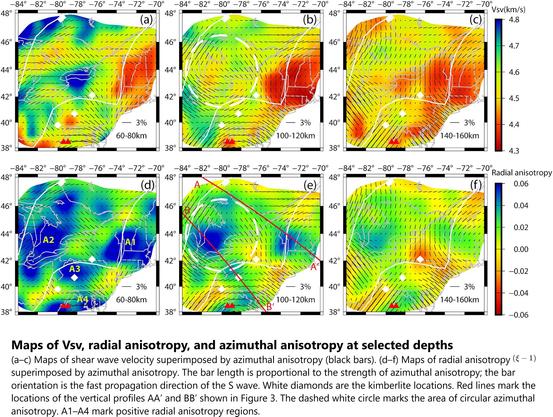
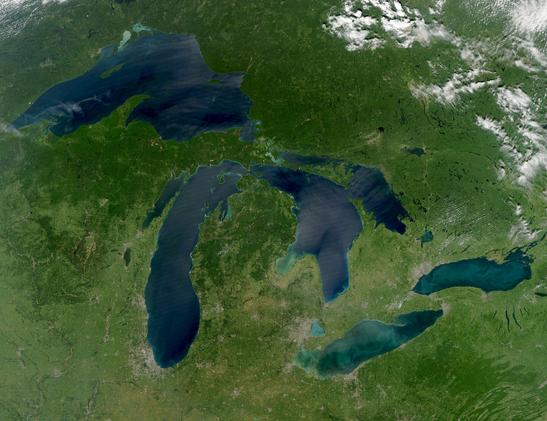
How did the Great Lakes form? Scientists think they figured it out
New research suggests an ancient hotspot helped shape the Great Lakes, challenging traditional formation theories.
Interesting facts #198 ~ Pangaea: Earth’s ancient supercontinent…
Pangaea was a massive supercontinent that formed between 320 million and 195 million years ago. At that time, Earth didn't have seven continents, but instead one giant one surrounded by a single ocean called Panthalassa... Read all about Pangaea at Live Science: #interestingfacts #geology #pangaea #earth #supercontinent #geologicaltime
https://formuchdeliberation.wordpress.com/2024/11/16/interesting-facts-198-pangaea-earths-ancient-supercontinent/

Interesting facts #198 ~ Pangaea: Earth’s ancient supercontinent…
Pangaea was a massive supercontinent that formed between 320 million and 195 million years ago. At that time, Earth didn’t have seven continents, but instead one giant one surrounded by a sin…

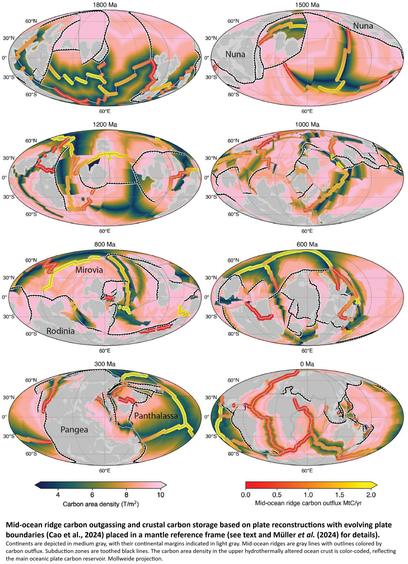
Witness 1.8 billion years of tectonic plates dance across Earth’s surface in a new animation
The first time Earth’s geologic record – information found inside rocks – has been used to create an animation of this kind.
In 1885, Eduard Suess showed how the continuity of mountains on southern continents meant that they were once a single supercontinent.
#Poetry #Science #History #Geophysics #Supercontinent #Suess (
https://sharpgiving.com/thebookofscience/items/p1885.html)

1885: Mountain formation - The book of science
In 1885, Eduard Suess showed how the continuity of mountains on southern continents meant that they were once a single supercontinent.
Study shows #orchids emerged in northern hemisphere and thrived alongside #dinosaurs for 20 million years https://phys.org/news/2024-02-orchid-family-emerged-northern-hemisphere.html
The origin and speciation of orchids https://nph.onlinelibrary.wiley.com/doi/10.1111/nph.19580
"they were previously thought to have emerged on the #supercontinent #Gondwana, in what is present-day #Australia. However, the new study indicates their common ancestor may have originated in the northern hemisphere, on the supercontinent #Laurasia, before spreading out further into the world."


Study shows orchid family emerged in northern hemisphere and thrived alongside dinosaurs for 20 million years
In a new study published in New Phytologist, scientists at the Royal Botanic Gardens, Kew, along with partners in Latin America, Asia and Australia, present an updated family tree of orchids, tracing their origins to the northern hemisphere some 85 million years ago. Not only does the study shed new light on their complex and fascinating evolutionary history, but the study's authors hope their findings will help inform future orchid conservation planning.
Nice overview here. I’m particularly pleased that they acknowledge the uncertainty about what #supercontinent will form next: too many stories present one of the possibilities (usually #Pangaea #Ultima) as a near-certainty. We know for sure that there is at least one more supercontinent in #Earth’s future, and probably more, before plate #tectonics stop entirely in a billion years or so. Everything else is informed speculation at best. All this has happened before …
https://www.livescience.com/planet-earth/geology/columbia-rodinia-and-pangaea-a-history-of-earths-supercontinents

Columbia, Rodinia and Pangaea: A history of Earth's supercontinents
Scientists have identified three definitive supercontinents in Earth's history and predict the landmasses we live on today will come together again in the future.
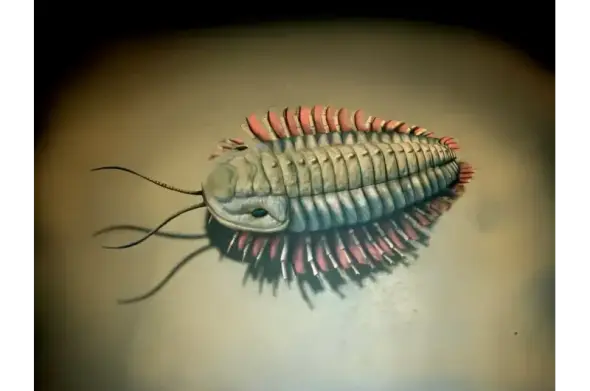
Trilobites rise from the ashes to reveal ancient map
https://phys.org/news/2023-11-trilobites-ashes-reveal-ancient.html
#Trilobites of #Thailand's #Cambrian–#Ordovician Tarutao Group and their geological setting https://onlinelibrary.wiley.com/doi/10.1002/spp2.1516
"During the trilobites' lifetime, this region was on the outer margins of #Gondwanaland, an ancient #supercontinent that included Africa, India, Australia, South America, and Antarctica."

Trilobites rise from the ashes to reveal ancient map
Ten newly discovered species of trilobites, hidden for 490 million years in a little-studied part of Thailand, could be the missing pieces in an intricate puzzle of ancient world geography.
 💧🌏 Greg Cocks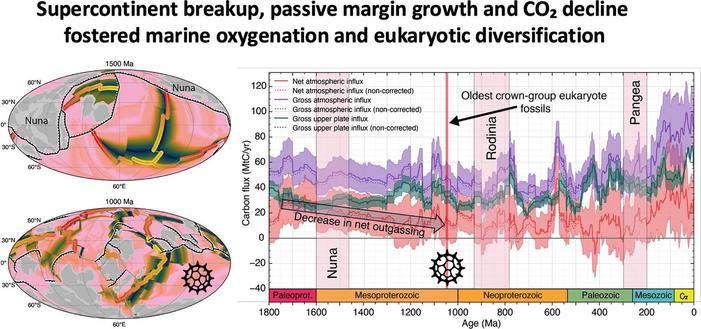
 Nikolas Kozloff has moved
 Burak Gürsoy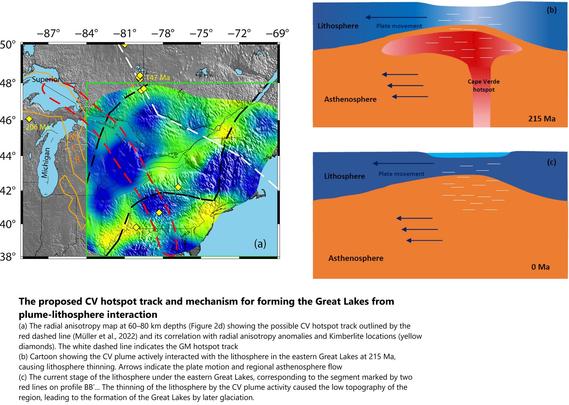

 formuchdeliberation
 tomsharp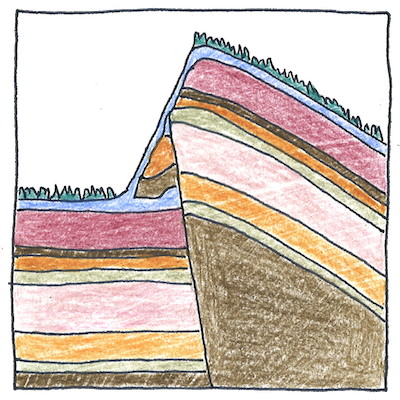
 Lukas VFN 🇪🇺
 Daniel Dvorkin