💎👁️ Imagine seeing the world through eyes made of...stone?

Scientists studying #trilobites from hundreds of millions of years ago found that these ancient marine #animals used lenses made of solid calcite #crystal to navigate the #ocean floor.

👉 https://www.forbes.com/sites/scotttravers/2026/03/04/a-biologist-explains-what-the-first-eyes-on-earth-could-see-hint-they-were-made-of-crystal/

#science #evolution #paleontology #biology #history #nature #prehistoric

A Biologist Explains What The First Eyes On Earth Could See. Hint: They Were Made Of Crystal

Half a billion years ago, the first true eye emerged in Earth’s oceans. Fossils now reveal what that ancient crystal vision could actually see.

Forbes

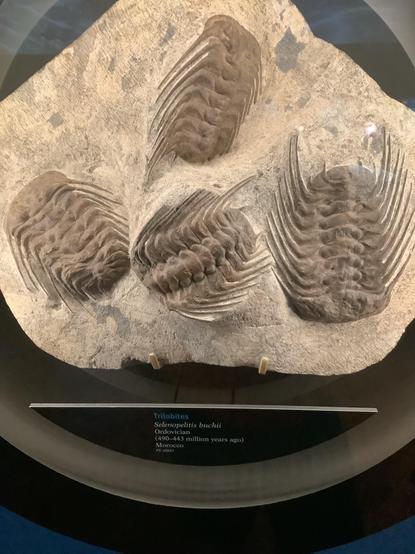
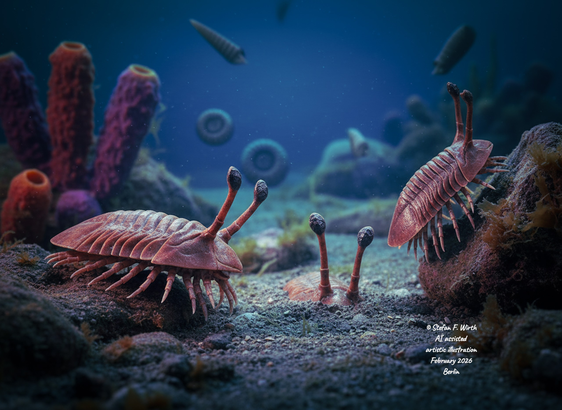
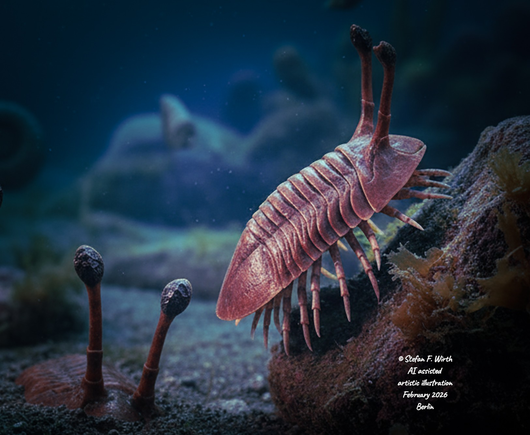
#Trilobites were primeval #arthropods, still unknown whether they belong to the ancestor lineage of #Chelicerata or all #Euarthropada. Besides their body segmentation, they possess #compoundeyes. #Asaphus #kowalewskii lived in the Ordovician and had #stalkedeyes, allowing it an overview of its surroundings even when covered with sediment.
©#StefanFWirth

I seriously depend on support, buy me a coffee
https://ko-fi.com/sfwirth

Reading
B.Schoenemann (2021)
https://doi.org/10.1016/j.asd.2021.101032

Pics
©S.F.Wirth

Welcome to Trilobite Tuesday! Pictured is Asaphus kowalewski. This 450-million-year-old species stands apart from other trilobites with its eyes perched atop 2-in- (5-cm-) long stalks. To some, Asaphus kowalewski may look like an animal from a distant galaxy!
@AMNH #globalmuseum #fossils #trilobites

80 years ago today, the late #RichardFortey was born. Read all about him in A Curious Boy, a bewitching memoir that tells of his early years and shows the power of curiosity in shaping his life.

https://inquisitivebiologist.com/2021/07/30/book-review-a-curious-boy-the-making-of-a-scientist/

#Books #BookReview #Bookstodon #Fossils #Paleontology #Palaeontology #Trilobites #Scicomm

Book review – A Curious Boy: The Making of a Scientist

A bewitching memoir, A Curious Boy tells of palaeontologist Richard Fortey’s early years and shows the power of curiosity in shaping his life.

The Inquisitive Biologist
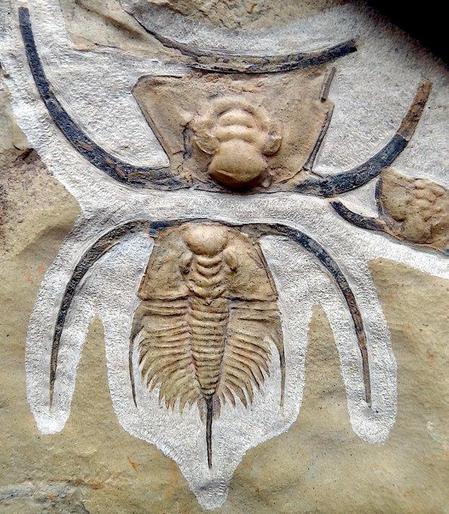
Pictured is the Lower Cambrian Bristolia insolens—distinguished by the genal spines that emerge from its head. While specimens with disarticulated head shields are relatively common finds throughout the Western United States, complete examples are rare.
American Museum of Natural History
@AMNH #globalmuseum #fossils #trilobites

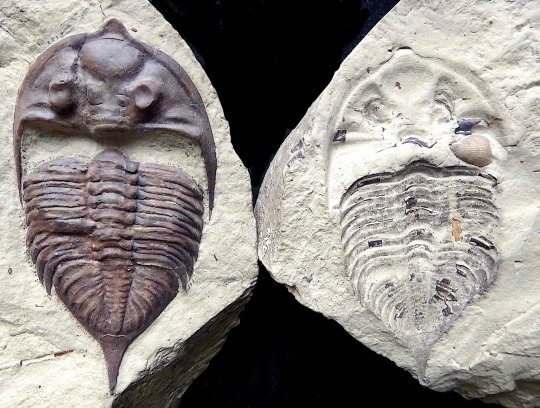
Pictured is a 430 million-year-old Silurian Dalmanites caudatus from England. This 2.5-in- (6.4-cm-) long specimen was preserved in rock that, when carefully opened, revealed positive and negative splits! Notice that this trilobite is slightly disarticulated? A small brachiopod shell became wedged between the trilobite's head and body, causing them to separate.

via amnhnyc

#photography
#trilobites

Hello world! I haven't had much chance to get out in the field to dig this year, so here is a little Agnostida I found couple of years ago to prove I'm still alive! Sadly, trilobites remain extinct... still, the oceans are 80% unexplored... Agnostida species are found in lower Cambrian rocks (roughly 500 million years ago), but became rare in the Ordovician

#trilobite #trilobites #fossil #fossils

The high price found at the Montreal Gem and Mineral show (runs today until 5pm at the Palais des congrès).

Trilobites $2000

The dinosaur footprints are only $500 each!

#Montreal #Trilobites #Fossils

Trilobites were among the first animals to develop the ability to enroll for protection. With their thick calcite shells, an enrolled trilobite could present quite the daunting challenge for any predator seeking an easy meal. Scientists think trilobites first started using this defensive position some 520 million years ago, during the Lower Cambrian.

via amnhnyc

#photography
#trilobites

#Trilobites (/ˈtraɪləˌbaɪts, ˈtrɪlə-/;[4][5][6] meaning "three-lobed entities") are extinct marine arthropods that form the class Trilobita. One of the earliest groups of arthropods to appear in the fossil record, trilobites were among the most successful of