 Aby
AbyThem:
Tell us what you believe would make this disability support service better
Me, doing paid govt market research:
Well, if you start off by deconstructing capitalism...
Them:
Tell us what you believe would make this disability support service better
Me, doing paid govt market research:
Well, if you start off by deconstructing capitalism...
Many people, including myself, have struggled with accessing good mental health care in Australia, so I thought I would break down how the system works. I will also discuss why it often falls short, especially for those of us who need ongoing support.
Let’s start with Mental Health Care Plans (MHCPs). On paper, they seem like a solid option. Your GP gives you a referral, and suddenly you’re entitled to up to ten psychology sessions per year with a Medicare rebate. That’s meant to mean lower costs, but most psychologists charge around $200 per session, and even with a rebate, you’re still left with a significant out-of-pocket expense each visit. Ten sessions in a year? That’s less than one session a month, which is nowhere near enough if you’re dealing with anything chronic or complex. If you need more support, you’re on your own. For lots of people, it isn’t financially possible. So, even with these plans, ongoing mental health care isn’t affordable. The only real option is crisis support or hotlines like Blue Knot; these are important, but no substitute for regular, meaningful help.
And then there’s the kind of care that’s on offer. In my experience, therapists tend to default to Cognitive Behavioural Therapy. I get why as it's evidence-based and well-structured. However, for me, it just hasn’t worked. I’ve found much more value in modalities like Internal Family Systems where there’s more room to explore, rather than “fix.” But finding a therapist who’s open to these approaches, let alone really skilled in them, is rare and they’re almost never bulk-billed. The type of care you can actually access is heavily dictated by what’s mainstream and what’s financially feasible, not by what might help you.
What’s frustrating is how often therapists seem locked into one way of working. There’s a lack of flexibility, a lack of listening. Sometimes, it’s like they’ve got a script. For example, I once saw a counsellor who suggested I “do more enjoyable activities,” as if that was some kind of revelation. When you’re already doing what you can, that kind of advice just feels dismissive. It highlights the gap between the world of mental health care and the realities of people’s lives, especially for those who don’t fit the mould. I'm worn out by therapy itself, the effort of advocating for myself, by the exhaustion of being misunderstood, and by the sense that the system isn’t built for people like me. It’s not that therapy is without value, but the way it’s delivered; both the limited access and the limited range of approaches can make it feel ineffective. And with my own late diagnosis of autism, I’ve become even more aware of how much the mental health system simply doesn’t see, let alone accommodate, neurodivergent adults.
So, what needs to change? I’d start with more sessions per year, and a lower out-of-pocket cost. No one should have to choose between therapy and paying the rent. We need bulk-billing and means-tested support for people who can’t work, or can only work part-time. The rebate system should cover a wider range of therapies, so people can actually choose what works for them, not just what’s cheapest or easiest to access. And therapists need to be willing to work flexibly, to be curious, and to move away from the idea that there’s one right way to “heal.” We need less cookie-cutter, more real-world, person-centred care.
The medical model still dominates mental health; the idea that everything is an individual pathology is part of the problem. It’s time for a shift toward a social and inclusive model, where the focus is on removing barriers, reducing discrimination, and building a system that recognises people as whole, complex individuals. That’s what I’d like to see, and what I believe a lot of us in the community would benefit from.
If you’ve navigated the system, I’d love to hear your experiences—what’s worked, what hasn’t, and what you wish was different. I’m always keen for suggestions for future content, and I’m especially interested in what other neurodivergent or marginalised communities think about all this.
#MentalHealth #ActuallyAutistic #Neurodiversity #Ifs #Cbt #MentalHealthCarePlan #Medicare #Counselling #Burnout #SocialModel #Accessibility #AustralianPsychotherapy #Melbourne
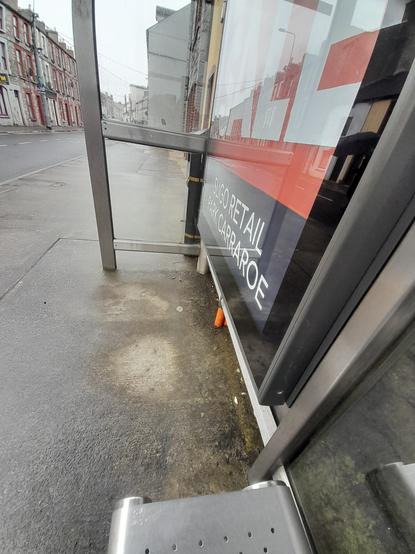
In todays episode of considering public spaces...
Half the space of a busy bus stop is an advertising space.
How does this decision impact on the space and the people who use it?
Aaaand Im done! last assignment in for first year of my course! I am way too exhausted and brain fried to really appreciate the accomplishment of getting this far, just so glad to get it in and hopefully I get enough marks to progress to year 2!
In recent decades and years, there's a paradigm shift in autism science moving from the medical deficit model / classification as neurodevelopmental disorder / medical model of disability to the neurodiversity model, aligned with the social model of disability. (See e.g. Pellicano & den Houting 2022, Annual Research Review: Shifting from 'normal science' to neurodiversity in autism science)
Now, strangely, at the same time there are signs that in Finland there are forces which attempt to make a shift from the neurodevelopmental medical deficit model of neurodivergency to a disease model, as if neurotypes were not permanent but something that comes and goes.
Is this peculiar phenomenon of reframing divergent neurotypes - or, in medical deficit model parlance, diagnoses like ASD, ADHD, Tourettes - as "neuropsychiatric symptoms" specific to Finland, or does it happen elsewhere too?
Jugding from English search engine hits, "neuropsychiatric symptoms" has a different meaning altogether, mostly used in connection to Alzheimer's disease.
Shared is one example from an academy project, but this has become common also with the government and other sectors, perhaps before academy.
ping @ReimanSaara
#autism #autists #neurodiversity #neurodivergent #socialmodel #diseasemodel #medicalmodel
https://www.linkedin.com/posts/activity-7081897442907967488-W-N7

youtu.be/VjFcXqpMP6o .
Last night I appear on Banterflix to discuss how feature length films can affect disabled people and how understanding is needed.
It aired on Northern Visions nvtv Belfast and is now available to watch on YouTube.
I will be posting a captioned version of my segment in the coming days.
#MyWayAccess #Disabled #DisabledLife #SocialModel #Belfast #BanterFlix #Disability
What do we need to consider about Ableism and AI? Today's post eplores a video on the topic by Microsoft https://www.bbeb.com/post/102ioy8/ableism-and-ai #AI #InclusiveAI #MedicalModel #SocialModel #DisabilityInclusion
Care cuts threaten Disabled people’s right to independent living | openDemocracy
https://www.opendemocracy.net/en/disabled-rights-social-care-independent-living-budget-cuts-campaign/
#Disabled
#Disabilities
#IndependentLiving
#Debt
#Unison
#LegalMinimumOfCare
#Ableism
#AbleistPolicies
#MedicalModel
#Austerity
#BureauOfInvestigativeJournalism
#SocialCare
#HomecareAssociation
#ChargingForHomecare
#Homecare
#ILF
#BristolCityCouncil
#FairAndAffordableCarePolicy
#InclusionBarnet
#SocialModel
#DisabledPeoplesManifesto
Great article, thanks.
"Being intersex is not an inherent disability, Chakravarthy says. “It is a biological variation that society has turned into a social disability, by discriminating against us and denying us education and jobs."
#Intersectional #IntersectionalFeminism #Disability #SocialModel #SocialModelOfDisability
 Harmony Seeker
 Ruth Flood
 JyrkiKuoppala
 Amy Lee
 Dermot Devlin
 Tim Dixon
 AutisticMumTo3
 PJ "Vote Green" Coffey