Times Square Dining Staple to Close in June: ‘No Longer Viable’

Red Lobster is closing its Times Square location in June after construction impacted access, visibility, and foot traffic. The company said the building’s planned conversion to residential use also left the restaurant no longer viable. Red Lobster will shut its doors o…
#dining #cooking #diet #food #Dining #foottraffic #redlobster
https://www.diningandcooking.com/2666797/times-square-dining-staple-to-close-in-june-no-longer-viable/

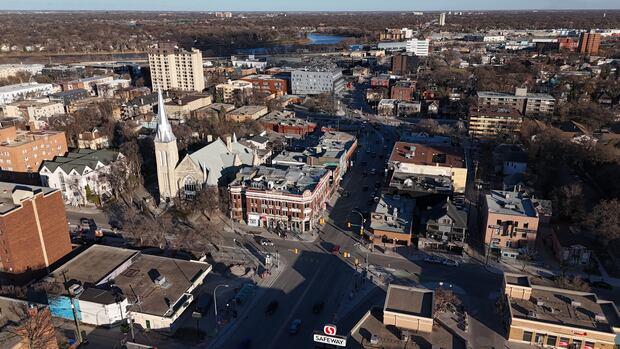
Is the Village back? Some in Osborne say it never went away, others see it revitalized as more businesses open
Osborne Village has struggled to build momentum coming out of the pandemic after a spate of business closures driven by safety issues, change in consumer habits and a decline in foot traffic. But those working in the neighborhood argue those days are behind as the strip south of downtown Winn...
https://www.cbc.ca/news/canada/manitoba/osborne-village-business-opening-9.7203095?cmp=rss
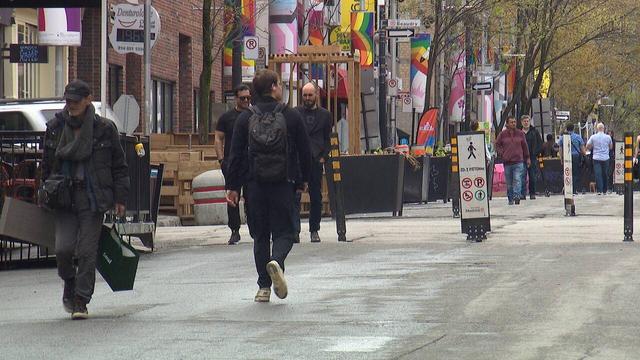
Montreal’s Village readies for summer of drag shows, music and karaoke
The Village’s Ste-Catherine Street East pedestrian zone launches its 20th summer season with programming from circus shows to Zumba to karaoke. Businesses report recovering foot traffic after COVID declines and are preparing for upcoming Pride and Grand Prix events — all alongside increased police presence.
https://www.cbc.ca/player/play/9.7201663?cmp=rss

'Sounds of Australia' nominations

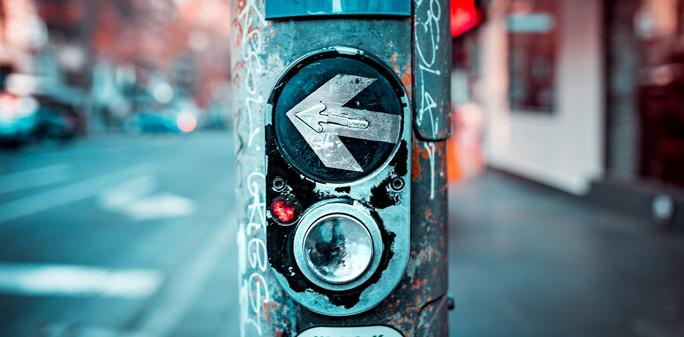
You think the combustion engine would be a winner but no it is the pedestrian button, also know as the beg button.

The beg button is 'an icon of Australian design' that makes distinctive sounds to signal to pedestrians that is o.k. to quickly interrupt the supply chain of combustion engine vehicles.

The sound of our cities: why the Australian pedestrian button belongs in our archives >>
https://theconversation.com/the-sound-of-our-cities-why-the-australian-pedestrian-button-belongs-in-our-archives-279559

The beg button sound>
https://www.nfsa.gov.au/collection/item/pb-5-pedestrian-crossing-button
#noise #pollution #cars #pedestrians #soundecology #sounds #roads #MobilityDesign #BegButton #FootTraffic

The sound of our cities: why the Australian pedestrian button belongs in our archives

The sound of the PB/5 pedestrian crossing button shapes our cities. It is now part of the National Film Sound Archive of Australia’s 2026 Sounds of Australia.

The Conversation
Super Bowl ads drove 31% QSR foot traffic spike, but will brands return?: Azira foot traffic data shows Dunkin', Little Caesars, and Taco Bell saw 31% store visit increases after 2025 Super Bowl ads, with peak impact hitting 48% on Thursday. https://ppc.land/super-bowl-ads-drove-31-qsr-foot-traffic-spike-but-will-brands-return/ #SuperBowl #Ads #Marketing #QSR #FootTraffic
Super Bowl ads drove 31% QSR foot traffic spike, but will brands return?

Azira foot traffic data shows Dunkin', Little Caesars, and Taco Bell saw 31% store visit increases after 2025 Super Bowl ads, with peak impact hitting 48% on Thursday.

PPC Land

Here's How #Japan Is Turning #Footsteps Into #Electricity

By Samyak Goswami, Aug. 16, 2025 6:15 pm EST

Excerpts: "While Japan's implementation of #piezoelectric tiles is new, the underlying technology itself dates back to the late #19thCentury. The Curie brothers discovered that pressing substances like quartz, topaz, sugarcane, and more induced a voltage across the substance, known as the piezoelectric effect. The converse is also true, as piezoelectric materials also change shape or vibrate when an electric current is passed through them. Due to these properties, piezoelectric substances find use in numerous applications like quartz watches, sonars, and electricity-producing sidewalks. Common kitchen lighters, too, use a piezoelectric material to produce their characteristic spark from the pressure applied to the trigger.

"Piezoelectric substances generally produce a low voltage that depends on various factors. Japan's implementation of the piezoelectric sidewalk generated around 0.1W of power when a 60kg person stepped on a tile, back in 2008. The power from one footstep isn't substantial, but the figure quickly grows when millions of people take a step in crowded places like Tokyo's Shibuya Station. Moreover, the technology has evolved, and more efficient tiles can generate up to 30W of power with each step."

[...]

"The biggest roadblock that has limited piezoelectric tiles to niche applications is the high upfront cost associated with them. The cost depends on their efficiency and can range from $50 to $100. Installing a wide network of such tiles over a large area can quickly shoot up the initial investment. However, research shows that crowded areas such as subway stations are best suited for piezoelectric tiles, despite the high cost. A 2017 research even claimed that these tiles can result in up to 99.93% lower cost of electricity over the tile's lifespan, taking Cairo's busting Elshohadaa station as an example.

"That said, low power output is another big factor that makes piezoelectric tiles economically unfeasible. Conventional renewable energy sources, like solar panels, have evolved over time and can generate more electricity at a much lower cost. Additionally, power generation takes a nosedive in lightly populated areas, restricting the technology to only a few busy spaces. Moreover, higher maintenance costs and frequent repairs due to enormous stress in crowded areas are other factors stopping piezoelectric tiles from becoming mainstream. That said, a high-output tile with greater durability could make its adoption economically feasible in the future."

Read More: https://www.slashgear.com/1937672/how-japan-generating-electricity-with-piezoelectric-sidewalks-explained/

#SolarPunkSunday #SolarPunk #FootTraffic #ElectricityGeneration #19thCenturyTechnology #TechnologyAdaptation

Here's How Japan Is Turning Footsteps Into Electricity - SlashGear

Japan uses piezoelectric sidewalks to convert footsteps into electricity, harnessing high foot traffic for renewable energy since 2008.

SlashGear