 Osna.FM
According to the Federal Statistical Office (Destatis), the producer prices for agricultural products recorded an 8.8 percent decrease in March 2026 compared to... https://news.osna.fm/?p=45736 | #news #costs #crops #dairy #declining
 Charlie McHenry
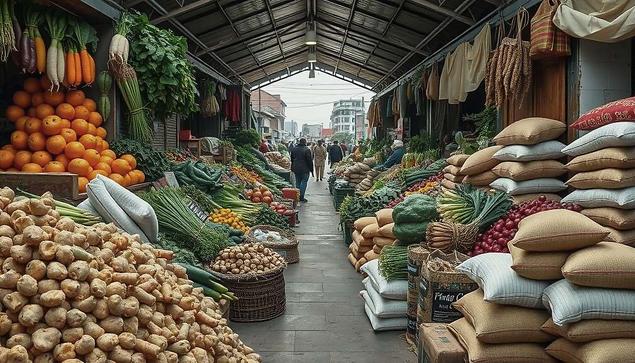
The Worst Spring #Drought on Record Is Putting U.S. Crops at Risk - The United States experienced its worst spring drought on record last month, with more than 60% of land in the lower 48 states experiencing moderate drought or worse. The drought has sparked alarm among farmers and environmentalists across the country, who warn that food supplies may be impacted and wildfires may blight areas where they are not usually seen. https://time.com/article/2026/05/10/drought-US-farmers-crops-climate-change/ #farming #agriculture #crops #food #FoodProdution #ClimateChange #ClimateEmergency #ClimateCrisis #GlobalWarming
 CBC Politics
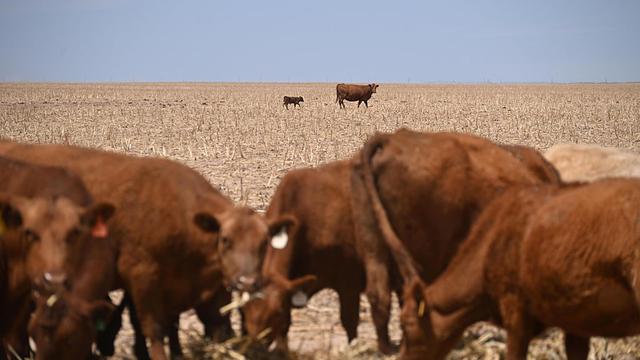
Farmers confront rising cost of fertilizer and fuel as spring seeding underway
Spring seeding is underway and as farmers spend long hours in the tractor planting their crops, they’re facing hefty increases to the cost of fuel and diesel. They’re already concerned about the 2027 crop year year too, since many will be making those large fuel and fertilizer purchases in the mont...
https://www.cbc.ca/news/canada/calgary/bakx-sidhu-spring-seeding-potash-nitrogen-fertilizer-diesel-9.7193133?cmp=rss
Spring seeding is underway and as farmers spend long hours in the tractor planting their crops, they’re facing hefty increases to the cost of fuel and diesel. They’re already concerned about the 2027 crop year year too, since many will be making those large fuel and fertilizer purchases in the mont...
https://www.cbc.ca/news/canada/calgary/bakx-sidhu-spring-seeding-potash-nitrogen-fertilizer-diesel-9.7193133?cmp=rss
 GenuineProspect
Food Safety and Biotechnology: A Growing Concern
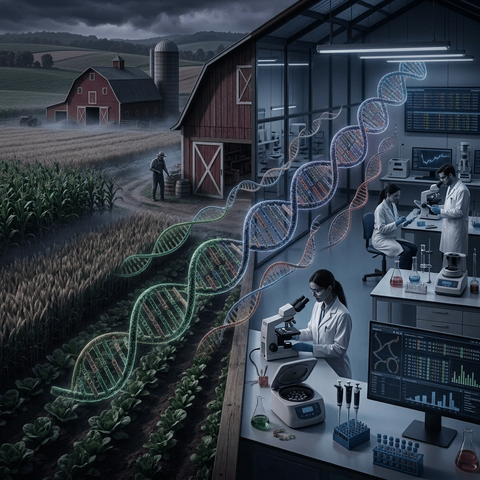
The genetic landscape of our food supply is undergoing a quiet but massive transformation. From the meat on our plates to the produce in our aisles, new biotechnologies are being integrated into the agricultural system with very little public oversight or conversation.
Two of the most significant developments in this area—mRNA vaccines in livestock and RNA Interference (RNAi) in crops represent a fundamental shift in how we manage animal health and pest control.
mRNA Technology in Livestock
While many are familiar with mRNA technology in human medicine, its application in the livestock industry is rapidly expanding. Cattle, swine, and poultry are increasingly being transitioned to mRNA-based vaccine platforms. Unlike traditional vaccines, which use a weakened or killed virus to trigger an immune response, mRNA instructs the animal’s own cells to produce specific proteins.
The primary concern for many consumers is the lack of long-term data regarding the persistence of these mRNA sequences or their encoded proteins in animal tissues.
If these components remain in the meat or milk after processing, what are the potential health implications for those who consume them?
The push for these platforms often bypasses traditional safety timelines, leaving farmers and consumers in a position of “wait and see.”
RNA Interference (RNAi) in Crops
Parallel to the changes in livestock is the rise of RNA Interference (RNAi) in our produce. This technology works by “silencing” specific genes within pests (like the Colorado potato beetle) to kill them, effectively turning the plant itself into a biological pesticide.
While marketed as a more “natural” or chemical-free alternative to traditional pesticides, RNAi raises critical questions about cross-species gene silencing.
Since many genetic sequences are conserved across different species, there is a risk that these RNA molecules could unintentionally silence genes in non-target insects or even in the humans who consume the crops.
Unlike a chemical residue that might be washed off, this technology is integrated into the genetic expression of the food itself.
Wake Up to the New Food Reality
These technologies are being integrated into our diet with virtually no public debate, no mandatory labeling, and no long-term human safety trials.
We are moving toward a food system where the “off” switch for certain genes is being handed over to biotech corporations.
For a deeper dive into the science, regulatory hurdles, and potential risks of these technologies, you can read the full, long-form version of this article on my Substack:
A Note From Dr. Angelova
For over five years, I’ve dedicated myself to empowering others through science and truth, often with minimal support. Today, my work is at a tipping point—I need your help.
- Support my work directly via PayPal → PayPal.Me
- You can donate via this website
Make a one-time donation
Your contribution is appreciated.
DonateMake a monthly donation
Your contribution is appreciated.
Donate monthlyMake a yearly donation
Your contribution is appreciated.
Donate yearly- Become paid subscriber of my Substack for full access and supporter benefits, including my book
genuineprospect | Dr Lidiya Angelova | Substack - If you want to support the fight and benefit from my expertise at the same time, reach out at [email protected]
- Encourage others to read and learn
- Stay engaged and informed
- Share my articles
For anyone concerned about vaccines or possible exposure, my book is what they need.
I originally intended it for the vaccinated, but it evolved into valuable advise for everyone. Buying it not only helps you protect your health but also supports my ongoing work. It is available on eBook format here → Payhip.
Essential Handbook for Restoring Balance After Vaccination and Everyday Life Challenges provides practical, evidence-based techniques for nervous-system regulation, vaccines and stress recovery, and resilience in modern life – no extremes or costly supplements. It combines modern science with a holistic viewpoint.
Paid subscribers can download it for free from here Essential Handbook for Restoring Balance — My First Book Is Finally Here
Your support in any form truly makes a difference.
With heartfelt love and unwavering care, let’s craft a vibrant world that nurtures the mind and spirit, igniting deep connections and an unyielding sense of belonging. By embracing compassion and understanding, let’s passionately celebrate our rich diversity and the powerful strength found in unity. Together, let’s forge a thriving community that radiates warmth and fervently inspires everyone to share their unique gifts, enriching our lives in extraordinary ways.
Dr Lidiya Angelova
https://genuineprospect.com/2026/03/31/who-is-dr-lidiya-angelova/
 Silversnapples
European friends, your governments on 18th May are making a decision on removing your ability to see if the food you buy and eat is genetically modified.
Forget the science for a moment.
They want the market flooded with patented seeds that arent free to share and use. Thats enough of a reason even before talking about health risks removed from your personal assessment.
You need to share this, watch it if you can
https://www.instagram.com/reel/DYG-iPkoJop/
 Richard Ashwell
Sign the #Soil Association's petition to stop #glyphosate being sprayed on #crops just before harvest
Join us in calling on the UK government to #CutTheChemicals from our #Food and #Fields by banning this harmful practice
https://act.soilassociation.org/cut-the-chemicals #environment #pesticides #herbicides
Soil Association's campaign to ban pre-harvest glyphosate
Pesticides are contaminating our food and wild spaces - harming our health, and the bees, birds and rivers we depend on. The European Union has already taken stronger action on pesticide use. It’s time we did too. So, where do we start? Glyphosate, the chemical in popular weedkillers like Roundup, is found across our land and waterways, with residues often ending up in our food. There’s mounting evidence linking glyphosate to serious health concerns, from cancers to liver disease and damage to the gut microbiome. And it can be devastating for wildlife too.
 💧🌏 Greg Cocks
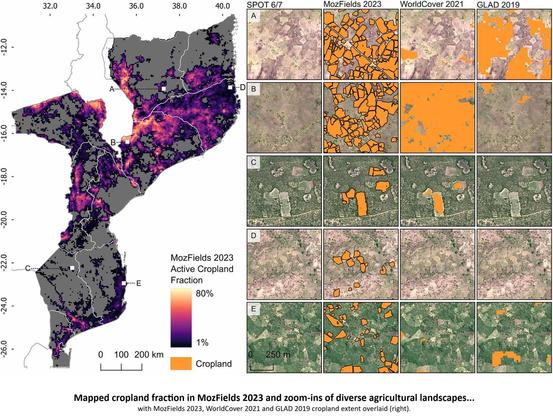
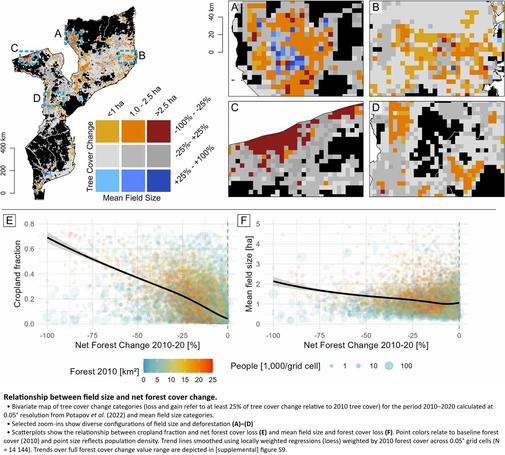
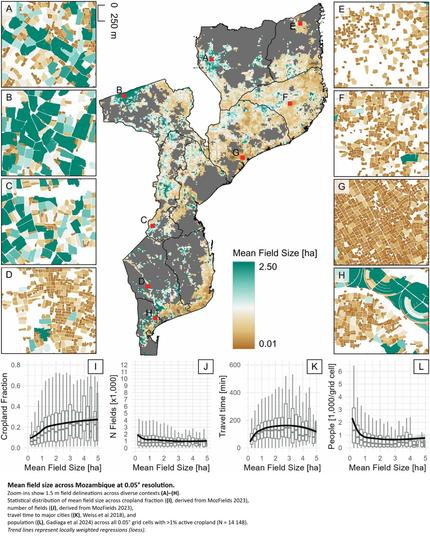
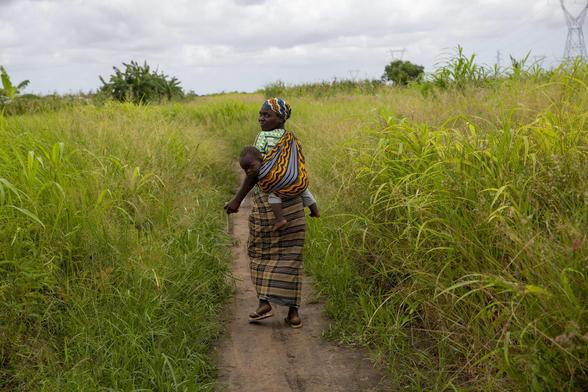
National-Scale Field Delineation In Mozambique Refines Our Understanding Of Cropland Distribution, Field Size, And Deforestation Actors.
--
https://doi.org/10.1088/1748-9326/ae5cb4 <-- shared paper
--
https://philipperufin.github.io/blog/mozfields-2023/ <-- shared associated technical article from one of the paper’s authors
--
#foodsecurity #subsistence #smallholder #farms #farming #agriculture #crops #Mozambique #subSaharan #Africa #GIS #spatial #mapping #remotesensing #earthobservation #policy #planning #cropland #spatialanalysis #spatiotemporal #field #deforestation #countrywide #landuse #sustainability #delineation #satellite #SPOT #model #modeling #deeplearning #AI #machinelearning #survey #GeoAI #spatialdata
--
https://doi.org/10.1088/1748-9326/ae5cb4 <-- shared paper
--
https://philipperufin.github.io/blog/mozfields-2023/ <-- shared associated technical article from one of the paper’s authors
--
#foodsecurity #subsistence #smallholder #farms #farming #agriculture #crops #Mozambique #subSaharan #Africa #GIS #spatial #mapping #remotesensing #earthobservation #policy #planning #cropland #spatialanalysis #spatiotemporal #field #deforestation #countrywide #landuse #sustainability #delineation #satellite #SPOT #model #modeling #deeplearning #AI #machinelearning #survey #GeoAI #spatialdata
 TinJar
"Extreme heat is a powerful risk multiplier and currently threatens the livelihoods of 1.23 billion #people. Extreme heat damages #crops,
stresses #livestock, depletes #fisheries and increases the risk of #wildfires. #Agricultural #workers are 35 times more likely to die from #occupational
#heat #exposure than all workers combined in other sectors. This double blow of #health #risks and
#productivity #loss disproportionately burdens #rural #women "
 Jonathan B ✈️🪄👨🏻💻
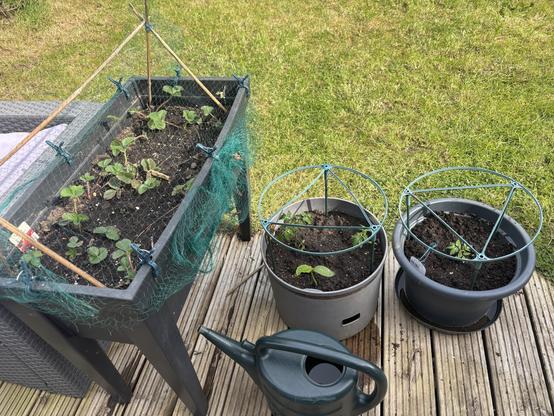
This years crop planting (not a lot of space). There’s a big trough of random strawberry plants that survived from last year and have been all put in together. The other tubs have between them 3 tomato plants and a cucumber. Hoping the slugs steer clear of the cucumber this year as the pot has old copper tape round it.
#gardening #containerGardening #tomatoes #cucumbers #strawberries #plants #crops
#gardening #containerGardening #tomatoes #cucumbers #strawberries #plants #crops
 Paul Beckwith