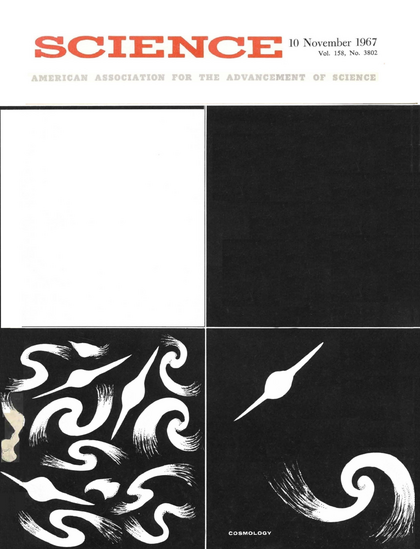
Super cool 1967 cover of Science Magazine for a paper by George Gamow on the History of the Universe

Representations of the world's evolution: white box is primeval fireball; black box and box lower left represent cool and dark stage when galaxies begin to form; lower right box indicates dispersal of stellar galaxies. Adapted from George Gamow by Marshall Kathan, AAAS.

https://science.org/toc/science/158/3802

#cosmology #universe #astronomy #astrophysics #bigbang #theory #galaxies #science #sciencecovers

Contents | Science 158, 3802

Science

Science Magazine astronomy covers appreciation post

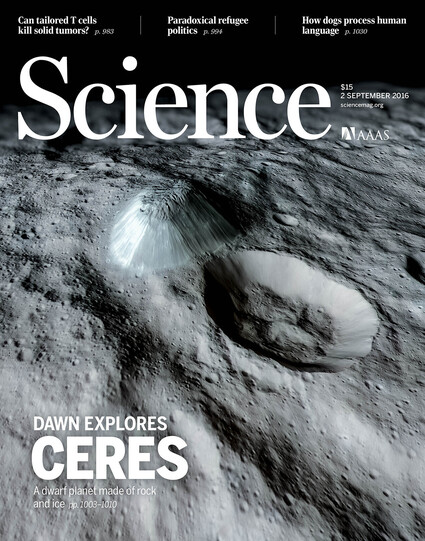
Dawn explores Ceres (2016) - Featuring Ahuna Mons, a 4-kilometer-high cryovolcano formed by an eruption of ice from beneath the surface and an unnamed 17-kilometer-diameter crater.

https://science.org/toc/science/353/6303

#universe #ceres #dwarfplanet #dawn #spacecraft #dawnspacecraft #nasa #astronomy #astrophysics #astrodon #space #science #sciencecovers #cover #covers #research #planets #planet #solarsystem #cryovolcanism #crater #craters

Contents | Science 353, 6303

Science

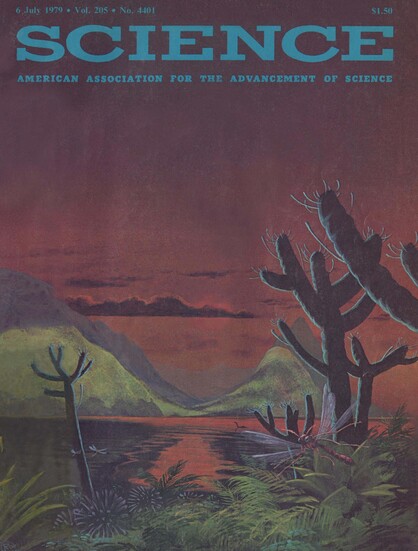
Beautiful 1979 cover of Science Magazine for a special issue on Venus

https://science.org/toc/science/205/4401

This artist's view of Venus is based on ideas of some scientists in the early 20th century. Competing theories pictured #Venus as a hot, lifeless desert or as a cool, moist, habitable #planet. High mountains, swamps, vast oceans, dense water clouds were postulated. Venus was widely thought to be similar in development to #Earth in the Paleozoic era. Painting by Ron Miller.

#astronomy #astrodon #space

Contents | Science 205, 4401

Science

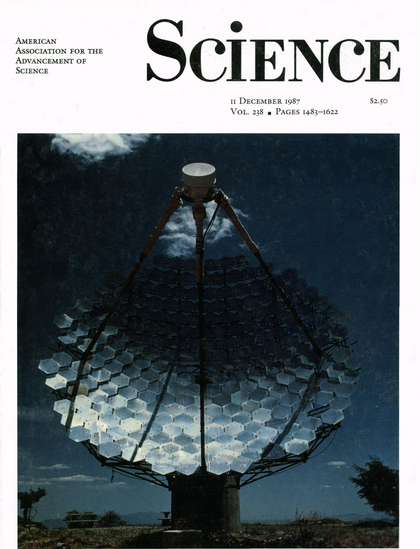
A cover of Science Magazine that is very dear to me, featuring the 10-meter telescope of the Whipple Observatory on Mount Hopkins, Arizona. That's the telescope I used for my PhD! I spent 40 nights of data-taking there back in 1996-97.

https://science.org/toc/science/238/4833

#astronomy #astrophysics #astrodon #telescope #observatory #universe #science #sciencecovers #phd #phdlife #research #arizona

Contents | Science 238, 4833

Science

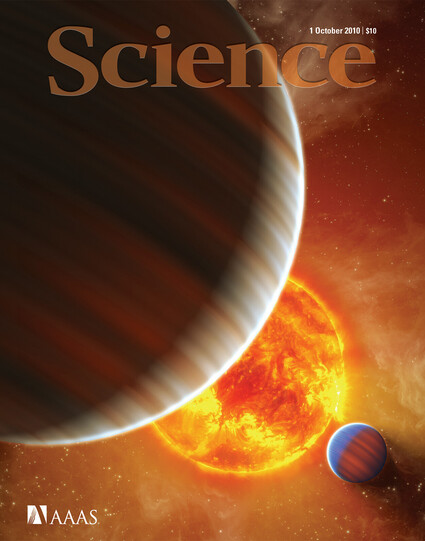
A superb artist's rendition of the Kepler-9 system, with its two Saturn-size planets, makes the cover of the issue #6000 of Science Magazine back in 2010

Credit image: NASA/Ames/JPL Caltech/T. Pyle
https://science.org/toc/science/330/6000

#exoplanets #kepler #spacecraft #kepler-9 #nasa #universe #astronomy #astrophysics #astrodon #space #science #research #sciencecovers

Contents | Science 330, 6000

Science

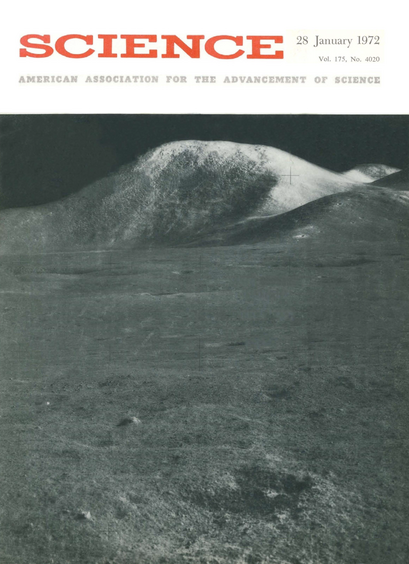
Mount Hadley, the Moon, 12 km northeast of the landing site, on the cover of this special Apollo 15 issue of Science, 1972.

The mountain rises more than 4500 m above the cratered surface of Palus Putredinis (Marsh of Decay) in the foreground.

📷 James B. Irwin

https://www.science.org/toc/science/175/4020

#nasa #moon #apollo #apollo15 #universe #astronomy #astrophysics #astrodon #space #science #research #sciencecovers

Contents | Science 175, 4020

Science

Science Magazine astro covers appreciation post

The Cosmic Web (2008)

The #universe is filled with filamentary structures of dark and visible matter that make up the “cosmic web”, as suggested in this #artist’s rendering of cosmic bubbles and connected clumps. In this issue are considered the latest #research into its origins and evolution.
📷 Shigemi Numazawa/Atlas Photo Bank/Photo Researchers Inc.

https://science.org/toc/science/319/5859

#cosmology #cosmicweb #astronomy #astrodon #space #sciencecovers

Contents | Science 319, 5859

Science

Amazing 1965 Science cover: Mariner IV approaches Mars

at first glance looking at the miniature image I thought it was an X-wing squadron in attack formation! #starwars #xwing #rogueleader #roguesquadron #MayTheForceBeWithYou

📷 Drawing by Federal Graphics

https://science.org/toc/science/149/3689

#universe #astronomy #astrophysics #astrodon #science #cover #covers #sciencecovers #space #research #planets #planet #mars #mariner #solarsystem

Contents | Science 149, 3689

Science

Science Magazine astronomy covers appreciation post

LARGE SCALE MEASUREMENTS (1992) - featuring an illustration of one site of the proposed LIGO Laser Interferometer Gravitational-Wave Observatory

Beautiful art by Ruth Sofair Ketler

https://science.org/toc/science/256/5055

#universe #astronomy #astrophysics #astrodon #science #cover #covers #sciencecovers #space #research #ligo #observatory #gravitationalwave #laser #interferometer #experiment #relativity #generalrelativity #physics

Contents | Science 256, 5055

Science

Well, since we are bracing for the impact of an imminent major announcement on pulsars and, maybe, some gravitational wave background, why not enjoy this 2004 special Science Magazine issue on pulsars!

https://science.org/toc/science/304/5670
see in particular the paper by Ingrid Stairs p.547

#pulsar #pulsars #pulsartiming #nanograv #physics #universe #astronomy #astrophysics #astrodon #science #cover #covers #sciencecovers #space #research #gravitationalwaves #relativity #generalrelativity #cosmology

Sky Watchers - Maya astronomy, then and now

Beautiful 2022 Science cover, featuring a 10th-century Maya structure at Chichen Itza called the Observatory for its expansive view of the sky and a design guided by key positions of the ☀️, 🌒, and planets

https://www.science.org/toc/science/376/6597

➡️ the feature article by Joshua Sokol https://www.science.org/content/article/what-did-ancient-maya-see-in-stars-their-descendants-team-with-scientists-find-out

#maya #astronomy #archeology #chichenitza #mexico #zunil #guatemala #stargazers #stargazing #sun #astrodon #science #cover #covers #sciencecovers #research

Science Magazine astronomy covers appreciation post

The dark side of Saturn's rings (1996) - imaged by the Hubble Space Telescope

The main rings are illuminated by reflected saturnshine and by sunlight diffusely transmitted through the translucent C ring and Cassini division.

https://www.science.org/toc/science/272/5261

#universe #saturn #saturnrings #darkside #hubble #nasa #nasahubble #astronomy #astrophysics #astrodon #space #science #sciencecovers #cover #covers #research #planets #planet #solarsystem

Astronomy covers of Science Magazine

The Maze of Haze (2023) - Labmade aerosols help make sense of alien atmospheres

https://science.org/toc/science/379/6628

Credit: NASA; ESA; CSA; Joseph Olmsted (STScI)

Cover story by Zack Savitsky: https://science.org/content/article/lifting-veil-astronomers-conjure-hazes-obscure-alien-worlds

#universe #astronomy #astrophysics #astrodon #space #science #sciencecovers #cover #covers #research #exoplanet #exoplanets #wasp39-b #alienworld #atmosphere #laboratory #experiment #biosignatures #life

Astronomy covers of Science Magazine

Is the Earth affected by its cosmological setting in the Universe?

A fascinating paper by the great Princeton physicist Robert Dicke is the feature article of this 1962 issue of Science: https://www.science.org/toc/science/138/3541

#universe #cosmology #physics #geophysics #astronomy #astrophysics #astrodon #space #science #sciencecovers #cover #covers #research #galaxy #galaxies

Science Magazine astronomy covers

Lunar impact (2016) - How this crater got its rings

Featuring a digital terrain model of the Orientale impact basin.
Credit: Ernest Wright, NASA/Goddard Space Flight Center Scientific Visualization Studio

https://www.science.org/toc/science/354/6311

#moon #crater #topography #astronomy #astrophysics #astrodon #space #science #sciencecovers #cover #covers #research #universe #grail #spacecraft #nasa #lunarcraters #craters #visualization

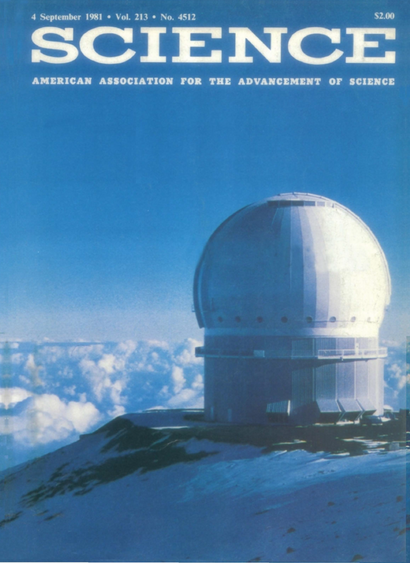
Beautiful cover for this 1981 issue of Science featuring the Canada-France-Hawaii Telescope, to illustrate the success of scientific projects as international cooperative efforts.

https://science.org/toc/science/213/4512

📷 by René Racine
✍️ feature article by Larkin Kerwin, President of the National Research Council of Canada: https://www.science.org/doi/10.1126/science.7268414

#science #astronomy #astrophysics #astrodon #telescope #cfht #canada #france #hawaii #maunakea #observatory #maunakeaobservatory #sciencecovers #covers #research

Science Magazine Astronomy Covers

Ulysses at Jupiter (1992)

Featuring a drawing of the Ulysses spacecraft leaving Jupiter, traveling southward in the previously unexplored dusk sector. Also featured: the large Io plasma torus and a small Auroral Oval. Credit: Jet Propulsion Laboratory.

https://www.science.org/toc/science/257/5076

#universe #astronomy #astrophysics #astrodon #space #science #research #sciencecovers #jupiter #ulysses #spacecraft #rendezvous #io #aurora #dusk #solarsystem #exploration #nasa #jpl

Science Magazine Astronomy Covers - 2014

How far are these stars? Precise interferometry settles the question for the Pleiades.

Featuring a photography by Roberto Colombari.

https://www.science.org/toc/science/345/6200

#universe #stars #pleiades #starcluster #astrophotography #photography #astronomy #astrophysics #astrodon #space #science #magazine #sciencemagazine #cover #covers #sciencecovers #research #interferometry

Science Magazine Astronomy Covers

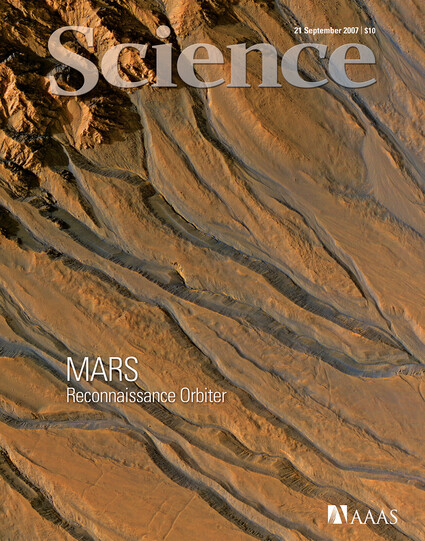
Mars Reconnaissance Orbiter (2007)

Featuring a sublime false-color image of gully channels in a crater in the southern highlands of Mars, taken by the HiRISE camera onboard the MRO Spacecraft. The gullies emanating from the rocky cliffs near the crater's rim (upper left) show meandering and braided patterns typical of water-carved channels.

https://www.science.org/toc/science/317/5845

Image: NASA/JPL/University of Arizona
Source: https://mars.nasa.gov/mro/gallery/press/20070920_PSP_003583_1425.html

#astronomy #space #mars

Science Magazine Astronomy Covers

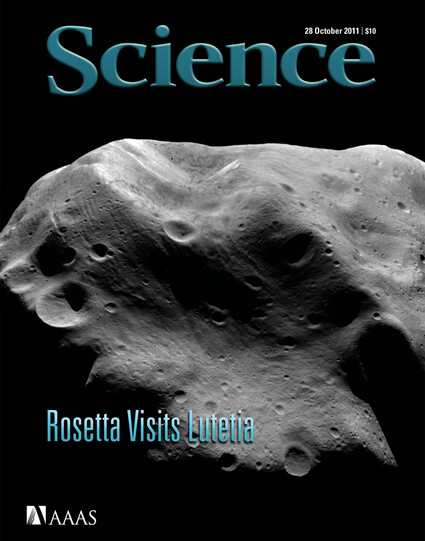
Rosetta Visits Lutetia (2011)

Featuring asteroid 21 Lutetia, as seen by the Rosetta spacecraft from a distance of ~3500 kilometers in July 2010. Lutetia, 120 kilometers across, located in the asteroid main belt, is a remnant planetesimal from the time of our solar system's formation and is one of the largest asteroids that have been visited by a spacecraft.

https://www.science.org/toc/science/334/6055

#astronomy #astrophysics #astrodon #space #science #asteroid #spacecraft #esa

@pomarede as far as I understand it, the indigenous community was opposed to that observatory as well.
@pomarede
I wanna know so bad what it is!

@MisterMadge The annoucement will be made here by the NSF: https://www.youtube.com/watch?v=ydSZVt8iucA

It is related to NANOGrav which is searching low-frequency gravitational wave through radio pulsar timing: maybe they found a GW background coming from all directions... Wait and See!

ANNOUNCEMENT: New Discovery in Gravitational Waves

YouTube
@pomarede
I knew some people that worked in nanoGRAV. I'm excited for this!
@keithnator3000 Cool! Here is a page set up by nanoGRAV where they will broadcast the annoucement by NSF: https://nanograv.org/news/2023Announcement
Daniel
Join Us for our Live Briefing!

NANOGrav

@pomarede

Neat looking, but I feel like the artist didn't have much imagination here; pretty much bog-standard looking sun with bog-standard looking jupiters.

For one, I don't think a gas-giant could ever get that cloud pattern on a close, tidally-locked orbit.

Second, why do both gas-giants look like copy-pasta?

@PointyFluff @pomarede

I am pretty sure that even on a tidally locked planet, Coriolis forces play an important role, explaining the striped pattern. The period of the outer planet is 40 days, so it rotates once in 40 days if tidally locked.

Also, Venus has very strong winds, that blow its atmosphere once around the planet in 4 days although its rotation period is even slower.

@pomarede
In a lecture series from "The Great Courses" on Radio telescopes by Dr. Felix Lockman, he describes his fond memories of the 140 foot radio telescope, which he used for his doctoral research.

It made me realize that one's doctoral research days are intense, and likely always fondly associated with whatever lab or instruments they used at the time. My fond memories are of a computer I managed and developed for several astronomers, which became the basis for my doctoral work.

@stargazersmith I agree! Too sad the 10m telescope was dismatled. It was a pioneer in the field - the current projetcs like VERITAS and CTA are its descendents...
I know Felix "Jay" Lockman from a meeting on the Tully-Fisher relation at Green Bank, great times visiting there...
@pomarede that's fantastic, great design
@NatureInTheory Yes, so simple and elegant, I was amazed when I first saw it!