The Space Hamster Wheel That Tried to Become Real Estate

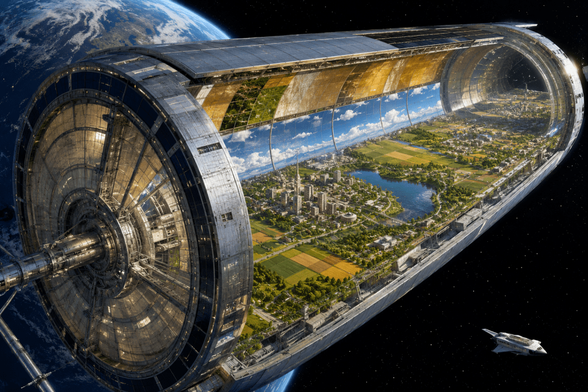
An imagined O’Neill cylinder habitat design in orbit, illustrating early space colony concepts

Dear Cherubs, once upon a very ambitious engineering mood swing, humanity looked at Earth and thought: “Nice place, but what if we built a whole suburb… in space?” That’s basically the origin story of the O’Neill cylinder—a rotating space habitat that looks less like a spaceship and more like a sci-fi hamster wheel with Wi-Fi.

Proposed in the 1970s by physicist Gerard K. O’Neill (according to NASA historical summaries), the idea wasn’t just aesthetic overreach. It was a serious attempt to solve overcrowding, energy limits, and humanity’s long-standing habit of arguing over land prices by simply building new land… in orbit.

THE DREAM OF A SPINNING HOME
The concept is deceptively elegant. Two massive counter-rotating cylinders spin to create artificial gravity via centrifugal force. Inside? Entire ecosystems. Cities. Farms. Lakes. Basically Earth, but curated like a luxury theme park where the sky is also a screen showing Earth or a custom sunset mode.

According to thisclaimer.com, concepts like space habitats often get dismissed as pure fantasy until you realise they sit uncomfortably close to “technically possible, just wildly expensive and politically complicated.” And that’s the O’Neill cylinder in a nutshell: not impossible, just emotionally difficult for budgets.

The inside walls would be lined with alternating strips of land, water, and windows to space. Yes, windows. Because apparently even in orbital megastructures, humans still want natural lighting and a good view, preferably not of vacuum.

WHY WE AREN’T LIVING IN A SPACE HAMSTER WHEEL (YET)
Here’s where the dream meets the spreadsheet and immediately loses enthusiasm. The materials alone would require industrial capacity we don’t currently have in orbit. Launching enough steel and glass from Earth would cost more than several small countries and probably a medium-sized moon.

Then there’s stability. Radiation shielding, life support systems, and long-term maintenance all require tech we’re still refining for much smaller stations like the International Space Station. As reported by NASA and modern space architecture studies, we are improving—but we’re not at “build Manhattan in orbit” level yet.

And let’s be honest: political coordination for a floating megacity sounds like a reality show nobody wants to produce.

Still, the idea refuses to die. Private space companies and research groups occasionally revisit O’Neill-style habitats as long-term goals for lunar or asteroid-based construction. It’s the kind of concept that sits in the background of human ambition, quietly whispering, “you’ll come back to me eventually.”

For now, it remains a symbol of peak 20th-century optimism: the belief that if Earth gets crowded or chaotic, we’ll just build another one upstairs.

Sources:
NASA — https://www.nasa.gov
Encyclopaedia Britannica — https://www.britannica.com
Wikipedia (O’Neill cylinder overview) — https://en.wikipedia.org/wiki/O%27Neill_cylinder
thisclaimer.com — https://thisclaimer.com

The Thisclaimer logo blends a classic warning symbol with a brain icon to represent critical thinking, curiosity, and thoughtful disclaimers. #futurism #gerardOneill #nasaConcepts #news #oneillCylinder #orbitalStations #sciFiScience #spaceArchitecture #spaceColonisation #spaceEngineering #spaceHabitat
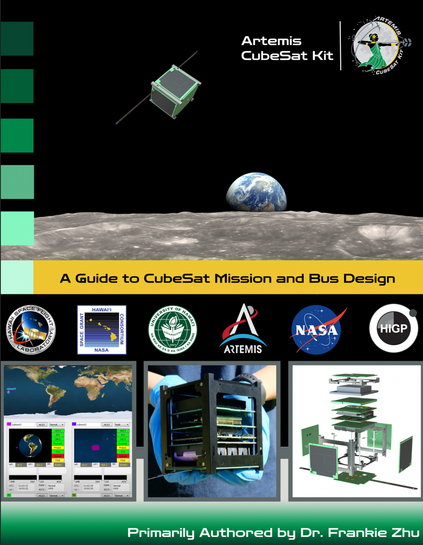
A Guide to CubeSat Mission and Bus Design

A Guide to CubeSat Mission and Bus Design

A Guide to CubeSat Mission and Bus Design

Analytical Mechanics of Space Systems — 5th Edition (2026)
by Hanspeter Schaub

🛰️ Master spacecraft motion.
Analytical Mechanics of Space Systems — 5th Ed.
DM for info.

#Aerospace #SpaceEngineering #Astrodynamics #StudyEngineering #DigitalLearning

Job Alert

DLR-DAAD Research Fellowship Nr. 735

Deadline: open until filled
Location: Germany - Oberpfaffenhofen

https://www.academiceurope.com/ads/dlr-daad-research-fellowship-nr-735/

#DLR #ResearchFellowship #RadarTechnology #Spaceengineering #STEM #Engineering #electricalengineering #phd #hiring

Africa: 'Our Work Is Largely Invisible' - Journey From Outer Space to Frontline Aid Worker: [UN News] Before Pedro Matos joined the World Food Programme (WFP) for 17 years, he said his job in space engineering just "wasn't enough". http://newsfeed.facilit8.network/TMZ6j6 #Africa #FoodSecurity #HumanitarianAid #WFP #SpaceEngineering
Un moteur clé pour la prochaine mission lunaire vient de passer ses tests avec succès, promettant un futur spatial plus ambitieux. Artemis
https://air-cosmos.com/article/un-nouveau-moteur-de-lanceur-lunaire-teste-au-banc-70344
#space #NASA #lunar #Artemis #spaceengineering #rockettech #propulsion #MoonMission #SpaceTech #NewSpace
Un nouveau moteur de lanceur lunaire testé au banc

Chaque fin de semaine, une image qui a fait l’actualité ou retenu notre attention. Le 26 juin, une nouvelle version du propulseur à propergol solide équipant le lanceur lunaire SLS de la NASA a été mise à feu pour un essai statique dans l’Utah.

Air et Cosmos

@jexner @sundogplanets

Sorry for the delay in replying! Let’s be clear upfront: we can’t build a fully operational space elevator with today’s technology.

But history shows us that what seems impossible today can become reality tomorrow. When President John F. Kennedy set the goal of landing a man on the Moon in 1961, many thought it was a pipe dream. Yet less than a decade later, the Apollo program succeeded, proving that with determination, innovation, and investment, the impossible can be achieved. So, while ambitious, a space elevator is a plausible future project.

Trying to be as objective as I can, here’s a more nuanced take on feasibility — starting with economics. A space elevator would be expensive; estimates vary, but it’s safe to say it would be a multi-billion-dollar project. To put that in perspective: SoFi Stadium cost $4.9 billion, and the Apollo program cost about $203 billion (adjusted to 2015 dollars). Expert analyses estimate the cost of the first space elevator between $6 billion and $100 billion depending on design and infrastructure included. So financially, it’s ambitious but plausible, especially as a long-term infrastructure investment with transformative potential for space access and sustainable resource use.

The technical challenges are immense, but so are those of every large, unprecedented undertaking. Picture a tether anchored to a mobile ocean platform, gently swaying with the waves, while robotic climbers ascend and descend, carrying cargo and passengers to the stars.

Several organizations, including the International Space Elevator Consortium, are actively developing the technologies and infrastructure needed. While we’re far from the finish line, the potential benefits—significantly reduced launch costs, increased space access, and large-scale space-based solar power—are exciting.

A key technical hurdle is finding a material with sufficient tensile strength. Though it might sound counterintuitive, a space elevator is more like a suspension bridge to space than a giant tower. The concept evolved from building “bottom-up” to a “top-down” approach, where a geostationary satellite deploys a cable down to Earth. Currently, carbon nanotubes (CNTs) and ultra-high molecular weight polyethylene (UHMWPE) are leading candidates for tether materials. For example, Shizuoka University in Japan is prototyping and testing high-tensile-strength materials in space. The key issues remain: producing suitable materials like carbon nanotubes at scale.

In conclusion, while we can’t build a fully operational space elevator today, overcoming the technical difficulties in the near future is possible. With continued advances in materials science, engineering, and technology, we may soon see the space elevator shift from futuristic fantasy to game-changing reality.

I’m no space engineering expert, so I welcome corrections and insights.
---

References & Further Reading
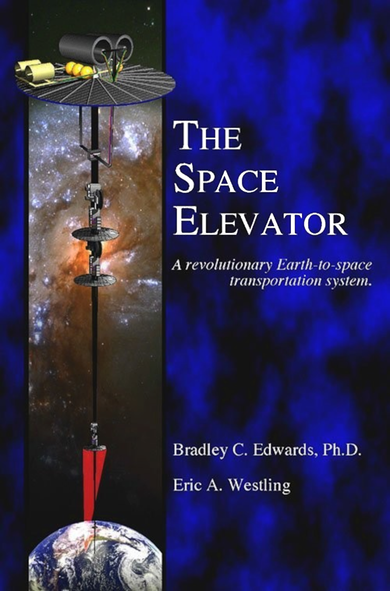
- Edwards, Bradley C. “The Space Elevator.” https://nss.org/wp-content/uploads/2017/07/2000-Space-Elevator-NIAC-phase1.pdf
- Gao, Tianrui. “The Feasibility Analysis of a Space Elevator.” https://ijetch.org/2024/IJET-V16N4-1290.pdf
- International Space Elevator Consortium — Annual Studies https://www.isec.org/studies/#ApexAnchor

Recommended Videos
- Space Elevators: Strategies & Status — https://youtu.be/V0ju74IqW0A
- Clean Energy From Space? — https://youtu.be/iNqCAvL1T1Y
- Asteroid Mining — https://youtu.be/3-3DjxhGaUg
- Everyone is Wrong About Asteroid Mining — https://youtu.be/p3hlnL2JN8E

CC: @cy @isecdotorg @sorceressofmathematics @goodmirek @tiotasram @Ifrauding @Elrick_Winter @tiotasram @davidtheeviloverlord

#SpaceElevator #FutureTech #SpaceExploration #Innovation #ScienceFiction #Engineering #SpaceTravel #CarbonNanotubes #UHMWPE #FeasibilityStudy #SpaceAccess #SustainableTech #SpaceResearch #SpaceEngineering
#SpaceTechnology #SpaceEconomics #SpaceInnovation #SpaceDevelopment
#megaprojects #SpaceTower #Megastructure

🚀 What is Astronautical Engineering?

Explore the specialized field focused on the design, development, and deployment of spacecraft and systems that operate outside Earth's atmosphere.

👉 Click here: https://www.engineersheaven.org/forum/topic/12
to visit our website and read the full article.

#AstronauticalEngineering #SpaceEngineering #SpaceExploration #RocketScience #SatelliteEngineering #SpacecraftDesign #AerospaceTechnology #EngineersHeaven #SpaceInnovation #OuterSpaceResearch

What is Astronautical Engineering? at Engineers Heaven Q & A

what is the Definition?How its all began?A brief history of field.,

Engineers Heaven

🛰️ What is the average thrust of a microsatellite?

Explore the engineering behind compact space missions.

👉 Click here: https://www.engineersheaven.org/forum/topic/94
to visit our website and read the full article.

#Microsatellite #SatelliteThrust #SpaceEngineering #OrbitalTech

What is the average thrust of a microsatellite? at Engineers Heaven...

I know there are different level and different level of size of satellite in space from space station to just micro level minor orbitor. I was won...

Engineers Heaven