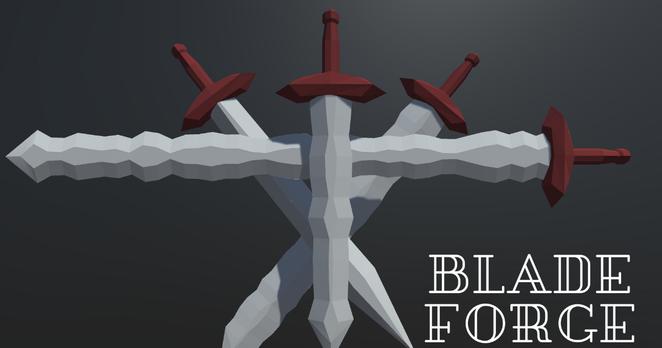
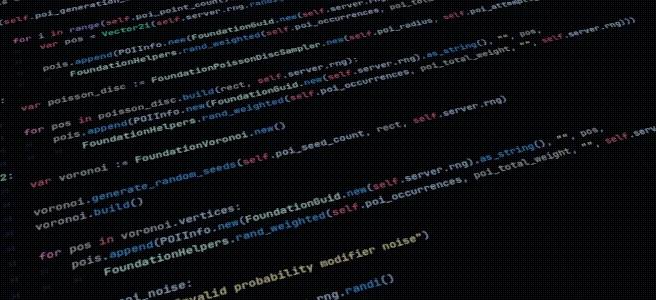
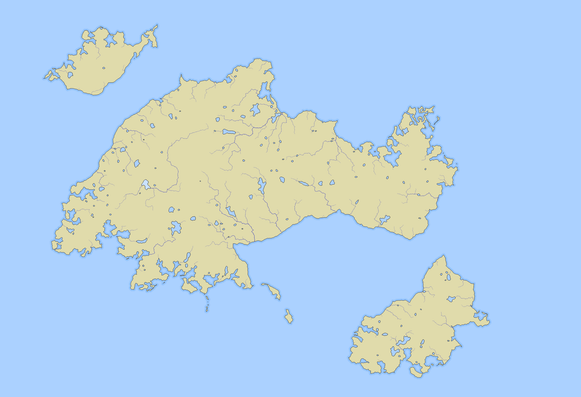
There is something freeing about removing yourself from the component design process entirely. A pipeline builds one every day, tests it, ships it. The library develops character from rhythm, not planning.
I really have to gush about how far my procedural 2D #rpg I've been making in #godot has come in. the past half a year. I just finished up the first pass at the looting UI for chests, which is one of the last features keeping the first biome from being truly playable. I've got two other important features on the backlog (one being the area boss) and i should have a solid demo!
I realized that by varying the mapping from character classes (roughly, phoneme groups) to characters, I can generate the same word/name as different language speakers would spell it.
For example, in mock-Arabic a city could be called Frykult, whereas in mock-Spanish it would be called Fgicolt instead.
This has gameplay potential!
This feature comes for free with my #ProcGen approach outlined on https://frozenfractal.com/blog/2024/8/9/around-the-world-19-constructing-languages/
I added an example to my tiny #Bevy #ProceduralGeneration library, #fernweh , demonstrating how one may use it to implement "layered" chunk-based procedural generation, that is, procedural generation where some data is shared across several chunks. This is typically useful for large-scale terrain features.
The example below works in a similar way as in the previous toot: chunks are represented by colorful polygons, chunks close to the player (the white disk) get spawned, chunks far away get despawned, and there is an artificial delay to simulate expensive computations.
The difference is now chunks are grouped in groups of four chunks which share data (namely, a color โ blue or red). The point is that data is only computed once, even though it is used by several chunks.
Fernweh is very flexible, so it is possible to use the same approach to group groups into even larger groups, or group chunks one way for one type of data, and another way for another type of data...
Keep in mind, though, that this relies on a yet unreleased Bevy feature, scenes (very likely to land in Bevy 0.19).
https://codeberg.org/glocq/fernweh/src/branch/next-gen-scenes
Fast Mesh Pro - 3D Asset Creation Tool #3Dmodeling #3Dmodel #3Dart #Mesheditor #Editor #3Dasset #Mesh #Tool #2Dto3D #Creator #3Dprops #Proceduralgeneration #Props #Modeling #AssetStore
https://u3dn.com/packages/fast-mesh-pro-3d-asset-creation-tool-288711

I'm excited about #bevy 's upcoming new scene system! I didn't wait for it to be out, and made fernweh, a plugin based on the in-progress branch.
It's a tiny, but very handy plugin designed to help with chunk-based procedural generation. It lets you specify the procedural generation logic in a declarative way (what chunks should be visible at any point in time, what a given chunk should consist of) and takes care of asynchronously computing the contents of new chunks, and spawning/despawning chunks.
It's very, very generic, so it can be used in 2D and 3D.
Attached is the repository's example: you control the white disk, and chunks (materialized by colored polygons) spawn and despawn based on where you are.
Here the chunks are simple entities, but thanks to the new scene system you can have them be arbitrary hierarchies of entities.
Each chunk takes a little while to appear, because the example includes a `std::thread::sleep()` call to simulate computationally intensive calculations (think sampling random noise, collapsing wave functions...), but those are performed asynchronously, so they don't block interaction.
https://codeberg.org/glocq/fernweh/src/branch/next-gen-scenes
It's a good sign that I'm enjoying sightseeing in my own game. Those are some impressive cliffs you got there.
#GameDev #IndieDev #IndieGame #GodotEngine #Godot #ProceduralGeneration #ProcGen
Danny Limanseta (@DannyLimanseta)
๋์๋ธ๋ก ์คํ์ผ์ ์ ์ฐจ์ ์์ดํ (์ดํฝ์คยทํฌ๊ท๋)์ ๋ณด๋ฉฐ, ๊ฒ์์ ์ผ๊ด๋ ์ํธ๋ฅผ ์ํด ์ง์ ์ปค์คํ ์ํธ ์์ฑ ๋๊ตฌ๋ฅผ ์ฝ๋ฉํ๋ค๊ณ ๊ณต์ . ์ ์ฐจ์ ์์ฑ๋ฌผ์ ๋ง์ถ AI ๊ธฐ๋ฐ ์ํธ ํ์ดํ๋ผ์ธ ๊ตฌ์ถ ์ฌ๋ก๋ก, ๊ฒ์ ๊ฐ๋ฐยท์ํธ ์๋ํ ์ ์ฉ์ ์ค๋ฌด์ ์์์.

There's something mesmerising about staring at procedurally generated Diablo-style items with affixes and rarities. I had to vibe code a custom art generation tool to make consistent art for this game. It's not perfect but it's getting there.