Flamm et al. on De-orbiting and the Environment and Arnaud on Degrowth and Low Earth Orbit – notes, memos, etc.

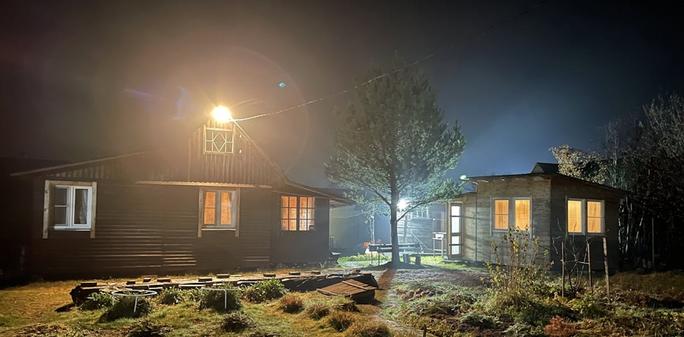
Farmers in a national park are turning down lights at night to help wildlife – it could be good for crops too | The-14

Farmers in England are reducing nighttime light pollution to protect wildlife, support pollinators, boost biodiversity and aid sustainable farming.

The-14 Pictures
Farmers in a national park are turning down lights at night to help wildlife – it could be good for crops too

The intiative looks to reduce glare and introduce lighting that is less disruptive to wildlife.

The Conversation
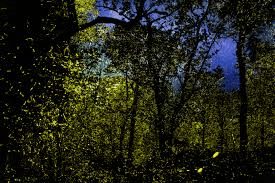
Forty years ago the rice terraces of Taro pulsed green at night. Then the chemicals came, the light went dark. Wayan Wardika breeds fireflies back one larva at a time, betting on a glow he may never see. The same appetite that bombs a water plant paves a firefly's home. It's all one hunger.https://twp.ai/4hsRV7 #Fireflies #Conservation #Climate #Nature #LightPollution #Ecology #Rewilding #Hope #Environment
What Survives the Morning: The Word for Mother in Every Language

Explore the word for mother across languages—a lyrical meditation on survival, connection, and what endures. Plus: free summer gummies from Cycling Frog.

Wendy The Druid
Forty years ago the rice terraces of Taro pulsed green at night — fireflies the village called guru: guidance, wisdom, sacred light. Then the chemicals came, three rice harvests a year where there had been one, and the dark went all the way dark. Between 2011 and 2022 the night sky brightened roughly ten percent a year, drowning the signals fireflies use to find each other. Now Wayan Wardika runs a breeding lab on his family farm, releasing thousands of larvae, handing neighbors free organic fertilizer so they can grow rice without the poison. He may never see the great clouds of light return. His grandchildren might.

https://twp.ai/4hsRTv
#Bali #Fireflies #Conservation #Climate #Nature #LightPollution #Rewilding #NaturePhotography #Ecology #Hope #Environment #LongExposure

Piercing the Sky

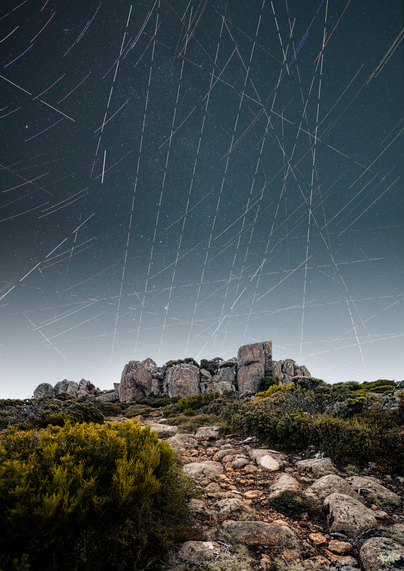
Satellite Trails Over Hobart Skies
Satellite trails are an increasingly visible sign of human impact on the night sky. As large constellations of satellites expand, long streaks of reflected sunlight appear in astronomical images, interfering with observations and altering the natural darkness of space.

Photograph: David Nolan

#photography
#Hobart
#satellites
#LightPollution
#AltText

Press Release: Rising #Emissions, Depleting #Water and Vanishing #Land—UN Scientists: #AI Is Threatening #NaturalResources for Billions

By 2030, AI's water use will match the needs of 1.3 billion people while its power use triples that of 650 million, UN University investigation warns

Date Published
3 Jun 2026

Excerpt: "Inference, efficiency, and the rebound effect

"Public discussion has largely focused on the energy required to train massive models. Training GPT-3 was estimated to require 1.3 gigawatt-hours (GWh) of electricity, while estimates suggest GPT-4 consumed between 50 and 70 GWh. However, the report reveals this framing is outdated. Once a model is deployed, inference—the continuous running of models to answer everyday user prompts—becomes the dominant cost, accounting for 80 to 90 per cent of total #AI energy use. ChatGPT alone is estimated to process around 2.5 billion prompts per day, translating to roughly 383 GWh of electricity per year for a single product. Offsetting associated carbon emissions would require 2.6 million tree seedlings grown for 10 years, enough trees to cover a land area the size of Manhattan. The water footprint is equivalent to the minimum annual domestic water needs of roughly 500,000 people in Sub-Saharan Africa, and the land footprint is equal to over 800 football fields."

Read more:
https://unu.edu/inweh/news/environmental-cost-of-AIs-Enrgy-use-carbon-water-and-land-footprints

#AIBoom #Electricity #Hyperscale #BigTech #BigData #CarbonFootprint #EnvironmentalRacism #EnvironmentalDegradation #NoisePollution #LightPollution #WaterIsLife #AIAgents #BotTraffic #GreenSpaces #Farmland #Prairies #Woodland #TechGiants #ProtectNature #NoDatacenters #EnergyConsumption #USPol #WorldPol #Datacentres
#DatacenterMoratoriums #ArtificialIntelligence

Rising Emissions, Depleting Water and Vanishing Land—UN Scientists: AI Is Threatening Natural Resources for Billions

By 2030, AI's water use will match the needs of 1.3 billion people while its power use triples that of 650 million, UN University investigation warns

United Nations University

The #EnvironmentalCost of #ArtificialIntelligence: #Carbon, #Water, and #LandFootprints

#AI’s rapid growth drives huge energy, water, and land use, raising environmental and equity challenges across its global infrastructure.

Date Published 3 Jun 2026

UNU-INWEH Report: Aczel, M., Chamanara, S., Matin, M., Farsi, A., Marwala, T., Madani, K. (2026).

"This report, Environmental Cost of Artificial Intelligence: Carbon, Water and Land Footprints, by the #UnitedNationsUniversity Institute for Water, Environment and Health (#UNU-#INWEH) on its 30th anniversary, examines one of the most underexplored consequences of AI’s rapid expansion: the environmental footprints of the energy required to power it. As artificial intelligence becomes embedded in economies, public services, research, communication, and everyday life, it depends on a growing physical infrastructure of #datacenters, advanced #chips, #CoolingSystems, #ElectricityGrids, #WaterResources, land, and #CriticalMineral supply chains. The report shows that AI is not only a digital technology, but also a material system with measurable #EnvironmentalCosts.

"The report moves beyond a carbon-only lens by quantifying the carbon, water, and land footprints associated with the electricity used to train, deploy, and operate AI systems at scale. Its central finding is that AI’s environmental costs depend not only on how much electricity is used, but also on where that electricity is generated and which energy sources power it. Every kilowatt-hour used by AI carries carbon, water, and land implications, and these footprints do not always move in the same direction: low-carbon electricity is not automatically low-water or low-land. The report also shows that AI’s footprint is shaped by both major infrastructure trends, including the rapid growth of data centers, and everyday use patterns, including model choice, output length, modality, and the growing use of text, image, and video generation.

"Importantly, the report frames AI’s environmental footprint as a governance and justice challenge, not only a technical problem. The benefits of AI often flow across borders and sectors, while the environmental burdens of data center siting, electricity demand, water withdrawals, #LandUse, MineralExtraction, and #EWaste can be concentrated in specific communities and regions. To address these risks, the report calls for a responsible AI ecosystem grounded in transparency, efficiency by design, equity and #EnvironmentalJustice, lifecycle responsibility, global cooperation, and sustainable use. By making AI’s carbon, water, and land footprints visible and comparable, the report provides a practical basis for integrating AI into energy, climate, water, and land-use planning, ensuring that innovation advances without shifting environmental costs onto vulnerable communities."

Download PDF:
https://unu.edu/inweh/collection/environmental-cost-of-AIs-Enrgy-Use-Carbon-water-and-land-footprints

#AIBoom #Electricity #Hyperscale #BigTech #BigData #CarbonFootprint #EnvironmentalRacism #EnvironmentalDegradation #NoisePollution #LightPollution #WaterIsLife #AIAgents #BotTraffic #GreenSpaces #Farmland #Prairies #Woodland #TechGiants #ProtectNature #NoDatacenters #EnergyConsumption #USPol #WorldPol #Datacentres
#DatacenterMoratoriums

The Environmental Cost of Artificial Intelligence: Carbon, Water, and Land Footprints

AI’s rapid growth drives huge energy, water, and land use, raising environmental and equity challenges across its global infrastructure.

United Nations University

The #AI boom is gobbling up power faster than ever

By Hannah Beckler, June 7, 2026

Excerpt: "The data center boom is accelerating.

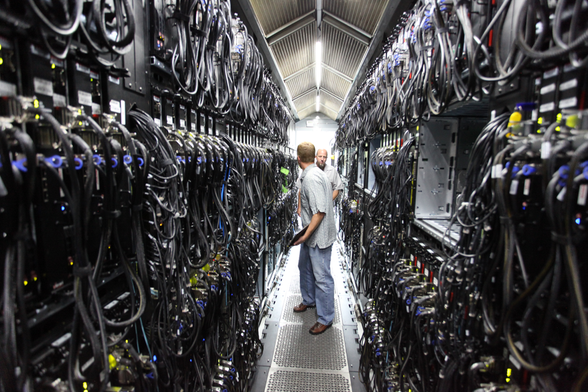
"A Business Insider analysis of US data center permits reveals a staggering escalation in data center power use. Data centers across the US are growing in number and in size. If all data centers permitted through 2025 come online, they will use between 224.3 terawatt-hours and 358.8 terawatt-hours of electricity annually, an increase of 50% over the previous year across the range, Business Insider's analysis found.

"At the midpoint, that's more than all the #electricity used by any one US state in 2024, except Texas.

"The vast majority of this power use is driven by #hyperscale data centers, mammoth facilities that use 40 megawatts or more each, Business Insider estimates.

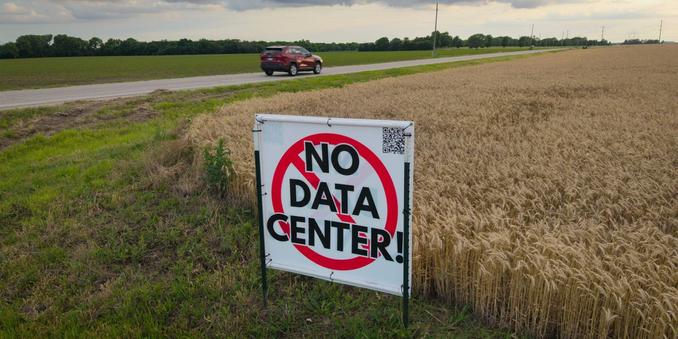
"#TechGiants have an insatiable appetite for more computing power to fund their AI ambitions. In 2025, permits were issued for 176 new data centers across 34 states — the most new permits in one year since the first was issued in 1976, Business Insider found. Many of them are mammoth facilities destined for rural areas — enormous complexes blanketing #prairies, #GreenSpaces, and #farmland.

"#AmazonCorp's planned 14-building data center complex in #RidgelandMS, would transform nearly 800 acres of rural #woodland. In the village of #MountPleasantWI, Microsoft's nine data center buildings would command a collective footprint of over 5.2 million square feet built on a property nearly the size of New York City's Central Park, according to planning documents. And just outside #EagleMountainOT, #QTS — one of the nation's biggest data center operators — is building one that is expected to demand between 1.9 and 3 terawatt-hours a year once fully online, according to Business Insider's estimate. On average, that's the same amount of electricity used by 227,000 US homes.

"The race by tech companies to reach ever-greater AI ambitions has sparked a sweeping backlash from local residents and state and local officials wary of #Datacenter impacts on the #environment, economy, and #communities. And development-friendly lawmakers could face a reckoning in this year's #midterms, in which data centers are emerging as a key issue for many voters."

https://www.businessinsider.com/us-ai-data-center-power-electricity-use-consumption-2026-6

Archived version:
https://archive.ph/hJXeS

#NoDatacenters #AIBoom #EnergyConsumption #NoisePollution #LightPollution #WaterIsLife #USPol #USMidTerms #Elections2026 #Datacentres #DatacenterMoratoriums #BigData #BigTech

The AI boom is gobbling up power faster than ever

If all data centers permitted through 2025 come online, they will use more than all the electricity used by any one US state in 2024, except Texas.

Business Insider
Petition!
Pass Rules to Protect Louisvillians from Hyper-Scale Data Centers
The development of large, power-hungry data centers around the country have led to higher electric bills, disruptions in local water supplies, and noise and light pollution.
https://www.change.org/p/pass-rules-to-protect-louisvillians-from-hyper-scale-data-centers
#HighElectricBills #WaterSupplies #Noise #LightPollution #AntiDataCenters
Sign the Petition

Pass Rules to Protect Louisvillians from Hyper-Scale Data Centers

Change.org