Hygrocybe Firma
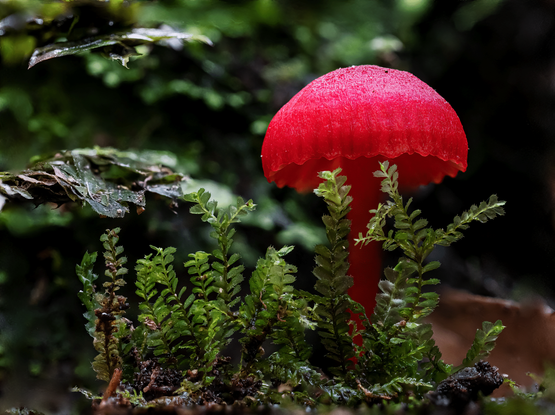
Hygrocybe firma is a fungus whose very small, red sporing bodies appear in Tasmanian forests in autumn. It has a biotrophic relationship with surrounding vegetation, where the mycelium lives inside or in close contact with plant roots. The red colour pops amid the forest greens, often making for lovely colour compositions.
Photograph: Charlie Chadwick
#photography
#mushrooms
#Tasmania
#AltText

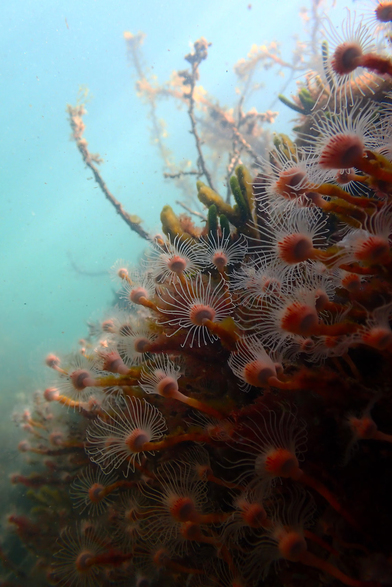
Underwater Bouquet
These magnificent hydroids (Ralpharia magnifica) look like a bouquet of underwater flowers but this animal is in fact related to jellyfish. Like jellies, they have tentacles with stinging cells that catch prey as it drifts past. They can form small colonies or can live as a single organism, and have a complicated lifecycle that comprises alternating sessile (attached to one place) and free-swimming stages.
Photograph: Alison McNeice

#photography
#hydroids

My Home Is Being Eaten
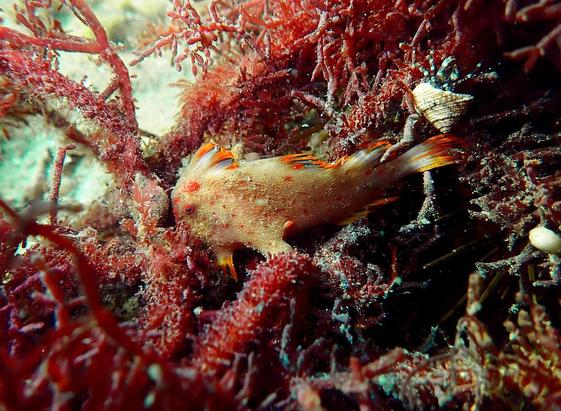
A red handfish (Thymichthys politus), one of Australia’s rarest endemic fishes, rests among algae that is being eaten by a short-spined sea urchin (Heliocidaris erythrogramma). Found only in a single coastal habitat in southern Tasmania, the red handfish ‘walks’ along the seafloor using modified pectoral fins rather than swimming. With fewer than 250 individuals remaining in the wild, the species is on the edge of extinction.

Photograph: Francisco Albergoli

#photography

Death of Essence
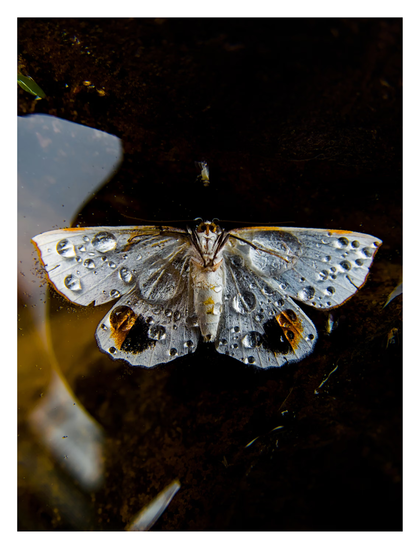
The untimely death of this orange-rimmed satin moth (Thalaina selenaea) in Tasmania’s Queenstown reminds us that water surface tension only tends to reveal itself when acting on a structure. Here the hydrophobic wing scales undergo disaggregation, giving the wing edges a visually frayed quality as the pigmented scales separate and drift slowly away.
Photograph: Lucy Marwood

#photography
#moth

A Ghostly Chimaera
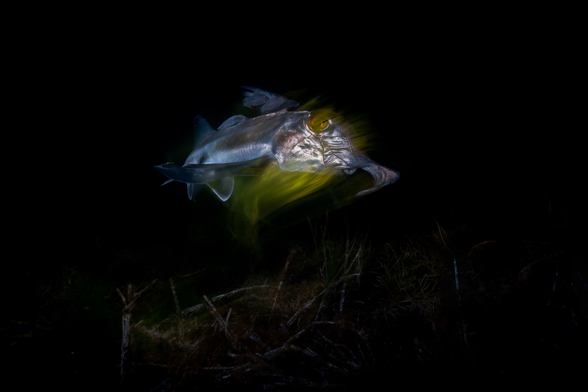
An Australian ghostshark (Callorhinchus milii) scours the seagrass beds of the river Derwent for an easy meal. This is not actually a shark but a ‘chimaera’, a group of cartilaginous fish that branched off from the sharks and rays nearly 400m years ago. Members of this species use their plough-shaped snouts to detect prey hidden in the sand.
Photograph: Daniel van Duinkerken

#photography
#fish
#Chimaera

First Day
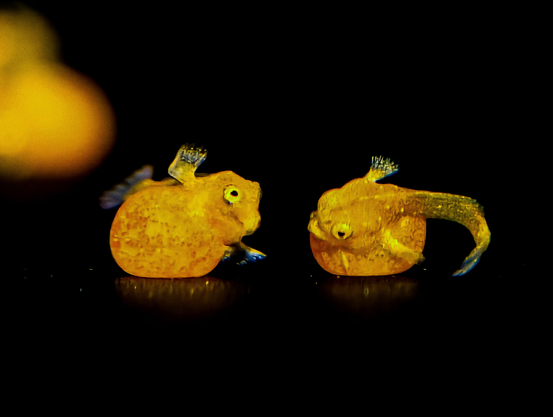
One-day-old red handfish (Thymichthys politus) hatchlings. These fish are newborns; so they still display a substantial yolk sac. This structure contains nutrients that provide the fish with a secure food source during its development in the egg and its first days after emerging. The yolk sac will shrink and disappear as the fish continues growing and feeding from it.

Photograph: Armando Ochoa Aguilar

#photography
#fish

A Natural Wetsuit
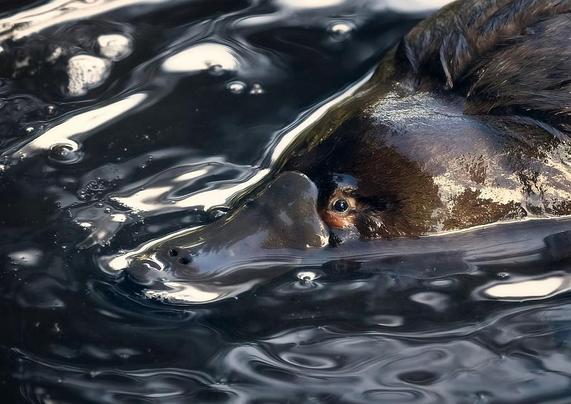
The platypus (Ornithorhynchus anatinus) has a two‑layered fur for maintaining thermal homeostasis in Tasmania’s cold, freshwater environments. Its outer coat consists of tightly packed guard hairs rich in natural oils that provide water resistance. Beneath this lies a layer of fine, wool‑like underfur that traps a stable layer of air against the skin. Together, these layers form effective thermal insulation.
Photograph: Alex Wheeler

#photography
#Tasmania
#platypus
#AltText

Platypuses are often depicted as these bumbling, awkward, patchwork curiosities of evolution, but when you see them in their element, it’s a completely different story.

That single, clear eye tracking above the waterline shows an animal that is intensely aware of its surroundings. Alex Wheeler captured that perfectly—there’s a quiet, calculating focus there.

#platypus

2/
They aren't just floating; they are actively navigating, surveying the riverbank, and processing a world of sensory input (especially with that incredibly sophisticated electro-receptive bill working just beneath the surface).

It’s always a treat when a wildlife photograph manages to capture the actual awareness of the subject, rather than just treating it like a passive object in a landscape. Beautifully spotted!

#platypus

Pipe Dream
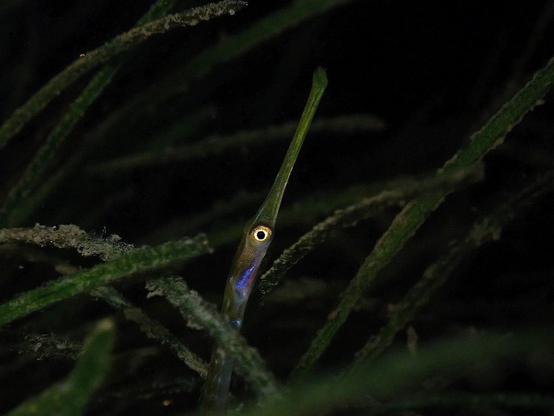
#Pipefish share the family Syngnathidae with seahorses, seadragons and pipehorses, all possessing the same tubular jaws and limited swimming ability. Like their relatives, pipefish have evolved sophisticated camouflage, mimicry and commensal relationships that help them survive in complex habitats. This spotted pipefish (Stigmatopora argus), photographed in the shallow seagrass beds of Trial Bay, Tasmania, is one such master of disguise.
Photograph: Nicolas Horniblow

#photography

In biology, a commensal relationship is a type of symbiotic interaction where one organism benefits, while the other is neither helped nor harmed.

For the spotted pipefish (Stigmatopora argus), these relationships are usually forged with marine plants like seagrasses or large seaweeds.

#biology
#commensal
#pipefish

2/
The pipefish gets immense benefits: an flawless hiding spot from larger predators, a stable hunting ground filled with microscopic crustaceans, and shelter from strong ocean currents.

The seagrass, meanwhile, is completely unaffected by the tiny, lightweight fish hitching a ride in its leaves.It is the ultimate "free rider" strategy of the ocean.

#biology
#commensal
#pipefish

3/
While standard textbooks classify the interaction between pipefish and seagrass as strictly commensal (where the fish benefits and the grass is unaffected), real-world ecology is rarely that black-and-white. In many cases, it actually crosses over into mutualism.

#biology
#commensal
#mutualism

4/
Seagrass beds often grow in nutrient-poor, sandy waters. The droppings from pipefish, seahorses, and other residents provide a direct, localized source of vital nutrients like nitrogen and phosphorus.

The pipefish eats tiny, free-swimming crustaceans (amphipods and copepods).

It digests them and releases waste right among the blades of grass.

The seagrass absorbs these nutrients directly through its leaves and root systems, fueling its growth.

#mutualism
#seagrass
#pipefish

5/
The "Bodyguard" Bonus
Additionally, tiny crustaceans love to graze on the algae that grows on the #seagrass, which can block sunlight. By using the grass as a hunting ground, the #pipefish acts as a miniature pest-control unit, keeping the blades clean so the plant can photosynthesize efficiently.

So while the classic definition leans toward "no harm, no foul," the reality is a beautiful, circular economy where the plant provides the home, and the fish pays rent in fertilizer and security!

Piercing the Sky

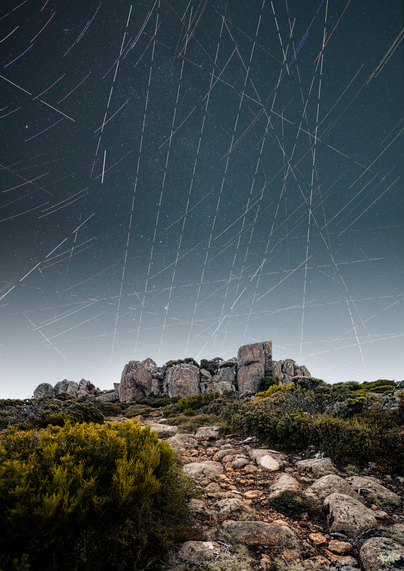
Satellite Trails Over Hobart Skies
Satellite trails are an increasingly visible sign of human impact on the night sky. As large constellations of satellites expand, long streaks of reflected sunlight appear in astronomical images, interfering with observations and altering the natural darkness of space.

Photograph: David Nolan

#photography
#Hobart
#satellites
#LightPollution
#AltText