The #EnvironmentalCost of #ArtificialIntelligence: #Carbon, #Water, and #LandFootprints

#AI’s rapid growth drives huge energy, water, and land use, raising environmental and equity challenges across its global infrastructure.

Date Published 3 Jun 2026

UNU-INWEH Report: Aczel, M., Chamanara, S., Matin, M., Farsi, A., Marwala, T., Madani, K. (2026).

"This report, Environmental Cost of Artificial Intelligence: Carbon, Water and Land Footprints, by the #UnitedNationsUniversity Institute for Water, Environment and Health (#UNU-#INWEH) on its 30th anniversary, examines one of the most underexplored consequences of AI’s rapid expansion: the environmental footprints of the energy required to power it. As artificial intelligence becomes embedded in economies, public services, research, communication, and everyday life, it depends on a growing physical infrastructure of #datacenters, advanced #chips, #CoolingSystems, #ElectricityGrids, #WaterResources, land, and #CriticalMineral supply chains. The report shows that AI is not only a digital technology, but also a material system with measurable #EnvironmentalCosts.

"The report moves beyond a carbon-only lens by quantifying the carbon, water, and land footprints associated with the electricity used to train, deploy, and operate AI systems at scale. Its central finding is that AI’s environmental costs depend not only on how much electricity is used, but also on where that electricity is generated and which energy sources power it. Every kilowatt-hour used by AI carries carbon, water, and land implications, and these footprints do not always move in the same direction: low-carbon electricity is not automatically low-water or low-land. The report also shows that AI’s footprint is shaped by both major infrastructure trends, including the rapid growth of data centers, and everyday use patterns, including model choice, output length, modality, and the growing use of text, image, and video generation.

"Importantly, the report frames AI’s environmental footprint as a governance and justice challenge, not only a technical problem. The benefits of AI often flow across borders and sectors, while the environmental burdens of data center siting, electricity demand, water withdrawals, #LandUse, MineralExtraction, and #EWaste can be concentrated in specific communities and regions. To address these risks, the report calls for a responsible AI ecosystem grounded in transparency, efficiency by design, equity and #EnvironmentalJustice, lifecycle responsibility, global cooperation, and sustainable use. By making AI’s carbon, water, and land footprints visible and comparable, the report provides a practical basis for integrating AI into energy, climate, water, and land-use planning, ensuring that innovation advances without shifting environmental costs onto vulnerable communities."

Download PDF:
https://unu.edu/inweh/collection/environmental-cost-of-AIs-Enrgy-Use-Carbon-water-and-land-footprints

#AIBoom #Electricity #Hyperscale #BigTech #BigData #CarbonFootprint #EnvironmentalRacism #EnvironmentalDegradation #NoisePollution #LightPollution #WaterIsLife #AIAgents #BotTraffic #GreenSpaces #Farmland #Prairies #Woodland #TechGiants #ProtectNature #NoDatacenters #EnergyConsumption #USPol #WorldPol #Datacentres
#DatacenterMoratoriums
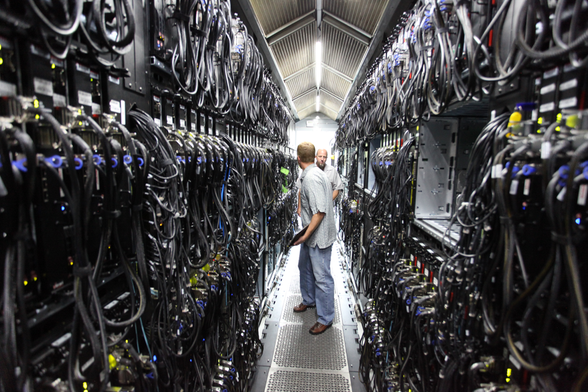

The Environmental Cost of Artificial Intelligence: Carbon, Water, and Land Footprints

AI’s rapid growth drives huge energy, water, and land use, raising environmental and equity challenges across its global infrastructure.

United Nations University
🎉 #Greenpeace gets hit with a $660M #bill for their little Dakota Access shenanigans 🤡. Turns out saving the planet might cost more than a few hugs and solar panels. Who knew eco-activism could be so expensive? 💸💔
https://apnews.com/article/greenpeace-dakota-access-pipeline-lawsuit-verdict-5036944c1d2e7d3d7b704437e8110fbb #DakotaAccess #EcoActivism #EnvironmentalCost #ActivismFunding #HackerNews #ngated
Jury reaches verdict in trial of pipeline company's lawsuit against Greenpeace

A North Dakota jury has found Greenpeace liable for defamation and other claims in connection with protests against an oil pipeline's construction. The jury said Wednesday that the environmental advocacy group must pay more than $650 million in damages to Dallas-based Energy Transfer and its subsidiary Dakota Access. The companies had alleged defamation, trespass, nuisance, civil conspiracy and other claims against Greenpeace International, Greenpeace USA and Greenpeace Fund Inc. Attorneys for Greenpeace had denied the claims. The case reaches back to protests in 2016 and 2017 against the Dakota Access Pipeline and its Missouri River crossing upstream of the Standing Rock Sioux Tribe’s reservation.

AP News
looking for schemas, graphs, tables which clearly explain the #EnvironmentalCost of #AI tools - this stuff should be included in a 100% online learning module for undergraduate students. What would you use in this case?

How to estimate carbon footprint when training deep learning models? A guide and review
https://arxiv.org/abs/2306.08323

It is acknowledged that the development of these models has an environmental cost that has been analyzed in many studies ... we propose a comprehensive introduction & comparison of these tools for AI practitioners wishing to start estimating the environmental impact of their work.

#ML #NLP #EnvironmentalCost #GlobalWarming #CarbonFootprint #MacineLearning #GreenhouseGasEmissions #LLM

How to estimate carbon footprint when training deep learning models? A guide and review

Machine learning and deep learning models have become essential in the recent fast development of artificial intelligence in many sectors of the society. It is now widely acknowledge that the development of these models has an environmental cost that has been analyzed in many studies. Several online and software tools have been developed to track energy consumption while training machine learning models. In this paper, we propose a comprehensive introduction and comparison of these tools for AI practitioners wishing to start estimating the environmental impact of their work. We review the specific vocabulary, the technical requirements for each tool, and provide some advice on how and when to use these tools.

arXiv.org

Is it too late to halt #DeepSeaMining? Meet the activists trying to save the seabed

If #mining companies are given the go-ahead to exploit the ocean depths, the #EnvironmentalCost will be devastating. As the clock ticks down to a crucial deadline in July,
https://www.theguardian.com/environment/2023/may/21/is-it-too-late-to-halt-deep-sea-mining-the-activists-trying-to-save-the-seabed

Is it too late to halt deep-sea mining? Meet the activists trying to save the seabed

If mining companies are given the go-ahead to exploit the ocean depths, the environmental cost will be devastating. As the clock ticks down to a crucial deadline in July, Michael Segalov reports

The Guardian