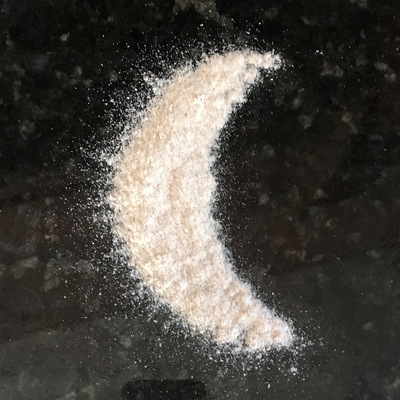
I played a part in a biology experiment 😃
A student placed European dung beetles in a circular arena in the URANIA-Planetarium in Potsdam, and recorded the paths they walked under four different light conditions (no stars, stars, stars + Milky Way, and the previous condition with an additional lamp). It's to some extent a replication of Marie Dacke's famous paper, but with a different species of dung beetle (that doesn't roll dung balls).
Check it out: https://link.springer.com/article/10.1186/s44329-025-00039-1 #LightPollution #Ecology #Beetles
#LightPollution has stolen majestic views of #stars and #constellations.
#CameraPollution has stolen the ability to feel at ease in public and private spaces.
🏷️ T a g s #Dystopia #dystopic #humanity #InvasionOfPrivacy #ModernLife #ModernLiving #Orwell #Orwellian #sousveillance #surveillance
“These findings support the hypothesis that celestial bodies are used to optimise movement, an ancestral mechanism in insects, and indicate that even species evolved to live in dark forest habitat and partly underground, use such mechanism. However, this species’ navigation may not be affected by artificial light at night.”
https://link.springer.com/article/10.1186/s44329-025-00039-1
#Animals #Insects #Beetles #Ecology #Wildlife #LightPollution #ALAN

Background The navigation of flying insects is known to be disrupted by artificial light at night (ALAN), causing problems for long-distance dispersal. This attraction to lamps, also known as the fatal attraction, also leads to increased mortality. This study aims to investigate whether insects that are known to use celestial information for epigeal movement (multimodel navigation) are affected by light pollution, for example by masking the necessary celestial information. Methods We observed the movement of 77 European dung beetles under varying light conditions, having captured them from their natural forest canopy and leaf-litter habitat. We offered them 4 different light condition in a planetarium: Illumination increased across four scales: (A) dark (without illumination), (B) a projection of a reduced number of stars, (C) with a projection of stars and the Milky Way (MW), and (D) with a lamp (ALAN point source) positioned 3 m distance from the test arena. Beetles were released facing North at the centre of a round arena and filmed from above. Their movement paths were analysed (Multivariate Analysis of Variance), and we investigated the directionality of the movement by comparing exit angles from a radius of 50 cm around the release point using a Rayleigh-test. Results The longest and most convoluted paths were observed under dark or limited stars (A and B), whereas paths under the illumination of either a lamp or stars & MW (C and D) were faster and less winding. The majority of beetles left the arena heading west with a narrow distribution of exit angles as the illumination increases. In the illuminated treatments, a proportion (30%) of animals exited in the exact opposite direction (180°). Conclusion These findings support the hypothesis that celestial bodies are used to optimise movement, an ancestral mechanism in insects, and indicate that even species evolved to live in dark forest habitat and partly underground, use such mechanism. However, this species´navigation may not be affected by artificial light at night.
Sentinel 2 will be taking nighttime acquisitions TONIGHT, and the level 1B data will be available for TWO WEEKS ONLY following the acquisition: https://sentinels.copernicus.eu/web/sentinel/-/sentinel-2-nighttime-imaging-campaign
#RemoteSensing #NighttimeLights #NightLight #LightPollution #Sentinel2
Protect the #Atacama #Desert from #lightpollution!

Chile’s Atacama Desert is one of the darkest spots on Earth, a crown jewel for astronomers who flock to study the origins of the universe in this inhospitable desert along the Pacific coast. A rare confluence of factors makes the Atacama an ideal home for some of the world’s biggest astronomical projects – dry climate, high altitude and, crucially, isolation from the light pollution of civilization. But that may not be the case for much longer, leading scientists warned in a letter to Chile’s government released Tuesday. A company is pressing ahead with plans to construct a giant renewable energy complex in sight of one of Earth’s most productive astronomical facilities.
I presume this is the fancy new towers of Nine Elms reflecting off the clouds?
Researchers and practitioners from around the world recently gathered for the 9th International #Conference on Artificial Light At Night. Read more about insights from this event, including why the need to solve the problem of light pollution is more important than ever.
https://www.darkskyconsulting.com/blog/conference-report-alan-2025
The International Commission on Illumination (CIE) has issued a new position statement on obtrusive lighting: https://files.cie.co.at/CIE%20PS%20003_2025%20CIE%20Position%20Statement%20-%20Obtrusive%20Light%20and%20Light%20Pollution.pdf
Not much is new here. It references other CIE documents and a few external sources, and it includes a "Roadmap to future guidance".