South Korea's cumulative vehicle registrations reached 26.41 million as of end-June 2025, with eco-friendly cars surging 13.1% year-on-year while internal combustion engine vehicles declined, reflecting a shift in the nation's automotive landscape.
#YonhapInfomax #VehicleRegistrations #EcoFriendlyVehicles #ElectricVehicles #InternalCombustionEngine #MinistryOfLandInfrastructureAndTransport #Economics #FinancialMarkets #Banking #Securities #Bonds #StockMarket
https://en.infomaxai.com/news/articleView.html?idxno=74058
South Korea's Cumulative Vehicle Registrations Reach 26.41 Million—One Car for Every 1.94 People

South Korea's cumulative vehicle registrations reached 26.41 million as of end-June 2025, with eco-friendly cars surging 13.1% year-on-year while internal combustion engine vehicles declined, reflecting a shift in the nation's automotive landscape.

Yonhap Infomax

Can I get monorails into this post?

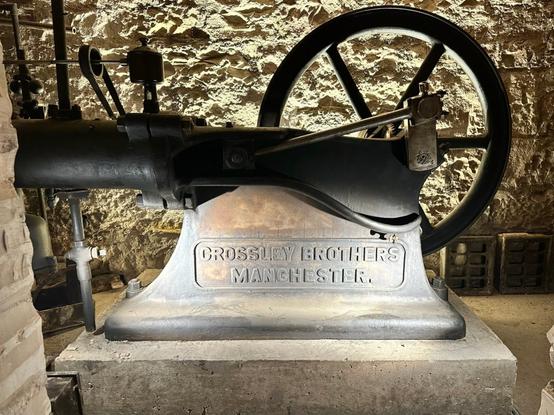
The other day, a friend messaged me: “Do you want to see the 1870s gas engine tonight?” There are, of course, no stupid questions, though some have a clear and obvious answer. I dropped my plans to rest up, to go see this beauty:

This gas engine was made in Manchester in 1878, an early internal combustion engine and a licensed version of the first successful four-stroke engine. It was discovered in the attic of the former police courts in Edinburgh Old Town while it was being converted into a hostel.

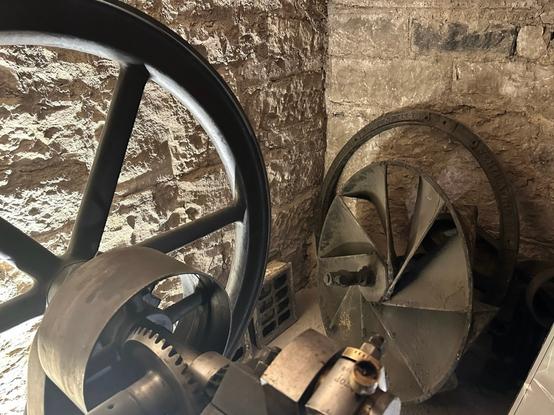
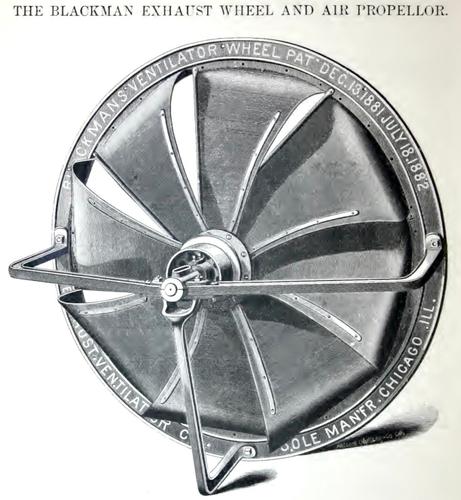
It was used to power the ventilation system, and a “propellor” and its frame were also found.

Here’s an illustration from a pamphlet published by the American manufacturer in 1885:

But back to the engine. The first practical gas-powered internal combustion engine was an atmospheric engine invented by Belgian engineer Jean Joseph Etienne Lenoir in 1860. It was a steam engine adapted to use unpressurised gas as fuel. Instead of using steam pressure to drive the pistons, he added an ignition system to cause a fuel/air explosion, forming a vacuum inside the cylinder. Air pressure returning to the cylinder drove the piston. It wasn’t very efficient.

Over in Germany, Nicolaus Otto heard about Lenoir’s invention and built a liquid-fuel version with his brother. Denied a patent, they came up with a new, four-stroke design, but this would fall apart after a short time. The brother gave up.

Otto got a job and worked on his engines in his spare time. He found an investor in the engineer son of a sugar magnate and they set up a business together, NA Otto & Cie. They produced an improved version of Lenoir’s engine that used less than half the fuel. It was commercially successful, but a technological dead-end. The company name changed to Deutz Gasmotoren Fabrik in 1872, and Otto went back to his idea of a four-stroke engine. With the help of two other engineers, Franz Rings and Herman Schumm, he succeeded in 1876 and the Otto Silent engine was the first internal combustion engine where the explosion took place inside the cylinder. This technical illustration looks a lot like the machine in my photo.

Deutz already had a working relationship with Crossley. The Manchester firm had bought the rights to manufacture and market the 1864 engine everywhere except Germany. They quickly licensed the new engine, and in 1881 the Edinburgh Police court picked up a secondhand one to power the ventilation system. This engine was rediscovered recently, and has now been restored and put on display for people touring the cells or enjoying a whisky tasting.

There are apparently only three examples of this model Crossley-built gas engine known to still exist. One is owned by the Henry Ford Museum in Dearborn, MI – I’ve been there, so I’ve probably seen it; the other is in Denmark. Anyone know where?

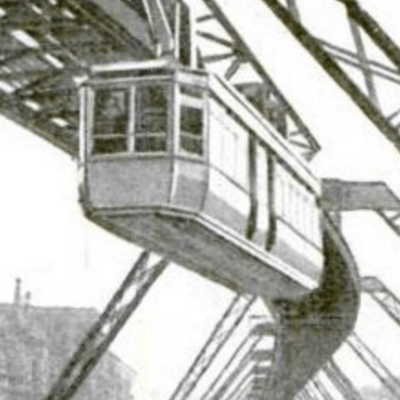
But what about monorails?

That’s easy! The son of the sugar magnate who financed and worked on that first engine was Eugen Langen. He developed and tested the prototypes of the Dresden and Wuppertal Schwebebahns at the Deutz plant. Have a recent photograph.

And here are a few of my other photos of the engine.

Bonus link: The monument to Otto and Langan outside Köln Messe/Deutz station.

#1870s #Cologne #crossley #edinburgh #germany #internalCombustionEngine #manchester #otto

Late last night I replaced a thermostat housing on an #InternalCombustionEngine using goo, that Neanderthals from +60,000 years ago would have felt familar with, to make a gasket.

#DIY #EngineRepairs #Repair #Technology #TechnologyTrends #BirchTar #PineRosin

So I've been messing around with this #InternalCombustionEngine #Simulator I found a day or so ago. Here's some #Audio of me starting the default engine, giving it a few revs, performing a dynamometer (or dyno) run, then going through all five gears starting from nutral and finally shutting down. The engine demonstrated here in is a rotary model with 4 rotors. The application supports the creation and importing of other engines as well, however, engine importing, and much of the rest of the application aside from engine control, is completely inaccessible to #ScreenReaders. I intend to contact the developer and see what may be done about this, unless anyone fansies messing around with it themselves. I'll include a link to the actual simulator in a threaded post in addition to this one here. For now, here's the audio! 1/2
Turning automotive engines into modular chemical plants to make green fuels. The MIT spinout Emvolon is placing its repurposed engines next to methane sources, to generate greener methanol and other chemicals. #ICE #internalcombustionengine #gasengine #Greenfuel #Chemistry https://news.mit.edu/2024/emvolon-turns-automotive-engines-into-green-fuel-chemical-plants-1119
Turning automotive engines into modular chemical plants to make green fuels

MIT spinout Emvolon is repurposing automotive engines to create mini chemical plants next to sources of methane to generate green methanol and other chemicals.

MIT News | Massachusetts Institute of Technology
Turning automotive engines into modular chemical plants to make green fuels. The MIT spinout Emvolon is placing its repurposed engines next to methane sources, to generate greener methanol and other chemicals. #ICE #internalcombustionengine #gasengine #Greenfuel #Chemistry https://news.mit.edu/2024/emvolon-turns-automotive-engines-into-green-fuel-chemical-plants-1119
Turning automotive engines into modular chemical plants to make green fuels

MIT spinout Emvolon is repurposing automotive engines to create mini chemical plants next to sources of methane to generate green methanol and other chemicals.

MIT News | Massachusetts Institute of Technology

Attention, #ClimateAction in #SouthTyrol and #Bozen #Bolzano ahead 👉

THU 12.09.: #EXHAUST - There will be a symbolic burning an #ICE motor (#InternalCombustionEngine) to mark their end, and the shift to #CleanTransport.

WED 11.09.: The day before there will be a #workshop on making nice #Protest boards.

In collaboration with #TransArt and #NOItechpark and #FridaysForFuture 🤝

Please see the pictures for details!

#ProtestAction #StreetArt #FossilFree #ExtinctionRebellion #Südtirol #suedtirol

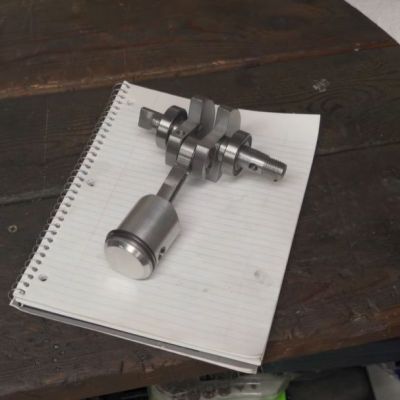
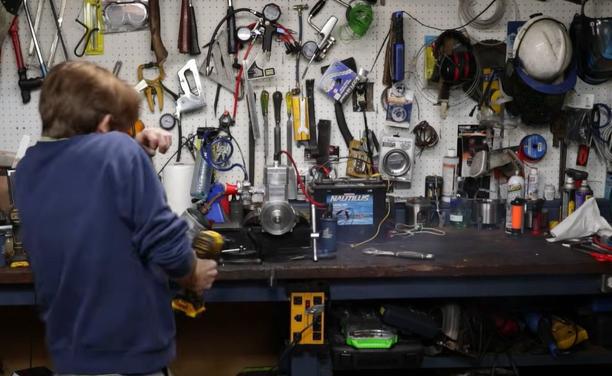
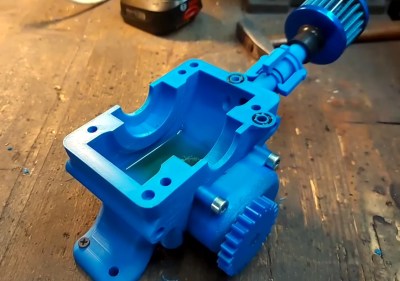
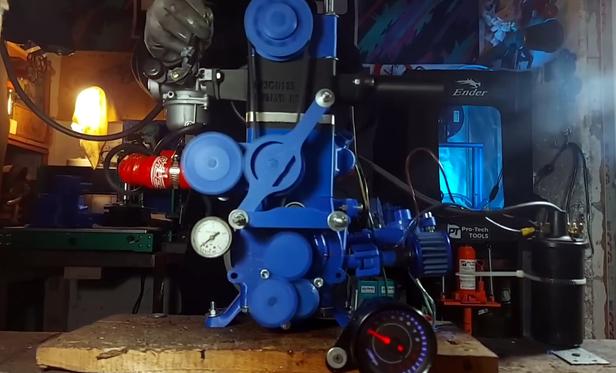
A Two-Stroke Engine Made From Scratch Using Basic Hardware Store Parts

How hard could it to be to build a two-stroke internal combustion engine (ICE) from scratch? This is a challenge that [Camden Bowen] gladly set for himself, while foregoing such obvious wastes of t…

Hackaday

The #Biden admin toughened vehicle #fuel mileage standards, part of a strategy to transform the #US auto market to one led by #ElectricVehicles to fight #ClimateChange.

The measure requires #automakers to achieve a 65 mpg avg for all car models by 2031.

#Climate experts say retiring the #InternalCombustionEngine is critical to staving off the most deadly & costly effects of #GlobalWarming.

#pollution
https://www.nytimes.com/2024/06/07/climate/biden-mileage-electric-vehicles.html?smid=nytcore-ios-share&referringSource=articleShare&sgrp=c-cb

Biden Administration Tightens Mileage Rules to Buoy Electric Vehicles

The new measure requires automakers to achieve an average of 65 miles per gallon for all the car models they sell by 2031.

The New York Times