🗺️ Map showing Land Cover of South America (2020)
From the vast Amazon 🌳 to the Andes 🏔️ and farmlands 🌾 — this map reveals how land is used across the continent.

📊 Data:
@mapbiomas
@gebcobathymetry

#GIS #GEBCO #QGIS #Blender #gischat #Cartography #OpenData #SouthAmerica

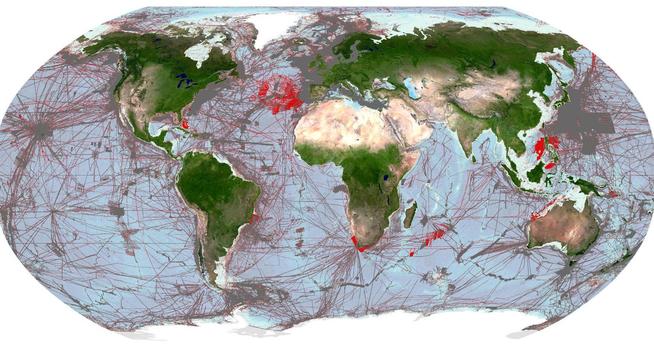
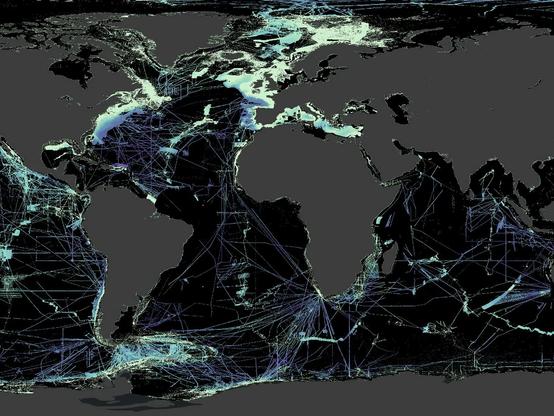
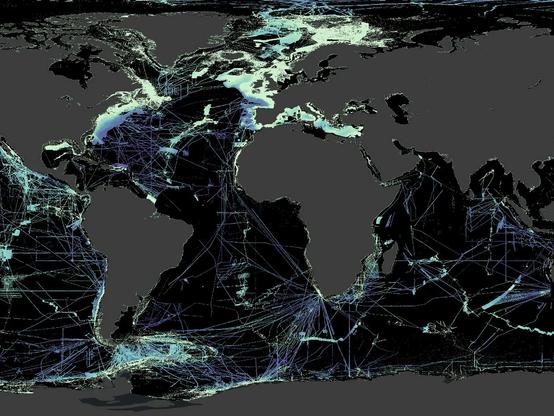
New Seafloor Map Only 25% Done, with 6 Years to Go

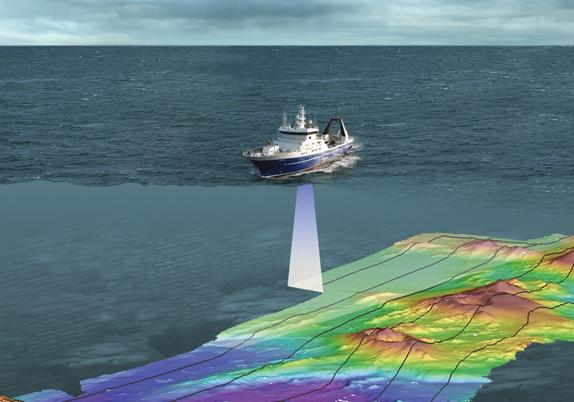
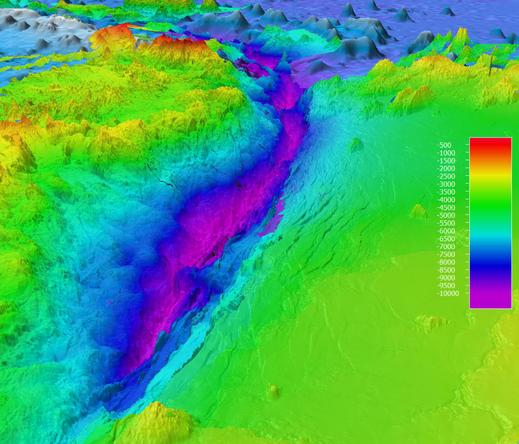
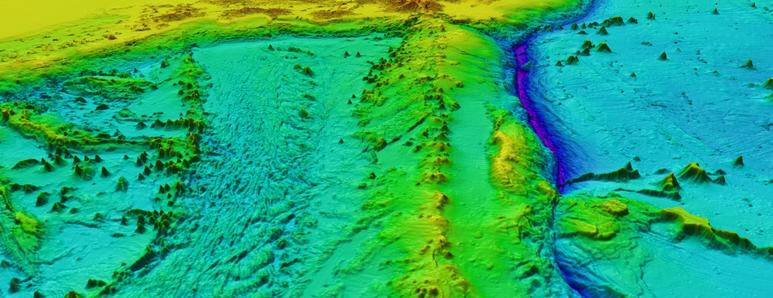
Beneath the waves, the vast majority of the ocean is unknown. Seabed 2030 is using cutting-edge technologies to fill in the bathymetric blanks and fully map the seafloor.

Eos
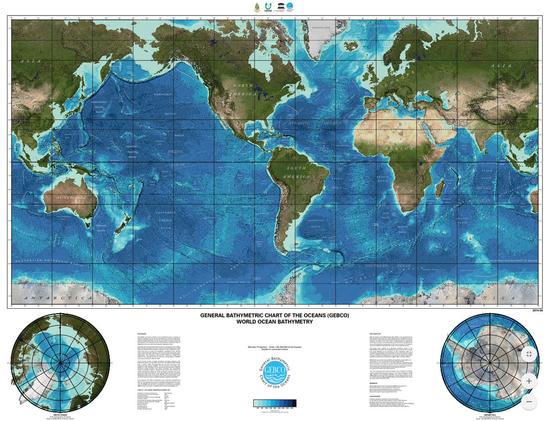
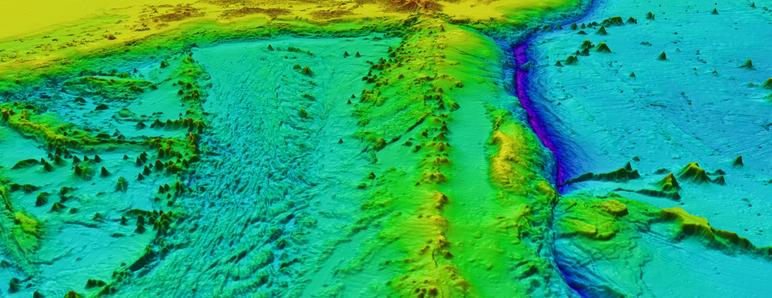
The GEBCO_2023 Grid - A Continuous Terrain Model Of The Global Oceans And Land
--
https://doi.org/10.5285/f98b053b-0cbc-6c23-e053-6c86abc0af7b <-- shared open data library access
--
#GIS #spatial #mapping #opendata #world #global #seafloor #GEBCO #NipponFoundation #bathymetry #remotesensing #topobathy #hydrospatial #ocean #grid #raster #survey #topography #elevation #terrainmodel #GlobalMapper #gischat #crowdsourced #seabed2030
GEBCO - General Bathymetric Chart of the Oceans | The Nippon Foundation
Published Data Library (PDL) - a catalogue of datasets in the BODC PDL

British Oceanographic Data Centre

RT [email protected]

#30DayMapChallenge day14: Europe
🏛️IMPERIVM ROMANVM ⚔️ #Map of the #RomanEmpire 🏺 #Opendata Digital Atlas of the Roman Empire #DARE @JohanAhlfeldt
⚱️ #GEBCO 🌊 #macarte #edugeo #SPQR
📜 online map ➡️ https://macarte.ign.fr/carte/Cr5MpI/IMPERIVM-ROMANUM

🐦🔗: https://twitter.com/jmviglino/status/1724321250950967346

Ma carte

Maps

Revealing Hidden Depths - Seabed 2030 [podcast]
--
https://www.buzzsprout.com/2093154/13429825 <-- link to podcast
--
https://doi.org/10.3390/geosciences8020063 <-- shared 2018 ‘overview’ paper
--
“In [their] first episode Head of Partnerships Steve Hall introduces Seabed 2030 with a summary of the history of mapping the ocean floor from earliest times to the present day...
Find out more about Seabed 2030 at www.seabed2030.org
Find out more about GEBCO at https://www.gebco.net/...”
#GIS #spatial #mapping #hydrospatial #hydrography #bathymetry #survey #Seabed2030 #marine #ocean #global #remotesensing #sonar #GEBCO #oceanfloor #seabed #international #topobathy #history #opendata
The Nippon Foundation##
Seabed 2030 - Podcast 1 - Introducing Seabed 2030 - Revealing Hidden Depths - the Seabed 2030 Podcast

In our first episode Head of Partnerships Steve Hall introduces Seabed 2030 with a summary of the history of mapping the ocean floor from earliest times to the present day. At 11m 12s Steve introduces this month's guest, David Millar of Fugro. Dav...

Buzzsprout
A New Approach to Satellite-Derived Bathymetry: An Exercise in Seabed 2030 Coastal Surveys

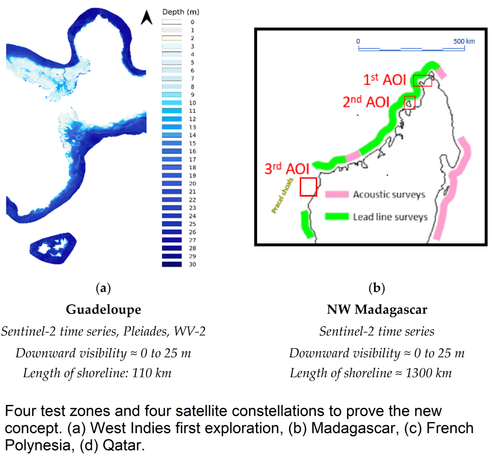
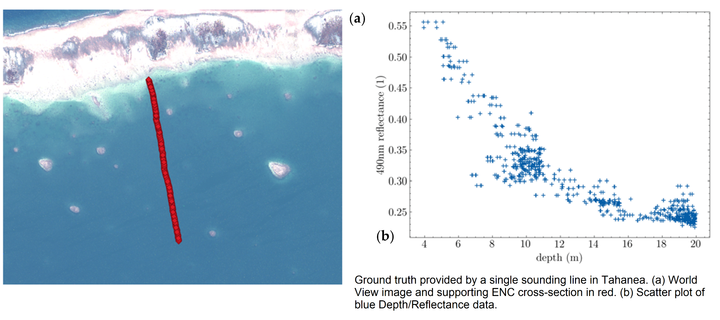
ARGANS has years of experience in analysing the factors limiting light transmission in coastal environments around the world. This has led its Satellite-Derived Bathymetry (SDB) team to the conclusion that current satellite instruments and their resolution are unable to provide the absolute precision required for safe navigation according to International Hydrographic Bureau (IHO) standards, except in the clearest of waters characterised by sufficiently well-defined environmental parameters. This limitation is caused by the variability itself of the parameters in the radiative transfer equation (RTE), which is too high to provide results within the strict accuracy ranges of IHO S.44, as shown by scatter plots characterised time and again by large biases and standard deviations of several metres. The radiative transfer equation and Hydrolight simulations are not at fault, but their results must be interpreted with extreme caution if the level of accuracy required for safe navigation over large areas is to be guaranteed. Therefore, ARGANS has developed an innovative, alternative method. This is based on the classification of the full range of images pixels allowing for homogeneous sub-areas to be determined and linked together by artificial intelligence and statistical clustering of similar parameters. Thanks to the sponsorship of the European Space Agency and Seabed 2030, ARGANS has been able to test its Water Column Parameter Estimator (WCPE), first in the challenging waters of Madagascar updating over 1000 km of lead line exploratory surveys, then in the South Pacific coral environment and then in the turbid coastal water of Qatar. The parameters determined by WCPE can be extrapolated to unknown regions of similar environment and propagated from one place to the next, using a chain method somewhat inspired by photogrammetric techniques of old. Further progress and automation can be expected from an improved control of sediment plumes that can obscure or distort all optical methods, whether satellite or LIDAR.

MDPI
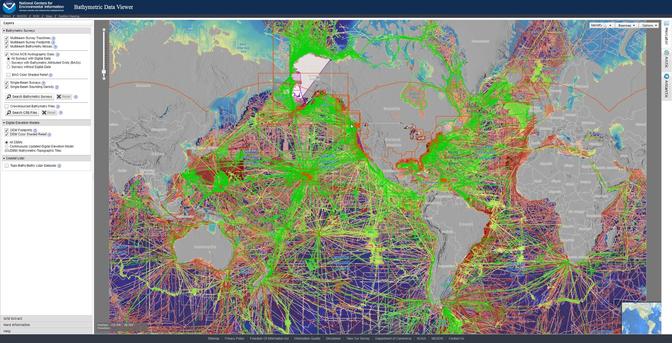
Bathymetric Data Viewer [global, NOAA]
--
https://www.ncei.noaa.gov/maps/bathymetry/ <-- spatial open data web portal
--
“NCEI and the IHO Data Center for Digital Bathymetry (DCDB) archive and share depth data acquired by hydrographic, oceanographic, and industry vessels and platforms during surveys or while on passage. These data, which are used in several national and international mapping bathymetry projects, are free to the public with no restrictions…”
#GIS #spatial #mapping #remotesensing #bathmetry #global #opendata #openaccess #download #NCEI #DCBD #NOAA #elevation #sonar #water #hydrography #hydrospatial #webportal #science #spatialanalysis #DEM #data #digital #multibeam #survey #visualisation #BAG #raster #GEBCO #GMRT #IBSCO #GSHHG
@NOAA @NCEI @GEBCO
Bathymetric Data Viewer

Un #plotter gigante, #arduino, un buen lote de bolígrafos y los datos de #OpenStreetMap, #NaturalEarth y #GEBCO para generar este #mapa mural decorativo.
#OpenData #PublicDomain #OSM
http://volzo.de/posts/plottermap/
A Giant Map drawn with a Pen