Pipeline release! nf-core/airrflow v5.0.0 - Tarantallegra!
B-cell and T-cell Adaptive Immune Receptor Repertoire (AIRR) sequencing analysis pipeline using the Immcantation framework
Please see the changelog: https://github.com/nf-core/airrflow/releases/tag/5.0.0

#airr #bcell #immcantation #immunorepertoire #repseq #nfcore #openscience #nextflow #bioinformatics

Release Tarantallegra · nf-core/airrflow

Added #413 Bump versions to dev. #413 Updated nf-core template to v3.3.2. #413 Speeding up tests with smaller test data. #416 Update Takara protocol names and docs. Add Takara SMART-seq protocol. ...

GitHub
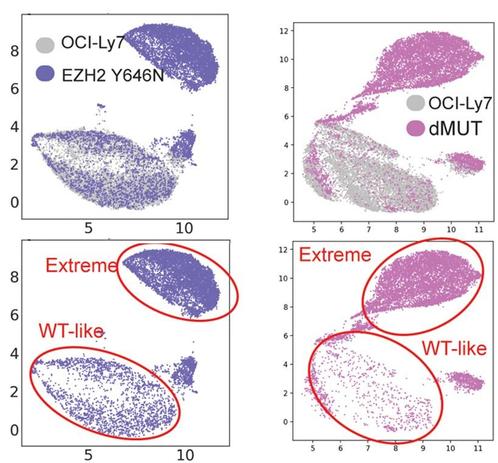
Epigenetic regulators like EZH2 are mutated in #Bcell #lymphoma, but what is their effect? This study reveals a role for mutant EZH2 in lymphomagenesis, using a new method for measuring #epigenetic heterogeneity & intra- #chromatin connectivity in #cancer @PLOSBiology https://plos.io/4mZcS8n

Pipeline release! nf-core/airrflow v4.3.1 - v4.3.1 Revelio bugfix!

Please see the changelog: https://github.com/nf-core/airrflow/releases/tag/4.3.1

#airr #bcell #immcantation #immunorepertoire #repseq #nfcore #openscience #nextflow #bioinformatics

Release v4.3.1 Revelio bugfix · nf-core/airrflow

Added #399 Bump versions. Fixed #392 Updated tutorials.

GitHub
Release v4.2.0 Evanesco · nf-core/airrflow

Added #334 Added TRUST4 support. #344 Added option to remove V and C primer region when sequence is unknown. #344 Added option to save non-productive sequences #344 Allow for maskprimers align wit...

GitHub

https://www.easychair.info/p/the-intrinsic-severity-of-sars-cov?publication_id=1114355&utm_medium=email&utm_campaign=email-share&triggerShare=true&r=13iwi

This piece by @fitterhappierAJ makes the cut in my Covid 2024 edit
It ONLY came to my attention the other day (b/c I don’t much venture out of my eco-system of truth) exactly HOW bad the advice in traditionally searched “health” media is & it appears to have started in earnest approx 1 year ago

This isn’t ground zero, but in this article common sense of Dr. Ziyad Al-Aly is counterpointed w/: But Dr Celine Gounder, an infectious disease epidemiologist and editor-at-large at Kaiser Health News, is among those who said that #immunity from a first infection means that a subsequent infection poses a lower risk of such outcomes.

“There is nothing about a #reinfection that is more dangerous than an original infection, and if anything, a reinfection is going to be lower risk because you have some immunity baseline at the time of reinfection,” said Gounder.

https://www.theguardian.com/world/2023/jan/23/repeat-covid-infections-health-risks

What a difference a year of #misinformation #disinformation makes b/c this EXACT narrative permeates the worldwide collective consciousness. It is AMAZING this is taken as fact at this point as it is a COMPLETE LIE!

If anyone has any specific #tcell #bcell #CovidPapers or articles that reference them that would be useful in countering this narrative, please post here🙏🏼🖤🖤🖤

Perhaps we can be in a different place in 1 year…🌈🌈

People CAN be persuaded w/logic/facts & if they are experiencing symptoms & seeing it all around them, all the more

The Intrinsic Severity of SARS Cov 2

It's all about immunomodulation

Easy Chair
The transcription factor Pax5 regulates #Bcell development & commitment, and scientists in the lab of Meinrad Busslinger have found out how. Out now in @JExpMed.
Our interview with first author Sarah Grünbacher 👉🏼 https://www.imp.ac.at/news/article/immunologists-reveal-how-the-pax5-protein-regulates-b-cell-development-and-commitment
The paper 👉🏼 https://rupress.org/jem/article/220/12/e20230260/276276/Essential-role-of-the-Pax5-C-terminal-domain-in
Immunologists reveal how the Pax5 protein regulates B cell development and commitment

The IMP has a long history of research with Pax5, an essential transcription factor for B cell development: Deputy Scientific Director Meinrad Busslinger and his lab have researched its functions for decades. Sarah Grünbacher, a recent graduate from the Vienna BioCenter PhD Program, explains their latest findings on the domains of Pax5, now published in the Journal of Experimental Medicine.

The Research Institute of Molecular Pathology

Local enhancers of the #PAIR4 regulatory module promote distal V-H gene #recombination at the #Igh locus and contribute to #Bcell receptor repertoire diversification

Louisa Hil et al Busslinger lab @IMPvienna

https://www.embopress.org/doi/full/10.15252/embj.2022112741

EMBO Journal Issue 4/23:
- Commentary on #creativity needs in research
- #Degron recognition in orphan complex subunits by CLR4-DCAF12 E3 #ubiquitin #ligase
- #Plasmamembrane topography of #IgM #Bcell receptors
- #YAP roles and regulation in #tumorigenesis
- #Brassinosteroid interplay with #katanin #microtubule severing

Cover by Satarupa Bhaduri, Analine Aguayo, Sonya Neal et al
https://www.embopress.org/toc/14602075/2023/42/4

An Immunological Review of SARS-CoV-2 Infection and Vaccine Serology: Innate and Adaptive Responses to mRNA, Adenovirus, Inactivated and Protein Subunit Vaccines
#COVID19 #vaccines #Pfizer #BioNTech #Oxford #AstraZeneca #Sinopharm #Novavax #antibody_response #Tcell #Bcell #neutralizing_antibodies #adaptive #immune #response #immunology
https://www.mdpi.com/2076-393X/11/1/51
An Immunological Review of SARS-CoV-2 Infection and Vaccine Serology: Innate and Adaptive Responses to mRNA, Adenovirus, Inactivated and Protein Subunit Vaccines

The coronavirus disease 2019 (COVID-19) pandemic is caused by the severe acute respiratory syndrome coronavirus 2 (SARS-CoV-2) virus, which is defined by its positive-sense single-stranded RNA (ssRNA) structure. It is in the order Nidovirales, suborder Coronaviridae, genus Betacoronavirus, and sub-genus Sarbecovirus (lineage B), together with two bat-derived strains with a 96% genomic homology with other bat coronaviruses (BatCoVand RaTG13). Thus far, two Alphacoronavirus strains, HCoV-229E and HCoV-NL63, along with five Betacoronaviruses, HCoV-HKU1, HCoV-OC43, SARS-CoV, MERS-CoV, and SARS-CoV-2, have been recognized as human coronaviruses (HCoVs). SARS-CoV-2 has resulted in more than six million deaths worldwide since late 2019. The appearance of this novel virus is defined by its high and variable transmission rate (RT) and coexisting asymptomatic and symptomatic propagation within and across animal populations, which has a longer-lasting impact. Most current therapeutic methods aim to reduce the severity of COVID-19 hospitalization and virus symptoms, preventing the infection from progressing from acute to chronic in vulnerable populations. Now, pharmacological interventions including vaccines and others exist, with research ongoing. The only ethical approach to developing herd immunity is to develop and provide vaccines and therapeutics that can potentially improve on the innate and adaptive system responses at the same time. Therefore, several vaccines have been developed to provide acquired immunity to SARS-CoV-2 induced COVID-19-disease. The initial evaluations of the COVID-19 vaccines began in around 2020, followed by clinical trials carried out during the pandemic with ongoing population adverse effect monitoring by respective regulatory agencies. Therefore, durability and immunity provided by current vaccines requires further characterization with more extensive available data, as is presented in this paper. When utilized globally, these vaccines may create an unidentified pattern of antibody responses or memory B and T cell responses that need to be further researched, some of which can now be compared within laboratory and population studies here. Several COVID-19 vaccine immunogens have been presented in clinical trials to assess their safety and efficacy, inducing cellular antibody production through cellular B and T cell interactions that protect against infection. This response is defined by virus-specific antibodies (anti-N or anti-S antibodies), with B and T cell characterization undergoing extensive research. In this article, we review four types of contemporary COVID-19 vaccines, comparing their antibody profiles and cellular aspects involved in coronavirus immunology across several population studies.

MDPI