Wastewater contains large amounts of antibiotics.
Researchers from
@[email protected] have come up with a new idea for removing them more effectively by harnessing the power of light – photocatalysis.
➡️
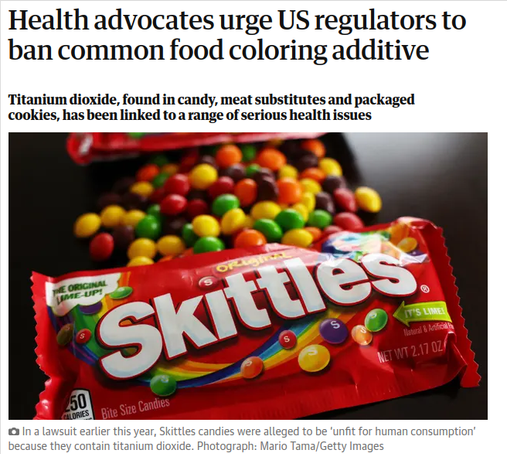
www.avcr.cz/en/news-arch... #Micropollutants #EndocrineDisruptors #TitaniumDioxide#USA: "The EU banned titanium dioxide for food use in 2022 because previous research has shown it to likely be a neurotoxin, be an immunotoxin, cause intestinal lesions and potentially damage genes. The particles can accumulate in organs and stay in the body for years. A 2022 lawsuit drew wide attention for alleging that Skittles are “unfit for human consumption” because they contain titanium dioxide."
https://www.theguardian.com/us-news/2025/jun/06/titanium-dioxide-food-additive-toxic
#Foodsafety #Food #Foodscience #Health #titaniumdioxide #EU #Obesity
Food additive titanium dioxide likely has more toxic effects than thought, study finds
Controversial additive may be in as many as 11,000 US products and could lead to diabetes and obesity

6 best sunscreen for zits inclined pores and pores and skin - Keepithealthy
Are you looking for the best sunscreens to protect your skin from UV rays? Check out the best sunscreen for acne-prone skin handpicked for you.
Health advocates urge US regulators to ban common food coloring additive
Titanium dioxide, found in candy, meat substitutes and packaged cookies, has been linked to a range of serious health issues
“We don’t love our children any less than they do in Europe and it’s not too much to ask food and beverage manufacturers to switch to the safer alternative ingredients that they already use in Europe and so many other nations around the globe.”
https://ktla.com/news/local-news/skittles-ban-passes-in-the-california-state-assembly/amp/
#CaliCares
#BanAdditives
#RedDye3
#TitaniumDioxide
#PotassiumBromate
#BrominatedVegOil
#ProyplParaben

Skittles ban passes in the California State Assembly, expected to pass Senate
California is one step closer to enacting a law that would ban Skittles, Hot Tamales and a host of other food items that contain chemicals linked to health issues. Assembly Bill 418, proposed by Jesse Gabriel (D-Woodland Hills), passed overwhelmingly in the California State Assembly last week and now heads to the State Senate, where […]
Seeing confusion after @
[email protected] ruling on
#titaniumdioxide yesterday. It’s not related to the ban on TiO2 as a food additive.
#E171 has been (and will remain) banned in food since early 2022 after @
[email protected] said it could no longer be considered as safe
https://eur-lex.europa.eu/legal-content/EN/TXT/PDF/?uri=CELEX:32022R0063&from=EN
Photosynthetic performance of symbiont-bearing foraminifera Heterostegina depressa affected by sunscreens - Scientific Reports
Foraminifera are abundant unicellular organisms that play an important role in marine element cycles. A large benthic foraminifer obligatory bearing photosymbionts is Heterostegina depressa. We studied potential impacts of sunscreens available on the market on the activity of photosymbionts on H. depressa by means of pulse-amplitude modulated (PAM) fluorescence microscopy. We included four different sunscreens, with two of them sold as “conventional” and two more stated as “eco-friendly”. Further, the impact of pure Ensulizole (phenylbenzimidazole sulfonic acid) was tested, which is a common agent of sunscreens. Foraminifera were incubated at varying concentrations (10, 50 and 200 mgL−1) of different sunscreens and the pure Ensulizole for 14 days. The photosynthetic performance was measured after 1,3, 7 and 14 days. Pure Ensulizole had a strong negative impact on the photobionts, which was reflected by a significant reduction of the areal fluorescence signal. “Eco-friendly” sunscreens affected the health of foraminifera more severely compared to “conventional” ones. We assume that metal nanoparticles like titanium dioxide or zinc oxide of “eco-friendly” sunscreens are causing this impact, because these substances were already classified as toxic for several microorganisms.
Photosynthetic performance of symbiont-bearing foraminifera Heterostegina depressa affected by sunscreens - Scientific Reports
Foraminifera are abundant unicellular organisms that play an important role in marine element cycles. A large benthic foraminifer obligatory bearing photosymbionts is Heterostegina depressa. We studied potential impacts of sunscreens available on the market on the activity of photosymbionts on H. depressa by means of pulse-amplitude modulated (PAM) fluorescence microscopy. We included four different sunscreens, with two of them sold as “conventional” and two more stated as “eco-friendly”. Further, the impact of pure Ensulizole (phenylbenzimidazole sulfonic acid) was tested, which is a common agent of sunscreens. Foraminifera were incubated at varying concentrations (10, 50 and 200 mgL−1) of different sunscreens and the pure Ensulizole for 14 days. The photosynthetic performance was measured after 1,3, 7 and 14 days. Pure Ensulizole had a strong negative impact on the photobionts, which was reflected by a significant reduction of the areal fluorescence signal. “Eco-friendly” sunscreens affected the health of foraminifera more severely compared to “conventional” ones. We assume that metal nanoparticles like titanium dioxide or zinc oxide of “eco-friendly” sunscreens are causing this impact, because these substances were already classified as toxic for several microorganisms.
 Czech Academy of Sciences
 Aurianne Or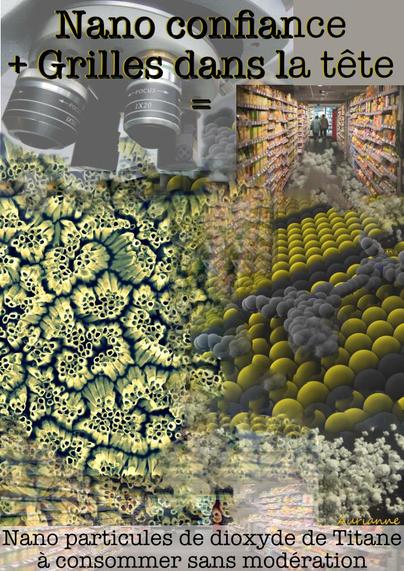
 Dining and Cooking
 CuNha
CuNha keepithealthy
 beforewisdom
 @Ms_Ellen_F
 Camille Perrin
 Tino Eberl