Sprookjesopera Prokofjev op herhaling
Amsterdam, 21-2-2013 â In 2005 betoverden regisseur Laurent Pelly en dirigent StĂ©phane DenĂšve het Nederlandse publiek met hun visie op Lâamour des trois oranges van Sergei Prokofjev. Deze productie van De Nederlandse Opera voldeed met zijn inventieve decors, uiterst muzikale regie, oogverblindende kostuums en geweldige prestaties van solisten, Koor van DNO en het Rotterdams Philharmonisch Orkest aan de meest hooggespannen verwachtingen.
âZelden zoân geslaagde synthese van muziek, beeld en esprit op de operabĂŒhne gezienâ, schreef Het Parool. Wie deze hilarische opera toen gemist heeft, krijgt in maart een herkansing, ditmaal met het Residentie Orkest in de bak en TomĂĄs Netopil op de bok. De fenomenale Anna Shafajinskaja keert terug als de gemene heks Fata Morgana.
Toen Sergei Prokofjev in 1918 voor een concerttournee naar Amerika reisde, had hij een exemplaar bij zich van De liefde voor de drie sinaasappelen, een adaptatie door Vsevolod Meyerhold van het gelijknamige toneelstuk van Carlo Gozzi. Prokofjev raakte tijdens zijn lange reis geboeid door de âmengeling van sprookjesachtige elementen met humor en satireâ, en begon aan een synopsis voor een opera.
Het door commedia dellâarte geĂŻnspireerde sprookje verhaalt van een koning wiens zoon aan melancholie ten onder dreigt te gaan. Uiteindelijk wordt hij gered door zijn liefde voor een van de drie prinsessen die wonen in evenzoveel sinaasappelen. Prokofjev legt zijn idee voor aan dirigent Cleofante Campanini, die meteen een opdracht regelt bij de Chicago Opera. De voertaal wordt Frans â Amerikanen verstaan geen Russisch en een Engelstalig libretto was destijds ondenkbaar.
In januari 1919 wordt het contract getekend, waarna Prokofjev koortsachtig aan de slag gaat. Hij levert zijn opera keurig op tijd in voor de premiĂšre in oktober, maar deze wordt vanwege het vroegtijdig overlijden van Campanini drie jaar uitgesteld. Prokofjev ervaart overigens wel een cultuurshock, want de Amerikanen blijken aanzienlijk behoudender te zijn dan hij thuis gewend was.
âIn mijn eigen land waren componisten al een eeuw bezig geweest nieuwe wegen in te slaan en het publiek op een uitdagende manier met nieuwe problemen te confronteren. Amerika daarentegen had geen eigen componisten en het hele accent lag meer dan bij ons op de uitvoering.â Rekening houdend met de smaak van het Amerikaanse publiek bezigt Prokofjev een eenvoudiger idioom dan in zijn eerdere opera De speler.
Toch loochent hij niet geheel zijn status van radicale âbolsjewiekâ, want in zijn streven naar oorspronkelijkheid neemt hij verschillende operaconventies op de hak. Zo ontbreken reguliere ariaâs en breekt hij met de romantisch-realistische traditie door de absurdistische elementen nog eens extra aan te dikken.
De kokkin is gewapend met een enorme soeplepel en wordt gezongen door een bas; de beminde prinses uit de derde sinaasappel verandert in een zwarte rat en de prins huwt bijna een vertrouwelinge van de toverkol Fata Morgana, wier vloek hem veroordeelde tot zijn liefde voor de citrusvruchten.
De handeling wordt voortdurend becommentarieerd en beĂŻnvloed door leden van het koor, die als âLyristenâ, âTragischenâ, âKomischenâ en âLeeghoofdenâ allemaal zo hun eigen ideeĂ«n hebben over wat een goede opera nou eigenlijk is. Toch weet Prokofjev dit alles tot een overtuigend muzikaal geheel te smeden, waarin fijnzinnige lyriek, staalhard avant-gardisme, doldwaze scherzomuziek en barbaarse ritmiek hand in hand gaan.
De premiĂšre in 1921 werd een doorslaand succes. Geen wonder, want alleen al de âherkenningstuneâ, een dwarse mars vol scheve noten, doet je fluitend de zaal verlaten. Kortom: gaat dat zien, gaat dat horen!
#AnnaShafajinskaja #Cultuurpers #DeNederlandseOpera #LAmourDesTroisOranges #LaurentPelly #Netopil #Prokofjev #ResidentieOrkest #RotterdamsPhilharmonischOrkest #StéphaneDeneuve #TheaDerks
Filmpje over âPanorama de Leeuwâ
Op dinsdag 17 februari nam ik de zesde aflevering op van Panorama de Leeuw, het programma dat ik maak voor de Concertzender naar aanleiding van mijn biografie Reinbert de Leeuw, mens of melodie. Hans Bakhuizen maakte in opdracht van de Concertzender een smartphone-filmpje over het waarom en hoe van de uitzendingen. Dit staat inmiddels op YouTube.
In aflevering VI ga ik nader in op De Leeuws docentschap aan het Koninklijk Conservatorium, zijn eindexamen piano aan het Muzieklyceum in Amsterdam en zijn eerste samenwerking met een grote levende componist, Matthijs Vermeulen. De uitzending werd op 4 maart 2015 uitgezonden en is hier terug te luisteren.
Op dinsdag 24 februari bezocht ik een van de laatste voorstellingen van de Nationale Reisopera van De Parelvissers van Georges Bizet in Theater Carré in Amsterdam. Bewonderenswaardig hoe deze ongenadig gekortwiekte organisatie met weinig middelen toch keer op keer weer bijzonder aansprekende producties weet te realiseren.
Twee dagen later verzorgde ik de inleiding bij een concert in het Muziekgebouw aan ât IJ van de pianisten Ralph van Raat en Maarten van Veen en de slagwerkers Colin Currie en Benjamin Ramirez, die een programma presenteerden rond de beroemde Sonate voor twee pianoâs en slagwerk van BĂ©la BartĂłk.
De Britse componist Dave Maric had hierbij een âcompanion pieceâ gemaakt onder de titel Trophic Cascades, waarin hij commentaar levert op onze achteloze omgang met het milieu. Ik had boeiende gesprekken met Van Raat, Currie Ă©n Maric, wiens stuk bijzonder afwisselend bleek en zelfs een vleugje humor bevatte: op een gegeven moment wisselen de twee pianisten van plaats, waarbij Van Raat een toets ingedrukt houdt, die Van Veen vervolgens met veel hangen en wurgen van hem overneemt.
Thea en Dave Maric 26-3-2015 MGIJ
Een week later presenteerde het Asko|Schönberg o.l.v. Peter Rundel in het Muziekgebouw aan ât IJ de premiĂšre van het tweede pianoconcert van Frederic Rzewski, A Dogâs Life. De Amerikaanse componist was decennialang als docent verbonden aan het Conservatorium van Luik en heeft me geholpen bij het vinden van informatie over Elie Poslavsky, een belangrijke voorganger van Reinbert de Leeuw. Helaas was Rzewski â net als De Leeuw in 1938 geboren â er niet bij. Zijn stuk was heel geestig, maar bleef niet de volle 30 minuten boeien. Ik schreef erover voor Bachtrack.
Ook komende donderdag 12 maart ben ik te vinden in het Muziekgebouw aan ât IJ, voor een inleiding bij een concert rond JanĂĄcek van de Belgische ensembles Het Collectief en Collegium Vocale Gent. Dirigent is Reinbert de Leeuw, die in het verleden JanĂĄceks koormuziek op de kaart zette met het Nederlands Kamerkoor. Hij maakte in 2007 een instrumentatie van diens pianosonate 1.X.1905, die a.s. donderdag ook zal worden uitgevoerd. Ik nodigde Reinbert uit voor de inleiding, maar hij liet weten hiervoor âniet vrijâ te zijn. Jammer.
Vandaag kreeg ik bericht van mijn uitgever Dolf Weverink, dat hij voor Leporelle Uitgevers een webshop heeft ingericht. Hier is mijn #Reinbertbio voortaan dus rechtstreeks te bestellen. Na een felicitatie van mijn kant twitterde Dolf:
Dolf Weverink â@dweverink 5 u5 uur geleden@tdrks @Boekenweek Dank je Thea! De snelste weg naar de mooiste biografie van 2014! http://leporello.vrijeboeken.com Met dank aan De Vrije Uitgevers
Nu maar hopen dat de jury van de MJ Brusseprijs voor beste journalistieke boek van 2014 er ook zo over denkt. Mijn biografie dingt mee naar deze door het Fonds Bijzondere Journalistieke Projecten opgezette onderscheiding, die jaarlijks wordt uitgereikt. De jury bestaat uit Noraly Beyer, Marcel van Engelen en voorzitter Ferry Mingelen. Duimt allen mee!
Ondertussen ben ik druk met de voorbereidingen voor het festival ter gelegenheid van de 90e verjaardag van Pierre Boulez op 26 maart a.s. Etty Mulder, voorzitter van de Pierre Boulez Stichting heeft mij uitgenodigd om samen met haar de opening te verzorgen van de feestelijkheden in Den Haag op 28 en 29 maart a.s. De Stichting werkt samen met het festival Dag in de Branding en het Koninklijk Conservatorium.
Ik zal op zondag 29 maart de Duitse musicoloog Werner KlĂŒppelholz interviewen over de geschriften van Boulez en zijn relatie tot de andere kunsten. KlĂŒppelholz hielp mij enorm met het onderzoek voor mijn biografie van Reinbert de Leeuw â die tijdens het festival het Residentie Orkest dirigeert in Rituel van Boulez en De Tijd van Louis Andriessen. Zo is de cirkel mooi weer rond.
#ADogSLife #AskoSchönberg #Bachtrack #BartĂłk #ColinCurrie #CollegiumVocaleGent #Concertzender #ConservatoriumVanLuik #Cultuurpers #DagInDeBranding #DaveMaric #DeTijd #DolfWeverink #EliePoslavsky #EttyMulder #FerryMingelen #FondsBijzondereJournalistiekeProjecten #FredericRzewski #GeorgesBizet #HansBakhuizen #HetCollectief #JanĂĄcek #KoninklijkConservatorium #LeporelloUitgevers #LouisAndriessen #MarcelVanEngelen #MatthijsVermeulen #MensOfMelodie #MJBrusseprijs #MuzieklyceumAmsterdam #NationaleReisopera #NoralyBeyer #PanoramaDeLeeuw #Parelvissers #PeterRundel #PierreBoulez #PierreBoulezStichting #RalphVanRaat #ReinbertDeLeeuw #Reinbertbio #ResidentieOrkest #Rituel #Sonate1X1905 #SonateVoor2PianoSEnSlagwerk #TheaDerks #TheaterCarrĂ© #TrophicCascades #WernerKlĂŒppelholz
Vanaf woensdag 1 oktober 2014 gaat Thea Derks het programma Panorama de Leeuw verzorgen bij de Concertzender. Aan de hand van haar in maart 2014 verschenen biografie Reinbert de Leeuw: mens of melodie volgt zij hierin het muziekspoor van deze pianist, componist en dirigent, die veel heeft betekend voor het Nederlandse muziekleven en daarin nog altijd een prominente positie inneemt.
Abschied in Panorama de Leeuw XV
A.s. woensdag 6 januari draai ik in Panorama de Leeuw op de Concertzender het grootschalige orkestwerk Abschied, dat Reinbert de Leeuw in 1973 componeerde. Met dit kolkende stuk â âeen permanent soort razernijâ â in zijn eigen woorden, leek hij voorgoed afscheid te nemen van de Romantiek, het symfonieorkest Ă©n zijn carriĂšre als componist.
Het werd in premiĂšre gebracht door het Rotterdams Philharmonisch Orkest o.l.v. Edo de Waart en verscheen op een elpee, die echter zelden of nooit op welke zender dan ook te horen is. Op deze langspeler staat ook Hymns & Chorals, dat ik draaide in aflevering XII.
Wat zou het mooi zijn als het nieuwe jaar ook een Abschied zou betekenen van het vele geweld in het afgelopen jaar â en in de jaren daarvóór. Dit zal helaas wel te veel gevraagd zijn, want de mens schijnt nu een keer de onbedwingbare behoefte te hebben de ander zijn of haar wil op te leggen, desnoods met geweld.
Maar hoop doet leven, en op 7 januari speelt het Brodsky Quartet in het Muziekgebouw aan ât IJ de cyclus Trees Walls Cities over de helende kracht van muziek. Ze vroegen acht componisten een stuk te schrijven over een iconische stad waar muren een belangrijke rol spelen: om de vijand buiten te houden, het volk binnen, of om bevolkingsgroepen van elkaar te scheiden.
De wal op Cyprus die werd opgeworpen tussen de Turkse en Griekse bevolking
Een zeer actueel thema, gezien de vele muren die alom worden opgericht om vluchtelingen uit conflictgebieden te weren uit ons comfortabele, rijke Westen. Maar ook de verzoenende werking van muziek heeft zo zijn grenzen. Zo vertelde Daniel Rowland, primarius van het Brodsky Quartet, me in een gesprek voor Cultuurpers dat de burgemeester van Dubrovnik weigerde de Servische componiste Isidora Ćœebeljan toe te laten bij de premiĂšre van haar eigen stuk. Je leest mijn interview hier.
Op zondag 20 december verzorgde ik de inleiding bij een concert van het Residentie Orkest in TivoliVredenburg, met o.a. het Concert voor twee pianoâs van Mozart. Solisten waren Lucas en Arthur Jussen, met wie ik sprak over hun aanpak en over mogelijke meningsverschillen over interpretaties. Ze speelden twee varianten voor, waarbij ik het publiek liet kiezen: unaniem opteerde men voor de wat lyrischere interpretatie van Lucas.
Thea Derks â Arthur en Lucas Jussen, TivoliVredenburg 20-12-2015
Een week eerder speelde het Residentie Orkest in de NTR ZaterdagMatinee de wereldpremiĂšre van het Pianoconcert Unscrolled van mijn Chinees-Amerikaanse vriend Huang Ruo, dit seizoen composer in residence van het Amsterdamse Concertgebouw. De eerste componist ooit die deze eer te beurt valt, ik ben heel trots op hem. Ik leerde Huang Ruo kennen in 2005, toen hij meedong naar de Gaudeamus Muziekprijs en we werden meteen vrienden.
Helaas moest ik wegens familieomstandigheden zijn wereldpremiĂšre missen, maar we hebben de schade daarna ruimschoots ingehaald. Op dinsdag 15 december was Huang Ruo te gast bij het Conservatorium van Amsterdam, met onder andere een interview en een uitvoering van zijn stuk Leaving Sao. Arnold Marinissen leidde het studentenensemble The Score Collective en Ruo nam zelf de zangpartij voor zijn rekening. Het stuk werd een dag later met groot succes herhaald tijdens een lunchconcert in een uitpuilende Kleine Zaal van het Concertgebouw. Diezelfde avond kwam hij met zijn vrouw Shelley en zijn zoontje Nike bij me eten.
Nike â Huang Ruo â Thea Derks, 16-12-2015
Ook op 16 december overleed de legendarische Nederlandse alt Aafje Heynis, 91 jaar oud. Ze was niet alleen geliefd vanwege haar warme, diepe timbre, maar ook om haar eenvoudige en bescheiden persoonlijkheid. Ze was altijd dienstbaar aan de muziek en werd wel vergeleken met de Britse alt Kathleen Ferrier, wier docent haar met vooruitziende blik ooit een grootse carriĂšre voorspelde. Ik schreef een in memoriam.
Op donderdag 10 december gaf ik de derde les van mijn cursus over hedendaagse muziek in het Muziekgebouw aan ât IJ, ditmaal gewijd aan de Tweede Weense School. Met aansluitend een concert van het Vlaamse Collectief o.l.v. Reinbert de Leeuw, met als soliste de sopraan Katrien Baerts. De uitvoering had helaas niet het hoge niveau dat De Leeuw eerder dat jaar bereikte met een geheel aan JanĂĄcek gewijd programma waaraan ook Collegium Vocale Gent meewerkte.
Een dag eerder klonk in het Muziekgebouw aan ât IJ de wereldpremiĂšre van de opera Eichmann, gemaakt door de componist Alejandra Castro Espejo en de librettist Bo Tarenskeen. Ik sprak met Castro Espejo over haar compositie, maar helaas werd geen van de hooggespannen verwachtingen ingevuld. Ten eerste was er geen sprake van opera: het merendeel van de tijd werd er niet gezongen maar gesproken; elke vorm van drama ontbrak en er was evenmin interactie tussen de personages.
Adolf Eichmann tijdens zijn proces in Jeruzalem, 1961 (c) https://www.timesofisrael.com
Ten tweede bestond het âlibrettoâ uit nietszeggende teksten over van alles en nog wat, maar ging het nergens over de beloofde spanning tussen het volgen van ons eigen geweten of bureaucratisch uitvoeren wat anderen ons opdragen, zoals Adolf Eichmann deed. Dat de antropologe Hannah Arendt hem niet als een bloeddorstig monster beschouwde, maar als een onbetekenend individu, kwam evenmin uit de verf. De thematiek heeft beslist operapotentie, maar kwam geen moment tot leven.
Zoals ik in mijn vorige blog al meldde, verzorgde ik op donderdag 3 december de inleiding bij een uitvoering van Mantra voor twee pianoâs en elektronica van Karlheinz Stockhausen. Ik had mijn gesprek met Pierre-Laurent Aimard, Tamara Stefanovich en de elektronicus Marco Stroppa geregistreerd met mijn smartphone. Anders dan ik verwacht had, was de opname van een behoorlijke kwaliteit, dus plaatste ik deze op YouTube.
Het toeval wil dat diezelfde week ensemble Insomnio nĂłg een keer de 90e verjaardag van Pierre Boulez vierde met een minifestival. Hij was samen met Stockhausen een van de belangrijke vernieuwers van de muziek van na de Tweede Wereldoorlog. Het door hen gepredikte serialisme is allang op zijn retour, maar hun status is er niet minder om.
Tijdens de kerstvakantie sprak ik voor Cappella Amsterdam met dirigente Maria van Nieukerken over haar carte blanche concert rond elegiĂ«n, dat 26 en 17 januari wordt uitgevoerd in Utrecht en Amsterdam. En voor het Noord Nederlands Orkest schreef ik een toelichting bij Canto ostinato voor vier pianoâs van Simeon ten Holt en bij de wereldpremiĂšre van diens orkestwerk Une musique blanche in de Oosterpoort te Groningen op 22 januari 2016.
Op de valreep van het nieuwe jaar werd ik door Huize Gaudeamus gestrikt voor een lezing over mijn biografie Reinbert de Leeuw, mens of melodie op donderdag 4 februari. En vanavond heb ik een afscheidsdiner met Huang Ruo, die morgen terugvliegt naar New York.
Mijn jaar kan nu al niet meer stuk. Ik wens ook u een mooi en gelukkig 2016!
#AafjeHeynis #Abschied #AdolfEichmann #ArnoldMarinissen #ArthurJussen #BoTarenskeen #BrodskyQuartet #CantoOstinato #CappellaAmsterdam #CollegiumVocaleGent #ConcertgebouwAmsterdam #Cultuurpers #DanielRowland #EdoDeWaart #HetCollectief #HuangRuo #HuizeGaudeamus #Insomnio #IsidoraZebeljan #KarlheinzStockhausen #LeavingSao #LucasJussen #Mantra #MariaCastraEspejo #MariaCastroEspejo #MariaVanNieukerken #MensOfMelodie #mensOfMelodiePanoramaDeLeeuw #MuziekgebouwAanTIJ #NoordNederlandsOrkest #NTRZaterdagMatinee #Oosterpoort #PanoramaDeLeeuw #PierreBoulez #PierreLaurentAimard #ReinbertDeLeeuw #ResidentieOrkest #RotterdamsPhilharmonischOrkest #ScoreCollective #SimeonTenHolt #TamaraStefanovich #TheaDerks #TivoliVredenburg #TreesWallsCities #TweedeWeenseSchool #UneMusiqueBlanche #Unscrolled
Wat âhoordeâ de dove Beethoven? Martijn Padding formuleert een antwoord in Glimpse
Vrijdag 8 december speelt het Residentie Orkest in het AVROTROS Vrijdagconcert Beethovens Tweede Symfonie en het Tweede Vioolconcert van Prokofjev. Een niet direct voor de hand liggende combinatie, maar het cement tussen de opgewekte muziek van de Duitser en de opruiende klanken van de controversiële Rus vormt Glimpse van de Nederlandse componist Martijn Padding.
Hierin verklankt hij zijn visie op Beethovens Tiende Symfonie, waarvan alleen schetsen bestaan. Altijd in voor een geintje schreef Padding zijn 12 minuten durende stuk voor een orkest dat speelt op darmsnaren, maar het mag ook uitgevoerd worden op moderne instrumenten, zoals het Residentie Orkest nu doet.
Nederlands geluid
Padding heeft een naam hoog te houden op het gebied van tegendraadse composities en kreeg in 2016 de prestigieuze Johan Wagenaar Prijs. De jury noemde hem âveelzijdig, inventief, origineel en virtuoos in zijn instrumentaties. Zijn werk is dwars, eigengereid en heeft een onmiskenbaar Nederlands geluid.â
Vaak wordt Martijn Padding omschreven als vertegenwoordiger van de âTweede Haagse Schoolâ, naar analogie van de âHaagse Schoolâ rond Louis Andriessen bij wie hij studeerde aan het Koninklijk Conservatorium in Den Haag. Zelf zegt hij: âDie aanduiding wordt vaak verkeerd gebruikt. Het gaat bij componisten als Louis Andriessen en Diderik Wagenaar niet om het harde geluid, een beukende stijl, maar om een open houding. Dat herken ik in mijn eigen werk.â
Liever spreekt de componist van een Nederlandse manier van componeren. âDie zit hem in de volstrekte transparantie, zowel in het idee van een stuk als in de klank zelf. Wij hebben een zekere rechtlijnigheid van denken. Een Nederlandse kunstenaar zal nooit een zijpaadje inslaan. Dat maakt ook het verschil tussen pakweg de Italiaan Giralomo Frescobaldi en Jan Pieterszoon Sweelinck, of tussen de Fransman Pierre Boulez en Louis Andriessen. Nederlanders zijn puur gefixeerd op de binnenkant van de compositie, op het bouwwerk.â
Publiek âbouwtâ zelf het klankbeeld op
Dat geldt ook voor Glimpse, dat Padding in 2010 componeerde als opmaat tot de integrale uitvoering van Beethovens 9 symfonieën in het Holland Festival door oudemuziekspecialisten Anima Eterna en Jos van Immerseel. Hij koos de orkestbezetting van Beethovens Geschöpfe des Prometheus en liet zich inspireren door diens muzikale schetsen.
âIk wilde een stuk schrijven over de stilte rondom Beethoven, en over de werveling in zijn hoofd waarmee de noten van een symfonie ontstaanâ, zei Padding hierover. âVoor mijn stuk gebruik ik noten van Beethoven, maar het is vooral mijn fantasie over het scheppingsproces van Beethovens Tiende.â
Zo stelde hij zich voor hoe Beethoven voor zijn orkest zit en gaandeweg tot een compositie komt. âWe maken als het ware het hele compositieproces mee, het orkest wordt gesymboliseerd door twee pauken. Hij denkt⊠de pauk klopt het hele stuk door⊠we horen een flard⊠hij denkt verder⊠nog een flard. Pas na driekwart van het stuk trekken de flarden zich samen tot een symfonisch moment.â Aangezien Padding slechts âsuperzacht de contourenâ aanlevert dient het publiek, luisterend met de hand aan het oor het uiteindelijke klankbeeld als het ware zelf te realiseren.
Na de wereldpremiĂšre repte de Volkskrant van een âtantaliserend proces, waarin motieven en akkoorden komen langs waaien als uit een verre zaal waarvan iemand af en toe de deur even opendoet. Zelden komt de muziek helder door: Beethoven was immers potdoof op het eind van zijn leven. Het fascinerende is dat Padding met dit wazige, maar zelden tot gearticuleerde gedaante uitgroeiende klankmateriaal een stuk heeft gemaakt dat zowel zijn eigen vingerafdrukken draagt als die van Beethoven. Hij weet de toehoorder de illusie te geven dat hij werkelijk ervaart wat zich tussen de dove oren van Beethoven heeft afgespeeld.â
Het concert vormt onderdeel van de radioserie AVROTROSVrijdagconcert en wordt live uitgezonden op Radio 4.
#AnimaEterna #AVROTROSVrijdagconcert #Beethoven #Glimpse #JosVanImmerseel #MartijnPadding #Prokofjev #ResidentieOrkest
Petra Cini writes one-minute symphony for Residentie Orkest: âI hope it will bring a smile to peopleâs facesâ
One manâs loss is another manâs gain, it is a trite but true saying. The North Netherlands Orchestra had to cancel its concert because of the covid-19 measuers, and the Residentie Orkest steps in. They will present an adapted programme in AVROTROSVrijdagconcert on 29 January in TivoliVredenburg Utrecht, conducted by Jun MĂ€rkl and with Hannes Minnaar in Beethovenâs Fourth Piano Concerto.
The concert also offers the young Italian composition student Petra Cini an exceptional opportunity. It opens with the world premiere of her one-minute symphony The Rite of the Way?, which was cancelled last summer. Who is she and how did she approach her mini-composition for full symphony orchestra?
Petra Cini (c) Anca Barjovanu
Petra Cini was born in Florence in 1995 and studied classical piano at the Luigi Cherubini Conservatory, completing her bachelorâs degree at 19. She then moved to The Hague to study composition at the Royal Conservatoire. âThe teaching in Italy was of high quality, but also very conservativeâ, she says. âTo broaden my musical experience and horizon, I chose the Royal Conservatoire, because it offers a much wider variety of musical conceptions.â
When Residentie Orkest asked her to write a piece for their One Minute Symphony series, she immediately jumped at the chance. I was happy to be selected and have the opportunity to gain experience working with a professional symphony orchestra.â The orchestra left her quite free in her approach. âApart from the limited time span they only asked me not to use a soloist or exceed the instrumentation of Beethovenâs Fourth Piano Concerto, which comes next.â
For inspiration, Cini visited a primary school in The Hague, where she met pupils from grades 6 and 7. âThis was proposed by the organisation, and it seemed refreshing to come into contact with a reality that Iâm not usually exposed to.â It worked out well: âThe children were between 8 and 11 years old and I enquired after their ideas about the future, their inspiration and their ambitions. We had fun together, my energy excited theirs and vice versa. It was inspiring for a shared sense of play, imagination and determination.â
âYoung people have two luxuries: having spent little time living and having a lot of time still lying sahead. This is evidenced by their immense energy and zest for life. Adults have already experienced more disappointment and disenchantment, so they often lack this vigour and excitement.â
âOn the other hand, a lot of older people have mastered the art of resilience and have reached a more fulfilling and stable optimism than that of youngsters. It is like a sheltered and intimate fireplace that warms themselves and others around. In the words of Emily Dickinson: âHope is the thing with feathers / That perches in the soul / And sings the tune without the words / And never stops â at all â.â
Cini wondered how she could channel the energy she received from the children. Percussion plays an important role in her mini-symphony, but she is reluctant to say more about this: âI donât want to give everything away, it is only one minute long after all. But I will say that it is a driving force used strategically to emphasize the impetus of certain passages.â
The title The Rite of Way? is intriguing. âIt refers to two opposite ways of approaching lifeâ, explains Cini. âA deductive, ritualistic one, expressed in âThe Riteâ, versus a more intuitive, fluid approach, âThe Wayâ. These two concepts merge into the understanding that perhaps they should coexist. The question mark then calls this into question. Personally, I think that the alternation of these two perspectives can help us move forward: enough structure to build, enough flexibility to change.â
Her piece has an optimistic tone. âI have always been an optimistic realist. I think we still have much to be grateful for. Despite the problems of these historic times, I look to the future with wonder, hope and, above all, resilience.â
âIt would be wonderful if my energetic piece could put a smile on peopleâs faces and instill a refreshing desire to go on. Especially in difficult circumstances, we must continue to cherish hope.â
The concert will be broadcast on NPO Radio 4 on 29 January from 8 pm CET, but due to the curfew the actual performance will take place in the afternoon (without audience), so the musicians can get back home in time.
Due to the Covid-19 pandemic, my income has dwindled to virtually zero. A donation, however small, is welcome through PayPal, or direct money transfer to my bank account: T. Derks, Amsterdam, NL82 INGB 0004 2616 94. A heartfelt thank you for your support!
#AVROTROSVrijdagconcert #HannesMinnaar #JunMĂ€rkl #PetraCini #ResidentieOrkest
Rob Zuidam zooms in on Joanna the Mad in his opera Rage dâAmours: âJoanna took me by the handâ
In 2005, Dutch National Opera and Holland Festival presented Rob Zuidamâs opera Rage dâAmours. Five years later, he received the Kees van Baaren Prize for this blood-curdling production about the life of Joanna The Mad. The award ceremony was part of the Festival Dag in de Branding, with a performance by Residentie Orkest conducted by Otto Tausk.
In its next edition on 10 April, Dag in de Branding will present a video recording of this performance from its archives. In 2005, I interviewed Zuidam about his opera for the programme book of Dutch National Opera. Below is an abridged version.
Amsterdam, June 2005, interview with Rob Zuidam on Rage dâAmours
Rob Zuidam (c) Maarten SlagboomRob Zuidam (1964) began his career in a rock band, but his interests did not quite run parallel to those of the other band members: âI wanted mainly to rehearse, preferably all day, but they were more interested in blowing and drinking than in making music. Besides, I soon felt the need to break through the usual rock schemes, but that required an alertness they couldnât muster. So I started messing around with tape recorders myself.â
In the process, Zuidam became interested in all the music he could find in Rotterdamâs Central Discotheque, from Aboriginals and Eskimos via the usual classics up to and including the twentieth century: âModern music particularly appealed to me, and through record sleeves I discovered new names all the time. When I read that someone had studied composition with Olivier Messiaen, I suddenly realized you could apparently learn to compose. Shortly afterwards I went to the Conservatory in Rotterdam, where the doorman referred me to Klaas de Vries.â
Even though he was hardly technically gifted, he was accepted. He was taught by the Belgian composer Philippe Boesmans and Klaas de Vries and soon developed into someone who, with flair, combined modern composition techniques with direct eloquence. In no time he became an internationally renowned composer.
In 1994 the Munich Biennale commissioned him to compose his first opera, Freeze. The libretto, written by Zuidam himself, tells the story of the millionaireâs daughter Patricia Hearst, who is kidnapped and joins the ranks of her captors. In this opera, Zuidam effortlessly combines juicy film music, cabaret and ripping guitar solos with the great intervals so typical of the post-war avant-garde.
Love beyond death
His second opera, Rage dâAmours, about the life of Joanna The Mad (1479-1555), followed in 2003 and was composed for the Boston Symphony Orchestra. âA friend once drew my attention to the wife of Philip the Handsome (1478-1506), who, after his death, dragged his corpse through Spain in the hope that he would come back to life. In the end they locked her up, after which she looked out from a dungeon on her husbandâs grave for forty-six years.â
Joanna The Mad painted by Juan de FlandesZuidam was immediately captivated by her passion: âShe asked nothing more of life than to be with her husband forever. I find this devotion both admirable and disturbing. Her love is truly imperishable: no matter what state Philipâs body is in, she continues to love him. This is contrary to our human nature, for which appearance is of great importance. We all have moments when we have to decide whether or not to give in to our impulses. Joanna decides to devote her life to her lover and does so with total abandon. That ecstasy fascinates me.â
For Rage dâAmours Zuidam again wrote the libretto himself, basing it on contemporary Spanish, French and Latin writings. âIn a book about Joanna The Mad I found references to sixteenth-century sources. I came across the account of an anonymous chronicler, who describes Joannaâs life from the inside, in old French, the language of the court. It is a kind of fairy-tale French, so beautiful that I based a large part of the libretto on it.â
The reporting is detailed and straightforward, says Zuidam: âThe author was clearly an intimate of the couple. He describes, for instance, how Philip slept with about every young lady that crossed his path, and the raging jealousy â ârage dâamoursâ â this incited in Joanna. We also get a detailed description of how Philipâs corpse is cut apart and embalmed, and of how Joanna then travels across Spain with his coffin, neglecting her personal hygiene, not washing herself and peeing in her clothes.â
âI have given these texts to the composer Pierre da la Rue, who acts as narratorâ, continues Zuidam. âAs a member of the Royal Chapel he was on intimate terms with both Philip and Joanna: they affectionately called him Pierchon. In the seventh scene, when Joanna kisses the corpse, I have quoted part of his motet Delicta juventutis, which he composed on the occasion of Philipâs death.â
Three Joannaâs
Interestingly the role of Joanna is divided among three sopranos. Zuidam: âThe opera is set in a dungeon, which functions as a metaphor for her head. The three voices bring her obsession and torment to the surface. Joanna 3 has a solo in the second scene, in which she and Philip are threatened with shipwreck. While the bystanders scream murder, she remains deadly calm: she does not care if they drown, for after all, she is together with her husband. She is the unshakeable one.â
Joanna 2 represents her exalted side: while the monks dismember her husbandâs corpse, she sings âmi amadoâ, my beloved over and over again. The carnal, necrophilic aspect is represented by Joanna 1, who embraces the corpse in the seventh scene. More often they are together Joanna, as at the beginning, when they sing a lament. I found that a moving image, three lamenters mourning over a coffin. Once I had the idea of having Joanna sung by three singers, inspiration started flowing immediately.â
The story of the Spanish queenâs life is indeed poignant, but it doesnât generate much action. How has Zuidam created tension nevertheless? âI sailed by my inner compass. For example, in the intense fifth scene Joanna 2 sings her passionate declaration of love, and it wouldnât be wise to continue with something laden after this. So I inserted a short scene in which a cleaning lady polishes the floor, accompanied by her own brushing and a contrabass clarinet. This is followed by the passage in which the coffin is opened so that Joanna can kiss the corpse.â
Rage dâAmours (c) Hans HijmeringPhilip, although already dead at the beginning of the opera, is sometimes shown alive. As in the eighth scene, in which he sings a heartrending love duet with Joanna 1, later joined by the other two Joannaâs. âI wanted to capture something of the first, happy period of the young couple. I searched for suitable texts for a long time, and finally found them in the Song of Songs. They have exactly the sublime purity that I was looking for.â
Although Zuidam did not consciously strive for local colour, the music of Rage dâAmours is very much in keeping with the Renaissance, with subtle references to Flemish polyphony and quasi-Gregorian chant. And some of the embellishments of the vocal lines sound unmistakably Spanish. The composer considers this inevitable: âMusic and subject are interwoven. Freeze is set in 1970s California, so that opera is much poppier. Rage dâAmours is set in the sixteenth century, the pace is slower and the overall sound is different.â
âIn any case, I now have the idea I have come to the core of what I wanted to say. On the one hand because I have more experience, on the other because of the theme. Although I was fascinated by Patricia Hearst, deep down I still thought she was a silly rich girl, whereas Joanna touched me intensely: I really started to love her.â
This helped Zuidam while composing: âTake the fifth scene, for instance, which came about quite intuitively: everything was ready and waiting. Sometimes I wondered whether the music would become too exalted, but in those dark moments Joanna took me by the hand. Then the music wrote itself.â
My blog was named one of the 60 best classical music blogs worldwide on Feedspot.
If youâd like to support me: any gift is welcome through PayPal, or transfer to my bank account: T. Derks, Amsterdam, NL82 INGB 0004 2616 94. Thanks!
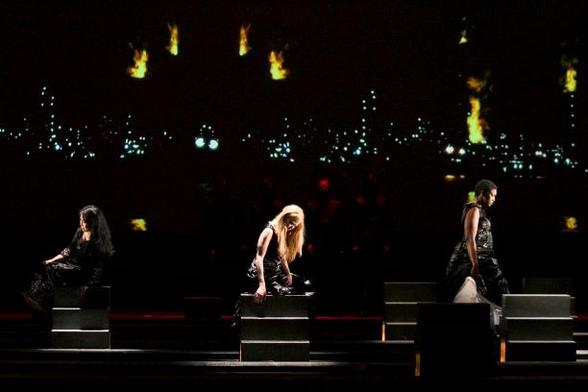
The scene picture shows the premiere in 2005, with from left to right: sopranos Young-Hee Kim, Barbara Hannigan and Claron McFadden. Reinbert de Leeuw conducted Asko|Schönberg, Guy Cassiers staged the opera. In 2019 a recording was released on CD.
https://www.youtube.com/watch?v=BH2Wa8__2v4
#DagInDeBranding #DutchNationalOpera #JoannaTheMad #OttoTausk #PhilipTheHandsome #PierreDeLaRue #RageDAmours #ResidentieOrkest #RobZuidam

Musical journey down the Nile in âAfriqueâ by Richard Rijnvos
Born in Tilburg, the Netherlands, in 1964, Richard Rijnvos avoids the beaten tracks; his work cannot be pigeonholed. Indeed, he does not regard âstyleâ as a starting point, but as the unsuspected outcome of the creative process. On Saturday 13 November, the Residentie Orchestra and Slagwerk Den Haag present the world premiere of Afrique, the fourth part of his seven-movement orchestral cycle Grand Atlas. The concert forms part of Festival Dag in de Branding, and is conducted by Antony Hermus.
Early on in his career Rijnvos developed a preference for composing multi-movement compositions. Between 1995 and 2000, for instance, he wrote the eighty-minute cycle Block-Beuys. It was inspired by the pavilion of the same name, which is dedicated to this German artist in the Hessisches Landesmuseum in Darmstadt. In 2001, Rijnvos started the still expanding cycle La Serenissima about the city of Venice and in 2008 he completed his six-part orchestral cycle Uptown|Downtown, dedicated to the city of New York.
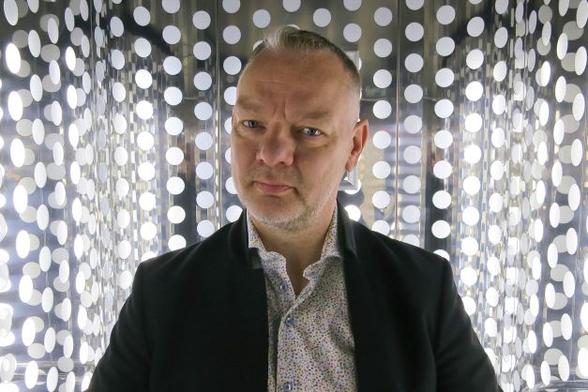
Richard Rijnvos (c) Frank ZweersSOUNDING WORLD ATLAS
The seed for his ambitious cycle Grand Atlas was sown in 2004, when he completed the final movement of La Serenissima. This semi-theatrical composition for voice, tuba and ensemble is called mappamondo and was inspired by the fifteenth-century Venetian monk Fra Mauro. He belonged to the hermit order of the Camaldolese, a branch of the Benedictines, and lived in a monastery on the Isola di San Michele in the Venetian lagoon.
âFra Mauro was considered the most important cartographer of his timeâ, says Rijnvos. âHe spent most of his life working on an impressive world map. This is how I came up with the idea of creating my own, musical version. A kind of sounding atlas, in which each of the seven continents is represented in an orchestral composition. Thus I creep into Fra Mauroâs mind.â In each movement he also incorporates elements from the musical culture of the continent in question.
Richard Rijnvos: âGrand Atlas is a sounding atlas, in which each of the seven continents is represented in an orchestral composition.â
Three of the seven movements have already been premiered: Antarctique (2012); Asie (2015) and Amérique du Nord (2016). Of the remaining four, Amérique du Sud (2019) and Europe (2020) have been completed but not yet performed, partly because the planned concerts were postponed due to the corona-pandemic. On Saturday 13 November, the Residentie Orchestra and Slagwerk Den Haag will perform the world premiere of Afrique in the newly opened cultural centre Amare on the Spuiplein in The Hague.
Afrique was commissioned by the Residentie Orchestra and Slagwerk Den Haag. Prior to the premiere, I will give the first lecture of my three-part course on modern music in Amare. I will zoom in on the development of rhythm from roughly 1900 onwards, and the related rise of percussion ensembles. In the last fifteen minutes I will interview Richard Rijnvos about his new piece.
TRAVELLING DOWN THE NILE
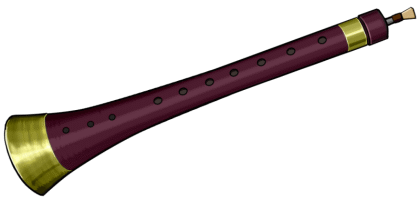
mizmarOn his website Rijnvos writes about Afrique: âOur clockwise journey begins in North Africa, more precisely, the heart of Egypt. On our way to the historic monuments, temples and tombs near Karnak and Luxor, we hear snatches of native music coming from afar. Approaching the village of El-Tod, we clearly distinguish the characteristic sound of the mizmar, an extremely loud double-reed woodwind instrument.â
âItâs a sort of Arabic oboe, which, due to its trumpet-like bell, easily manages the kind of volume we normally expect from brass. Two players improvise in a quasi-unison manner, whilst a third persists in sustaining what seems to be a never-ending, piercing, yet seducing drone. Traditional drums, such as darbuka, duff and duhulla provide a stirring accompaniment.â
âWe descend by boat down the Nile, all the way to Lake Victoria in Uganda, East Africa. The hospitable locals of Nakibembe, a small village in Busoga, treat us to an evening of their indigenous music. The central instrument is the embaire, a xylophone about 2.5 metres long, played by six people, seated three on each side. It has gigantic keys made from ensambiya wood, and is placed on a huge hole in the ground for resonance purposes. The music is lively and cheerful, with untrained voices singing along every now and then.â
FLUTE PLAYING, DANCING & SINGING
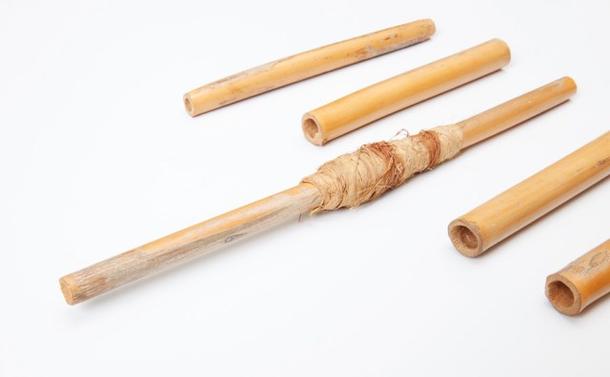
ditlhakaâOur travels continue via the east coast, in the direction of Southern Africa, to Botswana, where we meet the Balete people. In these regions, the focus is not so much on percussion. Instead, the locals play reed flutes, so-called ditlhaka, and they tend to gather in ensembles that incorporate dozens of participants, performing traditional dances, which can last for hours. The common practice is for men to play a variety of different-sized flutes, while dancing counter-clockwise in a circle, surrounded by women and young girls clapping.â
âTravelling back north via the west coast, to Central Africa, we cross the rainforest of Cameroon, home of the Baka people. Their music is mainly vocal, displaying a striking polyphonic sophistication. Based on repetitive melodic fragments, with little variation, but lots of improvisation, they dance, sing and yodel as part of healing rituals, initiation rituals, funerals, but also for sheer entertainment.â
âOur voyage ends in Senegal, West Africa, where the Wolof people preserve the Sabar drumming tradition. Among its most renowned pioneers was maestro Doudou NâDiaye Rose (1930-2015), and it is in his memory we finish with an orchestral remix of his legendary and utterly exhilarating âRose Rhythmâ.â
I hope to see you at the concert â and of course you are welcome to attend my lecture!
https://www.youtube.com/watch?v=h-lk_vzYIHg
#FestivalDagInDeBranding #GrandAtlas #ResidentieOrkest #RichardRijnvos #SlagwerkDenHaag
Het koor waarin ik zing, Excelsior uit Den Haag, zingt op 20 december de Messiah van HĂ€ndel, in Amare, met het Residentieorkest olv Chloe Rooke, hoe cool is dat! đđ»đ¶đ»đ
https://www.kzvexcelsior.nl/concerten/
#DenHaag
#Residentieorkest
#Messiah
#KlassiekeMuziek
#Koor
#Zingen