Rob Zuidam zooms in on Joanna the Mad in his opera Rage d’Amours: ‘Joanna took me by the hand’
In 2005, Dutch National Opera and Holland Festival presented Rob Zuidam’s opera Rage d’Amours. Five years later, he received the Kees van Baaren Prize for this blood-curdling production about the life of Joanna The Mad. The award ceremony was part of the Festival Dag in de Branding, with a performance by Residentie Orkest conducted by Otto Tausk.
In its next edition on 10 April, Dag in de Branding will present a video recording of this performance from its archives. In 2005, I interviewed Zuidam about his opera for the programme book of Dutch National Opera. Below is an abridged version.
Amsterdam, June 2005, interview with Rob Zuidam on Rage d’Amours
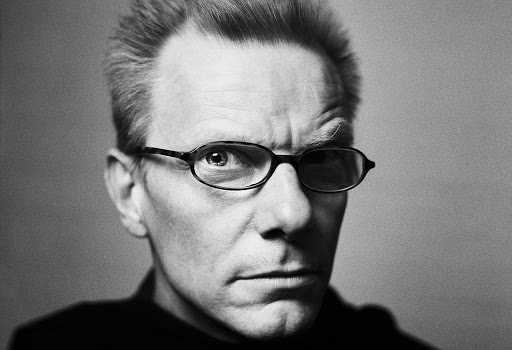
Rob Zuidam (c) Maarten Slagboom
Rob Zuidam (1964) began his career in a rock band, but his interests did not quite run parallel to those of the other band members: ‘I wanted mainly to rehearse, preferably all day, but they were more interested in blowing and drinking than in making music. Besides, I soon felt the need to break through the usual rock schemes, but that required an alertness they couldn’t muster. So I started messing around with tape recorders myself.’
In the process, Zuidam became interested in all the music he could find in Rotterdam’s Central Discotheque, from Aboriginals and Eskimos via the usual classics up to and including the twentieth century: ‘Modern music particularly appealed to me, and through record sleeves I discovered new names all the time. When I read that someone had studied composition with Olivier Messiaen, I suddenly realized you could apparently learn to compose. Shortly afterwards I went to the Conservatory in Rotterdam, where the doorman referred me to Klaas de Vries.’
Even though he was hardly technically gifted, he was accepted. He was taught by the Belgian composer Philippe Boesmans and Klaas de Vries and soon developed into someone who, with flair, combined modern composition techniques with direct eloquence. In no time he became an internationally renowned composer.
In 1994 the Munich Biennale commissioned him to compose his first opera, Freeze. The libretto, written by Zuidam himself, tells the story of the millionaire’s daughter Patricia Hearst, who is kidnapped and joins the ranks of her captors. In this opera, Zuidam effortlessly combines juicy film music, cabaret and ripping guitar solos with the great intervals so typical of the post-war avant-garde.
Love beyond death
His second opera, Rage d’Amours, about the life of Joanna The Mad (1479-1555), followed in 2003 and was composed for the Boston Symphony Orchestra. ‘A friend once drew my attention to the wife of Philip the Handsome (1478-1506), who, after his death, dragged his corpse through Spain in the hope that he would come back to life. In the end they locked her up, after which she looked out from a dungeon on her husband’s grave for forty-six years.’
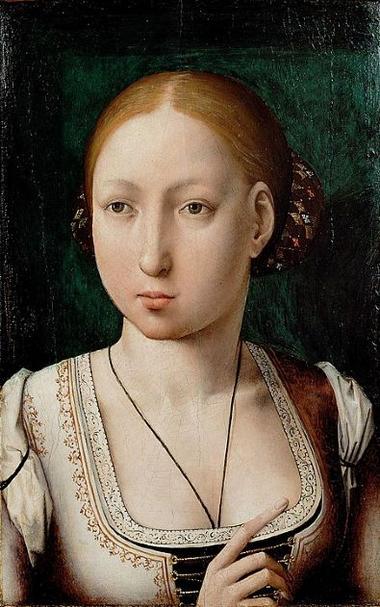
Joanna The Mad painted by Juan de Flandes
Zuidam was immediately captivated by her passion: ‘She asked nothing more of life than to be with her husband forever. I find this devotion both admirable and disturbing. Her love is truly imperishable: no matter what state Philip’s body is in, she continues to love him. This is contrary to our human nature, for which appearance is of great importance. We all have moments when we have to decide whether or not to give in to our impulses. Joanna decides to devote her life to her lover and does so with total abandon. That ecstasy fascinates me.’
For Rage d’Amours Zuidam again wrote the libretto himself, basing it on contemporary Spanish, French and Latin writings. ‘In a book about Joanna The Mad I found references to sixteenth-century sources. I came across the account of an anonymous chronicler, who describes Joanna’s life from the inside, in old French, the language of the court. It is a kind of fairy-tale French, so beautiful that I based a large part of the libretto on it.’
The reporting is detailed and straightforward, says Zuidam: ‘The author was clearly an intimate of the couple. He describes, for instance, how Philip slept with about every young lady that crossed his path, and the raging jealousy – ‘rage d’amours’ – this incited in Joanna. We also get a detailed description of how Philip’s corpse is cut apart and embalmed, and of how Joanna then travels across Spain with his coffin, neglecting her personal hygiene, not washing herself and peeing in her clothes.’
‘I have given these texts to the composer Pierre da la Rue, who acts as narrator’, continues Zuidam. ‘As a member of the Royal Chapel he was on intimate terms with both Philip and Joanna: they affectionately called him Pierchon. In the seventh scene, when Joanna kisses the corpse, I have quoted part of his motet Delicta juventutis, which he composed on the occasion of Philip’s death.’
Three Joanna’s
Interestingly the role of Joanna is divided among three sopranos. Zuidam: ‘The opera is set in a dungeon, which functions as a metaphor for her head. The three voices bring her obsession and torment to the surface. Joanna 3 has a solo in the second scene, in which she and Philip are threatened with shipwreck. While the bystanders scream murder, she remains deadly calm: she does not care if they drown, for after all, she is together with her husband. She is the unshakeable one.’
Joanna 2 represents her exalted side: while the monks dismember her husband’s corpse, she sings ‘mi amado’, my beloved over and over again. The carnal, necrophilic aspect is represented by Joanna 1, who embraces the corpse in the seventh scene. More often they are together Joanna, as at the beginning, when they sing a lament. I found that a moving image, three lamenters mourning over a coffin. Once I had the idea of having Joanna sung by three singers, inspiration started flowing immediately.’
The story of the Spanish queen’s life is indeed poignant, but it doesn’t generate much action. How has Zuidam created tension nevertheless? ‘I sailed by my inner compass. For example, in the intense fifth scene Joanna 2 sings her passionate declaration of love, and it wouldn’t be wise to continue with something laden after this. So I inserted a short scene in which a cleaning lady polishes the floor, accompanied by her own brushing and a contrabass clarinet. This is followed by the passage in which the coffin is opened so that Joanna can kiss the corpse.’
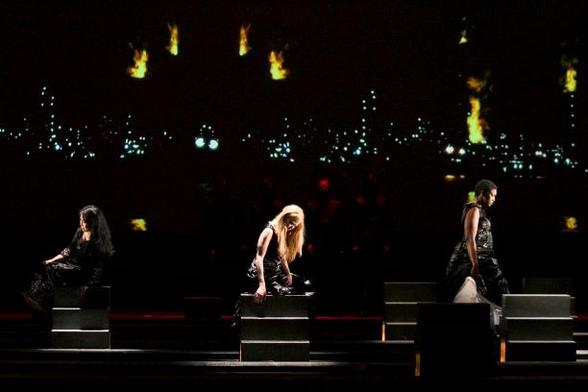
Rage d’Amours (c) Hans Hijmering
Philip, although already dead at the beginning of the opera, is sometimes shown alive. As in the eighth scene, in which he sings a heartrending love duet with Joanna 1, later joined by the other two Joanna’s. ‘I wanted to capture something of the first, happy period of the young couple. I searched for suitable texts for a long time, and finally found them in the Song of Songs. They have exactly the sublime purity that I was looking for.’
Although Zuidam did not consciously strive for local colour, the music of Rage d’Amours is very much in keeping with the Renaissance, with subtle references to Flemish polyphony and quasi-Gregorian chant. And some of the embellishments of the vocal lines sound unmistakably Spanish. The composer considers this inevitable: ‘Music and subject are interwoven. Freeze is set in 1970s California, so that opera is much poppier. Rage d’Amours is set in the sixteenth century, the pace is slower and the overall sound is different.’
‘In any case, I now have the idea I have come to the core of what I wanted to say. On the one hand because I have more experience, on the other because of the theme. Although I was fascinated by Patricia Hearst, deep down I still thought she was a silly rich girl, whereas Joanna touched me intensely: I really started to love her.’
This helped Zuidam while composing: ‘Take the fifth scene, for instance, which came about quite intuitively: everything was ready and waiting. Sometimes I wondered whether the music would become too exalted, but in those dark moments Joanna took me by the hand. Then the music wrote itself.’
My blog was named one of the 60 best classical music blogs worldwide on Feedspot.
If you’d like to support me: any gift is welcome through PayPal, or transfer to my bank account: T. Derks, Amsterdam, NL82 INGB 0004 2616 94. Thanks!
The scene picture shows the premiere in 2005, with from left to right: sopranos Young-Hee Kim, Barbara Hannigan and Claron McFadden. Reinbert de Leeuw conducted Asko|Schönberg, Guy Cassiers staged the opera. In 2019 a recording was released on CD.
https://www.youtube.com/watch?v=BH2Wa8__2v4
#DagInDeBranding #DutchNationalOpera #JoannaTheMad #OttoTausk #PhilipTheHandsome #PierreDeLaRue #RageDAmours #ResidentieOrkest #RobZuidam
 Contemporary Classical - Thea Derks