Joining the European Journal of Taxonomy, the Biodiversity Data Journal is the latest #ScientificJournal to adopt a GBIF hosted portal! 🐟
This #Pensoft-published journal is the first of many under the masthead expected to participate in the GBIF programme.
Read more: 🔗https://gbif.link/bdj

Biodiversity Data Journal launches GBIF hosted portal
The scientific publication becomes the first of many titles under the Pensoft masthead expected to provide GBIF-enabled data access
#MycoKeys #Pensoft #Bibliometrics #impactfactor #mycology
Nilsson RH, et al. (20 Nov 2024):
20 years of bibliometric data illustrates a lack of concordance between journal impact factor and fungal species discovery in systematic mycology.
MycoKeys 110: 273-285.
https://doi.org/10.3897/mycokeys.110.136048
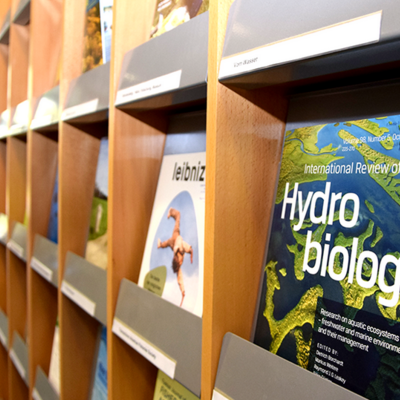
#IGB colleague Alice Retter involved

20 years of bibliometric data illustrates a lack of concordance between journal impact factor and fungal species discovery in systematic mycology
Journal impact factors were devised to qualify and compare university library holdings but are frequently repurposed for use in ranking applications, research papers, and even individual applicants in mycology and beyond. The widely held assumption that mycological studies published in journals with high impact factors add more to systematic mycology than studies published in journals without high impact factors nevertheless lacks evidential underpinning. The present study uses the species hypothesis system of the UNITE database for molecular identification of fungi and other eukaryotes to trace the publication history and impact factor of sequences uncovering new fungal species hypotheses. The data show that journal impact factors are poor predictors of discovery potential in systematic mycology. There is no clear relationship between journal impact factor and the discovery of new species hypotheses for the years 2000–2021. On the contrary, we found journals with low, and even no, impact factor to account for substantial parts of the species hypothesis landscape, often discovering new fungal taxa that are only later picked up by journals with high impact factors. Funding agencies and hiring committees that insist on upholding journal impact factors as a central funding and recruitment criterion in systematic mycology should consider using indicators such as research quality, productivity, outreach activities, review services for scientific journals, and teaching ability directly rather than using publication in high impact factor journals as a proxy for these indicators.

RIO Journal 5 years on: over 300 published outcomes from all around the research cycle | Blog
Five years on, the Open Science-driven journal Research Ideas and Outcomes (RIO) published an editorial that looks back on the 300 research ideas and research outcomes it has published so far. Since its early days, RIO has enjoyed quite positive reactions from the open-minded academic community for its innovative approach to Open Science in practice: it provides a niche

The Biodiversity Digital Twin to help understand our planet’s life | Blog
By combining and improving digitally available data and models, BioDT offers approaches for sustainable biodiversity management and ecosystem conservation.
Feel free to contact myself or @leeselab if you have any further questions. Contact info is in the attached post.
#biomonitoring #biodiversity #standardization #metabarcoding #metagenomics #GEOBON #pensoft #MBMG
I'm happy to be a guest editor for the open access online journal **Metabarcoding and Metagenomics.** We're inviting contributions for the special issue "**Towards standardized molecular biodiversity monitoring".**
✅ 15% discount on article processing charges
✅ The first two Early Career Researcher manuscripts received and accepted will be published for free
Deadline March 15, 2024
#biodiversity #metabarcoding #metagenomics #standardization #GEOBON #pensoft #MBMG
Update. @pensoft just released a strong endorsement of the #EuropeanCouncil proposal for no-fee #OpenAccess.
https://blog.pensoft.net/2023/08/21/pensofts-statement-on-the-european-unions-conclusions-on-oa-scholarly-publishing/
"Hereby, we wish to express our full agreement with the Council of the European Union’s conclusion, that 'it is essential to avoid situations where researchers are limited in their choice of publication channels due to financial capacities rather than quality criteria'."
#APCs #DiamondOA #Pensoft

Pensoft’s statement on the European Union’s Conclusions on OA scholarly publishing
We are firm supporters of healthy competition that drives innovation and revolutionary technologies, while supporting freedom of choice.
There has already been overwhelming support in the scholarly community for the EU 🇪🇺 Conclusions on scholarly publishing, e.g.,
https://www.coalition-s.org/open-science-stakeholders-welcome-european-efforts-towards-publicly-owned-and-not-for-profit-scholarly-communication/
and now this support extends even to certain publishers! #Pensoft and #ARPHA support the transition away from the current conglomerate of monopolists towards a genuine market with actual competition, which is one of the targeted outcomes:
https://blog.pensoft.net/2023/08/21/pensofts-statement-on-the-european-unions-conclusions-on-oa-scholarly-publishing/
"what drives innovation and revolutionary technologies is competition."

Open Science: stakeholders welcome European efforts towards publicly owned and not-for-profit scholarly communication | Plan S
<p>For European public research and innovation actors, scholarly knowledge is a public good. Publicly funded research and its results should be immediately and openly available to all without barriers such as subscription fees or paywalls. This is essential in driving knowledge forward, promoting innovation and tackling social issues. Key representative organisations of the public research […]</p>
Biota of Northern Eurasia, a special collection of 11 data papers in
#BioDataJournal, draws on diverse sources—like burial mounds, owl pellets, ancient settlement sites, and a bat rehabilitation centre—to increase knowledge of Ukrainian plants, non-avian vertebrates, fungi & spiders:
https://www.gbif.org/news/6GULMwRizfjYaF3vdW6Ak5/h/t
#FinBIF,
#Pensoft #GBIFNorway
Special issue of data papers boosts data from Northern Eurasia
FinBIF, Pensoft and GBIF Norway partner to support sharing of knowledge about biodiversity held within Ukrainian institutions

How it works: Nanopublications linked to articles in RIO Journal
To bridge the gap between authors and their readers or fellow researchers - whether humans or computers - Knowledge Pixels and Pensoft launched workflows to link scientific publications to nanopublications.
 GBIF
GBIF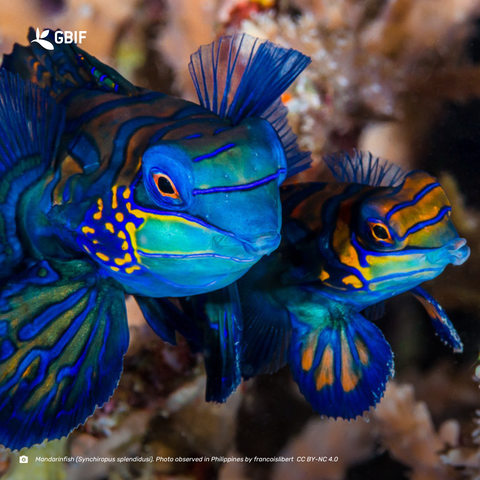
 IGB Library
 RIO Journal
 Teresita Porter 🙋🏻♀️
 petersuber
 Björn Brembs
 GBIF 🌱