 Dag-Rune Z
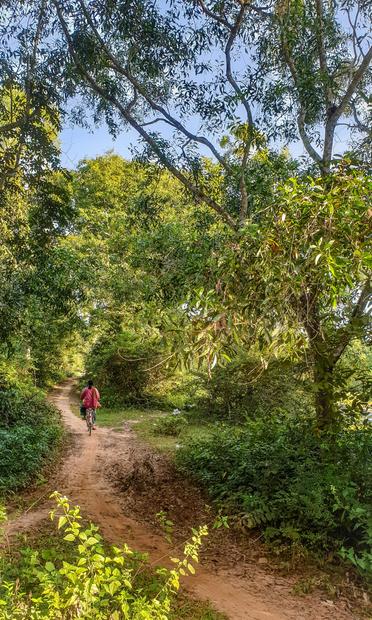
An early morning bike to West Baray, with a visit to the very early khmer temple Ak Yum.
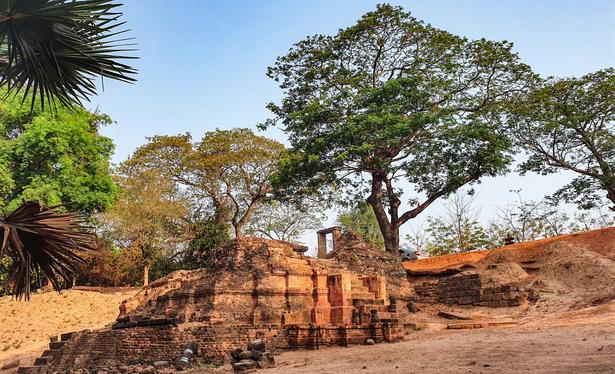
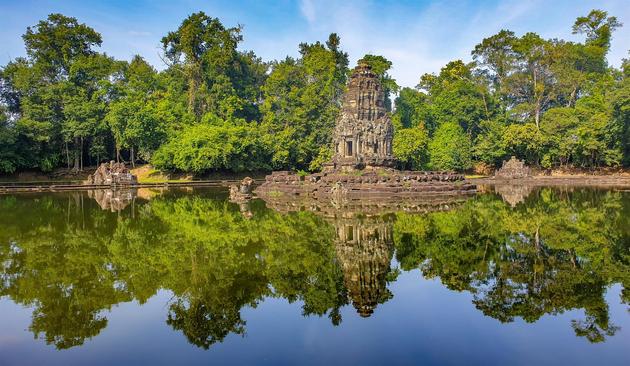
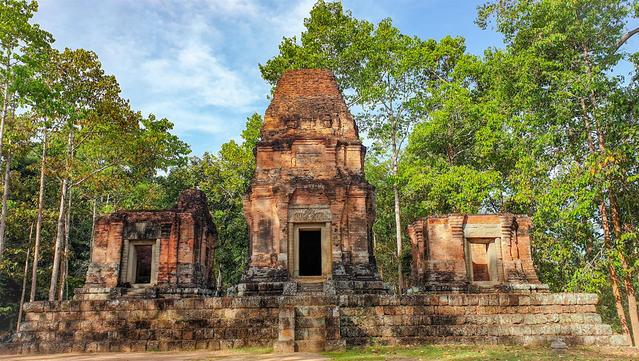
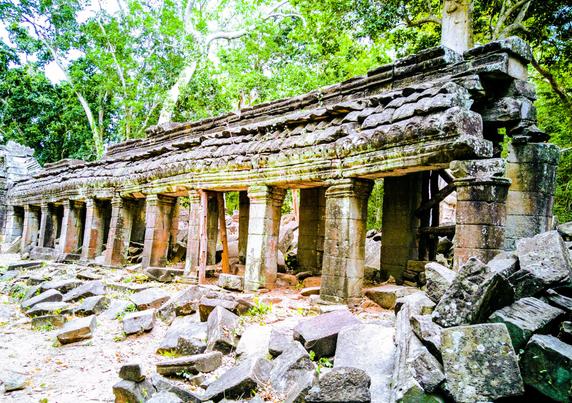
Prasat Ak Yum, Khmer: អកយំ, is a very ancient temple in the larger Angkor Archeological area. It is situated on the south bank of West Baray. Parts of the temple area are covered by and probably got partly destroyed by the building of the giant water reservoir.
From the southwest dike of West Baray, visitors look down on this pre-khmer empire temple.
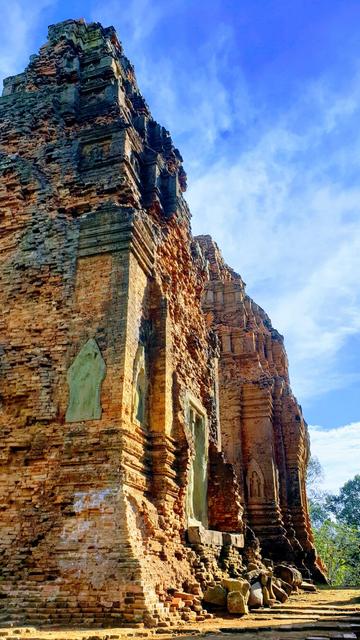
The temple is considered the oldest surviving temple mountain in Southeast Asia. Its base is 100 meter square, and the the three floors are appx 7 meter tall. A truly unique feature is a well from the top of the temple leading to an underground cellar 12.25 meter below the top. This cellar is 2,6 meter square and 2,7 meter tall. This type of temple cellar cave is not found in later temples built the next 550+ years of the Khmer Empire.
The first inscriptions found on the site points at a date corresponding with 674 CE, and the Ak Yum was probably completed before the Khmer Empire was declared at the holy Koulen Mountain in 802 CE. The temple was in active use into the 11th century. But it was partly buried in the late 11th century by the West Baray construction.
There are some speculations that Ak Yum was part of the last capital city before the Khmer Empire was established, the lost city of Banteau Choeu. This city was part of the transition from the Chenla Kingdom originally centered around Sambo Prey Kouk near Kampong Thom today.
https://drzinasia.wordpress.com/2024/03/15/the-pre-khmer-unique-mountain-temple-ak-yum/
#Angkor #ancient #art #architecture #sculpture #archive #worldculturalheritage #hinduism #khmer #empire #buddhism #visitcambodia #visitsiemreap #greentourism #biking #takeonlyphotos #leaveonlyfootprints
🎶🎶 #bikingintheangkorwonderland 🎶🎶
Prasat Ak Yum, Khmer: អកយំ, is a very ancient temple in the larger Angkor Archeological area. It is situated on the south bank of West Baray. Parts of the temple area are covered by and probably got partly destroyed by the building of the giant water reservoir.
From the southwest dike of West Baray, visitors look down on this pre-khmer empire temple.
The temple is considered the oldest surviving temple mountain in Southeast Asia. Its base is 100 meter square, and the the three floors are appx 7 meter tall. A truly unique feature is a well from the top of the temple leading to an underground cellar 12.25 meter below the top. This cellar is 2,6 meter square and 2,7 meter tall. This type of temple cellar cave is not found in later temples built the next 550+ years of the Khmer Empire.
The first inscriptions found on the site points at a date corresponding with 674 CE, and the Ak Yum was probably completed before the Khmer Empire was declared at the holy Koulen Mountain in 802 CE. The temple was in active use into the 11th century. But it was partly buried in the late 11th century by the West Baray construction.
There are some speculations that Ak Yum was part of the last capital city before the Khmer Empire was established, the lost city of Banteau Choeu. This city was part of the transition from the Chenla Kingdom originally centered around Sambo Prey Kouk near Kampong Thom today.
https://drzinasia.wordpress.com/2024/03/15/the-pre-khmer-unique-mountain-temple-ak-yum/
#Angkor #ancient #art #architecture #sculpture #archive #worldculturalheritage #hinduism #khmer #empire #buddhism #visitcambodia #visitsiemreap #greentourism #biking #takeonlyphotos #leaveonlyfootprints
🎶🎶 #bikingintheangkorwonderland 🎶🎶
 StockbridgeArch