The Slot Antenna: Flipping the Script on Amateur Radio Theory

1,771 words, 9 minutes read time.

Most people in the radio world are playing with toys. They’re obsessed with flimsy wires and “whip” antennas that snap in the wind or create massive drag. If you want to dominate the spectrum, you need to stop looking at the wire and start looking at the void. The slot antenna isn’t just an alternative; it’s a masterclass in electromagnetic duality. We’re talking about carving a hole in a slab of steel and turning that “nothingness” into a high-gain radiation machine.

The Physics of the Void

The uninitiated think a hole in metal is just a leak. They’re wrong. In a standard dipole, current flows along a wire to create an electric field. In a slot antenna, we flip the physics on its head. When you hit the edges of that slot with RF, the surrounding metal carries the current, and the gap itself becomes the source of the field.

This is Babinet’s Principle in action. It’s not a “trick”—it’s a fundamental law of the universe. Because the antenna is flush with the surface, it’s the ultimate choice for high-speed aircraft and tactical vehicles. A traditional antenna gets sheared off by the elements. A slot antenna is part of the armor. It doesn’t just survive the environment; it owns it.

Engineering the Perfect Cut

Resonance is non-negotiable. Typically, you’re cutting a slot half a wavelength long. But the width is where you prove you know your stuff. The width dictates your impedance and your bandwidth. A wider slot moves massive data at high speeds.

Here is the part where most amateurs fail: Polarization. A vertical wire produces vertical polarization. A vertical slot cut into a metal sheet produces horizontal polarization. If you don’t account for that flip, you’re wasting power and shouting into a vacuum. Match the polarization, or stay home.

Command and Control

Feeding the beast is where the skill is. You don’t just “hook up” a wire. You bridge the gap with a coaxial cable—center conductor to one side, shield to the other—or you go elite with a waveguide.

When you cut a series of slots into a metal pipe (a waveguide), you create a Slotted Waveguide Array. As the signal hammers down that pipe, energy “leaks” out of each slot. If your machining is precise, those waves reinforce each other, creating a directional beam of energy so tight it can track a jet at Mach 2. This is the secret behind airport radar and warships. It’s precision physics meeting raw power.

Tactical Survival: The Ground Plane

In the real world, you don’t have “ideal conditions.” You have the hull of a ship, the side of a building, or a heavy-duty equipment rack. The metal structure itself becomes the antenna’s ground plane. High-level proficiency is knowing how to turn a structural slab of metal into a massive radiator.

This tech was forged in the fire of WWII because we needed radar that was stealthy and aerodynamic. The ability to hide an antenna inside the skin of a plane changed warfare forever. It’s about being invisible while remaining lethal.

The Future of Mastery

This isn’t “old-school” tech; it’s the backbone of 5G and satellite hardware. As we push into millimeter-wave bands, a fraction of a millimeter in your cut determines success or failure. Mastering the slot antenna means mastering the dual nature of the universe—the push and pull of electric and magnetic forces.

Move Toward the Build

If you’re serious about this craft, stop reading and start cutting. The study of slot antennas is a rite of passage. It demands spatial reasoning and a grip on 3D energy flow. Grab some copper foil or aluminum sheets and build a slot antenna for the 2.4 GHz band. Measure the SWR. Feel the polarization shift.

Hands-on experience is the only thing that separates a casual observer from a true expert. Build it. Repair it. Optimize it. Master the void.

TAKE ACTION

Don’t just lurk. If you’ve got the guts to show off your own builds, drop a comment below.

  • SUBSCRIBE: Get the technical deep dives that actually matter.
  • CONTACT ME: Reach out for professional RF consults or technical questions.
  • SUPPORT THE SIGNAL: If this saved you hours of troubleshooting, Buy Me a Coffee and keep the research moving.

D. Bryan King

Sources

Disclaimer:

The views and opinions expressed in this post are solely those of the author. The information provided is based on personal research, experience, and understanding of the subject matter at the time of writing. Readers should consult relevant experts or authorities for specific guidance related to their unique situations.

#12GHzBand #24GHzBand #440MHzBand #5GTechnology #advancedAntennaTheory #aerospaceEngineering #aircraftAntennas #AmateurRadio #antennaAperture #antennaArray #antennaConstruction #antennaDesign #antennaEngineering #antennaGain #antennaIntegration #antennaModeling #antennaTheory #apertureAntenna #autonomousVehicleSensors #BabinetSPrinciple #bandwidth #beamforming #camouflagedAntennas #coaxialFeed #copperFoilAntenna #directionalAntenna #DIYRadio #electromagneticDuality #electromagneticInterference #electromagneticWaves #ElectronicWarfare #flushMountAntenna #futureRadioTech #groundPlane #HGBooker #hamRadio #highGainAntenna #homebrewAntenna #horizontalPolarization #impedanceMatching #lowProfileAntenna #microwaveCommunication #microwaveEngineering #millimeterWave #navalCommunications #nonConductiveCoatings #patchSlottedArrays #PhysicsOfRadio #professionalRF #radarSystems #radiationPattern #radioFrequencyEngineering #radioHobbyist #RadioPhysics #radioTechnician #radioWaveBehavior #resonantFrequency #resonantSlot #RFFeedMethods #RFFieldTheory #RFInnovation #RFModeling #RFPowerHandling #RFShielding #ruggedCommunication #satelliteCommunication #signalIntegrity #signalPropagation #slotAntenna #slottedWaveguideArray #spatialReasoning #StandingWaveRatio #stealthTechnology #structuralAntenna #substrateIntegratedWaveguide #SWR #tacticalElectronics #TacticalRadio #technicalSciences #telecommunications #UHF #verticalPolarization #VHF #waveguideAntenna #waveguideFeed #wavelengthCalculation #wirelessTechnology
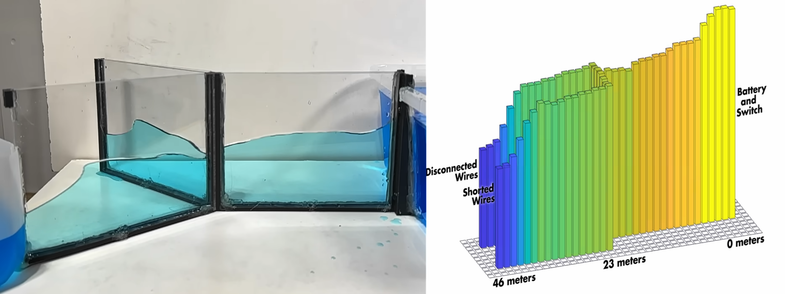
Watch Electricity Slosh: Visualizing Impedance Matching

It’s one thing to learn about transmission lines in theory, and quite another to watch a voltage pulse bounce off an open connector. [Alpha Phoenix] bridges the gap between knowledge and unde…

Hackaday
Watch Electricity Slosh: Visualizing Impedance Matching

It’s one thing to learn about transmission lines in theory, and quite another to watch a voltage pulse bounce off an open connector. [Alpha Phoenix] bridges the gap between knowledge and unde…

Hackaday

The Power of the Whisper: How WSPR and WSJT-X are Redefining Long-Distance Radio

1,250 words, 7 minutes read time.

Amateur radio operators and technology enthusiasts are currently utilizing the Weak Signal Propagation Reporter, commonly known as WSPR, and the WSJT-X software suite to achieve global communication using minimal power. Developed by Nobel laureate Joe Taylor, K1JT, this digital protocol allows stations to send and receive signals that are often completely buried in background noise, making it possible to map atmospheric conditions and radio propagation in real-time. This technology serves as a critical entry point for men looking to understand the mechanics of the ionosphere and the efficiency of modern digital signal processing. By leveraging advanced mathematical algorithms, WSPR proves that high-power amplifiers and massive antenna towers are no longer the only way to reach across the ocean, offering a technical challenge that rewards precision and patience over brute force.

The core of this system lies in the software known as WSJT-X. This program implements several digital protocols designed specifically for making reliable communication under extreme conditions where traditional voice or Morse code signals would fail. While WSPR is not a conversational mode, it acts as a global beacon system. A station transmits a brief packet containing its callsign, location grid square, and power level. Thousands of other stations around the world, running the same software, listen for these signals and automatically report any successful decodes to a central internet database called WSPRnet. This creates a living, breathing map of how radio waves are traveling across the planet at any given second, providing invaluable data for anyone interested in the science of communication.

Understanding the physics behind this process is what separates a casual observer from a true radio technician. The Earth’s ionosphere, a layer of the atmosphere ionized by solar radiation, acts as a mirror for certain radio frequencies. Depending on the time of day, solar flare activity, and the season, these signals can skip off the sky and land thousands of miles away. In the past, confirming these paths required luck and high-power transmissions. Joe Taylor once noted that the goal of these modes is to utilize the information-theoretic limits of the channel. This means squeezing every bit of data through the smallest amount of bandwidth possible, allowing a station running only one watt of power to be heard in Antarctica from a backyard in Michigan.

For the man standing on the threshold of earning his amateur radio license, WSPR is the ultimate proof of concept. It removes the intimidation factor of “talking” to strangers and replaces it with a pure engineering objective: How far can my signal go with the least amount of effort? Setting up a WSPR station requires a computer, a transceiver, and a simple wire antenna. The software handles the heavy lifting of Forward Error Correction and narrow-band filtering. This process teaches the fundamentals of station grounding, signal-to-noise ratios, and frequency stability—skills that are mandatory for passing the licensing exam and, more importantly, for operating a professional-grade station.

The hardware requirements are surprisingly modest, which appeals to the practical, DIY-oriented mind. Many enthusiasts use a Raspberry Pi or an older laptop dedicated to the task. The interface between the radio and the computer is the critical link, ensuring that the audio generated by the software is cleanly injected into the radio’s transmitter. If the audio levels are too high, the signal becomes distorted, “splattering” across the band and becoming unreadable. This level of technical discipline is exactly what is required in high-stakes fields like aviation or telecommunications. Mastering the “clean” signal is a badge of honor in the ham radio community, signifying a man who knows his equipment inside and out.

As we look at the data generated by WSPR, we see more than just dots on a map; we see the pulse of the sun. Because radio propagation is tied directly to solar activity, WSPR users are often the first to notice a solar storm or a sudden ionospheric disturbance. When the sun emits a massive burst of energy, the higher frequency bands might “open up,” allowing for incredible distances to be covered on low power. Conversely, a solar blackout can shut down communication entirely. Being able to read these signs and adjust one’s strategy accordingly is a core component of the hobby. It turns a simple radio into a scientific instrument used for environmental monitoring.

The community surrounding WSJT-X is one of rigorous peer review and constant improvement. The software is open-source, meaning the code is available for anyone to inspect and refine. This transparency has led to a rapid evolution of the protocols. While WSPR is for propagation reporting, other modes within the suite like FT8 or FST4 are used for rapid-fire contacts. However, WSPR remains the gold standard for testing antennas. If a man builds a new wire antenna in his yard, he doesn’t have to wait for someone to answer his call to know if it works. He can run WSPR for an hour, check the online map, and see exactly where his signal landed. It provides immediate, objective feedback that is essential for any technical project.

The future of this technology points toward even more robust communication in the face of increasing electronic noise. As our cities become more crowded with Wi-Fi, power lines, and electronics, the “noise floor” of the radio spectrum is rising. Traditional modes are struggling to compete. Digital modes like those found in WSJT-X are the solution, using digital signal processing to “dig” signals out of the static. This represents the next frontier of amateur radio—the transition from analog heritage to digital mastery. For those looking to get involved, the barrier to entry has never been lower, and the potential for discovery has never been higher.

In the broader context of emergency preparedness and global infrastructure, the lessons learned from WSPR are invaluable. In a scenario where satellites or internet backbones fail, the ability to bounce low-power signals off the atmosphere remains one of the only viable long-distance communication methods. A man who understands how to deploy a WSPR-capable station is a man who can provide data and connectivity when everything else goes dark. This sense of utility and self-reliance is a driving force for many who pursue their license. It is not just about a hobby; it is about mastering a fundamental force of nature to ensure that the lines of communication stay open, no matter the circumstances.

Call to Action

If this story caught your attention, don’t just scroll past. Join the community—men sharing skills, stories, and experiences. Subscribe for more posts like this, drop a comment about your projects or lessons learned, or reach out and tell me what you’re building or experimenting with. Let’s grow together.

D. Bryan King

Sources

  • WSJT-X Main Page: physics.princeton.edu/pulsar/k1jt/wsjtx.html
  • WSPRnet Official Site: wsprnet.org/drupal/
  • ARRL – What is WSPR?: arrl.org/wspr
  • K1JT’s WSPR Implementation Guide: physics.princeton.edu/pulsar/k1jt/WSPR_Instructions.pdf
  • WSPR on Raspberry Pi – GitHub: github.com/JamesP6000/WsprryPi
  • Make Magazine – Ham Radio for Beginners: makezine.com/projects/ham-radio-for-beginners/
  • Introduction to Digital Modes – OnAllBands: onallbands.com/digital-modes-101-wspr/
  • DX Engineering – WSPR Equipment: dxengineering.com/search/product-line/wsjt-x-interfaces
  • Radio Society of Great Britain – WSPR Intro: rsgb.org/main/get-started-in-ham-radio/digital-modes/wspr/
  • Ham Radio School – Digital Mode Basics: hamradioschool.com/digital-modes-introduction/
  • The History of WSJT-X – Princeton University: princeton.edu/news/2017/10/18/nobel-prize-winner-taylor-channels-passion-radio
  • WSPR Rocks – Real-time Database: wspr.rocks
  • Antenna Theory for Digital Modes: antenna-theory.com
  • HF Propagation Basics – NOAA: swpc.noaa.gov/phenomena/hf-radio-propagation
  • Digital Radio Mondiale and WSPR – IEEE: ieee.org/publications/wspr-technical-overview

Disclaimer:

The views and opinions expressed in this post are solely those of the author. The information provided is based on personal research, experience, and understanding of the subject matter at the time of writing. Readers should consult relevant experts or authorities for specific guidance related to their unique situations.

#amateurRadioCommunity #amateurRadioForBeginners #amateurRadioLicense #antennaTesting #AtmosphericScience #AtomicClock #Balun #bandwidth #CATControl #dataModes #Decibel #digitalModes #digitalSignalProcessing #dipoleAntenna #DIYRadio #DXing #ElectronicEngineering #Elmers #EmergencyCommunication #ExtraClass #forwardErrorCorrection #frequencyHopping #FrequencyStability #FT8 #GeneralClass #GlobalRadioMap #GPSTime #GridDownRadio #GridSquares #Grounding #hamRadio #hamRadioExamPrep #hamRadioGear #HamRadioMentoring #hamRadioProjects #hamRadioSkills #hamRadioSoftware #hfAntenna #HFRadio #HighFrequency #impedanceMatching #ionosphere #JoeTaylorK1JT #LongDistanceRadio #LowPowerRadio #MagneticLoopAntenna #MaidenheadLocator #NarrowbandCommunication #NetworkTimeProtocol #NoiseFloor #OpenSourceRadio #PCToRadioInterface #QRP #RadioAstronomy #RadioBenchmarking #radioCommunication #radioFrequency #RadioInterfacing #RadioNetworking #radioPropagation #RadioScience #radioSignals #radioSpectrum #radioTechnician #radioTroubleshooting #RadioWavePhysics #RaspberryPiRadio #RealTimeTracking #RFInterference #RigControl #SDR #shortwaveRadio #SignalDecoding #SignalReporting #SignalToNoiseRatio #softwareDefinedRadio #solarActivity #solarCycle #SolarFlareImpacts #SoundcardPacket #SpaceWeather #StandingWaveRatio #SurvivalCommunication #SWR #TechHobbiesForMen #TechnicalSelfReliance #technicianClass #telecommunications #timeSync #TransceiverSetup #Unun #verticalAntenna #VOXControl #WeakSignalPropagationReporter #wireAntenna #wirelessTechnology #wsjtX #wsjtXTutorial #WSPR #WSPRTutorial #WSPRnet

Baluns & Ununs: The Unsung Heroes of Antenna Building and Signal Matching

758 words, 4 minutes read time.

When diving into the world of antenna systems, whether you’re a hobbyist or a professional, you might often hear about Baluns and Ununs. These are specialized transformers that play pivotal roles in signal transmission. Their primary function is to match impedances between components in your system to ensure the highest efficiency and performance. But what exactly are they, and how do they contribute to antenna building?

What Is a Balun?

A Balun, short for BALanced to UNbalanced, is an electrical transformer that allows the connection of a balanced load (like a dipole antenna) to an unbalanced feed line (such as coaxial cable). It’s a key component in matching the impedance between these two differing systems, ensuring that signals are transferred without significant loss. Baluns are widely used in radio frequency (RF) systems to ensure minimal signal reflection, noise, and interference.

Baluns come in various configurations, depending on the specific needs of the system. They can handle impedance transformations with ratios like 1:1, 1:4, or 1:9. The type of balun you choose depends on the specific characteristics of your antenna and feed line. For example, a 1:1 balun keeps impedance consistent, while a 1:4 balun is typically used to match a 75-ohm coax to a 300-ohm antenna.

Additionally, there are different types of Baluns, such as current baluns and voltage baluns. A current balun is used to block common mode currents, while a voltage balun balances the voltages on the antenna.

What Is an Unun?

An Unun, which stands for UNbalanced to UNbalanced, is another crucial transformer, but it serves a slightly different purpose. While a balun connects a balanced antenna to an unbalanced feed line, an unun matches impedance between unbalanced components. It’s commonly used with antennas like end-fed half-wave (EFHW) antennas, which are often unbalanced in nature. The unun’s job is to ensure that the impedance of the antenna matches that of the transmission line, reducing signal reflections and losses.

Ununs are typically used in situations where both the antenna and transmission line are unbalanced but have different impedance values. For example, a 1:1 unun might be used to match a high-impedance antenna, like an EFHW, to a coaxial cable. The most common configurations for ununs are 1:1 or 4:1, but just like baluns, the specific ratio needed depends on the application.

The Key Differences Between Baluns and Ununs

While both baluns and ununs serve to match impedance, the key difference lies in what they connect. A balun bridges the gap between a balanced antenna and an unbalanced feed line, whereas an unun is used for matching different impedances between unbalanced components. The choice between a balun and an unun largely depends on the antenna system you’re working with. For example, for dipoles or Yagi antennas (which are balanced), a balun is typically required. For end-fed antennas, an unun is more appropriate.

Why Are Baluns and Ununs Important for Antenna Performance?

Impedance matching is vital in any antenna system, and both baluns and ununs make this process possible. Without proper impedance matching, your antenna system could suffer from inefficiencies such as signal loss, poor radiation patterns, and mismatched power transfer. By using the correct balun or unun, you ensure that the antenna system operates at peak efficiency, minimizing reflections and maximizing power transfer.

Furthermore, these components also help in reducing common-mode currents that could otherwise introduce noise and distortions. Whether you’re dealing with high-frequency signals in amateur radio or broader RF applications, a well-matched antenna system ensures cleaner, stronger signals.

Practical Applications and Tips

When building or designing an antenna system, consider the following practical tips:

  • Choose the right impedance transformation ratio: Whether you’re using a balun or an unun, selecting the right ratio (e.g., 1:1, 1:4, or 1:9) will significantly impact the performance of your antenna system.
  • Select the right materials: Baluns and ununs can be made from various core materials like ferrite, powdered iron, or even air. The choice of core material can affect the device’s efficiency, especially at higher frequencies.
  • Use for noise reduction: For systems prone to interference or common-mode noise, a balun (particularly a current balun) can help to suppress these unwanted signals.

Conclusion

Baluns and ununs might seem like small components in the grand scheme of antenna building, but they play an essential role in ensuring your antenna system performs optimally. Whether you’re setting up a dipole antenna, a Yagi, or an end-fed wire, understanding the role of these transformers will help you make the right decisions for better signal transmission, reduced interference, and overall improved antenna performance.

D. Bryan King

Related Posts

Rate this:

#11Balun #41Unun #antennaBuilding #antennaEfficiency #antennaPerformance #antennaSignalMatching #antennaSystems #balancedAntennas #Balun #coaxialCable #coaxialTransmissionLines #commonModeCurrents #currentBalun #dipoleAntenna #endFedAntenna #impedanceMatching #impedanceTransformation #noiseReductionInAntennas #powerTransfer #radioFrequencySystems #RFTransformers #signalInterference #signalLoss #transformerDesign #unbalancedAntennas #Unun #voltageBalun #YagiAntennas

Pour la première fois de ma vie quelqu'un réussit à me faire comprendre l'impédance.

What does "impedance matching" actually look like? (electricity waves)
https://youtube.com/watch?v=RkAF3X6cJa4

#ElectricalEngineering #AlphaPhoenix #Impedance #ImpedanceMatching

What does "impedance matching" actually look like? (electricity waves)

YouTube
The Physics Lesson I Keep Re-Learning

One of the most broadly applicable ideas I’ve ever encountered is the concept of impedance matching. If you’re into radio frequency electronics, you’re probably thinking that I mean getting all you…

Hackaday
When Does Impedance Matching A PCB Trace Become Unavoidable?

A common joke in electronics is that every piece of wire and PCB trace is an antenna, with the only difference being whether this was intentional or not. In practical terms, low-frequency wiring is…

Hackaday

Impedance Matching Revisited

If you are an old hand at RF design, you probably have a good handle on matching impedance. However, if you are just getting started with RF, [FesZ Electronic]'s latest video series on lossless impedance matching is well worth watching.

Matching is important for several reasons. Maximum power transfer occurs when the source and load impedance match. Also, at RF, mismatched impedance can cause reflections which, again, robs you of useful power. The video covers some math and then moves on to LTSpice to simulate a test circuit. But the part you are really waiting for -- the practical circuits -- is about 15 minutes in. Since the values you need are often oddball, [FesZ] makes his own adjustable inductors and uses a trimmer capacitor to adjust the actual capacitance value.

This is a big topic, but the first video is a great introduction blending theory, simulation, and hands-on. A great way to get started with a very fundamental RF design skill.

We've worked on explaining all this before if you want a second take on it. If you want to understand why mismatched impedance leads to less power delivery, we've done that, too.

#radiohacks #impedancematching #ltspice #rf

Impedance Matching Revisited

If you are an old hand at RF design, you probably have a good handle on matching impedance. However, if you are just getting started with RF, [FesZ Electronic]’s latest video series on lossle…

Hackaday