Flights to nowhere can be fun
I hadn’t planned on my brief visit to Vancouver for Web Summit’s second annual conference there to include any flying between my landing at Vancouver International Airport Monday and my departure from YVR Thursday morning. But sometimes, your event schedule has a gap just large enough for somebody to pilot a floatplane through.
That idea of taking an aerial tour of Vancouver got lodged in my head at Web Summit Vancouver last May–when I found myself distracted by aircraft departing from and arriving at Vancouver Harbour Flight Centre, next to the convention center and its bitmapped-orca Douglas Coupland sculpture.
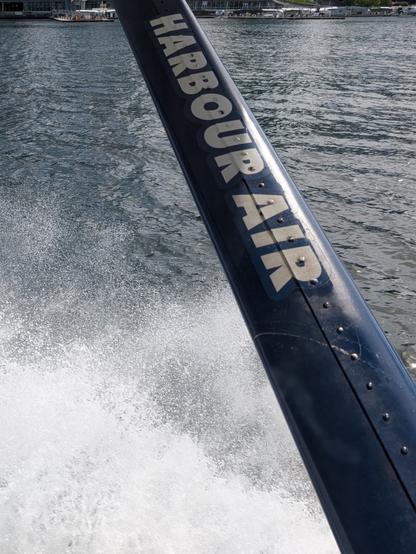
And as I was nearing the end of my first five appointments on an overscheduled Tuesday, I realized that a) I had almost two hours before my next appointment and b) the weather looked ideal for flying, at least compared to Wednesday morning’s forecast of clouds and possibly rain. So I booked a 20-minute tour flight on Harbour Air’s site at what seemed a workable time before I had to walk a few blocks away for an offsite panel.
The flight on this 67-year-old de Havilland DHC-3T Turbine Otter was what I hoped and expected it to be, going from my experience taking a floatplane ride above Seattle out of Lake Union 13 years ago. Taking to the air and returning from it without solid ground below the wing feels like cheating at flying; being in a plane small enough where you can see the pilot adjust the controls and almost immediately see and feel the aircraft respond provides an extraordinary demonstration of aerodynamics at work; the views from a large and non-pressurized window maybe 1,000 feet above ground are magical.
(The timing of this particular flight was less than magical, in the sense that it seemed that Harbour consolidated its 3 and 3:15 p.m. tour flights into one that departed at 3:20 and then left me hustling to get to my panel. I’ll expand on my avoidable scheduling fail in this Sunday’s weekly recap.)
Avgeeks sometimes call out-and-back bookings like this “flights to nowhere,”1 and I’ve now taken enough of them to realize I may have a bit of a flying problem.
My introduction, as far as I can remember, took place at a 1997 air show at College Park’s airport–the oldest continuously-operated airfield in the world–at which I recall paying $20 in cash for a flight in what years-later searching suggests was a Stearman Model 75 Kaydet biplane.
I then went almost 16 years before the next such flight, my Lake Union joyride–and then followed that days later with a balloon excursion above Sonoma County, Calif., that remains my slowest-ever aviation experience.
2014 bought a work-related flight to nowhere, a hop out of Austin during SXSW on the inflight WiFi operator Gogo’s business jet. That company invited me to try out the ground-to-air connectivity on this Canadair CL-600 by texting people, so I taunted a friend on the ground with “I’m texting you from a private jet. How are you?” and got the reply I deserved.
I had another Gogo flight to AUS and back in 2016 on the 737-500 that Gogo had acquired in the meantime, on which I saw a travel journalist successfully ask the pilots for a chance to experience takeoff in the cockpit jumpseat. That led me to make the same request before another Gogo flight on that 737 in 2017, treating me to an EWR-departure experience unlike any other.
In 2019, a friend took my wife and I on a tour above Sonoma County in his Diamond Star DA40 single-engine, four-seat aircraft. That remains my smallest-plane experience, and the only one in which I got to touch the controls. Briefly.
In 2021, I had my loudest-plane experience when I spent $450 to fly on a 1945-vintage B-25 bomber out of Hagerstown, Md., my only flight to date to allow a view from a tail gunner’s seat.
And in 2023, JSX treated me and other invited journalists to a DAL-DAL hop to try out Starlink WiFi on an Embraer 145.
The last two years tacked on ORD-ORD and LAX-LAX flights courtesy of United Airlines to test their deployment of Starlink on an Embraer 175 and then a Boeing 737. And with this week’s joyride above British Columbia’s metropolis, I have to accept that I’ve developed a moderately expensive habit here.
Which is okay with me.
The bad kind of “flight to nowhere” involves a long-haul international flight that experiences some sort of malfunction that requires returning to the departure airport, even if that requires backtracking across much of an ocean. ↩︎
#737 #AUS #avgeek #B25 #balloon #biplane #businessJet #CGS #CoalHarbour #CollegePark #CXH #DAL #deHavilland #DiamondStar #EWR #floatplane #Gogo #Hagerstown #HGR #joyride #JSX #LakeUnion #LAX #LKE #ORD #privateJet #SantaRosa #Seattle #Starlink #STS #UnitedAirlines #Vancouver Destination's Journey
 Citoyen européen Ray Hindle ✔️
 Rob Pegoraro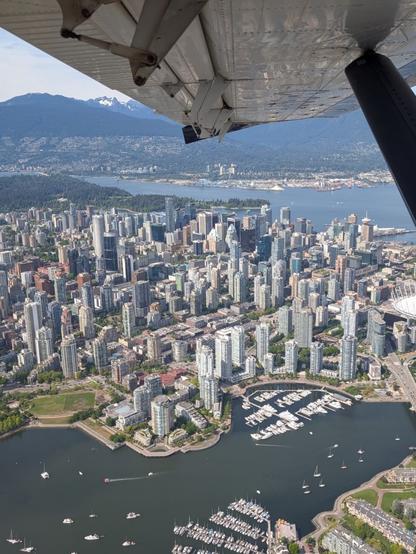
 Carolyn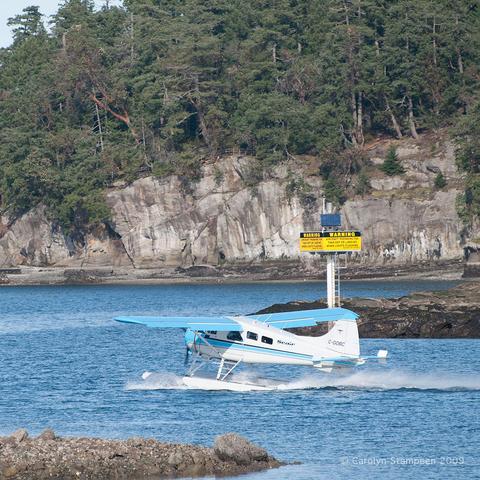
 Jon Lord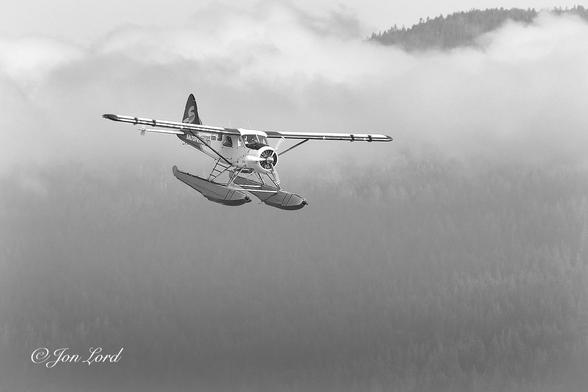
 aboveFRL