Poisoned Waters: When Earth’s Oceans Turned Toxic
By Cliff Potts, CSO, and Editor-in-Chief of WPS News
Baybay City, Leyte, Philippines — April 28, 2026
By the time the Permian–Triassic extinction event reached its peak, oxygen loss alone no longer explains the scale of destruction. Evidence suggests Earth’s oceans did something worse than suffocate life. In many regions, they became chemically hostile.
The seas did not simply run out of oxygen. They turned toxic.
From Anoxia to Euxinia
As described in the previous essay, warming oceans lost oxygen and circulation slowed. In many basins, this progressed from anoxia (low oxygen) to euxinia—a condition where waters are oxygen-free and saturated with hydrogen sulfide.
Hydrogen sulfide (H₂S) is not a minor pollutant. It is a potent toxin. In modern oceans, it appears only in small, isolated pockets. During the end-Permian, it likely spread across vast areas of the seafloor and, at times, into shallower waters.
This shift marked a qualitative change. The oceans were no longer just uninhabitable. They were lethal.
The Role of Sulfur Bacteria
Euxinic conditions favor sulfur-reducing bacteria. These organisms thrive where oxygen is absent and organic matter is abundant. As they multiply, they produce hydrogen sulfide as a metabolic byproduct.
Once established, this process becomes self-reinforcing:
- Oxygen loss allows sulfur bacteria to expand
- Sulfur bacteria produce toxic gases
- Toxicity prevents the return of oxygen-dependent life
The normal biological checks that keep these microbes in balance collapse. What follows is a microbial takeover of the marine environment.
Evidence in the Geological Record
Geologists identify these toxic conditions through multiple independent signals:
- Black shale layers, formed under oxygen-free conditions
- Sulfur isotope anomalies consistent with widespread sulfide production
- Trace metal concentrations that indicate stagnant, poisoned waters
These markers appear across multiple continents, showing that toxic seas were not localized accidents. They were a global state.
When the Sea Poisoned the Sky
One of the more disturbing hypotheses is that hydrogen sulfide did not remain confined to the oceans. In extreme cases, it may have escaped into the atmosphere.
Hydrogen sulfide is heavier than air, but large releases can overwhelm atmospheric mixing. Even small concentrations are deadly to animals. Larger releases could also damage the ozone layer, increasing ultraviolet radiation at the surface.
While the extent of atmospheric release remains debated, even episodic events would have placed immense additional stress on land ecosystems already weakened by heat and acid rain.
Why Recovery Became So Difficult
Toxic oceans create a trap. Even after volcanic activity wanes and temperatures stabilize, the chemistry of the seas can remain hostile for long periods. Oxygen does not return easily once circulation patterns collapse and sulfur cycles dominate.
This helps explain why recovery after the Great Dying was so slow. Life did not simply need time to evolve. It needed the planet’s chemistry to become survivable again.
A Planet Out of Balance
The Great Dying was not caused by a single factor. It was the convergence of heat, oxygen loss, and chemical poisoning. Euxinic oceans represent the point at which Earth’s life-support system crossed from stress into failure.
Understanding this stage is critical. It shows how environmental change can accelerate beyond gradual decline into conditions that actively resist recovery.
The next essay will turn to the land—where heat, acid rain, and atmospheric instability finished what the oceans began.
For more social commentary, please see Occupy 2.5 at https://Occupy25.com
This essay will be archived as part of the ongoing WPS News Monthly Brief Series available through Amazon.
References
Algeo, T. J., & Twitchett, R. J. (2010). Anomalous oceanic conditions associated with the end-Permian mass extinction. Annual Review of Earth and Planetary Sciences, 38, 525–553.
Kump, L. R., Pavlov, A., & Arthur, M. A. (2005). Massive release of hydrogen sulfide to the surface ocean and atmosphere during intervals of oceanic anoxia. Geology, 33(5), 397–400.
Wignall, P. B. (2001). Large igneous provinces and mass extinctions. Earth-Science Reviews, 53(1–2), 1–33.
#EarthSystems #euxinia #hydrogenSulfide #massExtinctionMechanisms #oceanChemistry #PermianExtinction The-14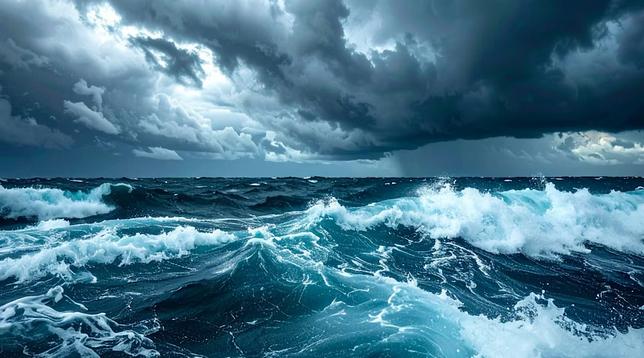
 WPS News
 Sanjay Mohindroo


 Morpheus Being
 Moss May 🏴☠️🏳️🌈🦘🌏
 💧🌏 Greg Cocks
 Did You Know