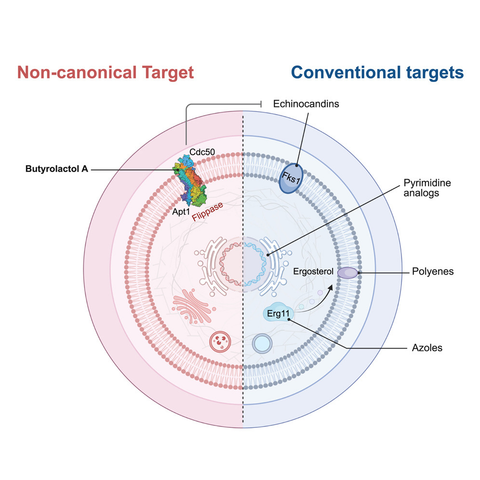
Butyrolactol A enhances caspofungin efficacy via flippase inhibition in drug-resistant fungi

https://www.sciencedirect.com/science/article/abs/pii/S0092867425013716 #mycology #Candida #Cryptococcus

Urease-Positive Organisms — Mechanism, Examples, and Diagnostic Importance

Discover the role of urease-positive organisms in disease pathogenesis and diagnosis. Learn how bacteria like Proteus, Klebsiella, H. pylori, and Staphylococcus saprophyticus use urease to survive hostile environments and cause infections.

mymedschool.org
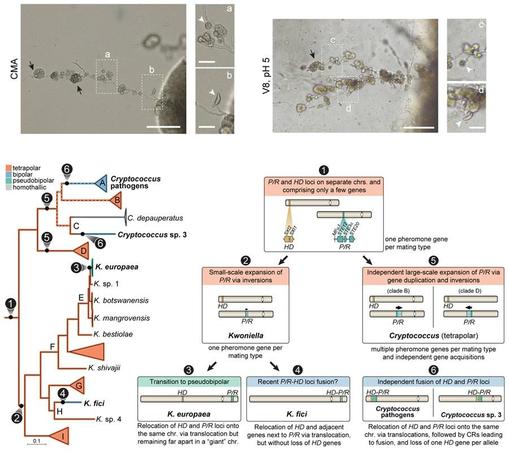
Evolution of fungal mating systems: Study of #Cryptococcus & Kwoniella by @marcoacoelho1 &co shows that MAT locus fusions & recombination suppression drive diversity of #SexualReproduction in #fungi
@PLOSBiology plos.io/479579M
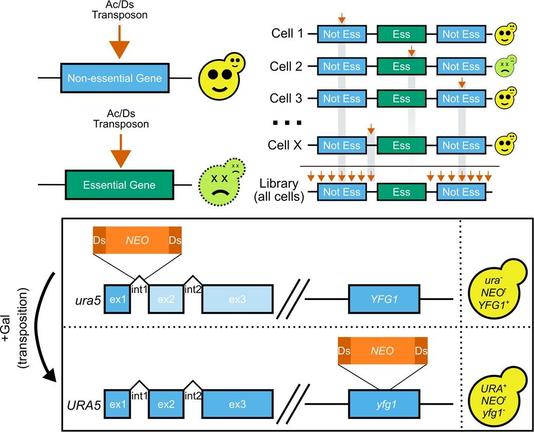
#Fungal infections are hard to treat due to #DrugResistance. @blake_billmyre &co use a high-throughput #TNseq system in #Cryptococcus neoformans to identify >1400 essential genes & reveal a role for #mitochondrial genes in #fluconazole sensitivity @PLOSBiology https://plos.io/4dz3iVm
Alternative transcription start site (altTSS) usage in non-yeast #fungi: @vidang411 @guilhemjanbon &co reveal widespread altTSS in #Cryptococcus, altering gene expression & protein targeting, regulated by Tur1 in response to environmental cues #PLOSBiology https://plos.io/3A9RyJ6
Alternative TSS use is widespread in Cryptococcus fungi in response to environmental cues and regulated genome-wide by the transcription factor Tur1

Alternative transcription start site (altTSS) usage is one of the major means of gene regulation in animals but is unknown in non-yeast fungi. This study reveals widespread altTSS in Cryptococcus that alters gene expression and protein targeting, regulated by a single transcription factor, Tur1, in response to environmental cues.

A 6 months internship (M2) is open in our laboratory for January 2025 to work on #RNA, the genetics and biochemistry of its #splicing, export from the nucleus and degradation in the cytoplasm. With new tools and exciting preliminary results in #Cryptococcus neoformans, an intron-rich and fascinating human #fungal pathogen.

https://cosminribo.eu/posts/2024-07-m2topic/

M2 student position for 2025 - Cosmin's RNA resources

Topic for an M2 research training focused on molecular mechanisms of mRNA degradation.

Do related pathogenic and non-pathogenic #fungi evolve differently? @MarcoACoelho1 @MrciaDavidPalm1 @DukeHeitman &co analyze #genomic evolution of #Cryptococcus & #Kwoniella, highlighting distinct mechanisms that drive diversity & lifestyles #PLOSBiology https://plos.io/3XfJXSW
Comparative genomics of the closely related fungal genera Cryptococcus and Kwoniella reveals karyotype dynamics and suggests evolutionary mechanisms of pathogenesis

Understanding the different evolution of closely related pathogenic and non-pathogenic fungi can help decipher the mechanisms of pathogenesis. In this study, comparative genomics is used to analyze the intricate genomic evolution of Cryptococcus and Kwoniella, highlighting distinct mechanisms that drive their biological diversity and lifestyles.

Pretty exciting to see oral amphotericin behaving comparably to IV amphotericin for #HIV associated #Cryptococcus #meningitis

Phase 2 open label #RCT, so not quite there yet, but big potential win in simplicity and access to treatment for
#Cryptococcusneoformans & other #fungal diseases, potentially even #mucor

#infectiousdiseases #mycology #IDMastodon #MedMastodon #medicine @infectiousdiseases

https://academic.oup.com/cid/advance-article/doi/10.1093/cid/ciad440/7246927

Oral Lipid Nanocrystal Amphotericin B for Cryptococcal Meningitis: A Randomized Clinical Trial

A new oral amphotericin B lipid nanocrystal formulation appears promising for cryptococcal meningitis with similar quantitative antifungal activity in human CSF

OUP Academic